





 President’s Message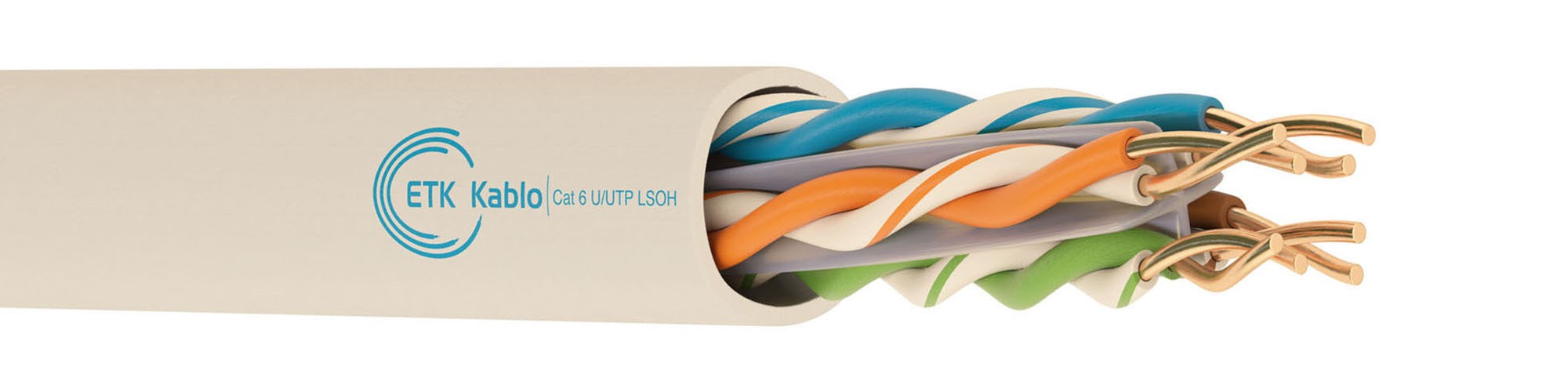
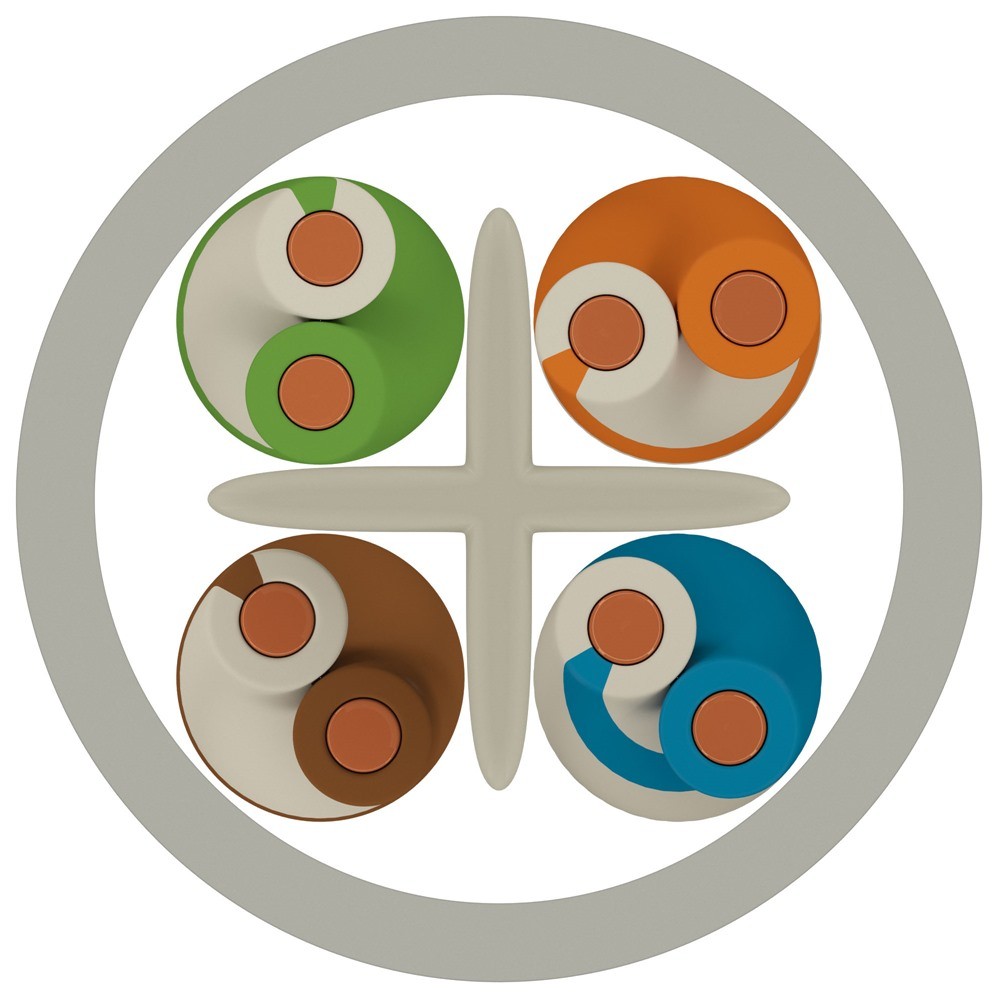



| 1 – Conductor | : | Electrolytic solid copper conductor |
| 2 – Insulation | : | Solid polyethylene insulation |
| 3 – Stranding | : | Insulations are stranded into pairs |
| 4 – Seperator | : | Pairs are stranded together with star shaped separator |
| 5 – Outer Jacket | : | UV resistant halogen-free outer jacket |
| Conductor Resistance Ω/km (20 °C) | Insulation Resistance MΩ/km (20 °C) | Mutual Capacitance nF/km | Resistance Unbalance | Propagation Velocity | Characteristic Impedance Ω (1-250 MHz) | Operating Voltage V DC | Test Voltage V (DC. 1 minute) |
|---|---|---|---|---|---|---|---|
| Max. 94 | 5000 | Max. 56 | %2 | %67-69 | 100 ±%5 | 250 | 1200 |
| Manufacturing | Smoke Density Test | Flame Retardancy Test | Corrosive Gas Test | Halogen-free Test |
|---|---|---|---|---|
| ANSI/TIA-568-C.2, IEC-61156-5, IEC-11801 | IEC 61034-2, VDE 0482-1034-2, BS EN 61034-2 | IEC 60332-1-2, VDE 0482-332-1-2, BS EN 60332-1-2 | IEC 60754-2, VDE 0482-267-2-3, BS EN 50267-2-3 | IEC 60754-1, VDE 0482-267-2-1, BS EN 50267-2-1 |
Cat 6 U-UTP LSOH (Pair)
| Part Number | Pair Count | Conductor Diameter (mm) | Approx. Cable Diameter (mm) | Copper Weight (kg/km) | Approx. Weight (kg/km) | Packing Lengths (m) |
|---|---|---|---|---|---|---|
| 3.416.2.1.3.0057.0.0004 | 4 | 0,57 | 6,4 | 19,9 | 45 | 100/500/1000 |
| Bending Radius | Temperature Range Operating |
|---|---|
| 8.0xD mm | -20°C ~ +60°C |
| Frequency MHz | Insertion Loss dB/100m (Max.) | Near-end Crosstalk (NEXT) dB (Min.) | Power-sum Near-end Crosstalk (PSNEXT) dB (Min.) | Equal-level Far-end Crosstalk (ELFEXT) dB/100m (Min.) | Power-sum Equal Level Far- end Crosstalk (PSELFEXT) dB/100m (Min.) | Return Loss (RL) dB (Min.) |
|---|---|---|---|---|---|---|
| 1 | 2 | 74.3 | 72.3 | 67.8 | 64.8 | 20 |
| 4 | 3.8 | 65.3 | 63.3 | 55.8 | 52.8 | 23 |
| 8 | 5.3 | 60.8 | 58.8 | 49.7 | 46.7 | 24.5 |
| 10 | 6 | 59.3 | 57.3 | 47.8 | 44.8 | 25 |
| 16 | 7.6 | 56.2 | 54.2 | 43.7 | 40.7 | 25 |
| 20 | 8.5 | 54.8 | 52.8 | 41.8 | 38.8 | 24.3 |
| 25 | 9.5 | 53.3 | 51.3 | 39.8 | 36.8 | 23.6 |
| 31.25 | 10.7 | 51.9 | 49.9 | 37.9 | 34.9 | 21.5 |
| 62.5 | 15.4 | 47.4 | 45.4 | 31.9 | 28.9 | 20.1 |
| 100 | 19.8 | 44.3 | 42.3 | 27.8 | 24.8 | 18 |
| 200 | 29 | 39.8 | 37.8 | 21.8 | 18.8 | 17.3 |
| 250 | 32.8 | 38.3 | 36.3 | 19.8 | 16.8 | 16.8 |
CAT 6 U/UTP LSOH Ethernet Cable for Safe and Efficient Indoor Networking
ETK Kablo’s CAT 6 U/UTP LSOH Ethernet cable is engineered for secure, high-performance structured cabling in modern enterprise and commercial environments. Designed for 1 Gigabit Ethernet (1000BASE-T) applications up to 250 MHz, this cable delivers stable data transmission, reduced crosstalk, and long-term signal reliability in indoor networking systems.
Engineered for Fast and Reliable Data Connectivity
Built with 4-pair unshielded twisted pairs (U/UTP) and solid AWG23 copper conductors, this CAT 6 cable offers excellent performance across short and medium cable runs. It supports a wide range of structured cabling needs including:
- Local Area Networks (LAN)
- VoIP and IP-telephony systems
- IP CCTV and security devices
- Access points, routers, and switches
- Workstation, printer, and building network connections
The U/UTP construction ensures efficient data flow and low signal interference in controlled environments with minimal electromagnetic noise.
Halogen-Free Safety for Modern Buildings
The LSZH (Low Smoke Zero Halogen) outer sheath minimizes toxic emissions and smoke in the event of fire, making it ideal for installations with high human occupancy and strict fire requirements such as:
- Hospitals and healthcare facilities
- Schools and universities
- Airports and transportation hubs
- Government and commercial office buildings
This cable meets global cabling and fire-safety standards, including ISO/IEC 11801 and TIA-568.
Applications in Structured Cabling Systems
Engineered for horizontal cabling, conduits, cable trays, wall ducts, and patch panel installations, the cable offers easy routing and consistent mechanical durability during installation in structured IT networks.
Comparison of ETK Kablo Copper Data Cables
| Cable Type | Performance | Bandwidth | Shielding | Sheath Type | Typical Use |
| CAT 5e U/UTP LSOH | 1 Gbps | 100 MHz | Unshielded | LSZH | Basic office & residential networking |
| CAT 6 U/UTP LSOH | 1 Gbps | 250 MHz | Unshielded | LSZH | Commercial indoor structured cabling |
| CAT 6A U/UTP LSOH | 10 Gbps | 500 MHz | Unshielded | LSZH | Advanced enterprise networks & data rooms |
| CAT 7 S/FTP LSOH | 10+ Gbps | 600–1000 MHz | Foil + braid shielded | LSZH | Indoor runs & high-interference areas |
Why Choose ETK Kablo’s CAT 6 U/UTP LSOH Cable?
Choose ETK Kablo’s CAT 6 U/UTP LSOH for secure, fire-safe, and reliable Gigabit performance in structured indoor cabling. With LSZH safety, AWG23 copper conductors, and certified performance, it provides long-term efficiency and network stability for modern buildings and enterprise networks.
Frequently Asked Questions about CAT 6 U/UTP Cables
What does CAT 6 U/UTP mean?
CAT 6 U/UTP stands for Category 6 Unshielded / Unshielded Twisted Pair. It refers to an Ethernet cable consisting of four unshielded twisted pairs of copper conductors designed for data transmission up to 1 Gbps (1000BASE-T) and 250 MHz frequency. This cable type offers high performance for indoor structured cabling in offices, data networks, and commercial buildings.
Is CAT 6 UTP good for gaming?
Yes. CAT 6 UTP cables are ideal for gaming and high-speed online applications. Their Gigabit Ethernet capability provides low latency, minimal packet loss, and stable network performance — essential for competitive gaming and streaming. For environments with significant electrical interference, shielded types like CAT 6A U/FTP or CAT 7 S/FTP may offer additional stability.
What is F/UTP vs U/UTP?
The main difference between F/UTP and U/UTP cables lies in shielding. F/UTP (Foiled Unshielded Twisted Pair) includes an overall aluminum foil shield to protect against electromagnetic interference (EMI), while U/UTP cables have no shielding. F/UTP is preferred in high-interference or industrial areas, whereas U/UTP is optimal for standard indoor LAN environments with low EMI.


