





 President’s Message
Data/LAN Cables
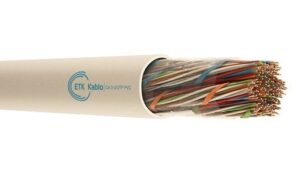
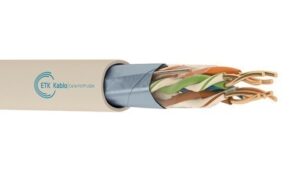
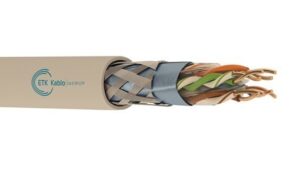
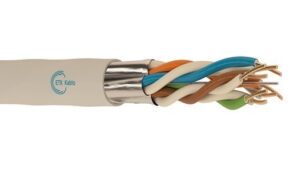
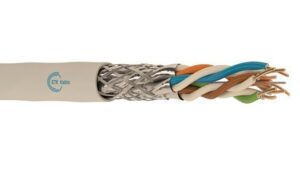
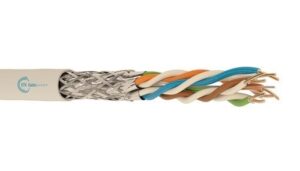
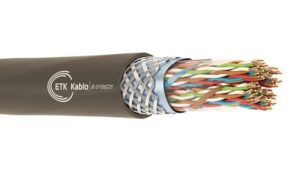
Data Cable Manufacturer for Ethernet and LAN Networks
ETK Kablo is a data cable manufacturer producing copper Ethernet and LAN cables for structured cabling, enterprise networks, data centers, industrial facilities, telecommunications infrastructure and smart buildings. The portfolio covers multiple performance categories, shielding systems, jacket materials and mechanical constructions for both indoor and outdoor network installations.
ETK Kablo manufactures Data/LAN cables from Cat 3 and Cat 5e through Cat 6, Cat 6A, Cat 7 and Cat 7A, together with specialized xDSL constructions. Depending on the category, buyers can select unshielded, foil-screened, braid-screened, individually screened, outdoor, aerial and armored cable designs.
Selecting the correct Ethernet cable requires more than choosing the highest category number. Network speed, channel length, installation environment, electromagnetic interference, PoE load, fire-performance requirement and mechanical protection all influence the appropriate cable construction.
Data and LAN Cable Categories from ETK Kablo
The ETK Kablo Data/LAN portfolio is organized by performance category so network designers and procurement teams can select the cable according to the required structured-cabling system.
| Category | Typical Performance Level | Typical Project Use |
|---|---|---|
| Cat 3 | Legacy and low-frequency communication applications | Older data, telephone and specialized communication networks |
| Cat 5e | Up to 100 MHz category performance | General Ethernet, enterprise and access networks |
| Cat 6 | Up to 250 MHz category performance | Professional structured cabling, offices and industrial LANs |
| Cat 6A | Up to 500 MHz category performance | 10 Gigabit Ethernet and high-performance structured cabling |
| Cat 7 | High-performance screened cabling up to 600 MHz | Data centers, industrial and high-interference environments |
| Cat 7A | High-performance screened cabling up to 1000 MHz | Advanced structured networks requiring additional bandwidth margin |
The applicable transmission performance depends on the complete permanent link or channel, including cable, connectors, installation quality and system design. Cable category alone does not guarantee the performance of the entire network.
Cat 5e Ethernet Cable
Cat 5e data cable remains widely used for general-purpose Ethernet and structured-cabling networks. It provides a practical combination of network performance, cable diameter and project cost.
ETK Kablo manufactures Cat 5e cables in several screening configurations, including U/UTP, F/UTP, S/UTP and SF/UTP. The portfolio also includes outdoor and mechanically protected designs for routes beyond conventional indoor structured cabling.
Cat 5e is particularly relevant for projects where Gigabit-class network performance meets the application requirement and higher-category cabling would not provide a meaningful operational advantage.
Cat 6 Data Cable
Cat 6 cable is one of the most important categories in professional structured cabling. ETK Kablo manufactures Cat 6 data cables for indoor, outdoor, aerial and armored network installations.
The portfolio includes U/UTP, F/UTP, S/UTP and SF/UTP shielding configurations together with PVC, LSOH and PE jacket options depending on the construction.
Cat 6 is commonly selected for enterprise networks, commercial buildings, industrial Ethernet systems, IP surveillance infrastructure and other installations that require additional transmission margin compared with Cat 5e.
Cat 6A Cable for 10 Gigabit Networks
Cat 6A data cable supports high-performance structured cabling where 10 Gigabit Ethernet over conventional copper horizontal cabling forms part of the network design.
ETK Kablo manufactures Cat 6A constructions including U/UTP, U/FTP, F/FTP and S/FTP. This gives network designers several approaches to balancing cable diameter, alien-crosstalk performance, electromagnetic protection and installation requirements.
Cat 6A is particularly relevant for data centers, high-performance enterprise buildings, Wi-Fi access-point infrastructure, server environments and networks designed for long-term bandwidth growth.
Cat 7 and Cat 7A Data Cables
Cat 7 and Cat 7A provide highly screened copper data-cable architectures for projects requiring increased frequency performance and strong protection against electromagnetic interference.
These categories commonly use individually screened pairs together with an additional overall screen. The resulting construction provides excellent pair-to-pair isolation and external noise protection when the complete cabling system is correctly installed.
ETK Kablo manufactures Cat 7 and Cat 7A products for high-performance networking applications, including outdoor constructions where polyethylene jackets provide environmental protection.
U/UTP, F/UTP, U/FTP, F/FTP and S/FTP Explained
Shielding terminology is one of the most important parts of professional Ethernet cable specification. Each abbreviation describes the relationship between the overall screen and the screening around individual pairs.
| Construction | Overall Screen | Pair Screen | Typical Reason for Selection |
|---|---|---|---|
| U/UTP | None | None | Simple, lightweight structured cabling where EMI conditions are controlled |
| F/UTP | Foil | None | Overall EMI protection with relatively straightforward construction |
| S/UTP | Braid | None | Robust overall screening for demanding electromagnetic environments |
| SF/UTP | Braid + foil | None | Enhanced overall shielding through two screen layers |
| U/FTP | None | Individual foil around pairs | Strong pair isolation and crosstalk control |
| F/FTP | Foil | Individual foil around pairs | Individual-pair protection plus an overall foil screen |
| S/FTP | Braid | Individual foil around pairs | High EMI protection and strong pair isolation |
The highest level of shielding is not automatically the best choice for every project. Screened systems require appropriate component selection, installation practice and bonding strategy. In controlled office environments, U/UTP may provide the most efficient solution, while industrial and high-interference environments can justify more heavily screened constructions.
Shielded vs Unshielded Ethernet Cable
Unshielded Ethernet cable relies on balanced twisted-pair design to control electromagnetic interference and crosstalk. It provides a compact, flexible and economical solution for many office and commercial LAN installations.
Shielded Ethernet cable adds foil, braid or individual-pair screens to increase protection against electromagnetic noise and improve pair isolation.
Shielding can be particularly relevant near motors, variable-frequency drives, industrial equipment, electrical distribution systems and other sources of electromagnetic interference.
However, the screen must form part of a correctly designed cabling system. Simply selecting a screened cable does not compensate for poor installation practice or incompatible connectors and hardware.
Indoor PVC and LSOH Data Cables
Indoor Ethernet cables can use different jacket compounds depending on the building and project requirements.
PVC data cable provides a durable and widely used construction for conventional indoor structured-cabling installations.
LSOH / LSZH data cable uses halogen-free materials intended to reduce smoke and corrosive halogen gas emissions during combustion. These cables are particularly relevant for public buildings, data centers, transport facilities and other projects where low-smoke, halogen-free material requirements form part of the specification.
LSOH should not be confused with fire resistance. A low-smoke halogen-free Ethernet cable does not automatically provide FE180, PH120 or other circuit-integrity performance.
Outdoor Ethernet Cable with PE Jacket
Outdoor Ethernet cable must address environmental conditions that are not normally present in conventional indoor structured cabling.
ETK Kablo manufactures selected Cat 5e, Cat 6 and higher-category products with polyethylene outer jackets for outdoor network routes. PE provides strong environmental and moisture resistance and is widely used for external cable installations.
Outdoor data cable can support applications such as campus networks, external Wi-Fi infrastructure, CCTV systems, industrial sites, telecom facilities and building-to-building Ethernet routes.
A PE jacket alone does not define every aspect of an outdoor installation. Mechanical protection, water exposure, UV conditions, route type and building-entry requirements should also be evaluated.
Aerial Data Cable
ETK Kablo's Data/LAN cable range includes dedicated aerial constructions for selected Ethernet categories.
An aerial data cable requires additional mechanical support compared with a standard indoor Ethernet cable. The complete cable construction must address the loads created by the overhead route and the environmental conditions around the installation.
Projects should therefore distinguish between a normal PE outdoor cable and a cable specifically designed for aerial deployment.
Armored Ethernet and Data Cables
Industrial and infrastructure networks can expose Ethernet cables to mechanical risks that conventional structured-cabling products are not designed to withstand.
ETK Kablo offers armored data cable constructions within Cat 5e, Cat 6 and Cat 6A product families. Depending on the category, the portfolio includes Steel Wire Armored (SWA) and Steel Wire Braided (SWB) mechanical protection.
SWA and SWB should not be confused with electrical shielding. A foil or braid screen primarily addresses electromagnetic performance, while steel-wire armor or braiding provides mechanical protection.
| Protection Type | Main Function |
|---|---|
| Foil / Braid Screen | Electromagnetic shielding and crosstalk control |
| Steel Wire Armor | Mechanical protection against physical stress |
| Steel Wire Braid | Flexible mechanical reinforcement |
A cable can contain both electrical shielding and mechanical armor when the project requires both functions.
Bulk Ethernet Cable for Professional Installations
Procurement managers source bulk Ethernet cable for structured-cabling projects, distributors and large network installations.
ETK Kablo manufactures installation cable supplied for professional project use rather than focusing only on pre-terminated patch cords. This allows contractors and structured-cabling integrators to terminate and install the cable according to the project design.
When requesting bulk cable, buyers should specify category, screen type, jacket material, conductor construction, packaging length and applicable project requirements.
Solid Copper Conductors for Structured Cabling
Horizontal structured-cabling networks commonly use solid copper conductors because they provide stable electrical characteristics for fixed installation.
Conductor diameter affects DC resistance, insertion loss, PoE performance, cable diameter and overall transmission characteristics. Therefore, conductor size should be evaluated together with category requirements and channel design.
Professional buyers should also distinguish solid copper Ethernet cable from low-cost copper-clad conductor products where electrical performance and project compliance are critical.
Data Cable Selection for Power over Ethernet
Power over Ethernet allows compatible network equipment to transmit data and electrical power over the same twisted-pair cabling.
As PoE power increases, conductor resistance and heat accumulation become increasingly important. Large cable bundles, ambient temperature and installation method can all affect thermal performance.
For PoE-intensive installations, procurement teams should consider:
- Cable category
- Conductor diameter
- DC resistance
- Bundle size
- Ambient temperature
- Installation pathway
- Connector compatibility
- Applicable structured-cabling requirements
Cable selection should follow the complete PoE system design rather than assuming that every Ethernet cable within one category will behave identically under high electrical load.
Ethernet Cable for Data Centers
Data centers require high transmission capacity, predictable channel performance and careful control of cable density.
Cat 6A is a major copper-cabling option for 10 Gigabit Ethernet horizontal links, while Cat 7 and Cat 7A constructions provide additional frequency and shielding capabilities for applicable structured-cabling systems.
Shielding architecture also matters. U/FTP, F/FTP and S/FTP constructions provide different approaches to controlling alien crosstalk and electromagnetic interference in dense cable environments.
Network designers should consider cable diameter, pathway capacity, patching architecture, grounding requirements and future network speed together when selecting a data-center cable.
Ethernet Cable for Industrial Networks
Industrial Ethernet installations can expose data cables to higher levels of electromagnetic interference and mechanical stress than typical office networks.
Shielded constructions such as F/UTP, SF/UTP, U/FTP, F/FTP and S/FTP can provide additional signal protection where the electrical environment requires it.
Outdoor PE jackets and armored constructions can also address environmental and mechanical risks beyond conventional indoor structured cabling.
The exact cable should be selected according to network protocol, transmission speed, EMI environment, installation route and mechanical conditions.
Cat 5e vs Cat 6 vs Cat 6A vs Cat 7 vs Cat 7A
Selecting a higher cable category can provide additional bandwidth and transmission margin, but the correct decision should follow the real network requirement.
| Category | Nominal Frequency | Typical Selection Logic |
|---|---|---|
| Cat 5e | 100 MHz | General Gigabit-class LAN networks and cost-efficient structured cabling |
| Cat 6 | 250 MHz | Professional enterprise networking with increased transmission headroom |
| Cat 6A | 500 MHz | 10 Gigabit Ethernet over full conventional horizontal cabling distances |
| Cat 7 | 600 MHz | Highly screened high-performance network infrastructure |
| Cat 7A | 1000 MHz | Advanced screened structured cabling with additional frequency margin |
Network equipment, connectors and installation practice must also support the required performance class. Installing a higher-category cable alone does not automatically upgrade the entire channel.
Relevant Structured Cabling Standards
Data cable requirements differ by category and cabling system. Depending on the product and market, applicable structured-cabling references can include ISO/IEC, EN and ANSI/TIA requirements.
Cat 5e, Cat 6 and Cat 6A are widely addressed in both international ISO/IEC and ANSI/TIA structured-cabling frameworks. Cat 7 and Cat 7A belong primarily to ISO/IEC and EN structured-cabling systems rather than conventional ANSI/TIA category recognition.
For this reason, buyers should specify the required category, applicable standard and project test criteria rather than using the term Ethernet cable alone.
ETK Kablo Data/LAN Cable Portfolio
ETK Kablo manufactures a broad range of Data/LAN cable constructions across several categories and environments.
| Product Family | Available Constructions |
|---|---|
| Cat 3 | U/UTP and F/UTP |
| Cat 5e | U/UTP, F/UTP, S/UTP, SF/UTP, aerial and armored |
| Cat 6 | U/UTP, F/UTP, S/UTP, SF/UTP, aerial and armored |
| Cat 6A | U/UTP, U/FTP, F/FTP, S/FTP and armored |
| Cat 7 | High-performance screened constructions |
| Cat 7A | High-performance screened constructions |
| xDSL | Specialized copper data and broadband communication constructions |
Depending on the product family, ETK Kablo offers PVC, LSOH and PE jackets together with different screen and mechanical protection systems.
How to Specify a Data/LAN Cable
Providing complete network requirements allows ETK Kablo to identify the correct construction and prepare an accurate quotation.
| Specification Item | Information to Provide |
|---|---|
| Category | Cat 5e, Cat 6, Cat 6A, Cat 7, Cat 7A or other requirement |
| Screening | U/UTP, F/UTP, S/UTP, SF/UTP, U/FTP, F/FTP or S/FTP |
| Installation Environment | Indoor, outdoor, aerial, industrial or mechanically demanding route |
| Jacket | PVC, LSOH/LSZH, PE or project-specific material |
| Mechanical Protection | Standard, SWA, SWB or other required construction |
| Network Speed | Required Ethernet application and bandwidth |
| PoE Requirement | PoE type and expected electrical loading where applicable |
| Applicable Standard | ISO/IEC, EN, ANSI/TIA or project specification |
| Fire Performance | Required CPR or other reaction-to-fire classification where applicable |
| Delivery Requirements | Quantity, packing length, marking and project documentation |
Why Choose ETK Kablo as Your Data Cable Manufacturer?
ETK Kablo manufactures Data/LAN cables across multiple performance categories, shielding systems and installation environments. The portfolio includes standard indoor Ethernet cables, outdoor PE designs, high-performance screened constructions and mechanically protected SWA and SWB data cables.
This range allows distributors, structured-cabling contractors, system integrators, data-center projects and industrial network buyers to source multiple Ethernet cable families from one manufacturer.
ETK Kablo can evaluate category performance, shielding, jacket material, mechanical protection, fire requirements and delivery specifications together during the quotation process.
Frequently Asked Questions About Data and LAN Cables
What is a LAN cable?
A LAN cable is a copper or fiber cable used to connect devices within a local area network. In structured copper cabling, the term usually refers to twisted-pair Ethernet cables such as Cat 5e, Cat 6 and Cat 6A.
What is the difference between a data cable and an Ethernet cable?
Data cable is a broad term for cables that carry digital information. Ethernet cable more specifically refers to cabling designed for Ethernet network transmission. In structured-cabling applications, the terms are often used interchangeably for Category-rated copper LAN cables.
What is the difference between Cat 6 and Cat 6A?
Cat 6A provides higher frequency performance and is designed to support 10 Gigabit Ethernet over full conventional horizontal channel distances. Cat 6 operates at a lower category bandwidth and is commonly selected for general enterprise networking.
What is U/UTP cable?
U/UTP is an unshielded twisted-pair cable with no overall screen and no individual pair screen. It is widely used in controlled indoor structured-cabling environments.
What is the difference between F/UTP and U/FTP?
F/UTP uses one overall foil screen around unshielded pairs. U/FTP has no overall screen but places individual foil screens around each pair. The two constructions control interference and crosstalk in different ways.
What is S/FTP Ethernet cable?
S/FTP cable uses individually foil-screened pairs together with an overall braid screen. This provides strong pair isolation and electromagnetic protection for demanding network environments.
Does ETK Kablo manufacture outdoor Ethernet cable?
Yes. ETK Kablo manufactures selected Data/LAN cable constructions with PE outer jackets for external network installations.
Does ETK Kablo manufacture armored Ethernet cable?
Yes. ETK Kablo offers mechanically protected data cables, including SWA and SWB constructions in selected Cat 5e, Cat 6 and Cat 6A product families.
Is LSZH Ethernet cable fire resistant?
No. LSZH describes low-smoke and halogen-free material characteristics. It does not automatically mean that the cable maintains network functionality during fire exposure.
Which Ethernet cable should I specify for a project?
Specify the required network speed, category, screening, jacket material, installation environment, PoE requirement, mechanical protection, applicable standards and fire classification. The most appropriate cable depends on the complete network and installation conditions rather than category number alone.


