





 President’s Message
Building Automation Cables
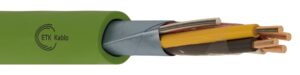
EIB-Y(St)Y BUS Cable
SKU:
EIB-Y(St)Y
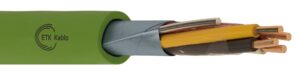
EIB-H(St)H BUS Cable
SKU:
EIB-H(St)H
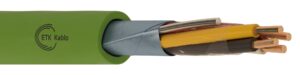
EIB-2Y(St)Y BUS Cable
SKU:
EIB-2Y(St)Y
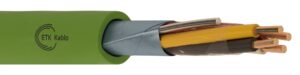
EIB-2Y(St)H BUS Cable
SKU:
EIB-2Y(St)H
KNX Cable for EIB and Smart Building Automation
KNX Cable provides the twisted-pair communication path between sensors, actuators, controllers and other devices in KNX and EIB building automation systems. ETK Kablo manufactures screened EIB bus cables for lighting control, HVAC automation, shading, access control, energy management and other smart-building applications.
The ETK Kablo Building Automation Cable range includes EIB-Y(St)Y, EIB-H(St)H, EIB-2Y(St)Y and EIB-2Y(St)H constructions. These products combine solid copper conductors, structured pair stranding and an overall Al/PET foil screen with a tinned copper earthing wire.
The four constructions differ mainly in conductor-insulation and outer-jacket materials. This allows project engineers to choose between PVC, polyethylene and halogen-free material systems while retaining the screened bus architecture required for reliable building-control communication.
What Is a KNX Cable?
A KNX cable is a twisted-pair bus cable used to connect compatible devices within a KNX building automation network.
KNX systems can integrate functions such as:
- Lighting control
- Heating and cooling
- HVAC automation
- Blind and shading control
- Room automation
- Access control
- Energy monitoring
- Metering
- Building management functions
The bus allows distributed KNX devices to exchange control information without requiring conventional point-to-point wiring for every building function.
KNX and EIB: What Is the Difference?
EIB stands for European Installation Bus and represents the earlier system from which modern KNX evolved.
Today, KNX is the internationally standardized building-control technology, while EIB remains widely used in cable names, project specifications and procurement terminology.
For this reason, both KNX cable and EIB cable are commonly used terms for this general type of twisted-pair building automation bus cable.
ETK Kablo KNX / EIB Bus Cable Range
| Construction | Insulation | Outer Jacket | Main Material Direction |
|---|---|---|---|
| EIB-Y(St)Y | PVC | PVC | Conventional PVC KNX / EIB bus cable |
| EIB-H(St)H | Halogen-free compound | Halogen-free compound | LSZH / halogen-free KNX bus cable |
| EIB-2Y(St)Y | Polyethylene | PVC | PE-insulated bus cable with PVC jacket |
| EIB-2Y(St)H | Polyethylene | Halogen-free compound | PE-insulated bus cable with halogen-free jacket |
The required construction should follow the building specification, installation environment, fire-material requirements and electrical characteristics of the project.
EIB-Y(St)Y KNX Bus Cable
EIB-Y(St)Y is a screened PVC building automation cable for KNX and EIB networks.
The ETK Kablo construction uses Class 1 solid copper conductors, PVC insulation, polyester wrapping, an Al/PET foil screen with a tinned copper earthing wire and a PVC outer jacket.
This construction provides a practical solution for indoor building automation projects where conventional PVC materials are permitted.
EIB-H(St)H Halogen-Free KNX Cable
EIB-H(St)H provides a halogen-free alternative for KNX and EIB building automation.
The cable uses solid copper conductors together with halogen-free insulation and a halogen-free outer jacket. An Al/PET foil and tinned copper earthing wire provide the overall electromagnetic screen.
The construction includes applicable tests for smoke density, halogen content, corrosive-gas behavior and flame propagation.
This makes EIB-H(St)H particularly relevant for public buildings, hospitals, transportation facilities, commercial properties and other projects where halogen-free cable materials form part of the specification.
Halogen-free construction should not be confused with fire resistance. A KNX cable with LSZH materials does not automatically provide FE180 or PH120 circuit integrity.
EIB-2Y(St)Y PE-Insulated Bus Cable
EIB-2Y(St)Y uses polyethylene conductor insulation together with a PVC outer jacket.
Its construction includes solid copper conductors, PE insulation, polyester wrapping, an overall Al/PET screen with tinned copper earthing wire and an outer PVC sheath.
ETK Kablo technical data show substantially higher insulation resistance for PE insulation compared with the PVC- and halogen-free-insulated alternatives.
The construction therefore provides another electrical and material option where the project calls for PE-insulated bus conductors.
EIB-2Y(St)H PE-Insulated Halogen-Free Bus Cable
EIB-2Y(St)H combines polyethylene conductor insulation with a halogen-free outer jacket.
This creates a hybrid material concept: PE provides the conductor-insulation system, while the outer sheath addresses the project's halogen-free material requirement.
The cable retains the Al/PET overall screen and tinned copper earthing wire used throughout the ETK Kablo EIB bus-cable family.
What Does 2x2x0.8 Mean in KNX Cable?
2x2x0.8 is one of the most common KNX cable descriptions.
It normally means:
- 2 conductor pairs
- 2 conductors in each pair
- 0.8 mm conductor diameter
Therefore, the commonly used notation is 2x2x0.8 mm when 0.8 refers to conductor diameter. It should not automatically be written as 0.8 mm², because diameter and conductor cross-sectional area are different measurements.
ETK Kablo also offers EIB cable versions with other conductor diameters and cross-sections, so buyers should state the required conductor size explicitly.
Why KNX Bus Cable Uses Twisted Conductors
Twisting conductors helps improve electrical balance and reduce the effect of electromagnetic interference on bus communication.
In ETK Kablo EIB constructions, two pairs can form a star-quad arrangement, while larger configurations can use pair stranding in layers.
This controlled conductor geometry supports predictable capacitance and resistance characteristics across the cable length.
Shielded KNX Cable and EMI Protection
All four ETK Kablo EIB bus-cable constructions use an overall metallic screen.
The screen consists of:
- Al/PET foil
- Tinned copper earthing wire
The foil provides broad electromagnetic coverage around the cable core, while the earthing wire allows practical electrical connection of the screen.
This can help protect KNX communication from interference produced by electrical equipment and nearby power circuits.
Effective shielding also depends on correct installation and screen termination. The cable screen alone cannot compensate for poor EMC design.
KNX Bus Voltage vs Cable Voltage Rating
The operating-voltage figure specified in a cable datasheet should not be confused with the actual communication-bus supply voltage.
KNX twisted-pair networks operate at safety extra-low voltage, typically around 29 V DC from the KNX bus power supply.
By contrast, ETK Kablo EIB cable technical tables specify a cable operating-voltage rating of 300 V DC. This value describes the cable construction and should not be interpreted as the normal KNX bus supply voltage.
Electrical Characteristics of KNX / EIB Cable
Electrical consistency is important for reliable communication over building automation bus networks.
Key parameters in ETK Kablo EIB cable specifications include:
- Conductor resistance
- Insulation resistance
- Mutual capacitance
- Operating voltage rating
- Test voltage
For the commonly specified 0.80 mm conductor, ETK Kablo specifies a conductor resistance of 73.2 Ω/km at 20°C and mutual capacitance of 100 nF/km across the EIB families.
The exact electrical values should always be checked against the selected conductor size and product datasheet.
PVC vs LSZH KNX Cable
| Characteristic | PVC KNX Cable | Halogen-Free KNX Cable |
|---|---|---|
| Typical ETK Construction | EIB-Y(St)Y | EIB-H(St)H |
| Insulation | PVC | Halogen-free compound |
| Outer Jacket | PVC | Halogen-free compound |
| Screen | Al/PET + earthing wire | Al/PET + earthing wire |
| Typical Selection Driver | General installations where PVC is permitted | Projects requiring LSZH / halogen-free materials |
The communication protocol does not determine the sheath material. KNX networks can use different cable material systems when the electrical construction and project requirements remain compatible.
PE-Insulated vs PVC-Insulated KNX Cable
The EIB-2Y constructions use polyethylene insulation around the conductors, while EIB-Y(St)Y uses PVC and EIB-H(St)H uses halogen-free insulation.
Insulation material influences parameters such as insulation resistance, dielectric behavior and cable construction.
The choice should therefore follow the required product specification rather than treating every EIB cable as one identical construction.
KNX Cable for Lighting Control
KNX building automation can integrate lighting into a distributed control system rather than relying only on conventional local switching.
Bus-connected switches, sensors and actuators can support functions such as:
- Lighting scenes
- Occupancy control
- Time-based control
- Daylight-dependent operation
- Central monitoring
- Energy-saving strategies
The KNX cable provides the communication path between compatible field devices and system components.
KNX Cable for HVAC and Room Automation
Heating, ventilation and air-conditioning systems are another major application of KNX building automation.
KNX networks can connect thermostats, room controllers, sensors, valves, actuators and building-management interfaces to coordinate temperature and energy control.
The bus cable therefore forms part of the communication infrastructure rather than the power circuit supplying HVAC equipment.
KNX Cable for Smart Buildings
Smart buildings increasingly combine lighting, shading, HVAC, security, metering and energy-management functions within integrated automation platforms.
KNX provides one standardized communication ecosystem for many of these applications.
Typical project environments include:
- Commercial offices
- Hotels
- Hospitals
- Schools and universities
- Airports
- Shopping centers
- Residential developments
- Industrial buildings
- Public facilities
- Energy-efficient smart buildings
KNX Cable vs Cat 6 Ethernet Cable
KNX bus cable and Ethernet data cable perform different network functions.
| Characteristic | KNX / EIB Cable | Cat 6 Data Cable |
|---|---|---|
| Main Purpose | Building automation control communication | Ethernet data networking |
| Typical ETK Family | EIB-Y(St)Y / EIB-H(St)H | Cat 6 U/UTP, F/UTP and related constructions |
| Network Application | Lighting, HVAC, shading, sensors and actuators | LAN, IP networking and high-speed data |
| Typical Cable Architecture | Screened building-control bus | Category-rated balanced twisted pair |
Ethernet cable should not be substituted for a specified KNX bus cable solely because both use twisted copper conductors.
KNX Cable vs General Control Cable
General control cables such as YSLY and YSLCY primarily connect machinery and industrial control circuits.
KNX / EIB cable is designed for a specific building-automation communication architecture with defined electrical and bus requirements.
Therefore, a generic multi-core control cable should not automatically replace an EIB bus cable in a KNX installation.
Flame Retardancy and Halogen-Free Performance
The exact fire-performance characteristics depend on the selected ETK Kablo EIB construction.
EIB-Y(St)Y and EIB-2Y(St)Y include applicable single-cable flame-retardancy testing.
EIB-H(St)H additionally includes smoke-density, halogen-free, corrosive-gas and flame-propagation tests associated with its halogen-free material system.
Project teams should verify the applicable tests and CPR classification from the exact product documentation rather than applying one category-wide fire classification to every KNX cable.
How to Specify a KNX Cable
A complete KNX cable RFQ should identify both the electrical construction and project material requirements.
| Specification Item | Information to Provide |
|---|---|
| Cable Code | EIB-Y(St)Y, EIB-H(St)H, EIB-2Y(St)Y or EIB-2Y(St)H |
| Conductor Configuration | Required pair count and conductor size, such as 2x2x0.8 mm |
| Insulation | PVC, PE or halogen-free according to construction |
| Outer Jacket | PVC or halogen-free |
| Screen | Overall Al/PET screen with earthing wire or project requirement |
| Fire Requirement | Flame, smoke, halogen and CPR requirements where applicable |
| Installation Environment | Indoor building, public infrastructure or other project environment |
| Documentation | Datasheet, DoP where applicable, test documentation and project certificates |
Why Choose ETK Kablo as Your KNX Cable Manufacturer?
ETK Kablo manufactures multiple EIB bus-cable constructions rather than offering one universal building automation cable.
The portfolio includes PVC, polyethylene and halogen-free insulation systems together with PVC and LSZH outer-jacket options. All ETK Kablo EIB families use screened copper communication architecture for KNX and EIB building automation networks.
This range allows electrical wholesalers, MEP contractors, KNX integrators and smart-building projects to select the cable according to electrical characteristics, material requirements and the building fire specification.
ETK Kablo can evaluate conductor size, insulation system, sheath material, fire-performance requirements and project documentation together during the quotation process.
Frequently Asked Questions About KNX Cable
What is a KNX cable?
A KNX cable is a twisted-pair bus communication cable used to connect compatible sensors, actuators, controllers and other devices in KNX building automation systems.
What is an EIB cable?
EIB means European Installation Bus, the earlier building-control technology from which KNX evolved. EIB remains widely used in cable codes and procurement terminology for KNX-compatible twisted-pair bus cables.
What does 2x2x0.8 mean in KNX cable?
It normally means two conductor pairs, with two conductors per pair and a conductor diameter of 0.8 mm.
Is 2x2x0.8 the same as 2x2x0.8 mm²?
No. When 0.8 refers to conductor diameter, the correct unit is mm rather than mm². Diameter and conductor cross-sectional area are different measurements.
What is EIB-H(St)H cable?
EIB-H(St)H is ETK Kablo's halogen-free screened KNX / EIB bus cable with solid copper conductors, halogen-free insulation, Al/PET screening and a halogen-free outer jacket.
What is the difference between EIB-Y(St)Y and EIB-H(St)H?
EIB-Y(St)Y uses PVC insulation and a PVC outer jacket. EIB-H(St)H uses halogen-free insulation and a halogen-free outer jacket. Both use an overall foil screen.
What does 2Y mean in EIB-2Y(St)Y?
In this ETK Kablo construction, 2Y identifies polyethylene conductor insulation. EIB-2Y(St)Y combines PE insulation with a PVC outer jacket.
Is KNX cable shielded?
ETK Kablo EIB bus-cable products use an overall Al/PET foil screen together with a tinned copper earthing wire for electromagnetic protection.
Is KNX cable the same as Cat 6 cable?
No. KNX bus cable is designed for building-automation communication, while Cat 6 is designed for Ethernet data networking. Their transmission requirements and system applications are different.
Is LSZH KNX cable fire resistant?
No. LSZH describes smoke and halogen characteristics of the cable materials. Dedicated FE180 or PH120 circuit integrity requires a separate fire-resistant construction.
What information should I provide when requesting a quotation?
Provide the required EIB cable code, pair configuration, conductor size, PVC or LSZH requirement, applicable fire or CPR classification, quantity, packing length and required project documentation.


