





 President’s Message
Fire Resistant Cables
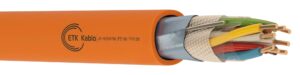
JE-H(St)H…Bd FE180 PH120 Fire Resistant Cable
SKU:
JE-H(St)H...Bd FE180 PH120
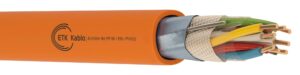
JE-H(St)H…Bd FE180 / E30-E60-E90 / PH120 Fire Resistant Cable
SKU:
JE-H(St)H...Bd FE180 / E30-E60-E90 / PH120
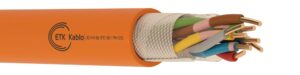
JE-HH…Bd FE180 / E30-E60-E90 / PH120 Fire Resistant Cable
SKU:
JE-HH...Bd FE180
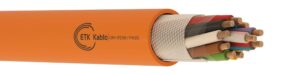
LIHH FE180 PH120 Fire Resistant Cable
SKU:
LIHH FE180 PH120
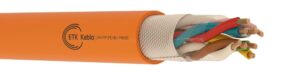
LIHH-TP FE180 PH120 Fire Resistant Cable
SKU:
LIHH-TP FE180 PH120
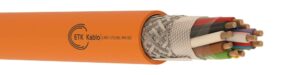
LIHCH FE180 PH120 Fire Resistant Cable
SKU:
LIHCH FE180 PH120
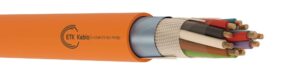
LIH(St)H FE180 PH120 Fire Resistant Cable
SKU:
LIH(St)H FE180 PH120
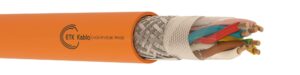
LIHCH-TP FE180 PH120 Fire Resistant Cable
SKU:
LIHCH-TP FE180 PH120
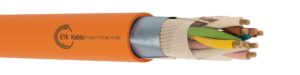
LIH(St)H-TP FE180 PH120 Fire Resistant Cable
SKU:
LIH(St)H-TP FE180 PH120
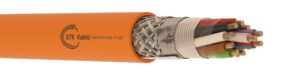
LIH(St)CH FE180 PH120 Fire Resistant Cable
SKU:
LIH(St)CH FE180 PH120
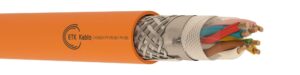
LIH(St)CH-TP FE180 PH120 Fire Resistant Cable
SKU:
LIH(St)CH-TP FE180 PH120
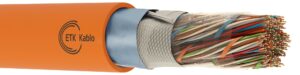
J-H(St)H FE180 PH120 Fire Resistant Cable
SKU:
J-H(St)H FE180 PH120
Fire Resistant Cable for Critical Signal and Control Systems
Fire Resistant Cable helps critical signal, communication, control and instrumentation circuits remain operational during defined fire-test conditions. ETK Kablo manufactures a broad range of fire-resistant cables for fire detection, voice evacuation, emergency communication, building automation, process control and other life-safety or mission-critical systems.
The ETK Kablo fire-resistant cable portfolio includes FE180 and PH120 constructions, selected cable systems suitable for E30, E60 and E90 functional-integrity requirements, screened and unscreened signal cables, flexible LIH-series cables, armored designs and fire-resistant instrumentation cables.
Fire resistance, flame retardancy, LSZH performance, CPR classification and E30/E60/E90 system integrity describe different cable or installation characteristics. Therefore, project engineers and procurement teams should specify each requirement separately rather than treating all fire-related terminology as one performance level.
What Is a Fire Resistant Cable?
A fire resistant cable is designed to maintain electrical or signal circuit integrity for a defined period under the conditions of an applicable fire test.
This characteristic is particularly important when a circuit must continue supporting evacuation, fire detection, communication, monitoring or emergency control functions after a fire has started.
The cable construction can use special fire-survival insulation, mica barriers, ceramic-forming compounds, glass-yarn tapes and halogen-free jacket materials to protect the electrical path during fire exposure.
The exact construction depends on cable type. A fire-resistant signal cable, flexible control cable and instrumentation cable can all achieve fire-survival performance through different internal designs.
Fire Resistant vs Flame Retardant Cable
Fire resistant cable and flame retardant cable describe different performance requirements.
Fire resistance addresses whether the cable maintains the required electrical or signal integrity during the specified fire test.
Flame retardancy addresses the propagation of flame along the cable. A flame-retardant cable can limit flame spread without continuing to transmit power or signals during prolonged fire exposure.
| Performance | Main Question |
|---|---|
| Fire Resistance | Does the cable maintain the required circuit or signal integrity during the specified fire test? |
| Flame Retardancy | How does flame propagate along the cable under the specified test? |
| LSZH / Halogen-Free | What smoke and halogen characteristics do the cable materials provide during combustion? |
| CPR Euroclass | How does the cable react and contribute to fire under the applicable European classification system? |
| E30 / E60 / E90 | Does the complete tested cable installation system maintain functional integrity? |
A professional life-safety cable specification can require several of these characteristics simultaneously.
What Does FE180 Mean?
FE180 describes fire-integrity performance associated with the cable itself under the referenced fire-test conditions.
Selected ETK Kablo fire-resistant cable constructions use IEC 60331-21 as the circuit-integrity test reference for FE180 performance.
The number 180 refers to the defined test duration. It should not be interpreted as a guarantee that the cable will remain fully operational for exactly 180 minutes in every real building fire.
Real installations can experience structural movement, collapsing supports, falling objects, water exposure and different temperature profiles. FE180 therefore describes standardized laboratory performance rather than universal real-fire survival time.
What Does PH120 Mean?
PH120 describes circuit-integrity performance under fire together with mechanical shock according to the applicable EN 50200 test concept.
The mechanical component makes PH testing particularly relevant for life-safety circuits because cable systems can experience physical disturbance during a fire.
Selected ETK Kablo JE-H, LIH and J-H fire-resistant constructions provide PH120 performance in addition to FE180.
PH120 should not automatically be described as a water-spray classification. Water exposure must be verified from the exact additional test requirement when a project specifies it.
FE180 vs PH120
FE180 and PH120 should not be compared simply as 180 minutes versus 120 minutes. They evaluate different fire conditions.
| Characteristic | FE180 | PH120 |
|---|---|---|
| Test Subject | Cable | Cable |
| Primary Purpose | Circuit or insulation integrity during fire exposure | Circuit integrity during fire with mechanical shock |
| Nominal Duration | 180 minutes | 120 minutes |
| Mechanical Shock | Not the defining FE180 feature | Yes |
| Complete Installation System | No | No |
A project can require both FE180 and PH120 when the fire strategy calls for both types of demonstrated performance.
What Do E30, E60 and E90 Mean?
E30, E60 and E90 describe functional integrity of a tested cable installation system under DIN 4102-12.
This distinction is essential because the classification involves more than the cable itself. The tested system can include:
- Fire-resistant cable
- Cable trays
- Clamps
- Supports
- Brackets
- Anchors
- Fixing distances
- Installation arrangement
E30 indicates 30 minutes of functional integrity for the approved system, while E60 and E90 represent 60 and 90 minutes respectively.
A cable that forms part of an approved E90 installation should therefore not be described as creating E90 performance automatically when installed on any tray or fixing system.
FE180, PH120 and E30/E60/E90 at a Glance
| Rating | What It Evaluates | Typical Reference |
|---|---|---|
| FE180 | Cable-level circuit or insulation integrity during fire | Applicable IEC 60331-based requirement |
| PH120 | Circuit integrity during fire with mechanical shock | EN 50200 |
| E30 | 30-minute functional integrity of the tested installation system | DIN 4102-12 |
| E60 | 60-minute functional integrity of the tested installation system | DIN 4102-12 |
| E90 | 90-minute functional integrity of the tested installation system | DIN 4102-12 |
The ratings answer different engineering questions. Consequently, the highest number is not automatically the most appropriate specification.
Fire Resistant Signal Cable
A large part of the ETK Kablo fire-resistant portfolio consists of signal and communication cables for critical building and infrastructure systems.
These cables can carry alarm, evacuation, monitoring, control and other low-voltage signals while maintaining circuit integrity during the specified fire test.
ETK Kablo offers both screened and unscreened constructions so project engineers can also address electromagnetic compatibility requirements.
JE-H(St)H Bd FE180 PH120 Fire Resistant Cable
JE-H(St)H Bd FE180 PH120 is a screened, halogen-free fire-resistant signal cable.
The construction uses solid copper conductors, a ceramic-forming cross-linked insulation system, glass-yarn protection and an Al/PET overall screen with a tinned copper earthing wire.
The metallic screen provides additional electromagnetic protection for critical signal circuits, while the fire-resistant construction provides FE180 and PH120 performance according to the applicable tests.
This family can suit fire detection, evacuation communication, building management and other critical low-voltage circuits where both signal integrity and fire survival matter.
JE-HH Bd Fire Resistant Cable
JE-HH Bd provides an unshielded alternative for fire-resistant signal circuits.
The cable uses fire-survival insulation and a halogen-free outer jacket but does not include the overall foil screen found in JE-H(St)H.
This distinction allows designers to select the construction according to the electromagnetic environment instead of automatically adding screening to every life-safety circuit.
Selected JE-HH Bd constructions also form part of approved E30, E60 and E90 installation systems when installed according to the corresponding tested system configuration.
Shielded vs Unshielded Fire Resistant Cable
| Feature | Shielded Construction | Unshielded Construction |
|---|---|---|
| Example | JE-H(St)H Bd | JE-HH Bd |
| Metallic Screen | Overall foil screen | No dedicated overall signal screen |
| Primary Benefit | Additional EMI protection | Simpler and lighter construction |
| Selection Driver | Sensitive signals or higher EMI environment | Routes where additional electromagnetic screening is unnecessary |
The screen does not create fire resistance. Fire survival and electromagnetic screening are separate construction functions.
LIHH and LIH-Series Fire Resistant Cables
ETK Kablo also manufactures several LIH-series fire resistant cables for flexible signal and control applications.
The portfolio includes constructions such as:
- LIHH FE180 PH120
- LIHH-TP FE180 PH120
- LIHCH FE180 PH120
- LIHCH-TP FE180 PH120
- LIH(St)H FE180 PH120
- LIH(St)H-TP FE180 PH120
- LIH(St)CH FE180 PH120
- LIH(St)CH-TP FE180 PH120
These families provide different conductor-stranding and screening concepts for projects that require flexible fire-resistant signal or control cables.
Foil Screen, Copper Braid and Combined Screen Options
The LIH-series allows the shielding architecture to follow the actual electromagnetic environment.
| Construction Concept | Typical Function |
|---|---|
| Unscreened | Fire-resistant signal transmission where additional EMI screening is not required |
| Foil Screen | Overall electromagnetic protection with relatively compact construction |
| Copper Braid Screen | Robust screen with flexible mechanical characteristics |
| Foil + Copper Braid | Combined screening for more demanding electromagnetic environments |
The highest level of screening should not automatically be specified for every circuit. Additional screens can increase cable diameter, weight, termination work and cost.
Armored Fire Resistant Cable
Some critical circuits require mechanical protection in addition to fire and signal performance.
ETK Kablo manufactures armored fire-resistant constructions such as LIHCHSWAH FE180 PH120 and several RE-series HSWAH products.
Galvanized steel wire armor increases resistance to physical damage, while the separate fire-survival insulation system maintains the required fire performance.
Mechanical armor, signal shielding and fire resistance perform different roles:
- Signal screen controls electromagnetic interference
- Steel wire armor provides mechanical protection
- Fire-survival insulation maintains circuit integrity during the specified fire test
A project should define all three independently where applicable.
Fire Resistant Instrumentation Cable
ETK Kablo's fire-resistant portfolio also includes a substantial range of fire resistant instrumentation cables.
These cables support process measurement and control circuits where signal integrity must continue during specified fire conditions.
The product range includes RE-2G(St)H and RE-2X(St)H families together with TP/TT, PiMF/TiMF, SWA and steel-wire-braided variants.
RE-2G(St)H FE180 Fire Resistant Cable
RE-2G(St)H FE180 uses stranded copper conductors, ceramic-forming cross-linked insulation, an Al/PET overall screen and a halogen-free outer jacket.
The construction provides an instrumentation-oriented cable architecture combined with FE180 fire-integrity performance.
TP and TT versions allow conductors to be organized as twisted pairs or triads according to the instrument circuit design.
RE-2X(St)H FE180 Fire Resistant Cable
RE-2X(St)H FE180 uses Class 2 stranded copper conductors, mica wrapping around the conductors, XLPE insulation, an overall Al/PET screen and a halogen-free outer jacket.
This construction combines conventional instrumentation-cable electrical characteristics with a dedicated fire barrier for FE180 performance.
ETK Kablo also offers TP/TT and PiMF/TiMF versions for projects requiring different conductor grouping and screen architectures.
PiMF and TiMF Fire Resistant Instrumentation Cable
PiMF refers to individually screened pairs, while TiMF describes individually screened triads.
Individual screens provide additional circuit-to-circuit separation where several sensitive instrumentation signals share one cable.
Selected ETK Kablo fire-resistant RE-series constructions combine individual screens with an overall screen and can also add mechanical armor.
This makes the architecture relevant for process plants, energy projects and industrial infrastructure where fire survival, EMI control and mechanical protection can all be specified together.
SWA and Steel Wire Braided Fire Resistant Instrumentation Cable
ETK Kablo offers two important mechanical protection concepts within the fire-resistant instrumentation range.
| Protection | Typical ETK Suffix | Main Function |
|---|---|---|
| Steel Wire Armor | HSWAH | Strong mechanical protection for demanding fixed installations |
| Steel Wire Braid | HSWBH | Braided mechanical reinforcement with a different flexibility profile |
These mechanical layers should not be confused with the Al/PET or individual foil screens responsible for instrumentation signal shielding.
LSZH and Halogen-Free Fire Resistant Cable
Many ETK Kablo fire-resistant signal and instrumentation constructions use halogen-free material systems.
Halogen-free and low-smoke materials can reduce smoke density and corrosive halogen-gas emissions compared with conventional halogen-containing materials during combustion.
This characteristic can be important in tunnels, metro systems, airports, hospitals, public buildings and other enclosed environments where evacuation and visibility form part of the fire strategy.
However, LSZH does not mean fire resistant. A standard LSZH cable can still lose circuit integrity during fire exposure if it does not contain the required fire-survival construction.
CPR and Fire Resistant Cable Are Different Requirements
CPR Euroclasses and circuit-integrity classifications evaluate different aspects of cable fire performance.
CPR classes such as B2ca, Cca, Dca and Eca describe reaction-to-fire behavior for applicable construction products placed on the European market.
FE180 and PH120 describe cable integrity under specific fire-survival tests.
A cable can therefore require both a CPR classification and a separate fire-resistance rating. Buyers should verify the Declaration of Performance and fire-test documentation for the exact product rather than assuming that one classification automatically includes the other.
Applications of Fire Resistant Cable
ETK Kablo fire-resistant signal, control and instrumentation cables can support critical circuits such as:
- Fire detection and alarm signaling
- Voice evacuation and public-address control circuits
- Emergency communication networks
- Building management and safety-control systems
- Smoke-control and ventilation control circuits
- Emergency shutdown and monitoring systems
- Critical industrial process signals
- Railway and metro communication systems
- Tunnel safety systems
- Hospital and airport communication infrastructure
- Power-plant and petrochemical control systems
The required fire rating should come from the circuit function, applicable regulation, fire strategy and project specification rather than the building type alone.
Fire Resistant Cable for Tunnels and Metro Systems
Tunnels and metro systems combine complex evacuation conditions with critical communication and control requirements.
Fire-resistant cables can help maintain alarm, communication, monitoring and control circuits during the specified fire-test period.
Projects can also require low-smoke, halogen-free materials because smoke density and corrosive gas characteristics become especially important in enclosed evacuation routes.
The complete system design should coordinate cable fire rating, supports, routing, emergency function and installation method.
Fire Resistant Cable for Hospitals and Public Buildings
Hospitals, airports, high-rise buildings and large public facilities can require critical communication circuits to remain available during evacuation or emergency response.
Depending on the system, specifications can call for FE180, PH120 or an E30/E60/E90 functional-integrity installation.
The required rating should follow the actual life-safety function rather than automatically specifying the highest available classification for every circuit.
Fire Resistant Cable for Industrial and Petrochemical Projects
Industrial, energy and petrochemical facilities can combine fire risk with electromagnetic interference and mechanical exposure.
ETK Kablo's screened, individually screened, SWA and steel-wire-braided fire-resistant constructions allow project engineers to combine fire-survival performance with the mechanical and signal requirements of these environments.
Instrumentation circuits can require different constructions from fire-alarm or building communication circuits even within the same facility.
Fire Resistant Signal Cable vs Fire Resistant Power Cable
Fire-resistant signal cables and fire-resistant power cables perform different electrical functions.
| Characteristic | Fire Resistant Signal / Control Cable | Fire Resistant Power Cable |
|---|---|---|
| Main Function | Signals, communication, monitoring and control circuits | Electrical power distribution |
| Typical ETK Families | JE-H, LIH, J-H, RE-series | NHXH, (N)HXH, N2XH and related power families |
| Typical Voltage / Electrical Design | Low-voltage signal or instrumentation requirements | Power-circuit conductor sizes and voltage ratings |
| Selection Priority | Signal integrity, screening and circuit function | Current-carrying capacity and power-system requirements |
Projects requiring fire-resistant power distribution should select the appropriate fire-resistant power cable construction rather than treating a signal cable as an equivalent product.
How to Specify a Fire Resistant Cable
Fire-resistant cable procurement should clearly separate electrical, fire, screening and mechanical requirements.
| Specification Item | Information to Provide |
|---|---|
| Circuit Function | Fire alarm, PA/VA, BMS, control, instrumentation or other critical circuit |
| Fire Integrity | FE180, PH120 or other specified cable-level requirement |
| System Integrity | E30, E60 or E90 where the complete tested installation system is required |
| Conductor Configuration | Core count, pair count, conductor size or TP/TT configuration |
| Screening | Unscreened, foil, braid, combined or individually screened construction |
| Mechanical Protection | Unarmored, SWA, steel wire braid or project-specific requirement |
| Material Requirement | Halogen-free / LSZH and applicable smoke or gas requirements |
| CPR Requirement | Required Euroclass and additional classifications where applicable |
| Installation Environment | Indoor, tunnel, industrial, transport infrastructure or other route |
| Documentation | Datasheet, fire-test documentation, CPR DoP and system approval where applicable |
ETK Kablo Fire Resistant Cable Range
ETK Kablo manufactures multiple fire-resistant cable families for different signal, control and instrumentation requirements.
| Family | Main Construction Direction |
|---|---|
| JE-H(St)H Bd | Screened halogen-free fire-resistant signal cable |
| JE-HH Bd | Unscreened halogen-free fire-resistant signal cable |
| LIHH / LIHH-TP | Flexible unshielded fire-resistant cable |
| LIHCH / LIHCH-TP | Flexible braid-screened fire-resistant cable |
| LIH(St)H / LIH(St)H-TP | Foil-screened fire-resistant cable |
| LIH(St)CH / LIH(St)CH-TP | Combined-screen fire-resistant cable |
| LIHCHSWAH | Mechanically armored flexible fire-resistant cable |
| J-H(St)H / J-H(St)HRH | Fire-resistant communication and signal cable constructions |
| RE-2G(St)H | Fire-resistant instrumentation cable with ceramic-forming insulation |
| RE-2X(St)H | XLPE instrumentation construction with mica fire barrier |
| RE-2X(St)HSWAH | SWA-protected fire-resistant instrumentation cable |
| RE-2X(St)HSWBH | Steel-wire-braided fire-resistant instrumentation cable |
TP/TT and PiMF/TiMF variants are available in selected instrumentation families for different circuit-grouping and screening requirements.
Why Choose ETK Kablo for Fire Resistant Cable?
ETK Kablo manufactures a broad fire-resistant cable portfolio rather than relying on one universal life-safety cable design.
The range covers screened and unscreened signal cables, flexible control constructions, individually screened instrumentation cables, armored products and selected cable systems supporting E30, E60 and E90 functional-integrity requirements.
This allows EPC contractors, consultants, distributors and infrastructure projects to select the cable according to the actual electrical function, fire rating, EMI environment and mechanical route.
ETK Kablo can evaluate cable construction, fire-performance requirements, screening, armor, conductor configuration and project documentation together during the technical quotation process.
Frequently Asked Questions About Fire Resistant Cable
What is a fire resistant cable?
A fire resistant cable is designed to maintain electrical or signal circuit integrity during specified fire-test conditions for a defined period.
What does FE180 mean?
FE180 describes cable-level circuit or insulation integrity under the conditions of the referenced fire test for a nominal 180-minute duration. It does not guarantee 180 minutes of operation in every real fire.
What does PH120 mean?
PH120 describes circuit integrity under fire with mechanical shock according to the applicable EN 50200 test concept for a nominal 120-minute duration.
What is the difference between FE180 and PH120?
FE180 and PH120 evaluate different fire conditions. PH testing includes mechanical shock, while FE180 addresses a different cable-integrity test concept. The numbers should not be treated as a simple performance ranking.
What does E90 mean on a fire resistant cable?
E90 refers to 90-minute functional integrity of an approved cable installation system under DIN 4102-12. The cable, supports, clamps and installation arrangement form part of the tested system.
Is LSZH cable automatically fire resistant?
No. LSZH describes smoke and halogen characteristics of the cable materials. Fire resistance requires separate circuit-integrity construction and testing.
Is fire resistant cable the same as flame retardant cable?
No. Fire-resistant cable is designed to maintain the required circuit function during specified fire conditions. Flame-retardant cable is primarily designed to limit flame propagation.
Can fire resistant cable be shielded?
Yes. ETK Kablo offers foil-screened, braid-screened, combined-screen and individually screened fire-resistant constructions for circuits requiring electromagnetic protection.
Can fire resistant cable be armored?
Yes. Selected ETK Kablo fire-resistant cables use galvanized steel wire armor or steel wire braid when the project also requires increased mechanical protection.
Is a fire resistant signal cable the same as a fire resistant power cable?
No. Signal and control cables are designed for communication, monitoring and control circuits, while fire-resistant power cables are designed around electrical power transmission requirements. ETK Kablo provides separate product families for these applications.
What information should I provide when requesting a quotation?
Provide the cable function, conductor or pair configuration, FE or PH requirement, E-class system requirement if applicable, screening, armor, LSZH and CPR requirements, quantity, packing length and required fire-test or project documentation.


