





 President’s Message
Cat 7A Data Cable
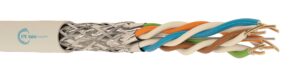
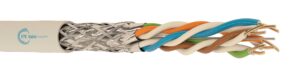
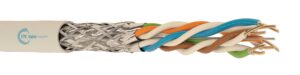
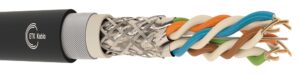
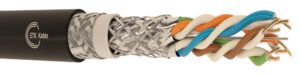
Cat 7A Cable for High-Performance 10 Gigabit Networks
Cat 7A Cable provides highly screened copper connectivity for 10 Gigabit Ethernet, high-density data networks, industrial Ethernet, smart buildings and other demanding structured cabling systems. ETK Kablo manufactures Category 7A cables with S/FTP shielding in PVC, LSOH and outdoor PE constructions together with mechanically protected SWA and SWB designs.
Cat 7A corresponds to Class FA structured cabling performance through 1000 MHz. Each twisted pair receives an individual foil screen, while an overall tinned copper braid surrounds the complete cable core. This S/FTP architecture provides strong protection against electromagnetic interference, internal crosstalk and alien crosstalk.
Selecting Cat 7A should follow the actual network and installation requirements rather than category number alone. Bandwidth, electromagnetic environment, jacket material, outdoor exposure, mechanical protection, PoE loading, connector system and the applicable structured cabling standard should all form part of the specification.
What Is Cat 7A Cable?
Cat 7A is a high-performance balanced copper cabling category associated with ISO/IEC Class FA structured cabling.
The category extends standardized transmission performance to 1000 MHz, providing greater high-frequency headroom than Cat 7 Class F cabling.
Cat 7A supports 10 Gigabit Ethernet in suitable structured cabling systems and is particularly relevant where the project also requires extensive electromagnetic shielding and high-frequency transmission margin.
Typical applications include data centers, industrial networks, broadcasting facilities, laboratories, healthcare environments, commercial infrastructure and smart buildings.
ETK Kablo Cat 7A Cable Range
| Construction | Outer Material / Protection | Typical Selection Logic |
|---|---|---|
| Cat 7A S/FTP PVC | PVC outer jacket | High-performance indoor structured cabling where PVC is permitted |
| Cat 7A S/FTP LSOH | Low-smoke halogen-free outer jacket | Indoor projects requiring LSZH / LSOH material characteristics |
| Cat 7A S/FTP PE | PE outer jacket | Outdoor and external Ethernet infrastructure |
| Cat 7A S/FTP LSOH SWA LSOH | Steel wire armor with halogen-free inner and outer jackets | Mechanically demanding fixed network routes |
| Cat 7A S/FTP LSOH SWB LSOH | Steel wire braid with halogen-free inner and outer jackets | Mechanically reinforced routes requiring braided protection |
Cat 7A S/FTP Cable
S/FTP is the shielding architecture used across the ETK Kablo Cat 7A range.
Each twisted pair receives an individual Al/PET foil screen. A tinned copper braid then surrounds the complete assembled cable core.
The individual foils and overall braid perform complementary functions:
- Individual pair screens increase electrical separation between the four Ethernet pairs
- The overall braid helps protect the complete cable against external electromagnetic interference
- The complete S/FTP architecture helps reduce alien crosstalk in dense cable routes
This shielding system makes Cat 7A particularly suitable for electrically demanding and high-density network environments.
How Cat 7A S/FTP Shielding Works
High-frequency copper networks must control several forms of unwanted signal coupling.
Individual foil screens around the pairs help reduce pair-to-pair interaction inside the cable. The overall copper braid provides an additional conductive barrier between the cable core and the external electromagnetic environment.
This architecture can help control:
- Near-end crosstalk
- Far-end crosstalk
- Alien crosstalk
- Electromagnetic interference
- Radio-frequency interference
However, effective shielding still depends on the complete installation. Compatible screened hardware, correct termination and an appropriate bonding strategy should form part of the cabling design.
1000 MHz Class FA Performance
Cat 7A corresponds to Class FA performance through 1000 MHz.
This standardized frequency range provides greater high-frequency transmission headroom than Cat 7, which corresponds to Class F performance through 600 MHz.
| Category | Performance Class | Nominal Standardized Frequency |
|---|---|---|
| Cat 6A | Class EA | 500 MHz |
| Cat 7 | Class F | 600 MHz |
| Cat 7A | Class FA | 1000 MHz |
Some ETK Kablo Cat 7A technical tables include electrical test data above 1000 MHz. This additional test range should be distinguished from the standardized Class FA category definition.
Cat 7A Cable Tested Beyond 1000 MHz
Selected ETK Kablo Cat 7A technical data includes insertion loss, crosstalk and return-loss measurements through 1200 MHz.
This provides useful additional technical information for buyers evaluating high-frequency cable behavior.
However, Cat 7A should still be specified as a 1000 MHz Class FA structured cabling category. Additional measured data above the standardized category bandwidth does not create a separate Ethernet category.
Cat 7A Cable for 10 Gigabit Ethernet
Cat 7A supports 10GBASE-T 10 Gigabit Ethernet over conventional structured cabling distances when the complete channel meets the applicable requirements.
The cable's additional frequency headroom does not mean that Cat 7A creates a different standardized Ethernet speed from Cat 6A or Cat 7.
All three categories can support 10GBASE-T in appropriate cabling systems. Cat 7A differentiates itself mainly through higher standardized frequency performance and comprehensive S/FTP shielding.
Cat 7A and Alien Crosstalk
Alien crosstalk occurs when a signal from one Ethernet cable couples into a neighboring cable.
This becomes increasingly important in dense pathways where many high-frequency cables run together.
Cat 7A's individual pair foils and overall braid provide substantial electrical isolation, making the construction attractive for high-density installations.
Bundle arrangement, connector design, grounding and installation workmanship still influence the performance of the complete channel.
Solid Copper Cat 7A Cable
ETK Kablo Cat 7A constructions use electrolytic solid copper conductors.
Solid copper provides stable electrical resistance and predictable transmission characteristics for fixed structured cabling installations.
ETK Kablo combines the copper conductors with foamed polyethylene insulation covered by solid polyethylene. This foam-skin insulation architecture supports controlled electrical characteristics across the high Cat 7A frequency range.
Professional buyers should distinguish solid-copper Ethernet cable from copper-clad alternatives when project compliance, transmission performance and remote powering are important.
Cat 7A Electrical Characteristics
ETK Kablo Cat 7A technical data includes several electrical parameters.
These include:
- Conductor resistance
- Insulation resistance
- Mutual capacitance
- Resistance unbalance
- Propagation velocity
- Characteristic impedance
- Insertion loss
- NEXT and PSNEXT
- ELFEXT and PSELFEXT
- Return loss
ETK Kablo Cat 7A products use a nominal characteristic impedance of 100 ohms across their specified high-frequency test range.
Cat 7A PVC Ethernet Cable
Cat 7A S/FTP PVC Cable combines the Class FA S/FTP architecture with a PVC outer jacket.
The ETK Kablo construction uses solid copper conductors, foam-skin polyethylene insulation, individually foil-screened pairs and an overall tinned copper braid.
PVC construction can suit fixed network installations where conventional PVC material is permitted by the project specification.
The exact flame-performance and CPR classification should be confirmed from the applicable product documentation.
Cat 7A LSOH / LSZH Cable
Cat 7A S/FTP LSOH Cable combines high-frequency network performance with a halogen-free outer jacket.
The ETK Kablo construction includes applicable testing for smoke density, flame retardancy, halogen content and corrosive-gas behavior.
This can make LSOH Cat 7A relevant for enclosed environments such as:
- Data centers
- Hospitals
- Airports
- Commercial buildings
- Transportation facilities
- Technical rooms
- Public infrastructure
LSOH or LSZH should not be confused with fire resistance. A halogen-free Ethernet cable does not automatically maintain data transmission during prolonged fire exposure.
Outdoor Cat 7A Cable with PE Jacket
Outdoor Cat 7A Cable combines high-performance Ethernet transmission with an outer construction intended for external environments.
ETK Kablo's Cat 7A S/FTP PE product retains the individually screened pair architecture and overall copper braid while using a polyethylene outer jacket.
Potential applications include:
- Building-to-building Ethernet links
- Campus network infrastructure
- Outdoor industrial Ethernet
- External IP surveillance systems
- Outdoor network extensions
- Smart-building external infrastructure
An outdoor PE jacket addresses environmental exposure but should not automatically be treated as mechanical armor.
Outdoor Cat 7A vs Armored Cat 7A
| Construction Element | Main Function |
|---|---|
| PE Outer Jacket | Environmental protection for outdoor installation |
| Steel Wire Armor | Increased mechanical protection |
| Steel Wire Braid | Braided mechanical reinforcement |
A project can require outdoor suitability, mechanical protection or both. These characteristics should therefore be specified independently.
Armored Cat 7A Cable
ETK Kablo manufactures Cat 7A cables with both Steel Wire Armor (SWA) and Steel Wire Braid (SWB).
The mechanically protected products retain the underlying S/FTP network architecture. Individual pair foils and the overall tinned copper braid provide the electrical shielding, while the steel layer adds physical protection.
The armored constructions also use inner and outer halogen-free jackets in the ETK Kablo range.
Cat 7A SWA Cable
Cat 7A S/FTP LSOH SWA LSOH adds steel wire armor around the screened Ethernet core.
The construction can suit fixed industrial and infrastructure routes where the cable requires increased resistance against mechanical stress.
SWA does not replace the Ethernet screen. The individual foil screens and overall copper braid remain responsible for electromagnetic performance.
Cat 7A SWB Cable
Cat 7A S/FTP LSOH SWB LSOH uses steel wire braiding as its mechanical protection layer.
The cable retains the same basic S/FTP architecture, with foil around each pair and an overall tinned copper braid before the mechanical layers.
SWB provides a different mechanical construction from conventional steel wire armor and can offer a different flexibility profile according to the installation requirements.
SWA vs SWB Cat 7A Cable
| Protection Type | Main Construction Concept | Main Function |
|---|---|---|
| SWA | Steel wire armor | Strong mechanical protection for demanding fixed routes |
| SWB | Steel wire braid | Braided mechanical reinforcement |
The correct option should follow the actual cable route, mechanical exposure and bending requirements.
Shielding vs Mechanical Armor
| Layer | Main Purpose |
|---|---|
| Individual Al/PET Foil Screens | Pair isolation and electromagnetic shielding |
| Overall Tinned Copper Braid | Overall electromagnetic protection |
| Steel Wire Armor | Mechanical protection |
| Steel Wire Braid | Mechanical reinforcement |
This distinction is important during procurement. A Cat 7A cable can contain several metallic layers, but each layer performs a different technical function.
Cat 7A Cable for Data Centers
Cat 7A can provide a highly screened copper-cabling platform for demanding data-center environments.
Its S/FTP architecture provides strong pair isolation and protection against electromagnetic noise in dense network pathways.
Potential applications include:
- 10 GbE server connections
- Network-management infrastructure
- Equipment and appliance connections
- High-density technical rooms
- Shielded copper access networks
Cat 6A already provides standardized full-distance 10GBASE-T and remains a major mainstream data-center option. Cat 7A becomes especially relevant where the project calls for Class FA performance and additional high-frequency transmission headroom.
Cat 7A Cable for Industrial Ethernet
Industrial environments can expose copper Ethernet cables to motors, drives, switchgear and other sources of electromagnetic interference.
Cat 7A S/FTP architecture provides extensive shielding for these routes.
ETK Kablo also allows industrial projects to combine Class FA performance with PE outer jackets or SWA/SWB mechanical protection where the physical installation requires it.
Cat 7A Cable for Broadcast and AV over IP
Broadcast and professional AV systems can generate high network traffic while operating near electrically active equipment.
Cat 7A's S/FTP construction can provide a stable shielded copper path for compatible AV-over-IP and media-network applications.
The equipment specification and network architecture should still determine the required Ethernet category and complete channel design.
Cat 7A Cable for Smart Buildings
Smart buildings can combine high-density IP networks, Wi-Fi infrastructure, security systems, building-management interfaces and other digital services.
Cat 7A provides a high-frequency shielded copper option for projects that require substantial transmission margin and electromagnetic protection.
Different areas of the same building may still justify different Ethernet categories according to bandwidth, cost and installation requirements.
Cat 7A Cable for Power over Ethernet
Cat 7A copper cabling can form part of compatible Power over Ethernet systems.
PoE selection should consider electrical characteristics separately from high-frequency shielding.
Important factors include:
- Conductor resistance
- Resistance unbalance
- Bundle size
- Ambient temperature
- Pathway conditions
- Required PoE level
- Connector compatibility
The heavy S/FTP shielding helps electromagnetic performance but does not eliminate the need to assess thermal and electrical loading.
Cat 6A vs Cat 7A Cable
| Characteristic | Cat 6A | Cat 7A |
|---|---|---|
| Performance Class | Class EA | Class FA |
| Nominal Frequency | 500 MHz | 1000 MHz |
| 10GBASE-T | Yes | Yes |
| Screening Options | Several unshielded and screened architectures | Highly screened S/FTP architecture in the ETK Kablo range |
| Typical Selection Direction | Mainstream high-performance 10 GbE structured cabling | Class FA projects requiring greater frequency headroom and shielding |
Cat 7A provides greater standardized frequency performance, but Cat 6A can already satisfy many 10 Gigabit Ethernet projects. The correct category should follow the project requirements rather than assuming that the higher category number is always necessary.
Cat 7 vs Cat 7A Cable
| Characteristic | Cat 7 | Cat 7A |
|---|---|---|
| Performance Class | Class F | Class FA |
| Nominal Frequency | 600 MHz | 1000 MHz |
| Typical ETK Shielding | S/FTP | S/FTP |
| 10 Gigabit Ethernet | Yes | Yes |
| Main Difference | High-performance Class F cabling | Greater standardized high-frequency headroom |
Cat 7A therefore extends frequency performance rather than introducing a different standard Ethernet data rate.
Cat 7A vs Cat 8 Cable
Cat 7A and Cat 8 should not be treated as equivalent categories.
Cat 7A is associated with Class FA structured cabling and supports 10GBASE-T over conventional horizontal cabling distances.
Cat 8 is a separate higher-frequency category developed for 25GBASE-T and 40GBASE-T over substantially shorter balanced-copper channel lengths.
Where the project requires Cat 8, a Cat 7A cable should not automatically be represented as a substitute solely because additional test data extends above the Class FA frequency limit.
Cat 7A Standards and Testing
Cat 7A is primarily associated with ISO/IEC and European Class FA structured-cabling requirements.
ETK Kablo individual Cat 7A product datasheets include manufacturing and electrical test references.
Selected Cat 7A technical data includes electrical measurements through 1200 MHz, including insertion loss, NEXT, power-sum NEXT, far-end crosstalk and return loss.
Procurement teams should identify the required project standard and verify the applicable product documentation rather than relying only on a commercial category name.
Cat 7A CPR Classification
Ethernet category and CPR reaction-to-fire performance describe different cable characteristics.
Cat 7A defines data-transmission performance, while CPR Euroclasses address reaction-to-fire characteristics of the exact tested construction.
Different ETK Kablo Cat 7A products can carry different CPR classifications. Therefore, one Euroclass should not automatically be applied to every PVC, LSOH, PE or armored Cat 7A cable.
Buyers should verify the Declaration of Performance for the exact cable being supplied.
How to Specify a Cat 7A Cable
A complete Cat 7A RFQ should define the network requirement and the physical construction separately.
| Specification Item | Information to Provide |
|---|---|
| Category | Cat 7A / Class FA |
| Network Requirement | 10GBASE-T or project-specific Ethernet application |
| Shielding | S/FTP |
| Conductor | Solid copper and required project specification |
| Outer Jacket | PVC, LSOH or PE |
| Installation Environment | Indoor, outdoor, industrial, data center or other route |
| Mechanical Protection | Standard, SWA or SWB where required |
| PoE Requirement | Required remote-powering application where applicable |
| CPR Requirement | Required Euroclass and additional classifications |
| Packing Length | Required coil or drum length |
| Documentation | Datasheet, electrical test results, DoP and project documentation |
Why Choose ETK Kablo for Cat 7A Cable?
ETK Kablo manufactures Cat 7A cable across indoor, outdoor and mechanically protected S/FTP constructions.
The portfolio includes PVC, LSOH and PE outer-jacket options together with steel-wire-armored and steel-wire-braided designs. All ETK Kablo Cat 7A products use individually foil-screened pairs and an overall tinned copper braid.
This range allows network contractors, industrial facilities, data-center projects, distributors and infrastructure buyers to combine Class FA transmission performance with the material and mechanical construction required by the route.
ETK Kablo can evaluate jacket material, mechanical protection, PoE requirements, CPR classification, packing length and project documentation together during the quotation process.
Frequently Asked Questions About Cat 7A Cable
What is Cat 7A cable?
Cat 7A is a high-performance balanced copper cable category associated with ISO/IEC Class FA structured cabling and standardized transmission performance through 1000 MHz.
What speed does Cat 7A support?
Cat 7A supports 10 Gigabit Ethernet in suitable structured cabling systems. Higher frequency capability should not be confused with a different standardized Ethernet data rate.
What frequency is Cat 7A cable?
Cat 7A corresponds to Class FA performance through 1000 MHz. Selected ETK Kablo technical data also includes additional electrical test results through 1200 MHz.
What is Cat 7A S/FTP?
S/FTP Cat 7A uses individual foil screens around each twisted pair together with an overall tinned copper braid around the complete cable core.
Is Cat 7A shielded?
Yes. All ETK Kablo Cat 7A products use S/FTP architecture.
What is the difference between Cat 7 and Cat 7A?
Cat 7 corresponds to Class F performance through 600 MHz, while Cat 7A corresponds to Class FA performance through 1000 MHz. Both ETK Kablo ranges use S/FTP shielding.
Is Cat 7A better than Cat 6A?
Cat 7A provides higher standardized frequency performance and extensive S/FTP shielding. Cat 6A already supports full-distance 10GBASE-T and can remain the more appropriate solution where Class FA performance is unnecessary.
Can Cat 7A cable be installed outdoors?
Yes, when the exact construction is designed for outdoor use. ETK Kablo manufactures Cat 7A S/FTP PE cable for external network routes.
Does ETK Kablo manufacture armored Cat 7A cable?
Yes. ETK Kablo manufactures Cat 7A S/FTP cables with Steel Wire Armor and Steel Wire Braid for routes requiring additional mechanical protection.
Is LSOH Cat 7A fire resistant?
No. LSOH describes smoke and halogen characteristics of cable materials. Fire-resistant circuit integrity requires a separately designed and tested cable.
Is Cat 7A the same as Cat 8?
No. Cat 7A is a Class FA cabling category designed around high-performance 10 Gigabit structured cabling. Cat 8 is a separate category intended for higher-rate 25/40 Gigabit balanced-copper applications over shorter channel distances.
What information should I provide when requesting a quotation?
Provide the required Cat 7A construction, PVC/LSOH/PE jacket, indoor or outdoor environment, SWA or SWB requirement where applicable, PoE requirement, CPR classification, packing length, quantity and required project documentation.


