





 President’s Message
Indoor/Outdoor Fiber Optic Cable
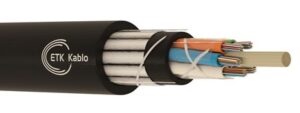
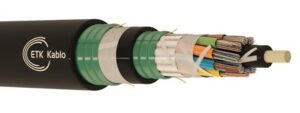
Indoor/Outdoor Fiber Optic Cable for Mixed-Environment Networks
Indoor/Outdoor Fiber Optic Cable provides a practical solution for network routes that pass between external infrastructure and indoor areas. ETK Kablo manufactures indoor/outdoor fiber optic cables for telecommunications, campus networks, industrial facilities, data infrastructure, building connections and other projects where one cable route must operate across different environmental conditions.
Unlike a cable designed exclusively for indoor or outdoor installation, an indoor/outdoor construction can combine environmental protection with the fire-performance, mechanical and installation characteristics required by the project. The exact sheath, armor, strength member, water-blocking system and fire classification should therefore be selected according to the actual installation route.
What Is an Indoor/Outdoor Fiber Optic Cable?
An indoor/outdoor fiber optic cable is designed for network routes that extend through both external and internal areas. Typical examples include connections from an outdoor duct into a building, links between buildings on the same campus, industrial facilities with external and internal cable routes, and telecom infrastructure that enters equipment or technical rooms.
Using one suitable construction across the route can reduce the need for unnecessary cable transitions. However, the term indoor/outdoor does not mean that every cable construction is automatically suitable for every indoor or outdoor environment. The cable must still meet the relevant environmental, mechanical and fire-performance requirements of the project.
Where Are Indoor/Outdoor Fiber Optic Cables Used?
Indoor/outdoor fiber cables are commonly selected where the network crosses between buildings, ducts, technical rooms and other mixed environments. They can support telecommunications backbones, campus connections, enterprise networks, industrial communication systems and FTTB or FTTX infrastructure.
| Application | Typical Requirement |
|---|---|
| Building-to-Building Links | Outdoor environmental protection combined with suitable building-entry performance |
| Campus Networks | Long cable routes between external ducts and internal technical areas |
| Industrial Facilities | Mechanical protection, moisture resistance and reliable optical transmission |
| Telecommunication Networks | Single-mode fiber, scalable fiber counts and durable cable construction |
| Data Infrastructure | Reliable transition between outdoor backbone routes and indoor network areas |
| FTTB / FTTX Networks | Flexible routing from access infrastructure toward buildings and distribution points |
Single-Mode and Multimode Fiber Options
ETK Kablo can manufacture indoor/outdoor fiber optic cable constructions with both single-mode and multimode optical fibers, depending on the cable design and project specification.
Single-mode options can include G.652.D, G.657.A1 and G.657.A2. These fiber types support telecom, backbone, access and long-distance data transmission applications. G.657 fibers can also provide improved bending performance where cable routes include tighter installation conditions.
For shorter-distance and high-bandwidth network applications, multimode options can include OM1, OM2, OM3, OM4 and OM5. The correct fiber type should be selected according to transmission distance, network equipment, bandwidth requirements and system design.
Loose Tube Fiber Optic Cable Constructions
Many indoor/outdoor network applications use loose tube fiber optic cable constructions because they provide mechanical protection and environmental stability while supporting different fiber counts.
Depending on the project, ETK Kablo can manufacture central loose tube and multi loose tube designs. Central loose tube constructions provide a compact solution for many telecommunications and building-to-building links. Multi loose tube designs can support larger fiber counts and more complex backbone infrastructures.
Water-blocking elements, strength members, sheath materials and additional mechanical protection can vary according to the selected cable construction.
Metallic and Non-Metallic Armored Fiber Optic Cable Options
Some indoor/outdoor routes require additional mechanical protection. ETK Kablo therefore offers both metallic and non-metallic protected constructions within this product family.
| Construction | Main Characteristic | Typical Consideration |
|---|---|---|
| Metallic Armored Fiber Optic Cable | Metal-based mechanical protection | Suitable where higher resistance to impact, crushing or external mechanical forces is required |
| Non-Metallic Armored Fiber Optic Cable | Dielectric mechanical reinforcement | Useful where electrical isolation, reduced conductivity or non-metallic protection is required |
The correct armor type depends on installation conditions, mechanical loads, grounding requirements, electrical environment and project specifications. For this reason, metallic and non-metallic constructions should not be treated as interchangeable alternatives.
Sheath Materials and Environmental Protection
Indoor/outdoor fiber optic cable design must consider both environmental exposure and the requirements of the indoor section of the route. Outdoor areas can expose cables to UV radiation, moisture, temperature changes and mechanical stress. Indoor areas may introduce additional flame, smoke and halogen requirements.
Depending on the cable construction, ETK Kablo can offer sheath and protection systems developed for these different conditions. PE-based constructions are widely used for outdoor protection, while LSZH materials can support projects requiring reduced smoke and halogen emissions.
However, sheath material alone does not determine whether a cable is suitable for a specific installation. The complete cable construction and the applicable project or regulatory requirements must be evaluated together.
Fire Performance and CPR Requirements
Projects that bring fiber optic cables into buildings may specify flame propagation, smoke, halogen or CPR requirements. These requirements vary by country, installation type and building classification.
Selected ETK Kablo constructions can be produced for specific fire-performance requirements. Relevant specifications may include flame-propagation testing, low-smoke and halogen-free performance or CPR classification where required.
CPR Euroclass ratings apply to the specific tested cable construction. Therefore, a classification such as B2ca, Cca or another Euroclass should only be specified when that exact construction has the corresponding certification and Declaration of Performance.
Standards for Indoor/Outdoor Fiber Optic Cables
Depending on the cable and project, indoor/outdoor fiber optic cables may be designed or tested according to relevant international requirements such as IEC optical cable standards and applicable fiber specifications.
| Requirement | Relevant Area |
|---|---|
| IEC 60794 Series | Optical fiber cable construction and mechanical/environmental testing |
| ITU-T G.652 | Single-mode optical fiber characteristics |
| ITU-T G.657 | Bend-insensitive single-mode optical fibers |
| IEC 60332 Series | Flame propagation where applicable |
| IEC 60754 | Halogen gas characteristics where applicable |
| IEC 61034 | Smoke density where applicable |
| EN 50575 / CPR | Reaction-to-fire classification for applicable construction products |
The applicable standards depend on the selected construction and project specification. Not every standard or fire classification applies automatically to every indoor/outdoor fiber optic cable.
How to Specify an Indoor/Outdoor Fiber Optic Cable
Procurement teams and project engineers should define the complete route before selecting the cable. This makes it easier to determine whether the project requires a standard non-armored construction, additional mechanical protection, a dielectric design or a specific fire-performance classification.
| Specification Item | Examples |
|---|---|
| Fiber Type | G.652.D, G.657.A1, G.657.A2, OM1, OM2, OM3, OM4 or OM5 |
| Fiber Count | According to network capacity and future expansion requirements |
| Cable Construction | Central loose tube or multi loose tube |
| Mechanical Protection | Unarmored, metallic armored or non-metallic protected construction |
| Installation Route | Duct, tray, conduit, building entry or mixed indoor/outdoor route |
| Sheath Requirement | PE, LSZH or another project-specific material |
| Fire Performance | Project-specific flame, smoke, halogen or CPR requirement |
| Environmental Conditions | UV exposure, moisture, temperature and mechanical load |
Why Choose ETK Kablo for Indoor/Outdoor Fiber Optic Cables?
ETK Kablo has manufactured fiber optic cables since 2001 and supplies cable products to customers in more than 120 countries. The company manufactures a broad range of single-mode, multimode, armored, non-metallic, loose tube and project-specific fiber optic cable constructions.
For indoor/outdoor applications, ETK Kablo can evaluate the complete installation route rather than selecting a cable from fiber type alone. Mechanical protection, sheath design, fiber count, fire performance and environmental requirements can all influence the final cable construction.
This engineering approach allows distributors, contractors, telecom companies, system integrators and project buyers to define the cable according to the actual network environment and technical specification.
Frequently Asked Questions About Indoor/Outdoor Fiber Optic Cable
What is an indoor/outdoor fiber optic cable?
An indoor/outdoor fiber optic cable is designed for network routes that include both external and internal sections. Depending on its construction, it can provide environmental protection for outdoor routing while also addressing the installation and fire-performance requirements of the indoor portion of the route.
Can the same fiber optic cable be used indoors and outdoors?
Yes, when the cable has been specifically designed and approved for the conditions of both parts of the route. A standard outdoor PE cable should not automatically be considered suitable for unrestricted indoor installation, and a standard indoor cable should not automatically be used outdoors.
What is the difference between indoor, outdoor and indoor/outdoor fiber optic cable?
Indoor cables primarily address building installation requirements, while outdoor cables focus on environmental protection against factors such as moisture and UV exposure. Indoor/outdoor cables combine characteristics required for routes that transition between these environments.
Is indoor/outdoor fiber optic cable available with armor?
Yes. ETK Kablo offers both metallic and non-metallic protected fiber optic cable constructions. The correct option depends on mechanical loads, electrical conditions and the installation environment.
Can indoor/outdoor fiber optic cable use single-mode fiber?
Yes. Depending on the construction, ETK Kablo can manufacture indoor/outdoor cables using G.652.D, G.657.A1 or G.657.A2 single-mode fibers.
Can indoor/outdoor fiber optic cable use multimode fiber?
Yes. OM1, OM2, OM3, OM4 and OM5 multimode fiber options can be used for suitable constructions and project requirements.
Does every indoor/outdoor fiber optic cable have a CPR classification?
No. CPR classification applies to specific tested cable constructions. The required Euroclass should be defined according to the project and verified for the exact cable being supplied.
What information should be provided when requesting a quotation?
Provide the fiber type, fiber count, cable construction, installation route, required mechanical protection, sheath material, applicable standards, fire-performance requirements, quantity and any project-specific environmental conditions.


