





 President’s Message
LSZH Signal Control Cables
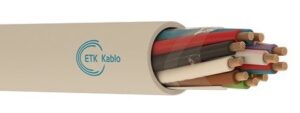
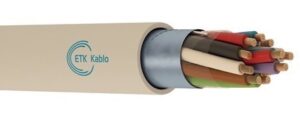
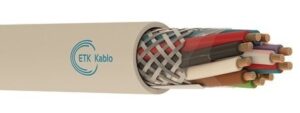
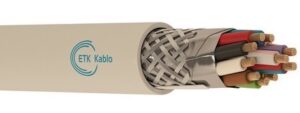
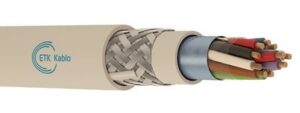
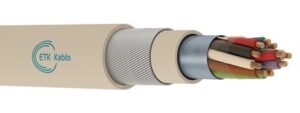
LSZH Signal Control Cable for Industrial Automation
LSZH Signal Control Cable provides low-voltage signal transmission for automation, monitoring and control systems while using halogen-free material systems designed for low smoke emission during combustion. ETK Kablo manufactures LSZH signal control cables in unscreened, foil-screened, braid-screened and combined-screen constructions together with steel wire braided and steel wire armored designs.
The ETK Kablo portfolio includes widely specified cable families such as LIHH, LIHCH, LIH(St)H and LIH(St)CH together with selected LI2Y constructions. TP/TT and PiMF/TiMF versions provide additional conductor-grouping and screening options for projects requiring greater circuit separation.
LSZH, LSOH and LS0H are commonly used commercial terms for low-smoke halogen-free cable constructions. However, LSZH does not automatically mean fire resistant. Where a circuit must maintain integrity during fire exposure, the project should specify a dedicated FE180, PH120 or other applicable fire-resistant construction.
What Is an LSZH Signal Control Cable?
An LSZH signal control cable is a low-voltage cable used to transmit analogue or digital signals between sensors, actuators, controllers, monitoring devices and other automation equipment while using halogen-free cable materials.
Low-smoke halogen-free constructions can reduce smoke density and avoid halogen content associated with conventional halogen-containing materials during combustion. This can be important in occupied buildings, transportation infrastructure and enclosed technical environments.
ETK Kablo combines LSZH material systems with several electrical screening architectures, allowing the cable to address both fire-material requirements and electromagnetic compatibility.
LSZH, LSOH, LS0H and HFFR Terminology
Several terms appear in international cable specifications for halogen-free low-smoke constructions.
| Term | Common Meaning |
|---|---|
| LSZH | Low Smoke Zero Halogen |
| LSOH | Low Smoke Zero Halogen / Low Smoke Halogen Free terminology |
| LS0H | Alternative notation using the number zero |
| HFFR | Halogen Free Flame Retardant material terminology |
The exact test requirements remain more important than the abbreviation itself. Project specifications should define the required smoke, halogen, corrosive-gas and flame-performance standards for the selected cable.
ETK Kablo LSZH Signal Control Cable Range
| Category | Main Electrical / Mechanical Feature | Typical Cable Families |
|---|---|---|
| Unscreened | No dedicated metallic electromagnetic screen | LIHH, LIHH-TP/TT |
| Foil Screened | Overall Al/PET foil screen | LIH(St)H, LI2Y(St)H and related variants |
| Braid Screened | Tinned copper braid screen | LIHCH, LI2YCH and related variants |
| Foil + Braid Screened | Combined foil and copper braid | LIH(St)CH, LI2Y(St)CH and related variants |
| Steel Wire Braided | Mechanical steel-wire braid with selected electrical screens | Foil, braid and foil + braid subfamilies |
| Steel Wire Armored | Steel wire armor with selected electrical screens | Foil, braid and foil + braid subfamilies |
LIHH Unscreened LSZH Signal Control Cable
LIHH is the principal unscreened halogen-free signal cable family in the ETK Kablo portfolio.
The construction uses flexible stranded copper conductors together with halogen-free insulation and an outer halogen-free jacket. Standard LIHH does not contain a dedicated metallic electromagnetic screen.
This makes LIHH suitable for signal and control circuits where the project requires LSZH materials but the electromagnetic environment does not require additional foil or braid screening.
ETK Kablo also manufactures LIHH-TP/TT constructions for projects requiring twisted-pair or twisted-triad conductor organization.
LIH(St)H Foil Screened LSZH Signal Cable
LIH(St)H combines halogen-free materials with an overall foil screen.
The foil provides broad electromagnetic coverage around the assembled cable core, while a tinned copper earthing wire supports screen termination.
This architecture can suit low-voltage signal circuits where the project requires both LSZH materials and overall electromagnetic screening.
ETK Kablo also offers LIH(St)H-TP/TT and PiMF/TiMF versions for projects requiring additional conductor organization or circuit separation.
LI2Y(St)H PE-Insulated LSZH Signal Cable
LI2Y(St)H demonstrates an important distinction within the LSZH category.
The ETK Kablo construction uses flexible copper conductors with solid polyethylene insulation, an overall Al/PET foil screen and a halogen-free outer jacket.
Therefore, an LSZH cable does not necessarily use halogen-free compound as the conductor insulation itself. The term can also describe a cable architecture that combines another halogen-free insulation material, such as polyethylene, with a halogen-free outer sheath.
The exact insulation and jacket materials should always be identified from the complete cable code and technical datasheet.
LIHCH Braid Screened LSZH Signal Control Cable
LIHCH combines halogen-free insulation and sheath materials with a tinned copper braid screen.
The braid creates a flexible conductive layer around the cable core and helps protect low-voltage signals against electromagnetic interference from nearby motors, drives, switching equipment and power circuits.
LIHCH is therefore one of the principal ETK Kablo cable families for screened signal transmission where both EMC performance and LSZH materials form part of the project specification.
ETK Kablo also manufactures LIHCH-TP/TT versions for pair- or triad-based signal architectures.
LI2YCH Braid Screened Halogen-Free Signal Cable
LI2YCH provides another braid-screened construction within the LSZH signal cable range.
The LI2Y designation identifies a different conductor-insulation concept from conventional LIHCH, while the copper braid provides overall electromagnetic screening and the H designation identifies the halogen-free outer-jacket direction.
This allows project engineers to select the insulation system independently from the screening and outer-jacket requirements.
LIH(St)CH Foil and Braid Screened LSZH Cable
LIH(St)CH combines overall foil screening with a tinned copper braid.
The foil provides broad metallic coverage around the cable core, while the braid adds a second conductive screening layer.
This dual-screen architecture can suit electrically demanding industrial environments where sensitive signals run close to motors, variable-frequency drives or power circuits.
ETK Kablo also manufactures TP/TT and PiMF/TiMF versions within the LIH(St)CH family.
LI2Y(St)CH Combined-Screen Signal Cable
LI2Y(St)CH combines the LI2Y insulation concept with foil and copper-braid screening together with a halogen-free outer jacket.
This construction provides another option for projects requiring strong electromagnetic protection together with specific insulation characteristics.
The electrical screen and halogen-free material system perform separate functions and should both be defined in the project specification.
Unscreened vs Foil vs Braid vs Foil + Braid LSZH Cable
| Screening Architecture | Typical ETK Family | Main Function |
|---|---|---|
| Unscreened | LIHH | Signal transmission where additional EMI screening is unnecessary |
| Foil Screen | LIH(St)H | Compact overall electromagnetic shielding |
| Copper Braid | LIHCH | Flexible and robust overall electromagnetic shielding |
| Foil + Copper Braid | LIH(St)CH | Combined overall screening for more demanding EMC environments |
The most heavily screened construction is not automatically the correct choice. Additional screens increase diameter, weight, termination work and cost.
The electromagnetic environment and signal sensitivity should determine the required screen architecture.
Foil Screen vs Copper Braid in LSZH Signal Cable
A foil screen uses a thin conductive laminate around the cable core and provides high surface coverage with relatively little additional thickness.
A tinned copper braid uses many fine conductive wires woven around the cable core. This produces a flexible conductive screen with robust electrical continuity.
Combined-screen constructions use both foil and braid where the project requires additional electromagnetic protection.
The quality of grounding and screen termination remains important regardless of screen type.
TP and TT LSZH Signal Control Cable
TP and TT refer to twisted-pair and twisted-triad conductor arrangements.
Twisting conductors can improve electrical balance and reduce unwanted electromagnetic coupling.
Pair or triad organization also allows engineers to assign conductor groups to individual sensors, measurement loops and control circuits.
ETK Kablo manufactures TP/TT constructions within several LSZH signal cable families.
PiMF and TiMF LSZH Signal Cable
PiMF describes pairs individually screened in metallic foil, while TiMF describes individually screened triads.
Each pair or triad receives its own screen instead of relying only on one common overall screen.
This architecture provides additional circuit-to-circuit separation where multiple sensitive signals share the same cable.
Selected ETK Kablo LIH(St)H and LIH(St)CH families include PiMF/TiMF constructions.
Individual Screening vs Overall Screening
| Screening Concept | Main Purpose |
|---|---|
| Overall Foil | Protect the complete cable core against external electromagnetic interference |
| Overall Copper Braid | Provide flexible overall electromagnetic shielding |
| Foil + Braid | Provide two overall screening layers |
| PiMF / TiMF | Increase electrical separation between individual signal circuits |
Individual screening and overall screening solve related but different EMC problems. A project can require either architecture or a combination of both.
Steel Wire Braided LSZH Signal Control Cable
Some installations require mechanical reinforcement in addition to low-smoke halogen-free materials and electromagnetic screening.
ETK Kablo provides Steel Wire Braided LSZH Signal Control Cable constructions.
These constructions are available with:
- Foil Screened
- Braid Screened
- Foil + Braid Screened
This architecture allows engineers to specify the electrical screen separately from the steel-wire mechanical layer.
Steel Wire Armored LSZH Signal Control Cable
ETK Kablo also manufactures Steel Wire Armored LSZH Signal Control Cables for demanding fixed routes requiring increased mechanical protection.
The SWA range includes separate foil-screened, braid-screened and combined foil + braid constructions.
Steel wire armor protects the cable against physical stress. It does not replace the foil or copper-braid screen used for electromagnetic protection.
Metallic armor should be bonded and grounded according to the applicable installation design.
Signal Screening vs Mechanical Protection
| Construction Element | Main Purpose |
|---|---|
| Al/PET Foil | Electromagnetic screening |
| Tinned Copper Braid | Electromagnetic screening |
| Foil + Copper Braid | Combined electromagnetic screening |
| Steel Wire Braid | Mechanical reinforcement |
| Steel Wire Armor | Mechanical protection |
A cable can therefore contain several metallic layers serving completely different purposes. The RFQ should identify both EMC requirements and mechanical protection separately.
LSZH Signal Cable Fire Performance
ETK Kablo LSZH signal cable products include applicable testing for smoke density, halogen content, corrosive-gas behavior and flame performance according to the exact construction.
Typical test families used on applicable ETK Kablo LSZH signal products include:
- IEC 61034 for smoke density
- IEC 60754-1 for halogen content
- IEC 60754-2 for corrosive-gas characteristics
- IEC 60332-1-2 for single-cable flame retardancy
- IEC 60332-3-24 on applicable constructions for flame propagation
The exact test package should always be confirmed from the selected product datasheet rather than automatically applied to every cable in the category.
LSZH Does Not Mean Fire Resistant
This distinction is particularly important for life-safety projects.
An LSZH cable addresses material behavior such as smoke, halogen and corrosive-gas characteristics during combustion.
A fire-resistant cable is specifically designed and tested to maintain electrical circuit integrity for a defined period under fire-test conditions.
Standard LIHH, LIHCH, LIH(St)H and LIH(St)CH signal cables should therefore not automatically be described as FE180 or PH120 cables.
ETK Kablo manufactures separate fire-resistant LIH-series constructions where FE180 and PH120 circuit integrity is required.
LSZH vs PVC Signal Control Cable
| Characteristic | LSZH Signal Control Cable | PVC Signal Control Cable |
|---|---|---|
| Typical ETK Families | LIHH, LIHCH, LIH(St)H, LIH(St)CH | LIYY, LIYCY, LIY(St)Y, LIY(St)CY |
| Outer Jacket Direction | Halogen-free / low-smoke material | PVC |
| Smoke / Halogen Requirement | Designed for specified low-smoke and halogen-free performance | Conventional PVC behavior according to the exact construction |
| Screening Options | Unscreened, foil, braid and combined | Unscreened, foil, braid and combined |
| SWB / SWA Options | Available | Available |
LSZH should be selected where the project specifically requires low-smoke halogen-free materials. PVC can remain technically appropriate where the project specification permits it.
The correct choice depends on building requirements, installation environment, fire strategy and project documentation rather than a simple assumption that one material system is universally superior.
LSZH Signal Cable for Public Buildings
Public and highly occupied buildings can place greater emphasis on smoke and corrosive-gas behavior during a fire.
LSZH signal control cable can therefore be relevant for installations such as:
- Hospitals
- Airports
- Schools and universities
- Shopping centers
- High-rise buildings
- Government buildings
- Hotels
- Large commercial facilities
The required fire classification should still follow the exact building regulation and project specification.
LSZH Signal Cable for Railway, Metro and Tunnel Projects
Transportation infrastructure often combines enclosed evacuation environments with extensive signalling, automation and monitoring systems.
LSZH signal cables can reduce smoke and halogen-related risks compared with conventional halogen-containing materials when the selected construction meets the required project tests.
Railway, metro and tunnel projects can also require screening, steel mechanical protection or separate fire-resistant circuit-integrity performance.
These requirements should be defined independently rather than assuming that LSZH alone satisfies the complete fire strategy.
LSZH Signal Cable for Industrial Automation
Industrial automation systems rely on stable low-voltage communication between field devices and control equipment.
Applications can include:
- PLC input and output circuits
- Sensors
- Actuators and valves
- Machine monitoring systems
- Process-control signals
- Control panels
- HVAC automation
- Building-management systems
- Alarm and monitoring circuits
- Industrial electronic equipment
The electromagnetic environment should determine whether the cable remains unscreened or uses foil, braid, combined or individual screening.
LSZH Signal Cable for BMS and HVAC
Building-management and HVAC systems can contain numerous low-voltage sensors, controllers, actuators and monitoring circuits.
LIHH can provide an unscreened solution where electromagnetic interference is limited, while LIH(St)H, LIHCH and LIH(St)CH offer progressively different screening architectures.
The building fire strategy can also make LSZH materials relevant in occupied commercial and public environments.
LSZH Signal Cable for Data Centers and Technical Rooms
Data centers and technical rooms contain sensitive electronics together with dense electrical infrastructure.
LSZH signal control cables can support monitoring, BMS, alarm and automation circuits while addressing project-specific smoke and halogen requirements.
Where electromagnetic interference is significant, screened LIH-series constructions can provide additional signal protection.
The exact cable should follow the signal type rather than treating every low-voltage connection in a data center as an Ethernet data-cabling application.
LSZH Signal Control Cable vs Control Cable
Signal control cable and industrial control cable serve related but different functions within automation systems.
| Characteristic | LSZH Signal Control Cable | LSZH Control Cable |
|---|---|---|
| Typical ETK Families | LIHH, LIHCH, LIH(St)H, LIH(St)CH | HSLH, HSLCH, HSLHCH and related constructions |
| Main Focus | Low-level analogue and digital signals | Machinery and multi-core industrial control circuits |
| Screening Options | Extensive foil, braid, combined and individual-screen architectures | Screened and unscreened designs according to construction |
The actual circuit function should determine which ETK Kablo product family is appropriate.
LSZH Signal Control Cable vs Instrumentation Cable
Instrumentation cable is designed around process-measurement and instrumentation circuits and commonly uses defined pairs, triads and individual screens.
ETK Kablo instrumentation cables include RE-series architectures, while the LSZH Signal Control Cable range primarily contains flexible LI-series signal constructions.
A project specification calling for an RE-series instrumentation cable should not automatically be substituted with LIHH or LIHCH solely because the conductor size appears similar.
Operating Voltage and Conductor Size
Electrical ratings vary across the ETK Kablo LSZH signal cable portfolio.
For example, selected LIHCH and LIH(St)CH constructions have 250 V DC operating ratings for smaller conductor cross-sections such as 0.22, 0.25 and 0.34 mm², while larger conductor sizes are rated 300/500 V.
Therefore, one blanket 300/500 V rating should not be applied to every product and conductor size in the LSZH Signal Control Cable category.
The exact conductor cross-section, operating voltage, capacitance and insulation resistance should be checked from the selected product datasheet.
Flexible Cable Does Not Automatically Mean Continuous-Flex Cable
Many ETK Kablo LI-series products use Class 5 stranded copper conductors, which provide installation flexibility.
However, flexible conductor construction does not automatically qualify a cable for continuous high-cycle drag-chain, robotic or torsional movement.
Projects involving repeated dynamic movement should specify the motion requirement separately and confirm that the exact cable is designed for that duty.
CPR Requirements for LSZH Signal Cable
LSZH terminology and CPR Euroclass describe different aspects of cable fire behavior.
LSZH identifies the material direction, while CPR classifications describe the reaction-to-fire performance of an exact tested construction.
ETK Kablo holds Declaration of Performance documentation for specific signal cable products. One CPR class should not automatically be applied to every LIHH, LIHCH, screened, SWA or SWB construction.
Buyers should verify the required Euroclass and applicable DoP for the exact product being supplied.
How to Specify an LSZH Signal Control Cable
A complete RFQ should define the signal, material, screening and mechanical requirements separately.
| Specification Item | Information to Provide |
|---|---|
| Cable Family | LIHH, LIHCH, LIH(St)H, LIH(St)CH, LI2Y variant or required equivalent |
| Conductor Arrangement | Multi-core, TP/TT or PiMF/TiMF |
| Conductor Cross-Section | Required mm² size |
| Insulation | Halogen-free compound, PE or construction-specific requirement |
| Screening | Unscreened, foil, copper braid, foil + braid or individual screens |
| Outer Jacket | LSZH / halogen-free |
| Mechanical Protection | Standard, steel wire braid or steel wire armor |
| Operating Voltage | Required electrical rating |
| Fire Performance | Required smoke, halogen, flame and CPR characteristics |
| Circuit Integrity | FE180 / PH120 only where separately required |
| Installation Environment | Building, industrial plant, transport infrastructure or other route |
| Documentation | Datasheet, DoP where applicable, test documents and project certificates |
Why Choose ETK Kablo for LSZH Signal Control Cable?
ETK Kablo manufactures LSZH signal control cables across a broad range of conductor grouping, electromagnetic screening and mechanical-protection architectures.
The portfolio includes LIHH unscreened cables, LIH(St)H foil-screened designs, LIHCH braid-screened products, LIH(St)CH combined-screen constructions and selected LI2Y, TP/TT and PiMF/TiMF variants.
Steel wire braided and steel wire armored families extend the range for routes requiring additional mechanical protection.
This allows OEMs, automation contractors, system integrators, distributors and infrastructure projects to select the cable according to signal sensitivity, LSZH requirements, EMC environment and mechanical installation conditions.
Frequently Asked Questions About LSZH Signal Control Cable
What is an LSZH signal control cable?
An LSZH signal control cable is a low-voltage signal cable using halogen-free material systems designed to provide low-smoke and halogen-related fire characteristics while transmitting analogue or digital control and monitoring signals.
What does LSZH mean?
LSZH means Low Smoke Zero Halogen. LSOH and LS0H are also widely used variations of the same general terminology.
What is LIHH cable?
LIHH is an unscreened flexible halogen-free signal control cable used where LSZH materials are required but a dedicated electromagnetic screen is unnecessary.
What is LIHCH cable?
LIHCH is a halogen-free signal control cable with an overall tinned copper braid screen for electromagnetic protection.
What is LIH(St)H cable?
LIH(St)H is a halogen-free signal cable with an overall foil screen and earthing wire for electromagnetic protection.
What is LIH(St)CH cable?
LIH(St)CH combines an overall foil screen with a tinned copper braid and halogen-free material system.
What does 2Y mean in LI2Y cable codes?
In applicable ETK Kablo constructions, 2Y identifies polyethylene conductor insulation. LI2Y(St)H therefore combines PE insulation, foil screening and a halogen-free outer jacket.
What is the difference between LIHH and LIHCH?
LIHH is unscreened, while LIHCH adds a tinned copper braid screen for electromagnetic protection.
What is the difference between LIHCH and LIH(St)H?
LIHCH uses copper braid screening, while LIH(St)H uses an overall foil screen.
What do TP and TT mean?
TP and TT describe twisted-pair and twisted-triad conductor configurations used for organized signal transmission.
What do PiMF and TiMF mean?
PiMF and TiMF describe individually foil-screened pairs or triads, providing additional electrical separation between signal circuits.
Is LSZH cable fire resistant?
No. LSZH describes material smoke and halogen characteristics. Fire-resistant circuit integrity such as FE180 or PH120 requires a dedicated fire-resistant construction.
Is steel wire braid the same as copper braid screening?
No. Tinned copper braid primarily provides electromagnetic screening, while steel wire braid primarily provides mechanical reinforcement.
What information should I provide when requesting a quotation?
Provide the required cable family, conductor or pair configuration, conductor cross-section, insulation requirement, screen architecture, SWB or SWA requirement where applicable, operating voltage, LSZH and CPR requirements, quantity, packing length and required project documentation.


