





 President’s Message
Cat 7 Data Cable
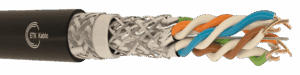
CAT 7 Data Cables | Shielded, 10 GbE, Class F | ETK Kablo
ETK Kablo CAT 7 cables are built for enterprises that need robust, shielded copper cabling with dependable 10 GbE performance across standard 100 m channels. Positioned between mainstream Cat 6A and premium Cat 7A, Cat 7 (ISO/IEC Class F) delivers 600 MHz bandwidth and strong electromagnetic immunity—ideal for office backbones, smart buildings, broadcast/AV over IP, and industrial networks.
Key Advantages
- 10 GbE at 100 m: Engineered for stable 10GBASE-T links across full channel lengths.
- 600 MHz bandwidth (Class F): Extra headroom over Cat 6 for cleaner signal margins.
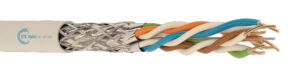
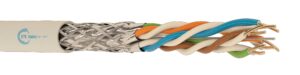
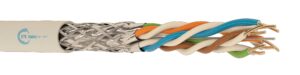
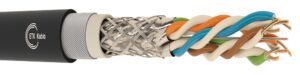
- High immunity to noise: S/FTP construction (foil per pair + overall braid) mitigates EMI/RFI and alien crosstalk in dense, noisy environments.
- Low smoke, halogen-free: LSZH jacket options reduce toxic gases and smoke density for people-safe installations.
- CPR ready: Available in CPR Euroclasses such as B2ca and Cca (s/d/a sub-classes per project requirements).
- Consistent quality: Manufactured to meet ISO/IEC 11801 Class F and EN 50173 performance criteria with rigorous process control.
Cable Structure & Materials
- Conductor: Solid bare copper (e.g., AWG 23) for low insertion loss and stable impedance.
- Insulation: High-performance PE/foam-skin variants (design-dependent) to maintain electrical uniformity.
- Shielding: S/FTP — each pair individually foil-shielded plus overall tinned-copper braid for maximum interference immunity.
- Outer jacket: LSZH for building interiors; color and print customization available on request.
- Geometry: Tight, balanced pair lay lengths for improved NEXT/PSNEXT and ANEXT margins.
Standards & Compliance
- Performance classes: ISO/IEC 11801 Class F, EN 50173.
- Fire performance: EN 50575 (CPR) with B2ca/Cca options; LSZH compounds for low smoke/halogen-free behavior.
- Documentation: Product data sheets, routine test reports, and Declarations of Performance (DoP) supplied for project records.
Where Cat 7 Excels
- Commercial & smart buildings: Shielded horizontal/backbone links with low latency and high reliability.
- Broadcast & AV over IP: Clean, low-noise transport for demanding media workflows.
- Healthcare & laboratories: Environments sensitive to interference and downtime.
- Industrial networks: Areas with drives/motors where EMI is elevated.
- Data centers: 10 GbE access links that benefit from strong screening and stable margins.
Product Range & Options
- Shielding: S/FTP (standard for Cat 7).
- Conductor size: Commonly AWG 23 (other designs available on request).
- CPR classes: B2ca, Cca configurations (s/d/a sub-classes per specification).
- Jacket & color: LSZH in standard colors; project-specific color/marking options available.
- Lengths & packaging: Typical 500 m drums; custom cuts for project logistics.
Quality & Testing
ETK Kablo applies stringent in-process and final testing to verify key electrical parameters—Return Loss, Insertion Loss, NEXT/PSNEXT, ACR-F, and alien crosstalk (ANEXT/AELFEXT)—according to product type. Full traceability and documented results help ensure predictable field performance.
Cat 6A vs Cat 7 vs Cat 7A (At-a-Glance)
| Category | Bandwidth | Typical Shielding | 10 GbE @ 100 m | Best For |
|---|---|---|---|---|
| Cat 6A | 500 MHz | U/UTP or F/UTP/U/FTP | Yes | General 10 GbE campus & office |
| Cat 7 | 600 MHz (Class F) | S/FTP | Yes | Shielded links in EMI-prone areas |
| Cat 7A | 1000 MHz (Class FA) | S/FTP | Yes | High-density, high-noise infrastructures |
Global Supply & Project Support
As a cable manufacturer, ETK Kablo supplies cables only and offers project-ready documentation for compliance and records. With flexible manufacturing and fast international logistics, we support diverse project requirements—from CPR class and jacket color to labeling and packaging specifications.
CAT 7 — Frequently Asked Questions
Is Cat7 overkill for home use?
Often yes. Most home networks and consumer devices run at 1 Gbps (or 2.5 Gbps) and don’t require Cat7’s heavy shielding and 600 MHz bandwidth. For new residential installs, Cat6 (1 Gbps @ 100 m; limited 10 Gbps on shorter runs) or Cat6A (10 Gbps @ 100 m) is typically the better value. Choose Cat7 mainly if you have strong EMI in walls or specialized needs.
Is Cat7 faster than Cat6?
Yes. Cat6 supports 1 Gbps up to 100 m and 10 Gbps only up to ~55 m in typical conditions. Cat7 (Class F, 600 MHz, S/FTP) is specified to support 10 Gbps to the full 100 m with stronger noise immunity. Note that Cat6A also supports 10 Gbps at 100 m and is widely used in modern buildings.
What is Cat7 used for?
Cat7 is used in shielded structured cabling where interference control and stable 10 GbE are required: data centers, commercial & smart buildings, broadcast/AV over IP, healthcare, and industrial networks with elevated EMI.
Is Cat7 or Cat8 better?
It depends on the use case. Cat8 supports 25/40 GbE but only for short data-center runs (typically up to 30 m). For building cabling to 100 m, Cat6A or Cat7 are more practical. Choose Cat8 if you specifically need short, very high-throughput copper links; otherwise Cat6A/Cat7 balance performance, reach, and cost.


