





 President’s Message
Instrumentation Cables
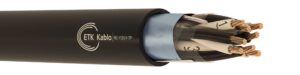
RE-Y(St)Y-TP/TT Instrumentation Cable
SKU:
RE-Y(St)Y-TP/TT
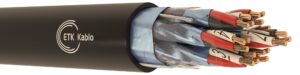
RE-Y(St)Y-PiMF/TiMF Instrumentation Cable
SKU:
RE-Y(St)Y-PiMF/TiMF
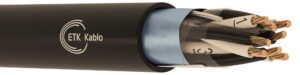
RE-2Y(St)Y-TP/TT Instrumentation Cable
SKU:
RE-2Y(St)Y-TP/TT
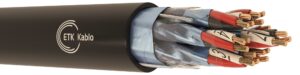
RE-2Y(St)Y-PiMF/TiMF Instrumentation Cable
SKU:
RE-2Y(St)Y-PiMF/TiMF
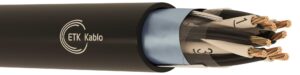
RE-2Y(St)H-TP/TT Instrumentation Cable
SKU:
RE-2Y(St)H-TP/TT
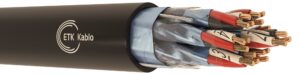
RE-2Y(St)H-PiMF/TiMF Instrumentation Cable
SKU:
RE-2Y(St)H-PiMF/TiMF
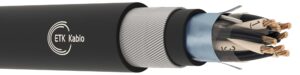
RE-Y(St)YSWAY-TP/TT Instrumentation Cable
SKU:
RE-Y(St)YSWAY-TP/TT
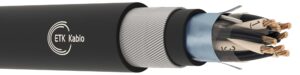
RE-2Y(St)YSWAY-TP/TT Instrumentation Cable
SKU:
RE-2Y(St)YSWAY-TP/TT

RE-2Y(St)YSWAY-PiMF/TiMF Instrumentation Cable
SKU:
RE-2Y(St)YSWAY-PiMF/TiMF
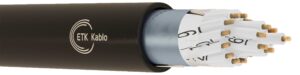
RE-2X(St)Y Instrumentation Cable
SKU:
RE-2X(St)Y
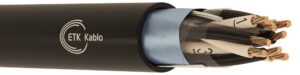
RE-2X(St)Y-TP/TT Instrumentation Cable
SKU:
RE-2X(St)Y-TP/TT
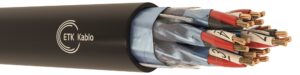
RE-2X(St)Y-PiMF/TiMF Instrumentation Cable
SKU:
RE-2X(St)Y-PiMF/TiMF
Instrumentation Cable Manufacturer for Process Control Systems
Instrumentation Cable carries low-level analogue and digital signals between field instruments, sensors, transmitters, control systems and monitoring equipment. ETK Kablo manufactures a broad range of instrumentation cables for oil and gas, petrochemical, power generation, mining, industrial automation, transportation and infrastructure projects.
The ETK Kablo portfolio includes overall-screened cables, twisted pair and triad constructions, individually screened PiMF/TiMF designs, PVC and halogen-free material systems, unarmored cables and mechanically protected constructions with steel wire armor or steel wire braid.
Selecting the correct instrumentation cable requires more than choosing a conductor size. Signal type, pair or triad configuration, screening architecture, insulation, sheath material, mechanical protection, installation route and fire-performance requirements should all form part of the specification.
What Is an Instrumentation Cable?
An instrumentation cable is a low-voltage signal cable designed for measurement, monitoring and process-control circuits. It connects field equipment such as pressure transmitters, temperature sensors, flow meters and other instrumentation devices to PLC, DCS, SCADA and control-room systems.
Instrumentation signals can be sensitive to electromagnetic interference and unwanted interaction between adjacent circuits. For this reason, these cables commonly use twisted conductors together with foil or other metallic screening systems.
The cable construction can also include mechanical protection and specific sheath materials when the installation route introduces impact, crushing, outdoor exposure or fire-safety requirements.
Instrumentation Cable Types from ETK Kablo
ETK Kablo manufactures instrumentation cable families with different insulation, screening and mechanical protection systems.
| Construction Type | Main Feature | Typical Selection Logic |
|---|---|---|
| Overall Screened | One common metallic screen around the assembled cable core | General instrumentation circuits requiring protection from external EMI |
| TP / TT | Conductors arranged as twisted pairs or twisted triads | Process signals requiring defined pair or triad organization |
| PiMF / TiMF | Individually screened pairs or triads, typically combined with an overall screen | Multiple sensitive circuits requiring greater circuit-to-circuit separation |
| SWA Armored | Galvanized steel wire armor | Routes requiring increased mechanical protection |
| Steel Wire Braided | Steel wire braid around the cable construction | Mechanical reinforcement with a different flexibility profile from conventional SWA |
| Halogen-Free | Halogen-free inner and/or outer sheath materials depending on construction | Projects requiring specified smoke and halogen characteristics |
Overall Screened Instrumentation Cable
An overall screened instrumentation cable uses one metallic screen around the assembled cable core. In several ETK Kablo RE-series constructions, this screen consists of Al/PET tape together with a tinned copper earthing wire.
The overall screen primarily protects the grouped instrumentation circuits against external electromagnetic interference.
This type of construction can provide an efficient solution where the project does not require individual electrical separation around every pair or triad.
Individually Screened PiMF and TiMF Instrumentation Cable
PiMF means pairs individually screened in metal foil, while TiMF refers to individually screened triads.
In these constructions, each pair or triad receives its own metallic screen before the elements are assembled into the complete cable. Selected ETK Kablo PiMF/TiMF products also include an additional overall screen around the complete cable core.
This screening architecture provides greater electrical separation between individual instrument circuits and can reduce unwanted coupling between sensitive signals sharing the same cable.
| Screening Architecture | Main Purpose |
|---|---|
| Overall Screen Only | Protection of the complete cable core against external EMI |
| Individual Pair / Triad Screens | Greater separation between individual signal circuits |
| Individual + Overall Screen | Combines circuit-to-circuit isolation with external EMI protection |
More screening is not automatically better for every project. Additional screens can increase cable diameter, weight, termination work and cost. The shielding architecture should therefore follow the instrumentation and EMC philosophy of the project.
TP, TT, PiMF and TiMF Explained
Instrumentation specifications frequently describe the cable according to how its signal elements are organized.
- TP – Twisted Pair: two insulated conductors twisted together as one signal element.
- TT – Twisted Triad: three insulated conductors twisted together as one signal element.
- PiMF: twisted pairs with individual metallic screens.
- TiMF: twisted triads with individual metallic screens.
The correct configuration depends on the instrument circuit, signal architecture and project specification.
A request for “12-pair instrumentation cable” therefore does not completely define the cable. The buyer must still specify whether individual screening, an overall screen, armor and particular sheath materials are required.
RE-2X(St) Instrumentation Cable
The RE-2X(St) family is one of the most important instrumentation cable groups in the ETK Kablo portfolio.
ETK Kablo RE-2X(St) constructions use stranded Class 2 copper conductors with XLPE insulation and an overall Al/PET screen with a tinned copper earthing wire.
Different suffixes then define important variations in sheath material, mechanical protection and screening architecture.
| Cable Family | Main Construction Difference |
|---|---|
| RE-2X(St)Y | Overall-screened XLPE instrumentation cable with PVC outer sheath |
| RE-2X(St)H | Overall-screened XLPE instrumentation cable with halogen-free outer sheath |
| RE-2X(St)YSWAY | PVC construction with galvanized steel wire armor |
| RE-2X(St)HSWAH | Halogen-free inner and outer sheaths with galvanized steel wire armor |
These four constructions should not be treated as a simple hierarchy from basic to premium. The correct choice depends primarily on sheath requirements and whether the installation route requires mechanical armor.
RE-2X(St)H Halogen-Free Instrumentation Cable
RE-2X(St)H provides an overall-screened instrumentation construction with XLPE insulation and a halogen-free outer jacket.
This type of cable can suit process-control and industrial instrumentation routes where the project requires specified low-smoke and halogen characteristics but does not require steel wire armor.
ETK Kablo RE-2X(St)H constructions use an Al/PET overall screen and a tinned copper earthing wire for electromagnetic protection.
Halogen-free construction should not be confused with fire resistance. A halogen-free instrumentation cable does not automatically provide FE180, PH120 or other circuit-integrity performance.
RE-2X(St)YSWAY Steel Wire Armored Instrumentation Cable
RE-2X(St)YSWAY combines XLPE-insulated instrumentation conductors, an overall metallic screen, PVC inner and outer sheath materials and galvanized steel wire armor.
The armor provides additional mechanical protection for routes exposed to impact, crushing or other physical hazards.
This construction is relevant for demanding industrial installations such as refineries, petrochemical facilities, energy projects, mining infrastructure and outdoor process routes where the project specifies both screened instrumentation signals and steel wire armor.
SWA should not be confused with signal shielding. The Al/PET screen performs the primary electromagnetic-screening function, while the galvanized steel wire layer provides mechanical protection.
RE-2X(St)HSWAH Halogen-Free Armored Instrumentation Cable
RE-2X(St)HSWAH combines halogen-free materials with galvanized steel wire armor.
This construction can be considered where a project simultaneously requires mechanical protection and specified smoke, halogen and corrosive-gas characteristics.
The armor adds diameter, weight and installation effort compared with an equivalent unarmored cable. Therefore, engineers should specify it when the route presents a genuine mechanical risk or the project explicitly requires SWA.
RE-2X(St)HSWAH PiMF/TiMF for Sensitive Instrument Circuits
For projects requiring both high mechanical protection and greater circuit-to-circuit signal separation, ETK Kablo manufactures RE-2X(St)HSWAH PiMF/TiMF.
The construction includes individually screened pairs or triads, an additional overall Al/PET screen, halogen-free inner and outer sheath materials and galvanized steel wire armor.
This combination can support sensitive instrumentation circuits in electrically noisy and mechanically demanding industrial environments.
The individually screened elements and overall screen address electromagnetic performance, while the steel wire armor provides physical protection. These functions should be considered separately during cable specification.
Steel Wire Armor vs Steel Wire Braid
ETK Kablo manufactures instrumentation cable constructions with both conventional steel wire armor and steel wire braided mechanical protection.
| Mechanical Protection | Main Construction Concept | Selection Consideration |
|---|---|---|
| SWA | Galvanized steel wires applied as an armor layer | Strong mechanical protection for demanding fixed installations |
| Steel Wire Braid | Braided steel wire layer | Mechanical reinforcement with a different flexibility and construction profile |
The required protection should follow the actual mechanical hazards, cable route, bending requirements and installation method.
Neither SWA nor steel wire braid should replace the dedicated electrical screen required for instrumentation signal integrity.
PVC vs Halogen-Free Instrumentation Cable
Outer sheath material forms another major instrumentation-cable selection decision.
PVC instrumentation cables provide durable industrial constructions for projects where PVC is permitted.
Halogen-free instrumentation cables use materials selected for specified smoke and halogen characteristics. These constructions can be important in enclosed facilities, tunnels, public infrastructure and projects with specific fire-material requirements.
| Project Requirement | Construction Direction |
|---|---|
| PVC permitted, armor not required | Consider an appropriate PVC unarmored instrumentation construction |
| PVC permitted, SWA required | Consider a YSWAY-type construction |
| Halogen-free required, armor not required | Consider an H-type construction such as RE-2X(St)H |
| Halogen-free and SWA required | Consider an HSWAH-type construction |
The industry or application name alone does not determine the sheath. Different routes within the same refinery, power station or tunnel project can justify different cable materials and mechanical protection.
Instrumentation Cable for Oil and Gas Projects
Oil and gas facilities contain large numbers of field instruments for pressure, temperature, flow, level, safety and process monitoring.
Instrumentation cables connect these devices to DCS, PLC, SCADA and safety-related control equipment. Cable selection can therefore affect signal integrity, commissioning, maintenance and long-term process reliability.
Oil and gas procurement specifications commonly need to define:
- Pair or triad configuration
- Conductor size
- Overall or individual screening
- Armor requirement
- PVC or halogen-free material system
- Installation route
- Fire-performance requirements
- Environmental exposure
- Applicable standards and project specifications
- Inspection and documentation requirements
There is no single instrumentation cable construction that is automatically correct for every oil and gas project.
Instrumentation Cables for Petrochemical and Process Plants
Petrochemical and process facilities combine sensitive measurement circuits with motors, power cables, drives and other electrical equipment that can create electromagnetic noise.
Instrumentation cables therefore require appropriate conductor twisting and screening to maintain stable process signals.
Where several sensitive loops share one cable, individual pair or triad screens can provide greater separation between circuits. Where the route also introduces mechanical exposure, an armored construction can add the required physical protection.
Instrumentation Cable for Mining and Tunnel Projects
Mining and tunnel installations can introduce demanding mechanical conditions, long cable routes and project-specific fire-material requirements.
ETK Kablo offers SWA, steel-wire-braided and halogen-free instrumentation constructions that allow engineers to combine the required signal-screening architecture with suitable mechanical and sheath characteristics.
The final cable should be selected according to the route rather than the application label alone. Protected control rooms, cable trays, underground sections and mechanically exposed areas can require different constructions within the same project.
Instrumentation Cable for DCS, PLC and SCADA Systems
DCS, PLC and SCADA systems rely on accurate signals from field equipment. Instrumentation cables provide the physical communication path between these devices and the control system.
Depending on the process architecture, the cable may carry analogue signals, digital status signals or other low-energy instrumentation circuits.
The screening arrangement should be coordinated with the project's EMC and grounding philosophy. Screen termination, cable routing and separation from power circuits remain installation-design decisions rather than cable-manufacturing characteristics alone.
Instrumentation Cable Standards
Instrumentation cables can be manufactured according to different standards depending on the construction and project specification.
EN 50288-7 is an important reference for multi-element metallic instrumentation and control cables used for analogue and digital communication and control.
ETK Kablo also uses IEC 60502-1 as a manufacturing reference for selected instrumentation constructions. Therefore, one standard should not automatically be applied to every product in the complete category.
Other relevant requirements can include IEC 60228 for conductor construction and applicable IEC 60332 flame-propagation tests. Halogen-free products can also include applicable IEC 60754 and IEC 61034 performance requirements.
The correct standards should always be confirmed for the exact cable being quoted and supplied.
ETK Kablo Instrumentation Cable Portfolio
ETK Kablo manufactures a broad instrumentation cable portfolio covering several material, screen and mechanical protection combinations.
| Family Example | Construction Direction |
|---|---|
| RE-Y(St)Y | Overall-screened instrumentation cable family |
| RE-2Y(St)Y | PE-based screened instrumentation family |
| RE-2X(St)Y | XLPE-insulated, PVC-sheathed, overall-screened construction |
| RE-2X(St)H | XLPE-insulated, halogen-free, overall-screened construction |
| RE-2X(St)YSWAY | PVC, overall-screened and steel wire armored construction |
| RE-2X(St)HSWAH | Halogen-free, overall-screened and steel wire armored construction |
| PiMF / TiMF Versions | Individually screened pairs or triads, with selected constructions also using an overall screen |
| YSWBY / HSWBH Families | Steel-wire-braided mechanically protected instrumentation constructions |
Many of these families are available in TP/TT and PiMF/TiMF configurations, allowing the screening and conductor grouping to follow the actual instrument circuits.
How to Specify an Instrumentation Cable
A complete RFQ should define the electrical, screening, mechanical and material requirements separately.
| Specification Item | Information to Provide |
|---|---|
| Circuit Configuration | Pairs, triads or project-specific arrangement |
| Conductor Size | Required conductor cross-section |
| Screening | Overall screen, PiMF, TiMF or individual + overall screening |
| Insulation | XLPE, PE or construction-specific material |
| Outer Sheath | PVC, halogen-free or project-specific material |
| Mechanical Protection | Unarmored, SWA, steel wire braid or project-specific protection |
| Installation Environment | Indoor, outdoor, tray, duct, underground or mechanically exposed route |
| Fire Requirements | Applicable flame, smoke, halogen or other project-specific performance |
| Electrical Requirements | Voltage rating, capacitance, resistance and other specified parameters |
| Documentation | Datasheets, inspection requirements, test documents and project certificates |
A description such as “12 pair armored instrumentation cable” can still represent several technically different products. A complete specification helps manufacturers and EPC procurement teams compare equivalent offers.
Why Choose ETK Kablo as Your Instrumentation Cable Manufacturer?
ETK Kablo manufactures a broad range of instrumentation cables rather than relying on one standard construction for every industrial application.
The portfolio covers overall-screened and individually screened designs, pair and triad configurations, PVC and halogen-free material systems, SWA and steel-wire-braided mechanical protection and several RE-series cable families.
This allows EPC contractors, distributors, oil and gas projects, petrochemical plants, mining companies and industrial system integrators to define the cable according to the real signal, installation and mechanical requirements of the project.
ETK Kablo can evaluate screening architecture, material system, conductor configuration, mechanical protection and project documentation together during the technical quotation process.
Frequently Asked Questions About Instrumentation Cable
What is an instrumentation cable?
An instrumentation cable carries low-level analogue or digital signals between field instruments and control or monitoring equipment. It is commonly used in process control, measurement, automation, DCS, PLC and SCADA systems.
What is the difference between instrumentation cable and control cable?
Instrumentation cables primarily carry sensitive measurement and process signals and commonly use dedicated screening architectures. Control cables primarily carry control and switching signals between equipment. The exact distinction depends on the electrical system and project specification.
What is a shielded instrumentation cable?
A shielded instrumentation cable uses a metallic screen to reduce electromagnetic interference. The cable may use one overall screen, individual screens around pairs or triads, or a combination of both.
What does PiMF mean in instrumentation cable?
PiMF refers to pairs individually screened in metallic foil. Each pair receives its own screen, providing increased electrical separation between individual instrumentation circuits.
What does TiMF mean?
TiMF describes individually screened triads. It is used where instrumentation circuits are arranged as three-conductor signal elements and the project requires individual shielding.
What is the difference between overall screen and individual screen?
An overall screen surrounds the complete cable core and mainly protects against external electromagnetic interference. Individual screens surround each pair or triad and provide additional separation between circuits inside the cable.
What is an SWA instrumentation cable?
An SWA instrumentation cable includes galvanized steel wire armor for increased mechanical protection. The dedicated foil or other electrical screen remains responsible for signal shielding.
Is RE-2X(St)H armored?
No. ETK Kablo's standard RE-2X(St)H construction is an overall-screened, halogen-free instrumentation cable without steel wire armor. Where both halogen-free materials and SWA are required, RE-2X(St)HSWAH is a relevant construction to consider.
What is the difference between RE-2X(St)Y and RE-2X(St)YSWAY?
Both are XLPE-insulated, overall-screened instrumentation constructions with PVC material systems. RE-2X(St)YSWAY additionally includes an inner sheath and galvanized steel wire armor for increased mechanical protection.
What information should I provide when requesting an instrumentation cable quotation?
Provide the required pair or triad count, conductor size, screening type, insulation and sheath materials, armor requirement, installation environment, electrical parameters, fire-performance requirements, quantity, drum length and applicable project documentation.


