





 President’s Message
Cat 5e Data Cable
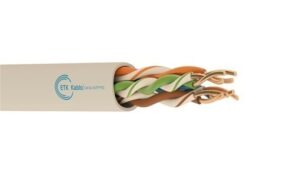
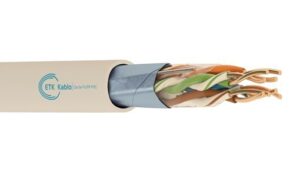
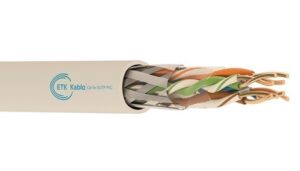
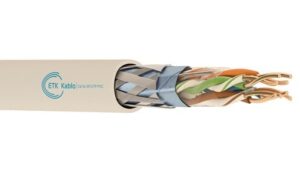
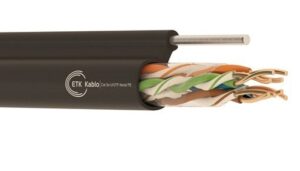
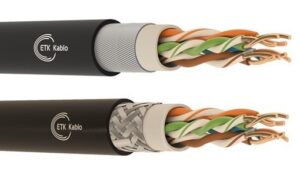
Cat 5e Cable for Gigabit Ethernet Networks
Cat 5e Cable provides reliable copper connectivity for Gigabit Ethernet, structured cabling, IP surveillance, VoIP and general LAN infrastructure. ETK Kablo manufactures Category 5e cables in U/UTP, F/UTP, S/UTP and SF/UTP screening configurations together with outdoor, aerial and mechanically protected designs.
The ETK Kablo Cat 5e portfolio includes solid-copper Ethernet cables with PVC, LSOH and PE material options. Dedicated aerial constructions add galvanized steel messenger wire, while armored families use Steel Wire Armor (SWA) or Steel Wire Braid (SWB) where the installation requires increased mechanical protection.
Choosing the correct Cat 5e cable requires more than specifying 1 Gbps performance. Screening, jacket material, installation environment, mechanical protection, conductor construction and fire requirements should all form part of the cable specification.
What Is Cat 5e Cable?
Cat 5e stands for Category 5 Enhanced. It is a balanced four-pair copper cabling category developed to provide improved crosstalk and transmission performance compared with the original Category 5 specification.
Cat 5e supports Gigabit Ethernet applications such as 1000BASE-T and operates with Category 5e transmission requirements through 100 MHz.
It remains widely used in offices, commercial buildings, IP surveillance networks, industrial sites and other installations where Gigabit Ethernet provides sufficient network capacity.
ETK Kablo Cat 5e Cable Types
ETK Kablo manufactures several Cat 5e architectures for different electromagnetic and installation environments.
| Cat 5e Type | Screening / Protection | Typical Selection Logic |
|---|---|---|
| U/UTP | No overall screen, unshielded pairs | General LAN networks in controlled EMI environments |
| F/UTP | Overall foil screen, unshielded pairs | Networks requiring additional external EMI protection |
| S/UTP | Overall copper braid, unshielded pairs | Flexible and robust overall electromagnetic shielding |
| SF/UTP | Overall foil + copper braid, unshielded pairs | More substantial overall electromagnetic protection |
| Aerial | Outdoor cable with integrated messenger support | Pole-to-pole and overhead Ethernet routes |
| Armored | SWA or SWB mechanical reinforcement | Routes requiring increased physical protection |
Cat 5e U/UTP Cable
Cat 5e U/UTP Cable contains four unshielded twisted pairs without an overall metallic screen.
The ETK Kablo U/UTP construction uses solid copper conductors with polyethylene insulation. Pair twisting provides the electrical balance required to control crosstalk and external noise without adding a dedicated metallic screen.
U/UTP provides a compact and cost-efficient solution for offices, commercial buildings, IP networks and other installations where electromagnetic interference remains within acceptable limits.
The ETK Kablo U/UTP range includes PVC, LSOH and PE product versions.
Cat 5e F/UTP Cable
Cat 5e F/UTP Cable uses one overall foil screen around four unshielded twisted pairs.
ETK Kablo's F/UTP construction uses Al/PET tape together with a tinned copper earthing wire. The foil provides additional protection against external electromagnetic interference.
F/UTP can therefore suit industrial, commercial or technical environments where the network route encounters more electrical noise than a typical office installation.
The ETK Kablo F/UTP family also includes PVC, LSOH and PE material variants.
Cat 5e S/UTP Cable
Cat 5e S/UTP Cable uses an overall tinned copper braid around unshielded twisted pairs.
The braid provides a flexible conductive screen and can offer robust electrical continuity around the cable core.
S/UTP provides another shielding option for installations where an overall screen is required but the project does not use individual pair screening.
Cat 5e SF/UTP Cable
Cat 5e SF/UTP Cable combines two overall screening technologies.
The ETK Kablo construction uses Al/PET foil together with tinned copper braiding around the cable core. The twisted pairs themselves remain individually unshielded.
This combined-screen architecture can provide additional protection in electrically demanding environments where the project requires both foil coverage and an overall metallic braid.
U/UTP vs F/UTP vs S/UTP vs SF/UTP
| Construction | Overall Screen | Individual Pair Screen | General Selection Logic |
|---|---|---|---|
| U/UTP | None | None | Controlled EMI environment |
| F/UTP | Foil | None | Additional overall EMI protection |
| S/UTP | Copper braid | None | Flexible and robust overall screening |
| SF/UTP | Foil + copper braid | None | Combined overall shielding |
The most heavily screened construction is not automatically the best solution for every network. Shielding increases cable complexity and requires appropriate termination and bonding practices. U/UTP can remain technically appropriate where electromagnetic conditions are controlled.
Cat 5e 24 AWG Solid Copper Cable
Conductor construction has a direct effect on Ethernet cable resistance and transmission performance.
ETK Kablo's standard four-pair Cat 5e products use approximately 0.51 mm solid copper conductors, corresponding closely to the commonly requested 24 AWG conductor size.
Solid copper provides stable electrical characteristics for fixed structured-cabling installations and should be distinguished from copper-clad conductor alternatives when comparing commercial offers.
Buyers specifying Cat 5e 24 AWG cable should also verify the screening type, jacket material and required installation environment rather than relying on AWG alone.
100 MHz Cat 5e Performance
ETK Kablo specifies Category 5e transmission characteristics through 100 MHz.
Relevant electrical parameters include:
- Insertion loss
- Near-end crosstalk (NEXT)
- Power-sum NEXT
- Equal-level far-end crosstalk
- Return loss
- Propagation velocity
- Characteristic impedance
ETK Kablo Cat 5e products use a nominal characteristic impedance of 100 ohms across the specified frequency range.
Cat 5e Cable for Gigabit Ethernet
Cat 5e is widely used for 1000BASE-T Gigabit Ethernet.
A correctly designed Category 5e structured-cabling system can support 1 Gbps Ethernet over the conventional maximum channel distance defined by the applicable network standard.
The complete channel matters. Cable, connectors, patch panels, patch cords, installation quality and termination all contribute to final network performance.
Installing a compliant Cat 5e cable cannot compensate for poor connectors, excessive untwisting or incorrect field installation.
Cat 5e Cable Length and the 100 Meter Channel
The conventional structured-cabling limit for copper Ethernet is a 100-meter channel, typically consisting of up to 90 meters of permanent-link cable plus patch and equipment cords.
Longer copper runs should not simply be extended because signal attenuation and other transmission parameters can exceed system limits.
Where network distances exceed the standard copper channel, designers can use an intermediate active device or consider fiber optic cabling.
Bulk Cat 5e Cable
Professional installers and distributors commonly purchase bulk Cat 5e cable rather than pre-terminated patch cords.
Bulk installation cable allows structured-cabling contractors to route and terminate each permanent link according to project dimensions.
When requesting bulk cable, buyers should specify:
- Screen type
- Jacket material
- Conductor construction
- Required packing length
- CPR or fire requirement
- Printing and marking requirements
Packaging lengths can vary between ETK Kablo products, so requested lengths such as 305 m, 500 m or project-specific drums should be confirmed during quotation rather than assumed from the category name.
PVC Cat 5e Cable
PVC Cat 5e Cable provides a conventional jacket solution for suitable structured-cabling environments.
PVC offers mechanical durability and straightforward installation for projects where the building specification allows conventional PVC materials.
The exact flame-retardancy and CPR characteristics belong to the specific tested product and should be confirmed from its technical documentation.
LSOH / LSZH Cat 5e Cable
LSOH Cat 5e Cable uses halogen-free material systems for projects with specific smoke and corrosive-gas requirements.
This can be particularly relevant in airports, hospitals, public buildings, transport infrastructure and other enclosed environments.
LSOH or LSZH does not automatically mean fire resistant. It describes material behavior during combustion rather than continued Ethernet operation under fire exposure.
PE Outdoor Cat 5e Cable
Outdoor Cat 5e Cable requires an outer construction suitable for environmental exposure.
ETK Kablo manufactures selected Cat 5e products with UV-resistant polyethylene outer jackets. The U/UTP PE construction, for example, uses solid copper conductors, polyethylene insulation and a PE outer jacket.
Outdoor Cat 5e cables can support applications such as:
- Inter-building LAN connections
- Outdoor IP CCTV networks
- Campus Ethernet infrastructure
- Industrial outdoor networks
- External Wi-Fi access-point connections
- Outdoor automation and monitoring systems
PE jacket construction should not automatically be interpreted as mechanical armor. Where the route creates significant physical risk, an armored cable may be more appropriate.
External and Weather-Resistant Cat 5e Cable
External Cat 5e cable and weather-resistant Ethernet cable are terms used for outdoor network cables.
The exact cable construction should be suitable for the UV exposure, moisture, temperature and physical installation route of the project.
ETK Kablo's PE Cat 5e designs provide an outdoor-oriented jacket option. The exact installation method should still be checked against the selected product datasheet.
Cat 5e Aerial Ethernet Cable
ETK Kablo manufactures a dedicated Cat 5e Aerial Data Cable family for overhead network routes.
The aerial portfolio includes U/UTP, F/UTP, S/UTP and SF/UTP PE constructions.
These cables add galvanized steel messenger wire to support the mechanical load of an aerial installation.
An ordinary outdoor PE cable should not automatically be suspended between poles simply because its jacket is weather resistant. Aerial support and outdoor environmental protection address different installation requirements.
Cat 5e Armored Cable
Some network routes require greater mechanical protection than a standard indoor or outdoor Ethernet cable provides.
ETK Kablo's Cat 5e Armored Data Cable range includes Steel Wire Armored (SWA) and Steel Wire Braided (SWB) constructions.
These mechanical layers can protect the cable against external stress in industrial and infrastructure installations.
Armor should not be confused with electromagnetic shielding. U/UTP, F/UTP, S/UTP and SF/UTP describe signal-screening architecture, while SWA and SWB primarily provide mechanical protection.
SWA vs SWB Cat 5e Cable
| Mechanical Protection | Main Concept | Selection Consideration |
|---|---|---|
| SWA | Steel Wire Armor | Strong mechanical reinforcement for demanding fixed routes |
| SWB | Steel Wire Braid | Braided mechanical reinforcement with a different flexibility profile |
The project should specify mechanical protection separately from the Ethernet screening system. An armored Cat 5e construction can also include dedicated foil or copper-braid electromagnetic screening where required.
Cat 5e Cable for IP CCTV
Gigabit-capable Cat 5e cable remains suitable for many IP surveillance networks.
Typical CCTV installations can require:
- Network connectivity between cameras and switches
- Outdoor PE jackets
- Aerial cable for pole-mounted cameras
- Shielded cable near electrically noisy equipment
- Mechanical protection in exposed infrastructure
The cable should therefore be selected according to both data performance and the physical camera route.
Cat 5e Cable for Power over Ethernet
Cat 5e cabling can form part of Power over Ethernet systems when the complete cable and channel meet the applicable electrical requirements.
PoE selection should consider conductor resistance, bundle size, ambient temperature and installation conditions because Ethernet conductors carry electrical current as well as data.
Procurement teams should therefore define the PoE requirement during cable selection rather than assuming that every Cat 5e construction will behave identically under high bundle loading.
Cat 5e vs Cat 6 Cable
Cat 5e and Cat 6 can both support Gigabit Ethernet, but they provide different transmission margins.
| Characteristic | Cat 5e | Cat 6 |
|---|---|---|
| Category Bandwidth | 100 MHz | 250 MHz |
| Gigabit Ethernet | Yes | Yes |
| Crosstalk Performance | Category 5e requirements | Higher Category 6 requirements |
| Typical Procurement Logic | Cost-efficient Gigabit network | Additional transmission headroom and newer installations |
Cat 6 is often selected for new enterprise installations where additional bandwidth margin is valuable. Cat 5e remains technically relevant where 1 GbE performance meets the project requirement and the economics of the network favor Category 5e.
Cat 5e Cable Standards and Testing
ETK Kablo Category 5e product datasheets include manufacturing and electrical-performance references.
Product documentation includes references such as ANSI/TIA-568-C.2, IEC 61156-5 and ISO/IEC 11801.
Electrical tests include insertion loss, NEXT, power-sum NEXT, far-end crosstalk and return loss across the Category 5e frequency range.
Because standards and project editions can change, procurement teams should define the required standard edition and verify it against the current technical documentation supplied with the quotation.
How to Specify a Cat 5e Cable
A complete Cat 5e RFQ should define both Ethernet performance and the physical installation requirements.
| Specification Item | Information to Provide |
|---|---|
| Category | Cat 5e |
| Screening | U/UTP, F/UTP, S/UTP or SF/UTP |
| Conductor | Solid copper and required conductor diameter / AWG |
| Jacket | PVC, LSOH or PE according to installation |
| Installation Environment | Indoor, outdoor, aerial or mechanically exposed route |
| Mechanical Protection | Standard, SWA or SWB where required |
| Network Application | Gigabit LAN, CCTV, VoIP, automation or other Ethernet application |
| PoE Requirement | Required PoE application where applicable |
| Fire Requirement | Applicable flame, smoke, halogen and CPR requirements |
| Packing Length | Required box, coil or drum length |
| Documentation | Datasheet, DoP where applicable and project test documentation |
ETK Kablo Cat 5e Cable Portfolio
| Category | Main Construction |
|---|---|
| Cat 5e U/UTP | Unshielded four-pair Ethernet cable |
| Cat 5e F/UTP | Overall foil-screened Ethernet cable |
| Cat 5e S/UTP | Overall copper-braid-screened Ethernet cable |
| Cat 5e SF/UTP | Overall foil + copper-braid-screened Ethernet cable |
| Cat 5e Aerial | Messenger-supported outdoor PE Ethernet cable |
| Cat 5e Armored | SWA and SWB mechanically protected Ethernet cable |
PVC, LSOH and PE material versions are available across applicable product families. The exact jacket, screen, mechanical construction and packing options should be confirmed from the selected ETK Kablo product datasheet.
Why Choose ETK Kablo for Cat 5e Cable?
ETK Kablo manufactures Cat 5e cables across a much broader construction range than one standard UTP office cable.
The portfolio includes four principal screening architectures, indoor and outdoor material systems, aerial messenger cables and SWA/SWB mechanically protected solutions.
This allows network contractors, distributors, CCTV integrators, infrastructure projects and industrial buyers to source Cat 5e cable according to both network performance and the physical installation environment.
ETK Kablo can evaluate screening, jacket material, mechanical protection, packing length, fire requirements and project documentation together during the quotation process.
Frequently Asked Questions About Cat 5e Cable
What is Cat 5e cable?
Cat 5e is a balanced twisted-pair copper cabling category designed for Ethernet and structured data networks with transmission requirements through 100 MHz.
What speed does Cat 5e support?
Cat 5e supports 1000BASE-T Gigabit Ethernet when the complete structured-cabling channel meets the applicable network requirements.
What frequency is Cat 5e?
Category 5e transmission requirements extend through 100 MHz.
Is Cat 5e UTP or shielded?
Cat 5e can use several screening systems. ETK Kablo manufactures U/UTP, F/UTP, S/UTP and SF/UTP Category 5e cables.
What is Cat 5e U/UTP?
U/UTP has no overall metallic screen and no individual pair screens. It relies on balanced twisted-pair geometry for signal performance.
What is Cat 5e F/UTP?
F/UTP contains one overall foil screen around four unshielded twisted pairs.
What is Cat 5e S/UTP?
S/UTP uses an overall metallic braid around unshielded twisted pairs. ETK Kablo's S/UTP construction uses tinned copper braiding.
What is Cat 5e SF/UTP?
SF/UTP combines an overall foil and copper braid around unshielded twisted pairs for increased electromagnetic screening.
Is Cat 5e 24 AWG?
ETK Kablo's standard four-pair Cat 5e products use approximately 0.51 mm solid copper conductors, which corresponds closely to 24 AWG.
Can Cat 5e run 1 Gbps?
Yes. Cat 5e is designed to support Gigabit Ethernet applications such as 1000BASE-T when installed as part of a compliant structured-cabling system.
Can Cat 5e be installed outdoors?
Yes, when the exact construction is designed for outdoor use. ETK Kablo manufactures Cat 5e products with UV-resistant PE outer jackets and also offers dedicated aerial constructions.
Does ETK Kablo manufacture armored Cat 5e cable?
Yes. ETK Kablo's Cat 5e range includes Steel Wire Armored and Steel Wire Braided mechanically protected cable families.
What information should I provide when requesting a quotation?
Provide the required screening type, conductor requirement, jacket material, indoor or outdoor environment, aerial or armor requirement, PoE requirement if applicable, packing length, quantity and applicable project standards or CPR requirements.


