





 President’s Message
Steel Wire Braided Signal Control Cables
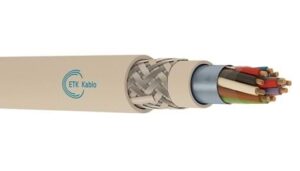
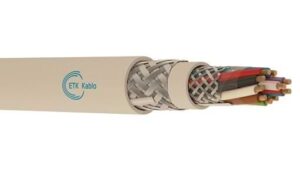
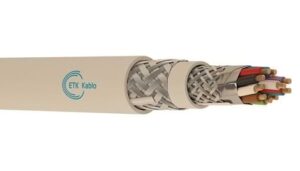
Steel Wire Braided Signal Control Cable for Industrial Automation and Protected Signal Routes
Steel Wire Braided Signal Control Cable combines flexible signal and control conductors with additional galvanized steel-wire braid protection for industrial automation, process control, building systems and other fixed communication routes where conventional signal cable requires increased mechanical protection. ETK Kablo manufactures PVC-jacketed steel-wire-braided signal control cables with foil-screened, braid-screened and combined foil-and-braid-screened electrical architectures.
The current ETK Kablo range uses Class 5 stranded electrolytic copper conductors and PVC inner and outer jackets. Depending on the selected cable family, conductor insulation can be PVC or solid polyethylene. A separate electromagnetic-screening system sits inside the inner jacket, while galvanized steel wire braiding surrounds the inner-jacketed cable as the mechanical-protection layer.
This functional separation is important. Aluminum/polyester foil and tinned copper braid primarily address electromagnetic screening, while the galvanized steel-wire braid primarily provides mechanical reinforcement. A complete cable specification should therefore define both the required signal-screen architecture and the required steel-wire-braided protection.
What Is a Steel Wire Braided Signal Control Cable?
A steel-wire-braided signal control cable is a flexible multicore, pair or triad communication cable with a galvanized steel-wire braid around the inner-jacketed signal cable core.
ETK Kablo places the steel braid between PVC inner and outer jackets in the current PVC signal-control range.
The steel braid adds a dedicated mechanical-protection layer while the internal cable architecture carries analog, digital, monitoring or control signals between devices and automation equipment.
ETK Kablo Steel Wire Braided Signal Control Cable Range
| Screening Family | Electrical Screening | Mechanical Protection |
|---|---|---|
| Foil Screened | Al/PET foil with tinned copper earthing wire | Galvanized steel wire braid |
| Braid Screened | Tinned copper braid | Galvanized steel wire braid |
| Braided Foil Screened | Al/PET foil + tinned copper braid | Galvanized steel wire braid |
The current range therefore allows electromagnetic screening and mechanical protection to be specified as separate engineering requirements.
Steel Wire Braid Is Primarily a Mechanical Layer
The current ETK Kablo product pages identify the galvanized steel-wire braid as the cable's armor layer.
This steel braid sits outside the inner PVC jacket. It is therefore physically separated from the foil or copper-braid screen located around the signal core.
For specification purposes, the steel-wire braid should primarily be treated as mechanical protection rather than as the defining electromagnetic screen.
Mechanical Protection vs Electromagnetic Screening
| Component | Typical Material | Main Function |
|---|---|---|
| Foil Screen | Al/PET tape | Electromagnetic screening |
| Signal Screen Braid | Tinned copper | Electromagnetic screening |
| Earthing Wire | Tinned copper | Supports foil-screen continuity and termination |
| SWB Mechanical Layer | Galvanized steel wire | Mechanical reinforcement and protection |
Some ETK Kablo products contain both a tinned-copper braid and a galvanized steel-wire braid. These layers should not be grouped together simply because both use a braided construction.
Foil Screened Steel Wire Braided Signal Control Cables
The foil-screened SWB branch uses an Al/PET screen together with a tinned copper earthing wire before the PVC inner jacket and galvanized steel-wire braid.
The current range includes six products:
- LIY(St)YSWBY
- LIY(St)YSWBY-TP/TT
- LIY(St)YSWBY-PiMF/TiMF
- LI2Y(St)YSWBY
- LI2Y(St)YSWBY-TP/TT
- LI2Y(St)YSWBY-PiMF/TiMF
The basic constructions use an overall foil screen. The PiMF/TiMF versions additionally screen individual pairs or triads before applying the overall screen.
Braid Screened Steel Wire Braided Signal Control Cables
The braid-screened SWB branch uses a tinned copper braid as the electromagnetic screen and a separate galvanized steel-wire braid as the mechanical layer.
The current range includes:
- LIYCYSWBY
- LIYCYSWBY-TP/TT
- LI2YCYSWBY
- LI2YCYSWBY-TP/TT
These cables contain two different braided metallic systems: a tinned-copper signal screen and a galvanized steel mechanical braid.
Two Different Braids in LIYCYSWBY
| Layer | Material | Function |
|---|---|---|
| CY Screen | Tinned copper braid | Electromagnetic screening |
| SWB Layer | Galvanized steel wire braid | Mechanical protection |
The copper braid surrounds the signal cable core. The steel braid sits outside the inner PVC jacket.
Correctly distinguishing these two layers prevents a common procurement mistake: assuming that every braided layer performs the same electrical function.
Braided Foil Screened Steel Wire Braided Signal Control Cables
The combined-screen branch uses both Al/PET foil and tinned copper braid around the signal core before the separate galvanized steel-wire braid.
The current range contains:
- LIY(St)CYSWBY
- LIY(St)CYSWBY-TP/TT
- LIY(St)CYSWBY-PiMF/TiMF
- LI2Y(St)CYSWBY
- LI2Y(St)CYSWBY-TP/TT
- LI2Y(St)CYSWBY-PiMF/TiMF
This architecture combines a more extensive electromagnetic-screen system with an independent mechanical steel-braid layer.
Three Metallic Functions in Combined-Screen SWB Cables
| Metallic Component | Material | Main Purpose |
|---|---|---|
| Foil | Al/PET | Electromagnetic screening |
| Screen Braid | Tinned copper | Electromagnetic screening |
| Mechanical Braid | Galvanized steel wire | Mechanical protection |
PiMF/TiMF versions can add another screening level around individual pairs or triads.
LIY and LI2Y Constructions
The current steel-wire-braided PVC signal-control portfolio contains both LIY-based and LI2Y-based constructions.
| Family | Conductor Insulation | Inner Jacket | Outer Jacket |
|---|---|---|---|
| LIY... | PVC | PVC | PVC |
| LI2Y... | Solid polyethylene | PVC | PVC |
Both LIY-based and LI2Y-based constructions in the PVC Signal Control Cables range use PVC inner and outer jackets, but LI2Y-based products use solid polyethylene conductor insulation.
Class 5 Flexible Copper Conductors
The current ETK Kablo SWB signal-control products use stranded electrolytic copper conductors according to IEC 60228 Class 5.
Class 5 construction provides conductor flexibility for installation and termination in industrial control systems, panels and equipment connections.
However, Class 5 conductor construction should not automatically be interpreted as continuous-flex, drag-chain or robotic-motion qualification. Those applications require separate mechanical design evidence.
Available Conductor Cross-Sections
Current products in this family publish conductor cross-sections from 0.22 mm² through 2.50 mm².
| Cross-Section | Maximum Conductor Resistance at 20°C |
|---|---|
| 0.22 mm² | 85.0 Ω/km |
| 0.25 mm² | 77.8 Ω/km |
| 0.34 mm² | 56.0 Ω/km |
| 0.50 mm² | 39.0 Ω/km |
| 0.75 mm² | 26.0 Ω/km |
| 1.00 mm² | 19.5 Ω/km |
| 1.50 mm² | 13.3 Ω/km |
| 2.50 mm² | 7.98 Ω/km |
The exact core count, pair or triad configuration and cable diameter depend on the selected product.
Voltage Ratings Depend on Conductor Size
The current ETK Kablo product tables do not use one universal operating voltage for every conductor cross-section.
| Cross-Section | Published Operating Voltage | Published Test Voltage |
|---|---|---|
| 0.22–0.34 mm² | 250 V DC | 1200 V DC for 1 minute |
| 0.50–2.50 mm² | 300/500 V | 2000 V DC for 1 minute |
Operating voltage therefore depends on the selected conductor cross-section rather than one blanket 300/500 V rating across the range.
TP/TT Signal Control Cable
TP/TT constructions organize conductors into twisted pairs or triads before the complete set of pairs or triads is stranded together.
This geometry can support applications where circuits need to be arranged as defined pair or triad groups rather than as individual cores.
ETK Kablo currently offers TP/TT constructions under foil-screened, braid-screened and combined foil-and-braid-screened SWB families.
PiMF/TiMF Signal Control Cable
PiMF/TiMF constructions provide individually screened pairs or triads.
In the current foil-screened SWB products, ETK Kablo wraps each pair or triad and applies an individual Al/PET foil screen with a tinned copper earthing wire before the screened groups are stranded together.
An additional overall screen, PVC inner jacket, galvanized steel-wire braid and PVC outer jacket then complete the construction.
PiMF/TiMF can therefore provide greater circuit-to-circuit screen separation than an architecture that only uses one common overall screen.
TP/TT vs PiMF/TiMF
| Construction | Pair / Triad Arrangement | Individual Pair / Triad Screen |
|---|---|---|
| TP/TT | Pairs or triads | No individual metallic screen unless otherwise specified |
| PiMF/TiMF | Pairs or triads | Individual Al/PET foil screen |
The choice should follow the required signal architecture and electromagnetic environment.
Foil vs Braid vs Foil + Braid Screening
| Electrical Screen | Construction | Steel Mechanical Braid |
|---|---|---|
| Foil Screened | Al/PET + earthing wire | Yes |
| Braid Screened | Tinned copper braid | Yes |
| Braided Foil Screened | Al/PET + tinned copper braid | Yes |
All three branches share the steel-wire-braided mechanical concept. Their main difference is the electromagnetic-screening architecture inside the inner jacket.
Steel Wire Braided vs Standard Foil Screened Signal Cable
A conventional foil-screened PVC signal cable uses an Al/PET screen around the signal core and a PVC outer jacket.
The SWB version adds a PVC inner jacket, galvanized steel-wire braid and another PVC outer jacket outside the screened signal cable core.
The SWB construction therefore addresses mechanical protection in addition to the signal-screen requirement.
Steel Wire Braided vs Standard Braid Screened Signal Cable
A standard braid-screened signal cable uses tinned copper braid for electromagnetic screening.
A Steel Wire Braided braid-screened cable adds a second braid made from galvanized steel outside the inner jacket.
The two braids have different primary functions: copper for electromagnetic screening and steel for mechanical protection.
Steel Wire Braided vs Steel Wire Armored Signal Control Cable
| Feature | Steel Wire Braided | Steel Wire Armored |
|---|---|---|
| Mechanical Construction | Braided galvanized steel wire | Steel wire armor construction |
| Primary Function | Mechanical protection | Mechanical protection |
| Electrical Screen | Specified separately | Specified separately |
| Available ETK Screen Families | Foil, braid, foil + braid | Foil, braid, foil + braid |
The correct mechanical construction should follow the route conditions and project specification. Neither SWB nor SWA should automatically be described as universally preferable.
PVC Inner and Outer Jackets
The current products in this branch use UV-resistant PVC inner and outer jackets, normally published in RAL 7035 grey.
The inner jacket separates the signal-screen structure from the galvanized steel-wire braid. The outer PVC jacket then surrounds the mechanical braid.
Project engineers should distinguish this PVC range from ETK Kablo's parallel LSZH Steel Wire Braided Signal Control Cable family when halogen-free material characteristics are required.
Flame Retardancy
The current representative products publish IEC 60332-1-2 flame-retardancy testing together with equivalent VDE and BS EN references.
This describes flame-propagation behavior under the referenced test method.
PVC flame-retardant performance should not be confused with defined fire-resistant circuit integrity such as FE180, PH120 or E30/E60/E90.
Operating Temperature and Bending Radius
Current representative ETK Kablo products in the foil, braid and combined-screen SWB families publish:
- Operating temperature: -30°C to +70°C
- Minimum bending radius: 7.5xD
The exact product datasheet should still be used during final installation engineering because outside diameter and mechanical characteristics vary with conductor size, core count and screening configuration.
Steel Wire Braided Signal Cable for Industrial Automation
Automation systems connect sensors, switches, controllers, actuators, PLCs and monitoring equipment across industrial facilities.
Where signal routes face both electromagnetic exposure and increased mechanical risk, an SWB signal-control cable can combine an appropriate internal screen with an additional steel mechanical layer.
Screen architecture should follow the electromagnetic environment, while the steel braid should follow the physical protection requirement.
Steel Wire Braided Signal Cable for Process Control
Process-control installations can involve analog and digital signals routed near motors, drives, power systems and industrial equipment.
Foil, copper-braid or combined screens can address the signal-screening requirement, while the galvanized steel braid provides additional mechanical protection around the inner-jacketed core.
PiMF/TiMF constructions can be evaluated where individual pairs or triads require separate foil screens.
Steel Wire Braided Signal Cable for Building Automation
Building-management and automation systems can use multicore, pair or triad signal cables to connect controllers, field devices and monitoring equipment.
Steel-wire-braided constructions can be relevant where cable routes require additional physical protection beyond the standard screened PVC signal cable.
The required screening level should follow the actual electromagnetic conditions of the installation.
Steel Wire Braided Cable in Cable Trays and Industrial Routes
Industrial cable routes can expose signal cable to abrasion, handling and other mechanical stresses.
The galvanized steel-wire braid can provide an additional protective layer around the PVC inner jacket.
However, the presence of steel braiding should not automatically be interpreted as qualification for every underground, submerged, chemical or continuously moving application.
Projects involving unusual environmental conditions should define those requirements separately during quotation.
Is Steel Wire Braided Signal Cable Suitable for Continuous Flexing?
The current products use Class 5 flexible conductors, but Class 5 conductor construction alone does not establish drag-chain, robotics or continuous-flex performance.
Applications involving repetitive dynamic movement should therefore be confirmed against a product specifically designed and tested for that duty.
Can Steel Wire Braided Signal Cable Be Installed Underground?
Steel-wire braiding provides additional mechanical protection, but underground routes can introduce moisture, standing water, chemical exposure and pulling conditions beyond the function of the steel braid itself.
The current standard construction includes PVC inner and outer jackets but does not by itself establish every possible direct-burial or water-blocking requirement.
Underground or buried projects should therefore specify environmental conditions separately.
How to Specify Steel Wire Braided Signal Control Cable
| Specification Item | Information to Provide |
|---|---|
| Cable Family | Steel Wire Braided Signal Control Cable |
| Mechanical Protection | Galvanized steel wire braid |
| Electrical Screen | Foil, tinned copper braid, or foil + copper braid |
| Conductor | Class 5 stranded copper |
| Conductor Insulation | PVC or solid PE according to LIY / LI2Y construction |
| Cross-Section | 0.22–2.50 mm² according to current published range |
| Core Arrangement | Individual cores, TP/TT or PiMF/TiMF according to requirement |
| Inner Jacket | PVC |
| Outer Jacket | PVC |
| Voltage | Define according to conductor cross-section and exact product |
| Installation Environment | Industrial, automation, process-control or protected infrastructure route |
| EMI Requirement | Define required signal-screen architecture separately |
| Mechanical Requirement | Define the reason for steel-wire-braided protection |
| Documentation | Exact product datasheet and project-specific documentation |
Why Choose ETK Kablo for Steel Wire Braided Signal Control Cable?
ETK Kablo manufactures a broad PVC-jacketed Steel Wire Braided Signal Control Cable portfolio for industrial signal and control infrastructure.
The current hierarchy includes foil-screened, braid-screened and combined foil-and-braid-screened designs together with core, pair, triad and individually screened pair or triad configurations.
Class 5 copper conductors, multiple conductor cross-sections and separate electromagnetic and mechanical protection systems allow procurement teams to match the cable construction to the electrical and physical requirements of the route.
ETK Kablo can evaluate conductor size, core configuration, screening architecture, mechanical protection and project documentation during the quotation process.
Frequently Asked Questions About Steel Wire Braided Signal Control Cable
What is a Steel Wire Braided Signal Control Cable?
It is a signal and control cable with galvanized steel-wire braiding around the inner-jacketed cable core to provide additional mechanical protection.
What does SWB mean?
SWB means Steel Wire Braid. In the current ETK Kablo signal-control construction, galvanized steel wire forms the mechanical-protection layer outside the inner PVC jacket.
Is the steel braid the electromagnetic screen?
The steel braid primarily serves as the mechanical layer. ETK Kablo specifies the signal screen separately using Al/PET foil, tinned copper braid or a combination of foil and copper braid.
What screening options are available?
The current PVC SWB family includes foil-screened, braid-screened and braided-foil-screened constructions.
What is the difference between a copper braid and steel braid?
The tinned copper braid serves as an electromagnetic screen. The galvanized steel braid provides mechanical protection outside the inner jacket.
Does ETK Kablo offer individually screened pairs or triads?
Yes. PiMF/TiMF constructions use individually foil-screened pairs or triads in selected foil and combined-screen SWB cable families.
What does TP/TT mean?
TP/TT identifies cable constructions where insulated conductors are arranged as twisted pairs or triads before the groups are stranded together.
What does PiMF/TiMF mean?
PiMF/TiMF identifies individually screened pairs or triads, with separate foil screens around the relevant signal groups.
What is the difference between LIY and LI2Y SWB cables?
Current LIY constructions use PVC conductor insulation, while LI2Y constructions use solid polyethylene insulation. Both families use PVC inner and outer jackets in this category.
What conductor sizes are available?
Current product pages publish cross-sections from 0.22 mm² through 2.50 mm².
Are all Steel Wire Braided Signal Control Cables rated 300/500 V?
No. Current products publish 250 V DC for 0.22–0.34 mm² constructions and 300/500 V for sizes from 0.50 mm² upward.
What operating temperature is published?
Current representative ETK Kablo SWB signal-control products publish an operating range of -30°C to +70°C.
What minimum bending radius is published?
Current representative products publish a minimum bending radius of 7.5xD.
Are these cables flame retardant?
Current representative PVC products publish IEC 60332-1-2 flame-retardancy testing. This should not be confused with fire-resistant circuit integrity.
Is Steel Wire Braided cable the same as Steel Wire Armored cable?
No. SWB uses a braided steel-wire construction, while SWA uses a different steel-wire armor architecture. Both address mechanical protection, but they remain separate ETK Kablo categories.
Can Steel Wire Braided Signal Control Cable be used in drag chains?
Class 5 conductors provide flexibility, but that alone does not establish continuous-flex or drag-chain qualification. Dynamic applications should use a construction specifically documented for that duty.
Can Steel Wire Braided Signal Control Cable be directly buried?
Steel braiding provides mechanical protection, but direct-burial suitability also depends on moisture, water-blocking, chemical and environmental requirements. Those conditions should be confirmed separately.
What information should I provide when requesting a quotation?
Provide the required conductor cross-section, core or pair/triad configuration, foil/braid screening architecture, mechanical conditions, installation environment, quantity and required documentation.


