





 President’s Message
PVC Signal Control Cables
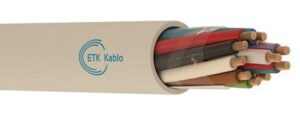
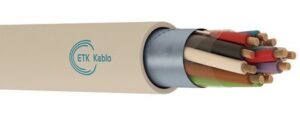
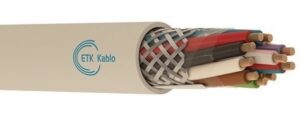
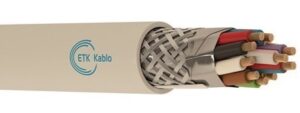
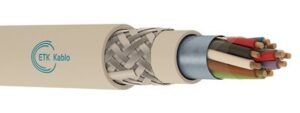
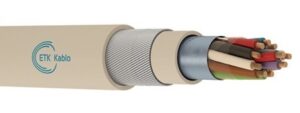
PVC Signal Control Cables | Reliable Industrial and Automation Solutions by ETK Kablo
ETK Kablo’s PVC signal control cables are essential components in modern automation and industrial systems, engineered to transmit analog and digital signals with precision, stability, and durability. Designed for both fixed and flexible installations, these cables ensure uninterrupted communication between control units, sensors, actuators, and process equipment — maintaining excellent signal integrity even in demanding electrical and mechanical conditions.
Construction and Material Features
ETK Kablo manufactures PVC-insulated signal and control cables using fine-stranded bare copper conductors for maximum flexibility and easy installation. Each core is insulated with high-grade polyvinyl chloride (PVC) for electrical reliability and mechanical strength. Depending on project needs, cables are produced with color-coded or numbered cores and finished with a durable PVC outer sheath that provides resistance to oil splashes, light abrasion, and industrial chemicals. This construction makes them ideal for automation cabinets, process control systems, and industrial machinery.
Shielded and Unshielded Variants
ETK Kablo offers both unshielded and shielded PVC signal control cables to accommodate different electromagnetic environments:
- Unshielded (LIYY types): Suitable for general-purpose control and signal transmission where EMI is minimal.
- Shielded (LIYCY types): Include collective aluminum-polyester foil or tinned copper braid to improve electromagnetic compatibility (EMC) and protect sensitive circuits from external interference.
Shielded designs are particularly recommended for CNC machines, HVAC systems, and automation panels, where signal accuracy and noise immunity are critical for performance and safety.
Technical Standards and Safety Compliance
All ETK Kablo PVC signal control cables are produced in accordance with international standards, including VDE 0245, VDE 0812, and IEC 60228.
Upon request, halogen-free (LSZH) versions are also available for use in public buildings or enclosed industrial spaces that require enhanced fire safety.
Standard conductor cross-sections range from 0.22 mm² to 16.00 mm², with multi-core configurations up to 50 cores — providing flexibility for complex signal and control applications.
Key Application Areas
- Automation and Process Control: For data and signal transmission between sensors, PLCs, and actuators.
- Industrial Machinery: Reliable cabling for conveyor systems, packaging machines, and bottling lines.
- Building Automation: Integration into BMS and HVAC systems for efficient monitoring and control.
- Transportation and Infrastructure: Used in signaling and monitoring systems where consistent performance is required.
Quality and Performance Assurance
ETK Kablo ensures each cable meets stringent performance metrics — including insulation resistance, capacitance control, and crosstalk suppression.
Every batch is tested for dimensional accuracy, dielectric strength, and concentricity to maintain signal quality and reliability over the cable’s lifetime. Our vertically integrated production and quality-assurance systems guarantee that each PVC signal control cable meets or exceeds international industrial standards.
Why Choose ETK Kablo PVC Signal Control Cables?
With decades of manufacturing expertise and a presence in over 120 countries, ETK Kablo provides consistent supply, engineering support, and customizable solutions for global automation projects.
Our cables combine mechanical durability, electrical stability, and competitive cost efficiency — making them the preferred choice for OEMs, system integrators, and industrial contractors seeking reliable signal and control performance.
ETK Kablo PVC Signal Control Cables — engineered for reliability, precision, and long-term industrial excellence.
PVC Cables — Frequently Asked Questions
What are PVC cables?
PVC cables use polyvinyl chloride as the insulation and/or outer sheath. PVC provides good electrical insulation, flexibility, basic flame-retardance, and cost efficiency, making it common for control, signal, and power cabling in indoor and light-industrial applications.
Which cable is better, XLPE or PVC?
XLPE (cross-linked polyethylene) typically offers a higher temperature rating (up to ~90 °C continuous), better dielectric strength, and higher current capacity—suited to demanding power or harsh environments. PVC is more economical, flexible, and easy to install for general control/signal uses. The “better” choice depends on your operating temperature, load, environment, and code requirements.
Are PVC cables safe?
Yes—when they comply with relevant standards and are installed correctly. PVC cables provide reliable insulation and basic flame-retardance. For enclosed public spaces where low smoke and zero halogen are required, consider LSZH (halogen-free) alternatives to reduce smoke and corrosive gas during fire events.
What are the disadvantages of PVC cable?
Limitations include a lower continuous temperature rating than XLPE, potential plasticizer migration/hardening over time, and the release of smoke and corrosive halogen gases if burned. Standard PVC may also need UV/chemical stabilization for prolonged outdoor use. Where stricter fire performance is required, specify LSZH or other halogen-free constructions.


