





 President’s Message
Indoor Fiber Optic Cable
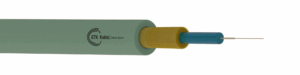
J-V(ZN)H Fiber Optic Cable
SKU:
Simplex Zipcord
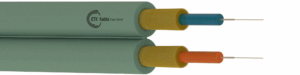
J-V(ZN)H Fiber Optic Cable
SKU:
Duplex Zipcord
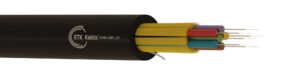
J-V(ZN)H Fiber Optic Cable
SKU:
TB-NMA-SHFJ
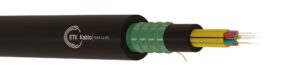
A-V(ZN)H(SR)2Y Fiber Optic Cable
SKU:
TB-SA-DJ
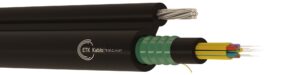
A-V(ZN)H(SR)T2Y Fiber Optic Cable
SKU:
TB-SA-DJ-A
Indoor Fiber Optic Cables | Tight-Buffered Optical Cables by ETK Kablo
ETK Kablo’s Indoor Fiber Optic Cables are engineered for reliable, high-density connectivity inside buildings and campuses. Centered on tight-buffered fiber designs, our portfolio enables fast, clean terminations, small bend radii, and flame-safe routing for data centers, enterprise LAN backbones, telecom rooms, and MDU/FTTB risers. Available in single-mode (G.652D, G.657.A1/A2) and multimode (OM3, OM4, OM5) variants, these indoor optical cables deliver low attenuation and consistent performance for modern 10G/40G/100G networks.
What Is a Tight-Buffered Fiber Cable?
Tight-buffered indoor cables encapsulate the 250 µm fiber in a 900 µm buffer, eliminating messy gels and simplifying field connectorization (LC, SC, ST) and rapid splicing. Bundled into distribution or breakout constructions, tight-buffered designs are ideal for short and medium indoor runs, patching, horizontal cabling, and building backbones.
Key Advantages of Tight-Buffered Indoor Cables
- Fast termination: 900 µm buffered fibers enable quick field connectors and pigtails without gel cleanup.
- Compact routing: Small bend radius options with G.657.A1/A2 bend-insensitive SMF reduce management space and tray load.
- Clean, dry core: No gel—ideal for data center and equipment-room environments.
- Flame-safe materials: LSZH sheaths with low smoke and zero halogen emissions for people-dense spaces.
- High density: Distribution and micro-distribution constructions optimize fiber counts in tight pathways.
- Durability: Aramid/yarn strength members improve pull strength and connector strain relief.
Indoor Tight-Buffered Constructions
| Construction | Fiber Count | Typical Use | Notes |
|---|---|---|---|
| Simplex / Duplex | 1F / 2F | Patch cords, equipment jumpers | 900 µm buffered, easy terminations |
| Distribution | 4F–24F (micro-distribution higher) | Horizontal links, riser/backbone trunks | Multiple 900 µm fibers under single LSZH jacket |
| Breakout | 2F–12F | Rugged fan-out to devices | Each fiber in 2–3 mm subunit; direct connectorization |
| Fan-out Kits / Pigtails | Varies | Rack terminations, ODFs | Speeds panel patching and field upgrades |
Technical Highlights
- Fiber types: Single-Mode G.652D / G.657.A1 / G.657.A2; Multi-Mode OM3 / OM4 / OM5
- Buffers: 900 µm tight buffer; aramid yarn strength members
- Jackets: LSZH (indoor safety), with options for riser/shaft routes per project specs
- Operating range: −20 °C to +70 °C (typical indoor); consult datasheet for model-specific values
- Compliance: Low smoke/halogen-free and flame performance per standards below
Standards & Compliance
- IEC 60794-2 – Indoor optical cable requirements and tests
- IEC 60332-1 / 60332-3 – Flame retardancy; IEC 61034 – low smoke; IEC 60754 – halogen-free
- EN 50575 (CPR) – Reaction-to-fire classification (e.g., B2ca/Cca options)
- ISO/IEC 11801 / EN 50173 – Structured cabling compatibility
- ITU-T fiber recommendations: G.652D, G.657.A1/A2; OM3/OM4/OM5 per ISO/IEC 11801
Typical Indoor Applications
- Data centers: Patch fields, ToR/EoR interconnects, spine-leaf backbones
- Enterprise campuses: Floor distributors, riser trunks, telecom rooms
- Healthcare, education, public buildings: LSZH-safe backbones and horizontal links
- FTTB / MDU: Building entry to tenant distribution with tight bend routes
Why Choose ETK Kablo Indoor Fiber
ETK Kablo combines precise manufacturing with rigorous optical and mechanical testing to deliver tight-buffered indoor cables that terminate faster, route cleaner, and last longer. With global standards compliance and a wide choice of fiber counts, jacket options, and bend-insensitive SMF/MMF, we provide the right indoor optical cable for every rack, room, and riser.
ETK Kablo — tight-buffered indoor fiber you can install faster and trust longer.
Indoor Fiber — Tight-Buffered Cables: Frequently Asked Questions
What is the difference between tight buffered fiber cable and loose tube cable?
Tight-buffered cables jacket each fiber with a 900 µm buffer (no gel), enabling fast field connectorization, small bend radii, and clean routing indoors (patch cords, distribution/backbone). Loose-tube cables place 250 µm fibers inside gel-filled or dry water-blocked tubes with excess length to isolate strain—ideal for outdoor ducts, aerial, or long runs where temperature and mechanical stress are higher.
When stripping the 900 µm tight buffer and coating, how much of the tight buffer should be stripped off at one time?
Always follow the connector manufacturer’s datasheet. For most LC/SC/ST field terminations, a ~25 mm (≈1 inch) strip length of the 900 µm buffer is typical before cleave/termination. Avoid stripping overly long sections to prevent micro-bends or fiber damage.
What size is a tight buffer fiber?
The glass fiber is 125 µm cladding (≈250 µm with primary coating), then a 900 µm tight buffer for indoor handling and direct connectorization.
What is the difference between loose buffer and tight buffer in OPGW?
OPGW (Optical Ground Wire) typically uses loose-buffered fibers inside metallic tubes to decouple fibers from mechanical tension, vibration, and thermal expansion on power lines. Tight-buffered fibers are generally not used in OPGW because they would transfer strain directly to the fiber under line loading.
What is the purpose of buffer tubes in fiber optic cable?
Buffer tubes protect fibers from moisture and mechanical stress, provide excess fiber length to absorb thermal/tensile forces, organize fiber counts, and enable water-blocking. This preserves low attenuation and long-term reliability, especially in outdoor and high-stress routes.


