





 President’s Message
Steel Wire Braided Signal Control Cable
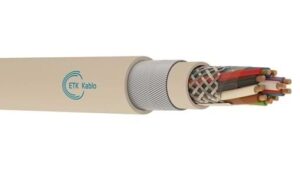
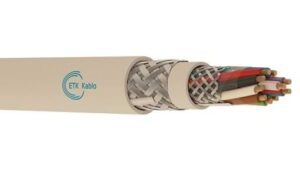
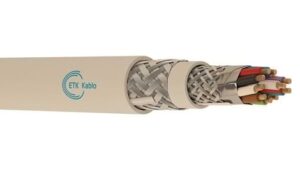
LSZH Steel Wire Braided (SWB) Signal Control Cables
SWB signal control cable constructions from ETK Kablo combine low-voltage signal transmission with a galvanized steel wire braid for additional mechanical protection. The LSZH range is divided into foil-screened, copper-braid-screened and combined foil-and-braid-screened constructions, allowing the electrical screening system and the mechanical protection layer to be specified separately.
The galvanized steel wire braid, commonly referred to as SWB, surrounds an inner halogen-free jacket and primarily provides mechanical reinforcement. Depending on the selected subcategory, the signal core can use an Al/PET foil, a tinned copper braid or both as its electrical screen.
This distinction is important when specifying mechanically protected signal cables. The galvanized steel braid and the internal electromagnetic screen perform different functions and should not be treated as interchangeable layers.
What Is an SWB Signal Control Cable?
An SWB signal control cable is a signal or control cable that includes a galvanized steel wire braid around the inner-jacketed cable core.
The steel braid adds mechanical protection around the signal cable. Inside this layer, a separate electrical-screening system can protect low-voltage signal circuits against electromagnetic interference.
ETK Kablo's LSZH SWB range uses halogen-free inner and outer jackets together with IEC 60228 Class 5 stranded copper conductors. The exact conductor insulation and electrical-screening system depend on the selected cable family.
ETK Kablo LSZH SWB Signal Control Cable Range
| Category | Electrical Screening | Mechanical Protection | Current Product Range |
|---|---|---|---|
| Foil Screened SWB Signal Control Cables | Al/PET foil with tinned copper earthing wire | Galvanized steel wire braid | 6 products |
| Braid Screened SWB Signal Control Cables | Tinned copper braid | Galvanized steel wire braid | 4 products |
| Foil and Braid Screened SWB Signal Control Cables | Al/PET foil + tinned copper braid | Galvanized steel wire braid | 6 products |
All three branches use the SWB mechanical concept. Their main difference is the electromagnetic-screening system located inside the inner jacket.
Steel Wire Braid vs Electrical Screening
An SWB cable can contain more than one metallic layer, but these layers do not perform the same function.
| Component | Material | Main Function |
|---|---|---|
| Foil Screen | Al/PET | Electromagnetic screening |
| Signal Screen Braid | Tinned copper | Electromagnetic screening |
| Earthing Wire | Tinned copper | Supports foil-screen continuity and termination |
| SWB Layer | Galvanized steel wire braid | Mechanical reinforcement and protection |
This separation is particularly important in braid-screened SWB constructions. Such a cable can contain one tinned copper braid for electromagnetic screening and a second galvanized steel wire braid for mechanical protection.
Foil Screened SWB Signal Control Cables
The foil-screened branch combines an overall Al/PET electrical screen with a galvanized steel wire braid mechanical layer.
A tinned copper earthing wire accompanies the foil screen. The screened signal core receives a halogen-free inner jacket before the galvanized steel wire braid and halogen-free outer jacket are applied.
This branch includes standard multicore constructions as well as TP/TT and PiMF/TiMF options.
PiMF/TiMF versions add separate foil screens around individual pairs or triads before the overall electrical screen and SWB mechanical layers are applied.
Braid Screened SWB Signal Control Cables
The braid-screened branch uses an overall tinned copper braid as its electromagnetic screen.
A separate galvanized steel wire braid surrounds the inner halogen-free jacket. Therefore, these cables contain two braided metallic layers with different functions: copper for electromagnetic screening and galvanized steel for mechanical protection.
Standard and TP/TT constructions are available within this branch.
Foil and Braid Screened SWB Signal Control Cables
The combined-screen branch uses both an Al/PET foil and a tinned copper braid around the signal core.
A halogen-free inner jacket separates these electrical screens from the galvanized steel wire braid used for mechanical protection. A halogen-free outer jacket completes the cable.
Standard, TP/TT and PiMF/TiMF constructions provide different conductor-grouping and screening options within this branch.
What Do TP and TT Mean?
TP refers to twisted pairs and TT refers to twisted triads.
TP/TT versions group related conductors together before the complete set of pairs or triads is stranded into the cable core. This arrangement can suit signal and control circuits that need defined pair or triad organization.
TP/TT does not automatically mean that each pair or triad has an individual metallic screen. Individual group screening requires a PiMF/TiMF construction.
What Do PiMF and TiMF Mean?
PiMF refers to individually foil-screened pairs, while TiMF refers to individually foil-screened triads.
In applicable ETK Kablo SWB constructions, each pair or triad receives its own Al/PET foil screen and tinned copper earthing wire. The groups are then stranded together before the remaining overall screens, inner jacket, steel wire braid and outer jacket are applied.
This allows individual signal groups to receive additional electromagnetic separation while the galvanized steel braid independently provides mechanical protection.
LIH and LI2Y Constructions
The LSZH SWB portfolio includes both LIH-based and LI2Y-based signal cable constructions.
| Family | Conductor Insulation | Inner Jacket | Outer Jacket |
|---|---|---|---|
| LIH... | Halogen-free | Halogen-free | Halogen-free |
| LI2Y... | Solid polyethylene | Halogen-free | Halogen-free |
The presence of polyethylene conductor insulation in an LI2Y construction does not make the outer jacket PVC. These products remain within the LSZH branch because their inner and outer jacket system is halogen-free.
SWB vs SWA Signal Control Cable
ETK Kablo also manufactures LSZH Steel Wire Armored signal control cables.
| Feature | SWB | SWA |
|---|---|---|
| Mechanical Layer | Galvanized steel wire braid | Steel wire armor |
| Main Function | Mechanical protection | Mechanical protection |
| Electrical Screen | Specified separately | Specified separately |
| Screening Options | Foil, braid, foil + braid | Foil, braid, foil + braid |
Neither SWB nor SWA is automatically the better construction. The correct mechanical-protection system should follow the physical route conditions, installation method and project specification.
SWB Does Not Replace an Electrical Screen
The galvanized steel wire braid should not automatically be specified as the electromagnetic screen for sensitive signal circuits.
ETK Kablo separates the signal-screening requirement from the mechanical-protection requirement. Depending on the selected family, an Al/PET foil, tinned copper braid or combined foil-and-braid system provides the dedicated electrical screen inside the SWB layer.
This distinction should remain clear in specifications and RFQs.
LSZH SWB vs PVC SWB Signal Control Cable
ETK Kablo also manufactures PVC Steel Wire Braided signal control cables.
The mechanical concept is similar: a galvanized steel wire braid provides additional protection around an inner-jacketed signal cable. However, the material systems differ.
The LSZH range uses halogen-free inner and outer jackets, while the PVC branch uses PVC inner and outer jackets. Project smoke, halogen and fire requirements should determine which material system is appropriate.
Typical Electrical Characteristics
Electrical ratings depend on conductor cross-section and the selected product family. Current ETK Kablo SWB signal-control constructions publish different operating voltages for smaller and larger conductor sizes.
| Conductor Cross-Section | Published Operating Voltage | Published Test Voltage |
|---|---|---|
| 0.22–0.34 mm² | 250 V DC | 1200 V DC / 1 min |
| 0.50–2.50 mm² | 300/500 V | 2000 V DC / 1 min |
The exact conductor count, pair or triad arrangement, insulation resistance and other electrical characteristics should be checked for the selected subcategory and cable construction.
Operating Temperature and Bending Radius
Current representative ETK Kablo LSZH SWB products publish an operating temperature range of -30°C to +70°C.
The published minimum bending radius is 7.5 × D, where D represents the actual outer diameter of the selected cable.
IEC 60228 Class 5 stranded copper conductors provide installation flexibility. However, Class 5 construction alone does not qualify an SWB cable for drag chains, robotic systems or continuously repeated flexing.
LSZH Fire Behavior
Current representative ETK Kablo LSZH SWB constructions publish applicable tests including IEC 61034-2 for smoke density, IEC 60754-1 and IEC 60754-2 for halogen and corrosive-gas behavior, IEC 60332-3-24 for flame propagation and IEC 60332-1-2 for flame retardancy.
These characteristics should not be confused with circuit integrity during fire.
LSZH and flame-retardant performance do not automatically provide FE180, PH120, E30, E60 or E90 performance. A project requiring circuit integrity should specify a cable specifically designed and tested for that requirement.
Is LSZH the Same as CPR?
No. LSZH and CPR describe different fire-related characteristics.
LSZH relates to cable materials, smoke and halogen behavior. CPR addresses the reaction-to-fire classification of an exact tested cable construction.
A specific B2ca, Cca, Dca or other Euroclass should therefore be verified through the applicable product documentation and Declaration of Performance rather than inferred from the term LSZH.
Where Are SWB Signal Control Cables Used?
Steel wire braided LSZH signal cables can be considered where a low-voltage automation or monitoring circuit requires both electromagnetic screening and additional mechanical protection.
Typical applications can include industrial automation, process control, control panels, manufacturing plants, building-management systems, HVAC control, sensors, actuators and other fixed signal routes exposed to increased mechanical stress.
The electrical screen should follow the electromagnetic environment, while the SWB layer should follow the physical protection requirement.
Can SWB Signal Cable Be Used Underground?
The presence of galvanized steel wire braid alone should not be treated as automatic approval for direct burial.
Underground installations can introduce moisture, standing water, chemicals, pulling loads and other environmental conditions that require additional construction features.
If an underground route is planned, the complete cable construction and installation requirements should be confirmed separately rather than selecting the cable solely because it contains an SWB layer.
How to Select an SWB Signal Control Cable
First, determine the required electrical-screening method. Select foil screening, copper-braid screening or combined foil-and-braid screening according to the signal sensitivity and electromagnetic environment.
Next, define the conductor organization. Standard multicore construction can suit conventional circuits, while TP/TT organizes conductors into pairs or triads. PiMF/TiMF should be considered where individual pairs or triads require separate foil screens.
Then define conductor cross-section, circuit count, operating voltage and the required LIH or LI2Y insulation concept.
Finally, verify mechanical route conditions, LSZH and CPR requirements, operating temperature, bending radius and required project documentation.
What Should an RFQ Include?
A clear RFQ should state that an SWB construction is required and define the electrical-screening system separately.
Specify foil, copper braid or combined foil-and-braid screening together with conductor cross-section, conductor or pair/triad count, standard, TP/TT or PiMF/TiMF configuration and total cable length.
Where applicable, also specify CPR classification, cable marking, packing length, test documentation and other project-specific requirements.
ETK Kablo as an SWB Signal Control Cable Manufacturer
ETK Kablo manufactures LSZH steel wire braided signal and control cables at its production facility in Istanbul, Türkiye.
The portfolio combines galvanized steel wire braid mechanical protection with foil, copper-braid and combined electrical-screening options for distributors, automation contractors, system integrators, OEMs and industrial projects.
Standard LSZH signal cables without the SWB mechanical layer are available within the wider LSZH signal control cable range.
What Determines SWB Signal Control Cable Price?
SWB signal control cable price depends on conductor cross-section, conductor or pair count, copper content, electrical-screening system, galvanized steel wire braid content, inner and outer jacket material, cable diameter, order quantity and required documentation.
A foil-screened SWB cable and a combined foil-and-copper-braid SWB cable do not contain the same quantity of metallic screening material. Likewise, larger cable diameters require more steel braid and jacket material.
Commercial comparisons should therefore use equivalent conductor sizes, screening configurations, mechanical protection, fire requirements and documentation scope.
Frequently Asked Questions
What is an SWB signal control cable?
An SWB signal control cable includes a galvanized steel wire braid around an inner-jacketed signal cable to provide additional mechanical protection.
What does SWB mean in cable construction?
SWB refers to Steel Wire Braid or Steel Wire Braided construction. In the ETK Kablo products in this category, galvanized steel wire braiding provides the mechanical-protection layer.
Does the steel wire braid provide electromagnetic screening?
The galvanized steel braid is primarily the mechanical layer. ETK Kablo uses separate Al/PET foil, tinned copper braid or combined electrical screens inside the SWB layer according to the selected construction.
What is the difference between SWB and SWA?
SWB uses a braided galvanized steel-wire mechanical layer, while SWA uses a steel-wire armor construction. Both provide mechanical protection, but their mechanical structures are different.
What screening options are available with LSZH SWB cables?
ETK Kablo divides the range into foil-screened, tinned-copper-braid-screened and combined foil-and-braid-screened subcategories.
What do TP and TT mean?
TP refers to twisted pairs and TT refers to twisted triads. They describe conductor organization rather than individual electromagnetic screening.
What do PiMF and TiMF mean?
PiMF uses individually foil-screened pairs, while TiMF uses individually foil-screened triads.
Is an LSZH SWB cable fire resistant?
Not automatically. LSZH and flame-retardant characteristics do not provide FE180, PH120 or another circuit-integrity rating unless the specific cable has been designed and tested for that requirement.
Can SWB cable be installed directly underground?
Steel wire braiding alone should not be treated as proof of direct-burial suitability. Moisture, water exposure, chemicals and installation loads must be considered for the complete cable construction.
Is SWB cable suitable for continuous flexing?
Class 5 stranded conductors provide installation flexibility, but they do not automatically qualify the cable for drag-chain, robotic or continuous-flex duty.
What determines SWB signal control cable price?
Key factors include conductor size, conductor or pair count, copper content, electrical-screening method, steel-braid content, cable diameter, order quantity and required documentation.


