





 President’s Message
Duct Type Fiber Optic Cable
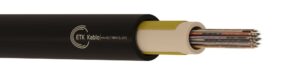
A-D(ZN)2Y Fiber Optic Cable
SKU:
microSLT-NMA-SJ-(AY06)
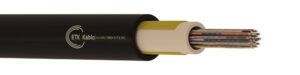
U-D(ZN)H Fiber Optic Cable
SKU:
microSLT-NMA-SHFJ-(AY06)
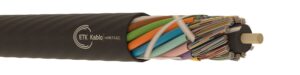
A-DQ2Y Fiber Optic Cable
SKU:
mdMLT-SJ-(D)
Duct Fiber Optic Cable for Underground Telecom Networks
Duct Fiber Optic Cable provides optical connectivity through protected underground conduits used in telecommunications, broadband, metropolitan, campus and infrastructure networks. ETK Kablo manufactures compact and high-capacity loose-tube fiber optic cables for duct routes where cable diameter, pulling performance, water protection and long-term environmental reliability influence the installation.
ETK Kablo's duct fiber optic portfolio includes compact central loose tube designs for lower and moderate fiber counts as well as multi loose tube constructions for larger network capacities. Depending on the product, non-metallic strength elements, water-blocking systems and UV-resistant outer jackets protect the optical core during installation and long-term operation.
Duct installation and direct burial are not the same. A duct cable operates inside a protective conduit, while a direct-burial cable must withstand the surrounding soil and external mechanical environment without that continuous duct protection. The correct construction should therefore match the actual underground installation method.
What Is a Duct Fiber Optic Cable?
A duct fiber optic cable is designed for installation inside underground conduits or ducts. The duct creates a protected pathway between network points, while the cable carries the optical fibers required for data transmission.
During installation, the cable may be pulled, pushed or blown through the conduit depending on cable dimensions, duct design, route length and installation equipment. As a result, the cable must combine optical performance with suitable tensile strength, bending characteristics and external durability.
Duct fiber cables normally use outdoor loose-tube architecture because the fiber-bearing tubes help protect the optical fibers against mechanical and environmental changes along extended underground routes.
Duct Cable vs Direct Burial Fiber Optic Cable
The terms underground fiber optic cable and duct fiber optic cable are sometimes used interchangeably, but they do not describe exactly the same installation method.
| Characteristic | Duct Fiber Optic Cable | Direct Burial Fiber Optic Cable |
|---|---|---|
| Installation | Installed inside a protective underground conduit | Installed directly in the ground |
| External Protection | Duct provides an additional physical barrier | Cable construction itself must address the burial environment |
| Mechanical Design | Optimized according to pulling, blowing and conduit conditions | Often requires increased mechanical protection |
| Future Access | Duct can facilitate replacement or additional cable installation | Access normally requires excavation |
| Armor Requirement | Depends on project and duct environment | Additional protection is often considered according to soil and mechanical risk |
A cable should therefore not be specified for direct burial simply because it is suitable for an underground duct route.
Compact Central Loose Tube Duct Fiber Optic Cable
Compact central loose tube constructions provide an efficient solution for duct networks with low to moderate fiber-count requirements.
ETK Kablo's A-D(ZN)2Y duct construction places the optical fibers inside one gel-filled PBT tube. Aramid yarn provides non-metallic mechanical reinforcement, while a black polyethylene outer jacket protects the finished cable for outdoor use.
The A-D(ZN)2Y range covers 2 to 24 fibers. Cable diameters remain compact, which can make this construction attractive where available duct space is limited.
Central loose tube architecture also simplifies the internal cable structure because all optical fibers share one principal fiber-bearing tube.
Multi Loose Tube Duct Fiber Optic Cable
Higher-capacity networks can require a multi loose tube duct fiber optic cable. In this architecture, several PBT tubes are stranded around a central strength member, allowing optical fibers to be distributed across multiple tubes.
ETK Kablo's A-DQ2Y construction uses an FRP central strength member, water-swellable yarn and a UV-resistant polyethylene outer jacket.
The A-DQ2Y range extends from 12 to 288 fibers, providing a scalable solution for metropolitan networks, telecom backbones and other infrastructure routes that require substantial optical capacity.
The cable diameter increases as capacity rises, so duct dimensions and installation method should be evaluated together with fiber count.
Fiber Count from Compact Links to 288 Fibers
Duct infrastructure can serve anything from small access links to high-capacity metropolitan backbones. ETK Kablo's product range reflects this range of requirements.
| Fiber Capacity | Typical Construction Direction |
|---|---|
| 2–24 Fibers | Compact central loose tube designs |
| 12–72 Fibers | Multi loose tube distribution and backbone designs |
| 96–144 Fibers | Higher-capacity metropolitan and telecom infrastructure |
| 192–288 Fibers | High-density backbone networks where duct capacity is valuable |
The largest available fiber count is not automatically the best choice. Network designers should balance present capacity, future growth, cable diameter, duct occupancy and installation cost.
Microduct Fiber Optic Cable and Compact Duct Installations
Microduct fiber optic cable is used in modern telecom networks where compact cable dimensions and efficient duct utilization are important. Microduct systems use smaller pathways to increase the number of available cable routes inside a larger duct infrastructure.
Compact cable diameter becomes particularly important in these systems. Selected ETK Kablo compact fiber optic constructions can be evaluated for small-duct or microduct applications according to the internal duct diameter, cable diameter, route length and installation method.
However, the term microduct should not be applied automatically to every duct cable. The cable-to-duct diameter ratio, blowing equipment, route geometry and product mechanical limits must suit the specific installation.
Pulling, Blowing and Jetting Fiber Optic Cable
Fiber optic cable can enter underground ducts through several installation methods. Pulling uses mechanical force applied along the cable route, while blowing or jetting uses controlled airflow and specialized equipment to move the cable through the duct.
The most appropriate method depends on:
- Cable outside diameter
- Duct internal diameter
- Route length
- Number and radius of bends
- Cable weight
- Surface friction
- Maximum installation tension
- Available installation equipment
Installers must always remain within the tensile and bending limits specified for the selected cable. Excessive pulling force can damage the cable structure or impose unwanted strain on the optical fibers.
Why Cable Diameter Matters in Duct Networks
Duct capacity is a valuable infrastructure resource. Therefore, outside cable diameter can influence both the initial installation and the ability to expand the network later.
A smaller cable can leave additional space for future cables or make installation easier in constrained conduit systems. However, cable diameter should not be reduced at the expense of the required fiber capacity or mechanical performance.
ETK Kablo's duct portfolio ranges from compact single-tube constructions with diameters below 5 mm in selected variants to larger high-fiber-count multi loose tube cables for backbone routes.
Procurement teams should provide duct dimensions when cable-to-duct compatibility forms part of the installation requirement.
Water Protection in Underground Duct Fiber Cable
Underground ducts can contain moisture or water even when the conduit itself remains structurally intact. Fiber optic cable design must therefore consider water penetration independently from the duct protection.
ETK Kablo uses different water-protection concepts depending on the cable construction. Central loose tube products can use waterproof thixotropic jelly around the fibers, while multi loose tube constructions can combine tube filling with water-swellable elements in the cable core.
The appropriate water-blocking system depends on the product architecture and project specification.
Non-Metallic Strength Elements for Duct Networks
Several ETK Kablo duct constructions use dielectric strength elements rather than metallic armor.
Aramid yarn can provide tensile reinforcement in compact central loose tube cables, while FRP can act as the central structural element in multi loose tube designs.
These materials allow suitable cable constructions to remain free from conventional steel armor while providing the mechanical strength needed for installation.
Where the project faces greater crushing, rodent or external mechanical risks, procurement teams should evaluate whether an armored fiber optic cable provides a more appropriate solution.
Single-Mode Fiber for Underground Telecom Networks
Single-mode fiber is the principal choice for long-distance telecom, broadband and metropolitan duct networks because it supports long transmission distances and high network capacity.
ETK Kablo duct products include G.652.D single-mode fiber. Other fiber requirements should be confirmed against the selected construction and project specification.
Fiber type should be selected according to transmission distance, optical equipment, network architecture and bending requirements rather than the underground installation method alone.
Applications of Duct Fiber Optic Cable
ETK Kablo duct fiber optic cables can support applications such as:
- Telecommunication backbone networks
- Metropolitan Area Networks (MAN)
- FTTx feeder and distribution networks
- Urban broadband infrastructure
- Campus and interbuilding networks
- Utility communication networks
- Transportation communication infrastructure
- Industrial backbone networks
- Smart-city fiber infrastructure
- High-capacity underground data networks
The correct cable should be selected according to required fiber capacity, duct dimensions, route geometry, installation method and environmental conditions.
Mechanical Performance During Duct Installation
Duct installation can expose fiber cable to tensile force, bending, crushing and impact before the network even begins operation.
ETK Kablo provides product-specific mechanical values for its duct constructions. Applicable testing can include tensile load, crush resistance, impact, torsion, repeated bending, temperature cycling and water penetration.
For example, different products can have different allowable installation tension and crush resistance. Procurement teams should therefore use the exact product datasheet rather than applying one mechanical rating to every duct fiber cable.
How to Specify a Duct Fiber Optic Cable
Providing duct and network information at the quotation stage helps ETK Kablo match the cable construction to the installation.
| Specification Item | Information to Provide |
|---|---|
| Fiber Type | Required single-mode or multimode fiber |
| Fiber Count | Current requirement and future network capacity |
| Cable Architecture | Central loose tube or multi loose tube |
| Duct Size | Internal duct or microduct diameter where relevant |
| Installation Method | Pulling, blowing, jetting or project-specific method |
| Route Length | Distance between access or jointing points |
| Route Geometry | Number of bends and minimum bend radius |
| Mechanical Requirements | Installation tension, crush and impact requirements |
| Water Protection | Project-specific water-blocking requirement |
| Delivery Requirement | Quantity, drum length, marking and documentation |
ETK Kablo Duct Fiber Optic Cable Range
ETK Kablo offers several duct cable constructions for different network capacities and installation requirements.
| Construction | Main Design Concept |
|---|---|
| A-D(ZN)2Y | Compact central loose tube construction with aramid-yarn reinforcement and outdoor polyethylene jacket |
| U-D(ZN)H | Compact non-metallic central loose tube construction for project-specific duct applications |
| A-DQ2Y | Multi loose tube construction with FRP central strength member and water-swellable protection for higher fiber counts |
The exact fiber type, cable diameter, mechanical values, sheath construction and environmental performance should be confirmed from the technical datasheet of the selected product.
Why Choose ETK Kablo for Duct Fiber Optic Cable?
ETK Kablo manufactures duct fiber optic cables ranging from compact low-count designs to multi loose tube constructions with up to 288 fibers in its product range.
This range allows telecom companies, contractors, distributors and infrastructure buyers to select a construction according to both optical capacity and physical duct conditions.
ETK Kablo can evaluate fiber count, cable diameter, duct dimensions, installation method, mechanical requirements and delivery specifications together during the quotation process.
Frequently Asked Questions About Duct Fiber Optic Cable
What is a duct fiber optic cable?
A duct fiber optic cable is designed for installation inside an underground conduit. The duct protects the cable route, while the fiber optic cable provides optical transmission between network points.
Is duct fiber optic cable the same as underground fiber optic cable?
Duct fiber cable is one type of underground fiber optic cable. Underground fiber can also use direct-burial or other protected constructions, so the installation method should always be specified.
Can duct fiber optic cable be directly buried?
Not automatically. A cable designed for duct installation should only be used for direct burial when the exact construction and manufacturer specification confirm suitability for that installation method.
Can fiber optic cable be blown through a duct?
Selected fiber optic cables can be installed by blowing or jetting when the cable dimensions, duct diameter, route geometry, mechanical limits and installation equipment are compatible.
What is microduct fiber optic cable?
Microduct fiber optic cable is a compact cable intended for installation in smaller duct pathways. The cable diameter and mechanical design must match the microduct dimensions and installation method.
How many fibers can ETK Kablo duct cable contain?
ETK Kablo's duct portfolio includes compact constructions starting at 2 fibers and multi loose tube A-DQ2Y designs reaching up to 288 fibers.
What is the difference between central loose tube and multi loose tube duct cable?
Central loose tube cable places the fibers inside one main tube and provides a compact design. Multi loose tube cable divides fibers among several tubes around a central strength member and provides greater scalability for high-capacity networks.
What information should I provide when requesting a duct fiber cable quotation?
Provide the fiber type, fiber count, duct or microduct size, installation method, route length, route geometry, mechanical requirements, quantity, required drum length and any project-specific technical documentation.


