





 President’s Message
Cat 3 Data Cable
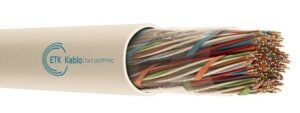
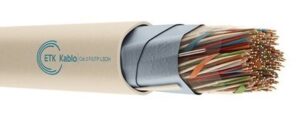
Cat 3 Cable for Voice and Legacy Data Networks
Cat 3 Cable provides multipair copper connectivity for voice communication, PBX systems, intercom networks and legacy low-speed data applications. ETK Kablo manufactures Category 3 cables in U/UTP and F/UTP constructions with multiple pair counts and different outer-jacket materials for indoor and project-specific installations.
The current ETK Kablo Cat 3 portfolio includes unshielded U/UTP and overall foil-screened F/UTP designs. Both families use solid copper conductors and twisted-pair architecture, while PVC, LSOH and PE product variants allow the outer construction to follow the installation environment and project material requirements.
Cat 3 remains relevant where a project requires standardized multipair voice or legacy data transmission rather than modern high-speed Ethernet. For new Gigabit or higher-speed LAN networks, Cat 5e, Cat 6 or a higher Category-rated cable normally provides the more appropriate network architecture.
What Is Cat 3 Cable?
Category 3 is a balanced twisted-pair copper cable category developed for voice and low-frequency data transmission.
ETK Kablo Cat 3 product documentation specifies electrical transmission characteristics through 16 MHz and a nominal 100-ohm characteristic impedance. These characteristics distinguish a Category-rated data cable from a generic multipair telephone cable that may not carry the same defined high-frequency transmission parameters.
Cat 3 cable can support applications such as analogue voice, PBX distribution, intercom systems and legacy Ethernet networks where Category 3 performance meets the system requirement.
Cat 3 U/UTP and F/UTP Cable Types
ETK Kablo divides its Cat 3 range into two principal screening architectures.
| Construction | Overall Screen | Pair Screen | Main Selection Logic |
|---|---|---|---|
| U/UTP | None | None | Unscreened multipair voice and data networks in controlled EMI environments |
| F/UTP | Overall foil | None | Multipair networks requiring additional electromagnetic protection |
The required screen should follow the electrical environment. F/UTP adds electromagnetic protection, while U/UTP provides a simpler and more compact cable construction where an overall screen is unnecessary.
Cat 3 U/UTP Cable
Cat 3 U/UTP Cable uses twisted copper pairs without an overall metallic screen or individual pair screens.
ETK Kablo's current U/UTP family uses solid copper conductors with solid polyethylene insulation. The pairs are stranded in layers, while larger pair-count constructions use organized multipair groups to create the complete cable core.
The current U/UTP category includes separate PVC, LSOH and PE product versions. This allows the same Category 3 transmission concept to be adapted to different material and installation requirements.
Cat 3 F/UTP Cable
Cat 3 F/UTP Cable adds one overall foil screen around the multipair cable core.
The ETK Kablo F/UTP construction uses Al/PET screening together with a tinned copper earthing wire. The screen helps reduce the influence of external electromagnetic interference on the twisted-pair signals.
Like the U/UTP family, the current F/UTP category includes PVC, LSOH and PE variants.
The F/UTP screen is an electromagnetic-protection element. It should not be confused with mechanical armor.
U/UTP vs F/UTP Cat 3 Cable
| Feature | Cat 3 U/UTP | Cat 3 F/UTP |
|---|---|---|
| Overall Screen | No | Al/PET foil |
| Individual Pair Screen | No | No |
| EMI Protection | Relies primarily on balanced twisted pairs | Adds an overall metallic screen |
| Termination | Simpler | Screen termination must form part of the installation design |
| Typical Selection | Controlled electromagnetic environment | Routes requiring additional EMI protection |
F/UTP should not automatically be considered superior. A correctly designed U/UTP network can provide the required performance where electromagnetic conditions are suitable.
Multipair Cat 3 Cable
One of the main strengths of Category 3 within the ETK Kablo portfolio is its ability to carry many twisted pairs within one cable.
ETK Kablo U/UTP and F/UTP product documentation includes constructions from 2 pairs up to 100 pairs with 0.51 mm solid copper conductors.
Common procurement sizes can include:
- 2 pair Cat 3 cable
- 4 pair Cat 3 cable
- 10 pair Cat 3 cable
- 20 pair Cat 3 cable
- 25 pair Cat 3 cable
- 50 pair Cat 3 cable
- 75 pair Cat 3 cable
- 100 pair Cat 3 cable
This multipair architecture makes Cat 3 particularly relevant for voice-distribution and legacy telecom systems where many circuits need to share one structured cable.
How High-Pair-Count Cat 3 Cable Is Organized
ETK Kablo's current Cat 3 constructions use layer stranding for lower pair counts.
For larger constructions, groups of twisted pairs form organized sub-units before final cabling. Identification tapes help distinguish the groups during installation and termination.
This structure is important in 20-pair, 50-pair and 100-pair cables because organized pair grouping makes large communication cables easier to identify and terminate.
Solid Copper Conductors
Current ETK Kablo Cat 3 products use electrolytic solid copper conductors.
Solid copper provides predictable conductor resistance and stable electrical characteristics for fixed structured-cabling installations.
ETK Kablo U/UTP and F/UTP product documentation specifies a 0.51 mm conductor diameter across the listed multipair range.
Conductor material and diameter should be verified when comparing quotations because conductor construction directly affects resistance, attenuation and cable performance.
Cat 3 Frequency and Transmission Performance
ETK Kablo publishes Cat 3 transmission data from 1 MHz through 16 MHz.
Technical parameters include:
- Insertion loss
- Near-end crosstalk (NEXT)
- Return loss
- Structural return loss
- Propagation delay
- Characteristic impedance
The current Cat 3 product documentation specifies a nominal characteristic impedance of 100 ohms across the specified frequency range.
These defined transmission parameters are one reason Category 3 cable should be distinguished from generic voice wiring.
Cat 3 Cable for 10BASE-T
Cat 3 cable was widely used for early twisted-pair Ethernet systems such as 10BASE-T.
10BASE-T provides 10 Mbps Ethernet transmission and represents a legacy network application by modern LAN standards.
Where an existing system specifically requires Category 3 cabling, ETK Kablo can supply suitable multipair U/UTP or F/UTP constructions. However, new higher-speed Ethernet networks should normally use a more recent category such as Cat 5e, Cat 6 or Cat 6A.
Cat 3 Cable for Telephone and PBX Networks
Voice distribution remains one of the most relevant applications for Cat 3 cable.
Large PBX, telephone and intercom installations can require many individual copper pairs between distribution points. Multipair Category 3 cable allows these circuits to be consolidated within one organized cable construction.
Potential applications include:
- PBX telephone systems
- Building voice distribution
- Intercom systems
- Legacy structured cabling
- Voice backbone cabling
- Low-speed data networks
- Legacy industrial communication
- Building communication infrastructure
Cat 3 Cable vs Telephone Cable
Cat 3 cable and conventional telephone cable can serve similar voice applications, but the terms should not automatically be treated as equivalent.
| Characteristic | Cat 3 Cable | General Telephone Cable |
|---|---|---|
| Main Design | Category-rated balanced twisted-pair transmission | Voice and telecom transmission according to the specific cable design |
| High-Frequency Parameters | Defined Category 3 transmission requirements | Depend on the individual telephone-cable specification |
| Characteristic Impedance | Defined for applicable Cat 3 performance | Depends on product family |
| Legacy Ethernet | Can support applicable Category 3 Ethernet systems | Should not be assumed without defined data performance |
| High Pair Counts | Available | Also widely available |
Procurement teams should therefore use the required cable standard and electrical specification rather than selecting a generic telephone cable solely because the pair count matches.
Cat 3 vs Cat 5e Cable
Cat 3 and Cat 5e belong to different generations of balanced copper cabling.
| Characteristic | Cat 3 | Cat 5e |
|---|---|---|
| Nominal Category Bandwidth | 16 MHz | 100 MHz |
| Typical Network Role | Voice and legacy low-speed data | Modern general-purpose Ethernet |
| Legacy 10BASE-T | Applicable | Applicable |
| Gigabit Ethernet | Not the appropriate Category 3 application | Common Cat 5e application |
| ETK Kablo Product Architecture | Multipair U/UTP and F/UTP | Broader U/UTP, F/UTP, S/UTP, SF/UTP and specialized constructions |
For a new conventional Ethernet installation, Cat 5e or a higher category will usually provide a much more appropriate performance platform. Cat 3 remains valuable where the actual application is voice, legacy infrastructure or a specifically defined multipair Category 3 system.
PVC, LSOH and PE Cat 3 Cable
ETK Kablo's current Cat 3 U/UTP and F/UTP categories each contain PVC, LSOH and PE product variants.
PVC Cat 3 cable provides a conventional material option for suitable fixed installations.
LSOH / LSZH Cat 3 cable addresses projects requiring low-smoke and halogen-free cable materials.
PE Cat 3 cable provides a polyethylene-jacket direction for applications where environmental resistance and the exact product construction make PE appropriate.
Material selection should follow the exact installation environment and product datasheet. Jacket material does not change the underlying Category 3 transmission requirement.
LSOH Cat 3 Cable Is Not Fire Resistant Cable
LSOH or LSZH describes smoke and halogen characteristics of the cable materials.
It does not mean that the cable maintains data or voice transmission during prolonged fire exposure.
Where a project requires FE180, PH120 or another circuit-integrity performance, a specifically designed and tested fire-resistant cable must be selected instead.
F/UTP Shielding and Grounding
The metallic screen in F/UTP cable must form part of the complete cabling-system design.
Appropriate screen termination and bonding help the screen perform its intended electromagnetic function. Poor or incomplete installation can reduce the benefit provided by a screened cable.
This is why the decision between U/UTP and F/UTP should consider not only the cable but also the installation environment and termination hardware.
Cat 3 Cable Standards and Technical Data
ETK Kablo publishes manufacturing references and electrical performance values on the individual Cat 3 product datasheets.
Current product documentation references standards including ANSI/TIA structured-cabling requirements together with IEC 61156-5 and ISO/IEC 11801.
Because standards can evolve over time, procurement teams should specify the required project edition or acceptance criteria and verify them against the current product documentation supplied with the quotation.
How to Specify a Cat 3 Cable
A complete Cat 3 RFQ should identify both the required transmission architecture and physical construction.
| Specification Item | Information to Provide |
|---|---|
| Category | Cat 3 |
| Screening | U/UTP or F/UTP |
| Pair Count | Required number of twisted pairs |
| Conductor | Required conductor diameter or applicable specification |
| Outer Jacket | PVC, LSOH or PE according to product and route |
| Application | PBX, voice, intercom, legacy data or other specified system |
| Transmission Requirement | Applicable Category 3 electrical performance |
| Installation Environment | Indoor, project-specific external route or other environment |
| Fire Requirement | Applicable flame, smoke, halogen and CPR requirements |
| Delivery Requirement | Quantity, packing length, marking and project documentation |
Why Choose ETK Kablo for Cat 3 Cable?
ETK Kablo manufactures Cat 3 cable as a true multipair communication product rather than limiting the range to a conventional four-pair Ethernet construction.
The current portfolio includes U/UTP and F/UTP architectures, pair counts from small communication links to 100-pair cables and separate PVC, LSOH and PE product versions.
This range allows telecom distributors, infrastructure contractors, system integrators and building communication projects to match screening, pair capacity and jacket material to the actual network requirement.
ETK Kablo can evaluate pair count, screening, material system, electrical performance and project documentation together during the quotation process.
Frequently Asked Questions About Cat 3 Cable
What is Cat 3 cable?
Cat 3 cable is a balanced twisted-pair copper cable category designed for voice and legacy low-speed data transmission. ETK Kablo manufactures multipair Cat 3 cables in U/UTP and F/UTP constructions.
What speed does Cat 3 cable support?
Cat 3 is associated with legacy Ethernet applications such as 10BASE-T at 10 Mbps. It is not the appropriate choice for modern Gigabit Ethernet structured cabling.
What frequency is Cat 3 cable rated for?
ETK Kablo publishes Cat 3 transmission parameters through 16 MHz on its current U/UTP and F/UTP products.
What is Cat 3 U/UTP cable?
Cat 3 U/UTP uses twisted copper pairs without an overall metallic screen or individual pair screens.
What is Cat 3 F/UTP cable?
Cat 3 F/UTP uses unshielded twisted pairs together with one overall foil screen for additional electromagnetic protection.
Is Cat 3 cable still used?
Yes. Cat 3 remains relevant for voice systems, PBX networks, intercoms, legacy data applications and existing infrastructure where Category 3 performance meets the technical requirement.
Is Cat 3 cable suitable for Gigabit Ethernet?
No. New Gigabit Ethernet installations should use a suitable higher category such as Cat 5e, Cat 6 or Cat 6A according to the network specification.
Is Cat 3 the same as telephone cable?
Not necessarily. Cat 3 defines Category-rated transmission performance. A general telephone cable can carry voice signals without necessarily meeting the complete Category 3 high-frequency data requirements.
How many pairs can ETK Kablo Cat 3 cable contain?
ETK Kablo U/UTP and F/UTP product documentation includes configurations from 2 pairs up to 100 pairs.
Does ETK Kablo manufacture shielded Cat 3 cable?
Yes. ETK Kablo manufactures F/UTP Cat 3 cable with an overall Al/PET foil screen and tinned copper earthing wire.
What Cat 3 jacket materials are available?
The current ETK Kablo U/UTP and F/UTP categories contain separate PVC, LSOH and PE product variants.
What information should I provide when requesting a quotation?
Provide the required U/UTP or F/UTP construction, pair count, conductor requirement, PVC/LSOH/PE jacket preference, application, required standards, quantity, packing length and project documentation.


