





 President’s Message
Blog
RE-Y vs RE-2Y vs RE-2X Instrumentation Cable: PVC, PE and XLPE Insulation Compared
Reading Time: 16 minutes
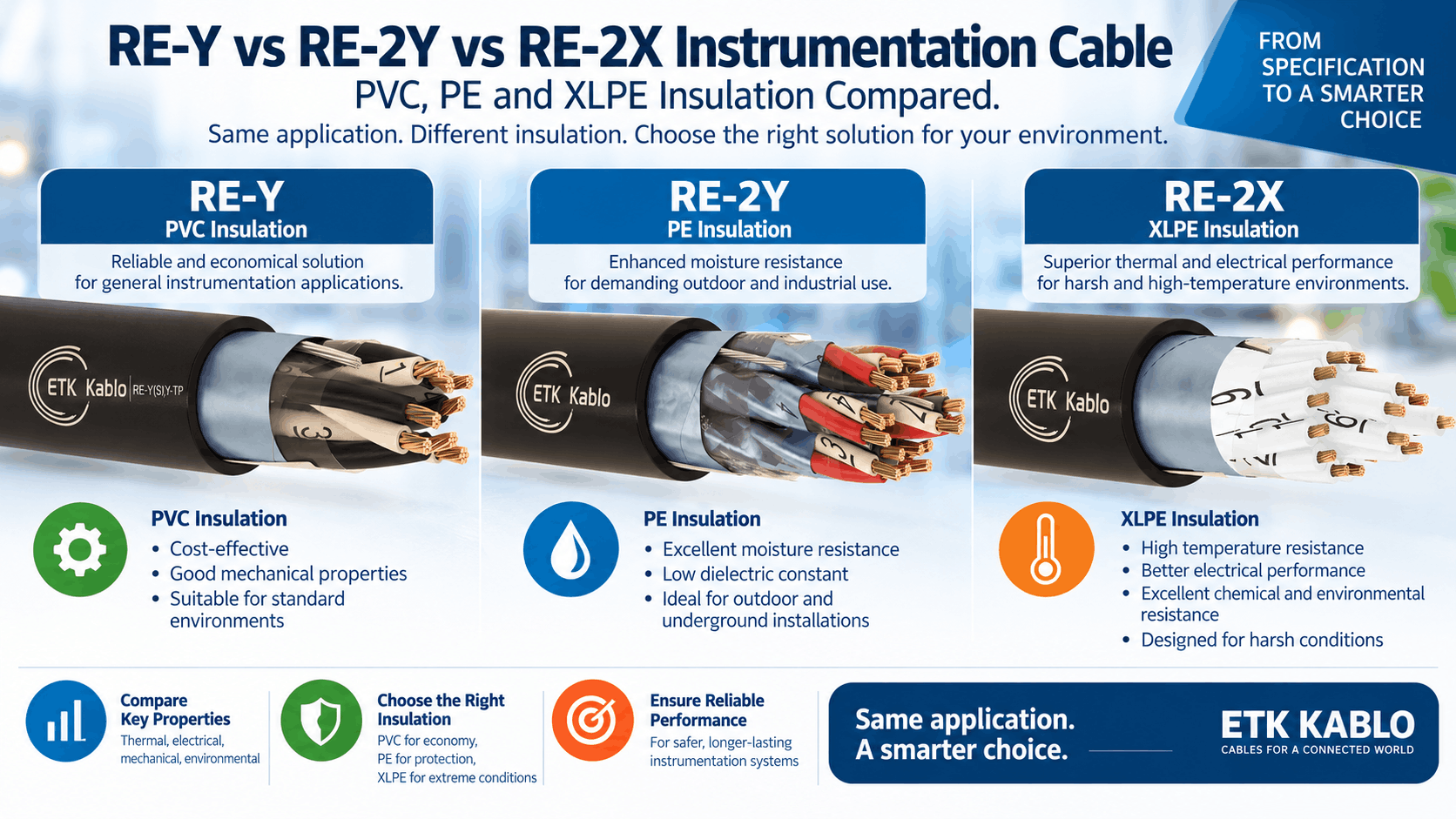
RE-Y vs RE-2Y vs RE-2X is fundamentally a comparison of the insulation materials surrounding the copper conductors inside an instrumentation cable. Although the cable designations look similar, Y, 2Y and 2X identify three different polymer systems: PVC, polyethylene and cross-linked polyethylene.
This difference matters because conductor insulation influences electrical characteristics, temperature capability, dielectric performance, mechanical behaviour and long-term suitability for industrial environments.
In the designation system, Y indicates PVC insulation, 2Y indicates polyethylene or PE insulation, and 2X indicates cross-linked polyethylene or XLPE insulation.
However, insulation type is only one part of the complete cable construction. The same cable can also include overall or individual screening, PVC or halogen-free outer sheaths, steel wire armour and different pair or triad configurations.
Therefore, engineers should not interpret RE-2X as automatically superior to RE-2Y or RE-Y for every project. Instead, the insulation should be selected according to the electrical, thermal and environmental requirements of the instrumentation circuit.
Quick answer: choose RE-Y when PVC insulation provides the required electrical and temperature performance and conventional industrial construction is appropriate. RE-2Y uses PE insulation, offering excellent dielectric characteristics and high insulation resistance. RE-2X uses XLPE insulation, combining strong electrical properties with cross-linking that enables higher continuous operating temperatures and improved resistance to thermal deformation. For demanding industrial plants, RE-2X is often preferred, but PE can remain highly attractive where dielectric performance is particularly important.
RE-Y vs RE-2Y vs RE-2X at a Glance
| Characteristic | RE-Y | RE-2Y | RE-2X |
|---|---|---|---|
| Insulation | PVC | PE | XLPE |
| Polymer structure | Thermoplastic | Thermoplastic | Cross-linked |
| Typical ETK operating temperature | Up to +70°C | Up to +70°C | Up to +90°C |
| Dielectric performance | Good | Excellent | Excellent |
| Insulation resistance | Lower than PE / XLPE in comparable designs | Very high | Very high |
| Thermal deformation resistance | Moderate | Moderate | High |
| Moisture resistance | Good | Excellent | Excellent |
| Typical selection logic | General industrial use | Strong dielectric performance | Higher-temperature and demanding industrial use |
Consequently, the three constructions should be viewed as different engineering solutions rather than as a simple basic-good-best hierarchy.
What Does RE Mean in Instrumentation Cable?
Instrumentation cable designations combine several codes that describe different parts of the cable.
The letters and numbers should therefore be read as a construction sequence rather than one complete unexplained product name.
In RE-type instrumentation cables, the insulation designation immediately following RE is particularly important:
- RE-Y → PVC insulation
- RE-2Y → polyethylene insulation
- RE-2X → cross-linked polyethylene insulation
Additional characters then describe screening, sheath material, armour and other cable characteristics.
For example, in RE-2X(St)Y, the 2X identifies XLPE conductor insulation while the final Y identifies a PVC outer sheath.
Therefore, two occurrences of the letter Y in one product designation can refer to different layers depending on their position.
Understanding Y, 2Y and 2X Cable Codes
| Code | Material | Meaning |
|---|---|---|
| Y | PVC | Polyvinyl chloride |
| 2Y | PE | Thermoplastic polyethylene |
| 2X | XLPE | Cross-linked polyethylene |
This coding principle is widely used in European cable designation systems.
It also explains why RE-Y(St)Y and RE-2X(St)Y can both end in Y even though their conductor insulation differs.
RE-Y vs RE-2Y vs RE-2X: Reading the Full Cable Code
Consider these three constructions:
- RE-Y(St)Y
- RE-2Y(St)Y
- RE-2X(St)Y
All three can use a similar general instrumentation architecture.
The first insulation code changes:
- Y = PVC
- 2Y = PE
- 2X = XLPE
Meanwhile, (St) identifies an overall foil-screen arrangement, typically using an aluminum/polyester tape together with a drain or earthing conductor.
The final Y indicates a PVC outer sheath.
Therefore:
| Code | Insulation | Screen | Outer Sheath |
|---|---|---|---|
| RE-Y(St)Y | PVC | Overall foil | PVC |
| RE-2Y(St)Y | PE | Overall foil | PVC |
| RE-2X(St)Y | XLPE | Overall foil | PVC |
This isolates the key variable: the insulation around the conductors.
What Is RE-Y Instrumentation Cable?
RE-Y uses PVC insulation around the copper conductors.
PVC is one of the most established cable polymers in industrial installations because it combines electrical insulation with mechanical durability, flame-retardant properties and cost-effective processing.
A typical overall-screened construction can include:
- Class 2 stranded copper conductors
- PVC conductor insulation
- Pairs or triads
- Polyester wrapping
- Aluminum/polyester overall screen
- Tinned copper drain wire
- PVC outer sheath
Therefore, RE-Y can provide a straightforward instrumentation cable where the temperature, dielectric and project requirements are compatible with PVC insulation.
Advantages of PVC Insulation in RE-Y Cable
PVC remains widely used because it provides a practical combination of properties.
Advantages can include:
- Good electrical insulation
- Good mechanical durability
- Established flame-retardant formulations
- Good processability
- Wide industrial availability
- Cost efficiency
Furthermore, PVC formulations can be adapted for particular fire, oil or environmental requirements.
However, the exact compound should always be checked from the manufacturer rather than assuming that all PVC formulations behave identically.
Limitations of PVC Insulation
PVC generally has less attractive dielectric characteristics than polyethylene-based insulation systems.
In addition, conventional PVC insulation has a lower continuous operating-temperature capability than standard XLPE.
Therefore, PVC can become less attractive when a project prioritizes:
- Very high insulation resistance
- Low dielectric losses
- Higher conductor operating temperature
- Improved thermal deformation resistance
Nevertheless, these limitations do not make RE-Y a low-quality cable. They simply define the applications for which another dielectric can offer a technical advantage.
What Is RE-2Y Instrumentation Cable?
RE-2Y uses polyethylene insulation around the conductors.
PE is a thermoplastic material with excellent dielectric properties and very low moisture absorption.
For instrumentation circuits, these characteristics can be highly valuable because the cable transmits relatively low-energy analogue or digital signals where stable electrical parameters matter.
A typical RE-2Y(St)Y cable can include:
- Class 2 copper conductors
- PE insulation
- Pairs or triads
- Polyester wrapping
- Al/PET overall screen
- Tinned copper drain wire
- PVC outer sheath
Thus, changing from RE-Y to RE-2Y changes the conductor insulation without necessarily changing the screen or outer-jacket system.
Why PE Has Strong Dielectric Properties
Polyethylene has a relatively low dielectric constant and low dielectric loss compared with many conventional cable polymers.
This makes PE particularly useful where electrical transmission characteristics are important.
In practice, PE insulation can help engineers achieve:
- High insulation resistance
- Controlled capacitance
- Low dielectric loss
- Stable signal transmission
However, complete cable performance still depends on pair geometry, conductor size, screen architecture and manufacturing consistency.
RE-Y vs RE-2Y: PVC vs PE Insulation
The RE-Y vs RE-2Y comparison isolates a thermoplastic insulation choice.
| Characteristic | RE-Y PVC | RE-2Y PE |
|---|---|---|
| Polymer type | Thermoplastic PVC | Thermoplastic PE |
| Electrical insulation | Good | Excellent |
| Insulation resistance | Good | Very high |
| Moisture absorption | Low | Very low |
| Dielectric characteristics | Good | Excellent |
| Typical temperature capability | Approximately +70°C depending on compound | Approximately +70°C in standard ETK construction |
| Flame behaviour | PVC can be formulated for flame retardancy | Requires complete cable construction to provide required flame performance |
Therefore, PE can provide an electrical advantage even when the two cables have a similar continuous operating-temperature range.
What Is RE-2X Instrumentation Cable?
RE-2X uses cross-linked polyethylene insulation.
XLPE starts from a polyethylene-based polymer system but undergoes a cross-linking process that creates bonds between molecular chains.
This changes the material from a conventional thermoplastic into a cross-linked network.
Consequently, XLPE maintains its shape and mechanical properties more effectively at elevated temperature.
In instrumentation cable applications, RE-2X can therefore provide a combination of:
- Strong dielectric performance
- High insulation resistance
- Higher operating temperature
- Improved thermal stability
- Good chemical resistance
- Strong mechanical characteristics
What Does Cross-Linking Do to PE?
Ordinary PE softens progressively when temperature increases because it remains a thermoplastic.
XLPE changes that behaviour.
Cross-links between polymer chains restrict molecular movement.
As a result, the insulation becomes more resistant to thermal deformation while retaining the fundamental electrical advantages associated with polyethylene-based materials.
This is why XLPE is widely used in industrial cable designs requiring elevated operating temperatures.
RE-2Y vs RE-2X: PE vs XLPE
The difference between RE-2Y and RE-2X is particularly interesting because both materials originate from polyethylene chemistry.
However, only XLPE is cross-linked.
| Characteristic | RE-2Y PE | RE-2X XLPE |
|---|---|---|
| Polymer structure | Thermoplastic | Cross-linked |
| Dielectric performance | Excellent | Excellent |
| Moisture resistance | Excellent | Excellent |
| Thermal deformation resistance | Moderate | High |
| Typical ETK operating temperature | Up to +70°C | Up to +90°C |
| Higher-temperature industrial use | Possible within product rating | Stronger candidate |
Thus, cross-linking primarily changes the thermal and mechanical behaviour rather than transforming PE into an entirely unrelated dielectric.
RE-Y vs RE-2Y vs RE-2X and Operating Temperature
Temperature is one of the clearest practical differences between these insulation systems.
In ETK’s standard product families, PVC- and PE-based instrumentation cables are typically published with operating temperatures up to approximately +70°C.
By contrast, ETK’s RE-2X constructions using XLPE are published up to approximately +90°C.
Therefore, RE-2X can provide additional thermal margin in installations exposed to:
- High ambient temperatures
- Process heat
- Poorly ventilated industrial trays
- Dense cable routing
- Warm equipment areas
However, the published temperature rating of the exact cable should always take precedence over a generic material assumption.
Does Higher Temperature Rating Mean Better Signal Transmission?
No.
A +90°C insulation rating does not automatically mean that instrumentation signals will be transmitted more accurately than with a +70°C cable.
Signal integrity depends on many parameters, including:
- Capacitance
- Conductor resistance
- L/R ratio
- Pair geometry
- Screening
- Frequency
- Installation environment
Therefore, the thermal advantage of RE-2X should not be confused with guaranteed superior signal quality.
RE-Y vs RE-2Y vs RE-2X and Insulation Resistance
Insulation resistance indicates how effectively the dielectric prevents electrical leakage between conductors.
Higher insulation resistance can be particularly valuable in low-energy instrumentation circuits.
PE typically provides extremely high insulation resistance.
XLPE also provides strong insulation-resistance characteristics because its basic polymer chemistry remains polyethylene based.
PVC can provide completely acceptable insulation resistance for instrumentation applications but is generally lower than high-quality PE.
Consequently, engineers working with sensitive high-impedance circuits can pay particular attention to this parameter.
ETK Electrical Data: PVC vs PE vs XLPE
ETK product data illustrates why insulation material should be evaluated through actual measured cable parameters rather than broad assumptions alone.
For corresponding standard instrumentation constructions, published insulation-resistance values differ substantially between material families.
ETK’s standard PE-insulated RE-2Y range publishes very high insulation resistance, while XLPE RE-2X cables also provide high resistance values and a higher operating-temperature capability.
PVC-insulated constructions use different electrical limits.
Therefore, the manufacturer’s technical data should always be included in the purchasing specification.
RE-Y vs RE-2Y vs RE-2X and Capacitance
Mutual capacitance is a critical instrumentation cable parameter.
A twisted pair behaves as a distributed electrical capacitor because two conductors are separated by dielectric material.
Capacitance depends on:
- Insulation dielectric constant
- Insulation thickness
- Conductor diameter
- Spacing between conductors
- Pair geometry
- Screen configuration
Therefore, insulation material influences capacitance, but it does not determine the final value by itself.
Does PE Always Have Lower Capacitance Than XLPE?
Not necessarily in the finished cable.
At a material level, PE has excellent dielectric characteristics.
However, a manufacturer can design PE and XLPE cables with different insulation thicknesses, conductor arrangements and pair geometries.
Consequently, two finished cables can have capacitance values that do not follow a simple material ranking.
This is why engineers should compare the actual nF/km or pF/m requirement in the datasheet rather than assume that one polymer automatically guarantees the lowest capacitance.
RE-Y vs RE-2Y vs RE-2X and Signal Integrity
Insulation contributes to signal integrity, but it works together with the complete cable design.
For instrumentation circuits, the cable must protect low-energy analogue or digital signals from distortion and interference.
Important variables include:
- Twisted-pair or triad geometry
- Pair lay length
- Individual screening
- Overall screening
- Drain-wire continuity
- Capacitance
- Resistance
- Electrical balance
Therefore, choosing XLPE instead of PVC cannot compensate for inadequate screening in a severe EMI environment.
Insulation and Shielding Are Different Decisions
This distinction is essential.
RE-Y, RE-2Y and RE-2X describe insulation material.
Meanwhile, screening codes such as (St), PiMF and TiMF describe how the cable protects signal circuits from electromagnetic interference.
A project can therefore require:
- RE-Y(St)Y
- RE-2Y(St)Y
- RE-2X(St)Y
- RE-2X(St)Y-PiMF
- RE-2X(St)Y-TiMF
depending on both insulation and shielding requirements.
What Does (St) Mean?
(St) identifies a static or foil-screen arrangement used around the cable core.
A typical instrumentation construction uses:
- Aluminum/polyester laminated tape
- Tinned copper drain or earth wire
The foil provides high coverage against external electromagnetic fields while the drain conductor allows convenient screen termination.
Therefore, (St) addresses EMI protection rather than insulation material.
Overall Screen vs PiMF and TiMF
An overall screen surrounds all cable elements together.
By contrast, PiMF means individually screened pairs and TiMF means individually screened triads.
Individual screening can improve separation between independent instrumentation circuits.
Projects can also use both individual screens and an additional overall screen.
Consequently, sensitive multi-circuit instrumentation systems should evaluate screen architecture independently from the RE-Y vs RE-2Y vs RE-2X decision.
RE-Y vs RE-2Y vs RE-2X and Moisture Resistance
Polyethylene-based materials provide particularly strong resistance to moisture absorption.
PE and XLPE are therefore attractive in industrial cable designs exposed to humid environments.
PVC also provides useful moisture resistance, but its dielectric properties differ from polyethylene.
However, conductor insulation does not replace the environmental protection provided by the outer cable construction.
Outdoor suitability can additionally depend on:
- Outer sheath material
- UV resistance
- Armour
- Water blocking
- Installation method
RE-Y vs RE-2Y vs RE-2X and Chemical Resistance
Industrial instrumentation cables can encounter oils, hydrocarbons, cleaning agents and process chemicals.
The insulation material contributes to chemical resistance, but the outer sheath experiences most direct environmental exposure.
Therefore, an XLPE-insulated cable with an unsuitable outer sheath should not automatically be considered suitable for aggressive chemical environments.
The complete material system must be reviewed.
RE-Y vs RE-2Y vs RE-2X and Mechanical Performance
Cross-linking improves the dimensional stability of polyethylene at elevated temperature.
Therefore, XLPE generally provides stronger resistance to thermal deformation than ordinary PE.
PVC can provide good mechanical durability but remains thermoplastic.
Nevertheless, mechanical cable protection depends heavily on additional construction features such as:
- Outer sheath thickness
- Inner sheath
- Steel wire armour
- Steel wire braid
- Cable diameter
Thus, insulation material should not be confused with armour.
Does RE-2X Mean the Cable Is Armored?
No.
The 2X code refers only to XLPE insulation.
For example, RE-2X(St)Y is an unarmored XLPE-insulated instrumentation cable.
RE-2X(St)YSWAY adds steel wire armour.
Therefore, armour must be identified separately from the insulation code.
RE-2X(St)Y vs RE-2X(St)YSWAY
These two cables use the same basic XLPE insulation family.
The difference is mechanical construction.
| Characteristic | RE-2X(St)Y | RE-2X(St)YSWAY |
|---|---|---|
| Insulation | XLPE | XLPE |
| Overall screen | Yes | Yes |
| Inner sheath | No standard SWA bedding | PVC |
| SWA | No | Yes |
| Outer sheath | PVC | PVC |
Consequently, moving from RE-2X(St)Y to YSWAY solves a mechanical-protection requirement rather than an insulation requirement.
Does RE-2X Mean the Cable Is Halogen-Free?
No.
XLPE insulation and halogen-free outer-sheath construction are separate characteristics.
For example:
- RE-2X(St)Y → XLPE insulation + PVC outer sheath
- RE-2X(St)H → XLPE insulation + halogen-free outer sheath
Therefore, engineers should not assume that an XLPE-insulated instrumentation cable is automatically LSZH.
RE-2X(St)Y vs RE-2X(St)H
This comparison keeps the insulation constant.
Both use XLPE conductor insulation.
The difference is primarily the outer sheath:
| Characteristic | RE-2X(St)Y | RE-2X(St)H |
|---|---|---|
| Insulation | XLPE | XLPE |
| Overall screen | Al/PET | Al/PET |
| Outer sheath | PVC | Halogen-free |
| Main selection issue | Conventional PVC construction | Smoke and halogen requirements |
Therefore, the H versus Y suffix decision should not be confused with the RE-2X insulation designation.
RE-Y vs RE-2Y vs RE-2X for Oil and Gas
Oil and gas projects frequently use instrumentation cables for:
- Pressure transmitters
- Flow measurement
- Temperature sensors
- Control valves
- DCS systems
- PLC systems
- Emergency shutdown systems
However, there is no universal rule that every oil and gas circuit must use one insulation material.
RE-2X can be attractive where higher temperature capability and robust industrial performance are required.
Meanwhile, RE-2Y can offer excellent dielectric characteristics where the project specification calls for PE insulation.
PVC-insulated RE-Y can remain suitable where its thermal and electrical characteristics satisfy the project requirements.
RE-Y vs RE-2Y vs RE-2X for Petrochemical Plants
Petrochemical plants can combine high ambient temperatures, electrical noise and chemical exposure.
Therefore, cable selection should consider:
- Insulation temperature rating
- Outer-sheath resistance
- Screening
- Armour requirements
- Fire performance
- Environmental exposure
XLPE can provide useful additional thermal margin, but the complete cable construction still determines suitability.
RE-Y vs RE-2Y vs RE-2X for Power Stations
Power-generation facilities contain both sensitive instrumentation and substantial electromagnetic interference sources.
Therefore, insulation type must be combined with effective screening.
Typical cable routes can connect:
- Sensors
- Transmitters
- Control rooms
- Turbine systems
- Boiler instrumentation
- PLC and DCS cabinets
High-temperature areas can favor XLPE, while PE can remain attractive where electrical characteristics are the primary focus.
RE-Y vs RE-2Y vs RE-2X for Industrial Automation
General automation installations can use all three insulation families depending on the environment.
Protected indoor systems with moderate temperature conditions can operate successfully with PVC-insulated instrumentation cable.
PE insulation can be selected for stronger dielectric characteristics.
Meanwhile, XLPE can provide additional temperature and mechanical margin in more demanding industrial zones.
Which Insulation Is Best for Sensitive Analogue Signals?
No insulation material should be selected from the signal type alone.
For sensitive analogue loops, engineers should evaluate:
- Mutual capacitance
- Insulation resistance
- Overall screen
- Individual pair screening
- Conductor resistance
- Loop length
- Instrument impedance
PE can provide excellent dielectric performance, while XLPE combines strong dielectric properties with improved thermal capability.
Therefore, actual cable data is more useful than a general statement that one insulation is always best.
RE-Y vs RE-2Y vs RE-2X for Digital Signals
Digital instrumentation also requires controlled transmission characteristics.
Nevertheless, not every instrumentation cable should be treated as a dedicated fieldbus or data cable.
Protocols such as RS-485 or Modbus RTU can require defined characteristic impedance, capacitance and pair geometry.
Therefore, engineers should verify communication requirements rather than select RE-2X simply because XLPE is the most thermally capable insulation.
Insulation Type Does Not Determine Characteristic Impedance Alone
Characteristic impedance depends on the relationship between conductor dimensions and dielectric geometry.
Changing insulation material can influence impedance, but manufacturers can modify:
- Insulation thickness
- Pair spacing
- Conductor size
- Twist geometry
to achieve different electrical designs.
Therefore, a cable must explicitly state the required characteristic impedance if it will be used for a communication protocol that depends on it.
TP/TT vs PiMF/TiMF with RE-Y, RE-2Y and RE-2X
Instrumentation cables can be produced as pairs or triads.
TP and TT constructions arrange insulated conductors into twisted pairs or triples.
PiMF and TiMF constructions add individual metallic screening around each pair or triad.
Consequently, insulation and pair-screen architecture form two independent specification dimensions.
A project can specify PE-insulated individually screened pairs or XLPE-insulated overall-screened pairs depending on its signal architecture.
RE-Y vs RE-2Y vs RE-2X and Conductor Size
Instrumentation cable conductor cross-sections commonly include:
- 0.50 mm²
- 0.75 mm²
- 1.00 mm²
- 1.50 mm²
- 2.50 mm²
Changing conductor size affects DC resistance.
However, conductor size and insulation type are independent decisions.
Therefore, a 1.5 mm² RE-Y cable does not become electrically equivalent to a 0.5 mm² RE-2X cable simply because one uses XLPE.
RE-Y vs RE-2Y vs RE-2X and 300/500 V Rating
Many instrumentation cable families are specified at 300/500 V.
However, these cables are designed primarily for instrumentation, analogue, digital and control circuits rather than conventional mains power distribution.
The insulation material does not change that fundamental application.
Therefore, engineers should distinguish a 300/500 V instrumentation cable from a power cable merely capable of carrying the same nominal voltage.
EN 50288-7 and Instrumentation Cables
EN 50288-7 is an important reference for multi-element metallic instrumentation and control cables used for analogue and digital signal transmission.
The standard covers cable construction and electrical, mechanical, environmental and transmission requirements.
It includes cables that can be:
- Screened or unscreened
- Armored or unarmored
- Provided with environmental protection layers
Therefore, insulation selection should form part of the complete EN 50288-7 cable specification rather than being treated as the only engineering requirement.
RE-Y vs RE-2Y vs RE-2X: Which Should You Choose?
| Project Requirement | Construction to Consider | Reason |
|---|---|---|
| General industrial instrumentation | RE-Y | Conventional PVC insulation can provide suitable performance |
| Very high insulation resistance | RE-2Y or RE-2X | Polyethylene-based dielectrics provide strong electrical insulation |
| Strong dielectric performance | RE-2Y | PE provides excellent dielectric characteristics |
| Higher operating temperature | RE-2X | XLPE can support higher continuous temperatures |
| Thermal deformation resistance | RE-2X | Cross-linked polymer structure improves thermal stability |
| Sensitive circuit in high EMI | Any insulation + appropriate screening | Screen architecture is the key EMI decision |
| Mechanical exposure | Any insulation + armour as required | Armour is separate from insulation choice |
| Low-smoke / halogen-free requirement | Compatible insulation + H sheath construction | Outer sheath fire requirements must be specified separately |
Accordingly, the cable should be selected by combining insulation, screening, sheath and mechanical protection requirements.
When RE-Y Can Be the Better Choice
RE-Y deserves consideration when:
- The operating temperature remains moderate
- PVC is permitted by the project specification
- The required electrical characteristics are achieved
- The project prioritizes a conventional industrial construction
- There is no technical requirement for PE or XLPE insulation
Therefore, specifying XLPE where PVC already satisfies all requirements can represent unnecessary over-specification.
When RE-2Y Can Be the Better Choice
RE-2Y can be attractive when:
- High insulation resistance is important
- Strong dielectric characteristics are required
- Moisture resistance matters
- The operating temperature remains within the product rating
In such applications, PE provides a strong electrical solution without requiring the higher-temperature cross-linked architecture of XLPE.
When RE-2X Can Be the Better Choice
RE-2X becomes particularly attractive when:
- Operating temperature can approach 90°C
- Thermal stability is important
- The cable is installed in demanding industrial environments
- Higher resistance to thermal deformation is desired
- The project specification explicitly requires XLPE
Therefore, RE-2X has become a common choice in oil and gas, petrochemical, power-generation and industrial-process applications.
Common RE-Y vs RE-2Y vs RE-2X Mistakes
Assuming Y Means PE
In the relevant cable designation convention, Y identifies PVC. PE is identified by 2Y.
Assuming 2X Means the Cable Has Two XLPE Layers
No. 2X is the code for cross-linked polyethylene.
Assuming the Final Y Is the Insulation
In RE-2X(St)Y, 2X identifies insulation and the final Y identifies the PVC outer sheath.
Assuming XLPE Is Automatically Halogen-Free
The outer sheath can still be PVC. Halogen-free construction requires the appropriate H designation and complete material specification.
Assuming XLPE Automatically Provides Better Signal Quality
Signal performance depends on capacitance, resistance, geometry and screening as well as insulation.
Assuming PE and XLPE Are the Same Material
XLPE is cross-linked, which changes its thermal and mechanical behaviour substantially.
Ignoring Screening
A high-quality dielectric cannot replace the EMI protection required for sensitive instrumentation signals.
Ignoring Pair vs Triad Construction
The signal architecture may require pairs, triads or individually screened elements.
Ignoring the Outer Sheath
Environmental and fire performance can depend more heavily on the outer sheath than on conductor insulation.
Ignoring Armour
Mechanical protection should be specified independently from the insulation system.
Choosing by Cable Code Without Reviewing the Datasheet
The finished-cable electrical parameters must still meet the project specification.
How to Specify RE-Y vs RE-2Y vs RE-2X
Define the Instrumentation Signal
Identify whether the circuit carries analogue, digital, measurement or control signals.
Define Operating Temperature
Determine the highest realistic conductor and ambient temperature.
Select the Insulation Material
Choose PVC, PE or XLPE according to electrical and thermal requirements.
Define Pair or Triad Construction
Specify the number of pairs or triads required by the instrumentation system.
Determine Screening Architecture
Select overall screening, individual screens or both according to EMI and crosstalk requirements.
Specify Capacitance
Set maximum mutual capacitance where the instrument or communication system requires it.
Specify Insulation Resistance
This is particularly important for sensitive high-impedance instrumentation circuits.
Choose the Outer Sheath
Define PVC, LSZH or another project-approved material independently from the conductor insulation.
Add Armour Where Necessary
Use SWA or another mechanical protection system only when the route justifies it.
Check Fire Requirements
Review flame propagation, smoke-density and halogen requirements according to the location.
Verify the Applicable Standard
Confirm EN 50288-7 or the exact project specification before procurement.
RE-Y vs RE-2Y vs RE-2X RFQ Checklist
A professional instrumentation cable RFQ can include:
- RE-Y, RE-2Y or RE-2X insulation requirement
- PVC, PE or XLPE insulation
- Pair, triad or multicore construction
- Number of elements
- Conductor cross-section
- IEC 60228 conductor class
- Conductor resistance
- Minimum insulation resistance
- Maximum mutual capacitance
- L/R ratio where required
- Operating voltage
- Test voltage
- Overall screen
- Individual pair or triad screens
- Drain-wire construction
- PVC or halogen-free outer sheath
- SWA or SWB where required
- Operating-temperature range
- Minimum bending radius
- UV resistance where required
- Oil or hydrocarbon resistance where required
- Flame-retardancy requirement
- Smoke and halogen requirements
- EN 50288-7 compliance
- Cable marking
- Required test reports
Consequently, the manufacturer can optimize the complete cable rather than treating PVC, PE or XLPE insulation as the only project requirement.
ETK Kablo RE-Y vs RE-2Y vs RE-2X Solutions
ETK Kablo manufactures a broad range of instrumentation cables for industrial automation, process control, measurement, oil and gas, petrochemical, power-generation and infrastructure projects.
The portfolio includes instrumentation constructions based on PVC, PE and XLPE insulation systems as well as overall and individually screened variants.
Available architectures include:
- RE-Y(St)Y
- RE-2Y(St)Y
- RE-2X(St)Y
- TP / TT pair and triad constructions
- PiMF / TiMF individually screened constructions
- PVC-sheathed versions
- Halogen-free versions
- Steel wire armored versions
This range allows the conductor insulation to be selected independently from shielding, outer-sheath and mechanical-protection requirements.
ETK RE-2Y PE Instrumentation Cable
ETK’s standard RE-2Y(St)Y-TP/TT construction uses Class 2 stranded copper conductors with polyethylene insulation.
The insulated conductors are twisted into pairs or triads and protected by an overall Al/PET screen with a tinned copper earthing conductor.
A UV-resistant PVC outer sheath completes the standard construction.
In ETK’s published range, the PE-insulated design operates from approximately -30°C to +70°C and is rated 300/500 V.
Therefore, RE-2Y provides an attractive combination of strong dielectric characteristics and conventional industrial construction.
ETK RE-2X XLPE Instrumentation Cable
ETK’s RE-2X(St)Y construction replaces PE with XLPE conductor insulation.
The cable retains an overall Al/PET screen and PVC outer sheath in the standard Y version.
ETK publishes an operating-temperature range extending to approximately +90°C for its standard RE-2X(St)Y range.
Consequently, XLPE provides additional thermal capability while maintaining the screened instrumentation architecture required for industrial signal transmission.
Frequently Asked Questions About RE-Y vs RE-2Y vs RE-2X
What is the difference between RE-Y, RE-2Y and RE-2X?
The principal difference is conductor insulation. RE-Y uses PVC, RE-2Y uses polyethylene and RE-2X uses cross-linked polyethylene.
What does Y mean in cable designation?
Y identifies PVC in the relevant cable designation system.
What does 2Y mean?
2Y identifies thermoplastic polyethylene, or PE.
What does 2X mean?
2X identifies cross-linked polyethylene, commonly abbreviated XLPE.
Is RE-2X better than RE-2Y?
Not universally. RE-2X provides higher thermal capability, while RE-2Y can provide excellent dielectric performance. The project requirements should determine the choice.
Is PE better electrically than PVC?
PE generally provides higher insulation resistance and more favorable dielectric characteristics, although the complete cable design determines finished electrical performance.
Why use XLPE instead of PE?
Cross-linking improves thermal stability and allows XLPE insulation to operate at higher temperatures in typical industrial cable designs.
Does XLPE have higher temperature resistance?
Yes. Standard instrumentation constructions commonly use XLPE for approximately 90°C operation, compared with approximately 70°C for standard PVC or PE constructions.
Is XLPE halogen-free?
XLPE insulation itself should not be used to infer the fire characteristics of the entire cable. An RE-2X cable can still use a PVC outer sheath.
What does (St) mean?
It identifies an overall static foil-screen arrangement, commonly using aluminum/polyester tape and a tinned copper drain conductor.
What does the last Y mean in RE-2X(St)Y?
The last Y identifies the PVC outer sheath. The 2X earlier in the designation identifies XLPE conductor insulation.
Is RE-2X(St)Y armored?
No. Standard RE-2X(St)Y is unarmored. An SWA construction requires an armour designation such as YSWAY.
Can RE-2X be LSZH?
Yes. For example, an RE-2X(St)H construction combines XLPE insulation with a halogen-free outer sheath.
Which insulation has the highest insulation resistance?
PE and XLPE both provide very high insulation resistance. Exact values should be taken from the finished cable datasheet.
Which cable is best for high temperature?
Among the three standard constructions, XLPE-insulated RE-2X normally provides the highest continuous operating-temperature capability.
Which is best for low capacitance?
PE offers excellent dielectric characteristics, but final capacitance depends on insulation thickness, conductor spacing and pair geometry. Compare the manufacturer’s published value.
Does insulation type affect EMI protection?
Only indirectly. EMI protection depends primarily on screening architecture and cable balance.
Can these cables be individually screened?
Yes. PiMF and TiMF constructions can provide individual screens around pairs or triads.
Are RE-Y, RE-2Y and RE-2X power cables?
They are primarily instrumentation and control-signal cables. Their voltage rating should not be interpreted as permission to substitute them for conventional mains power cables.
What standard applies to instrumentation cable?
EN 50288-7 is an important European reference for multi-element instrumentation and control cables used for analogue and digital signal transmission.
Which cable should I use for Modbus RTU?
Do not select solely from RE-Y, RE-2Y or RE-2X. Verify characteristic impedance, capacitance, shielding and pair geometry against the RS-485 system requirements.
How should RE-Y vs RE-2Y vs RE-2X be specified?
Specify insulation together with conductor size, pair or triad count, capacitance, insulation resistance, screen configuration, sheath material, armour, temperature range and applicable standard.
Conclusion
RE-Y vs RE-2Y vs RE-2X is primarily a comparison of three conductor-insulation technologies used in instrumentation cables.
RE-Y uses PVC insulation, providing a proven and cost-effective solution for conventional industrial applications.
RE-2Y uses thermoplastic polyethylene, providing very strong insulation resistance, moisture resistance and dielectric characteristics.
RE-2X uses cross-linked polyethylene, retaining strong electrical properties while adding improved thermal stability and a typical operating-temperature capability up to approximately 90°C.
However, insulation should never be selected in isolation.
Select Insulation as Part of the Complete Instrumentation System
First, define the analogue or digital signal requirements.
Next, determine the required operating temperature, capacitance and insulation resistance.
Then, select PVC, PE or XLPE insulation according to the actual electrical and environmental conditions.
Afterward, define the overall or individual screening architecture required for EMI protection.
Finally, specify the outer sheath, fire performance, armour and mechanical protection separately.
Ultimately, RE-2X is not automatically the correct choice simply because XLPE offers a higher temperature rating. RE-Y, RE-2Y and RE-2X each solve different combinations of electrical, thermal and industrial requirements. The correct cable is the one whose complete construction matches the instrumentation circuit and installation environment.
Benzer yazılar
EN 45545-2 HL1 vs HL2 vs HL3: Railway Cable Fire Requirements
EN 45545-2 hazard levels define different fire-performance requirements for materials and components installed on railway vehicles. For...
0.4 mm vs 0.6 mm vs 0.8 mm Telephone Cable Conductors: How to Select
Telephone cable conductor diameter directly affects electrical resistance, transmission performance, copper content, cable size, weight...
RE-Y vs RE-2Y vs RE-2X Instrumentation Cable: PVC, PE and XLPE Insulation Compared
RE-Y vs RE-2Y vs RE-2X is fundamentally a comparison of the insulation materials surrounding the copper conductors inside an instrument...
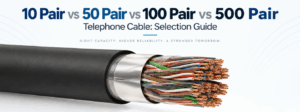
10 Pair vs 50 Pair vs 100 Pair vs 500 Pair Telephone Cable: Selection Guide
Telephone cable pair count is one of the first specifications engineers and procurement teams must define when selecting a multi-pair c...
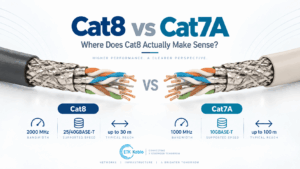
Cat8 vs Cat7A Cable: Where Does Cat8 Actually Make Sense?
Cat8 vs Cat7A is often presented as a simple comparison in which Cat8 is assumed to be the newer, faster and therefore better Ethernet ...
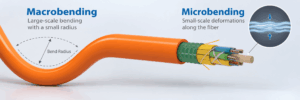
Fiber Optic Cable Bend Radius: Macrobending vs Microbending Explained
Fiber optic bend radius is one of the most important installation limits in an optical cable system. A fiber cable can meet its attenua...
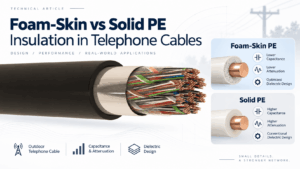
Foam-Skin vs Solid PE Insulation in Telephone Cables
Foam-skin vs solid PE is an important insulation choice in outdoor copper telephone cables because the material surrounding each conduc...
Cat6A Alien Crosstalk Explained: Why ANEXT Matters
Cat6A alien crosstalk is one of the most important performance considerations in high-speed copper structured cabling. As Ethernet freq...
Fiber Optic Cable Mechanical Tests: Tensile, Crush, Impact and Bend Performance
Fiber optic cable testing is essential because good optical performance alone does not prove that a cable can survive installation and ...
Jelly-Filled vs Dry-Core Outdoor Telephone Cable
Jelly-filled vs dry-core is an important construction choice when specifying outdoor telephone cable for telecom distribution networks,...
0.5 vs 0.75 vs 1.0 vs 1.5 mm² Control Cable: How to Select Conductor Size
Control cable conductor size affects resistance, voltage drop, current-carrying capability, cable diameter, flexibility and cost. Among...
300/500 V vs 450/750 V Control Cable: When Is the Higher Voltage Rating Required?
Control cable voltage rating is one of the most important electrical parameters to check when selecting cables for industrial machinery...


