





 President’s Message
Blog
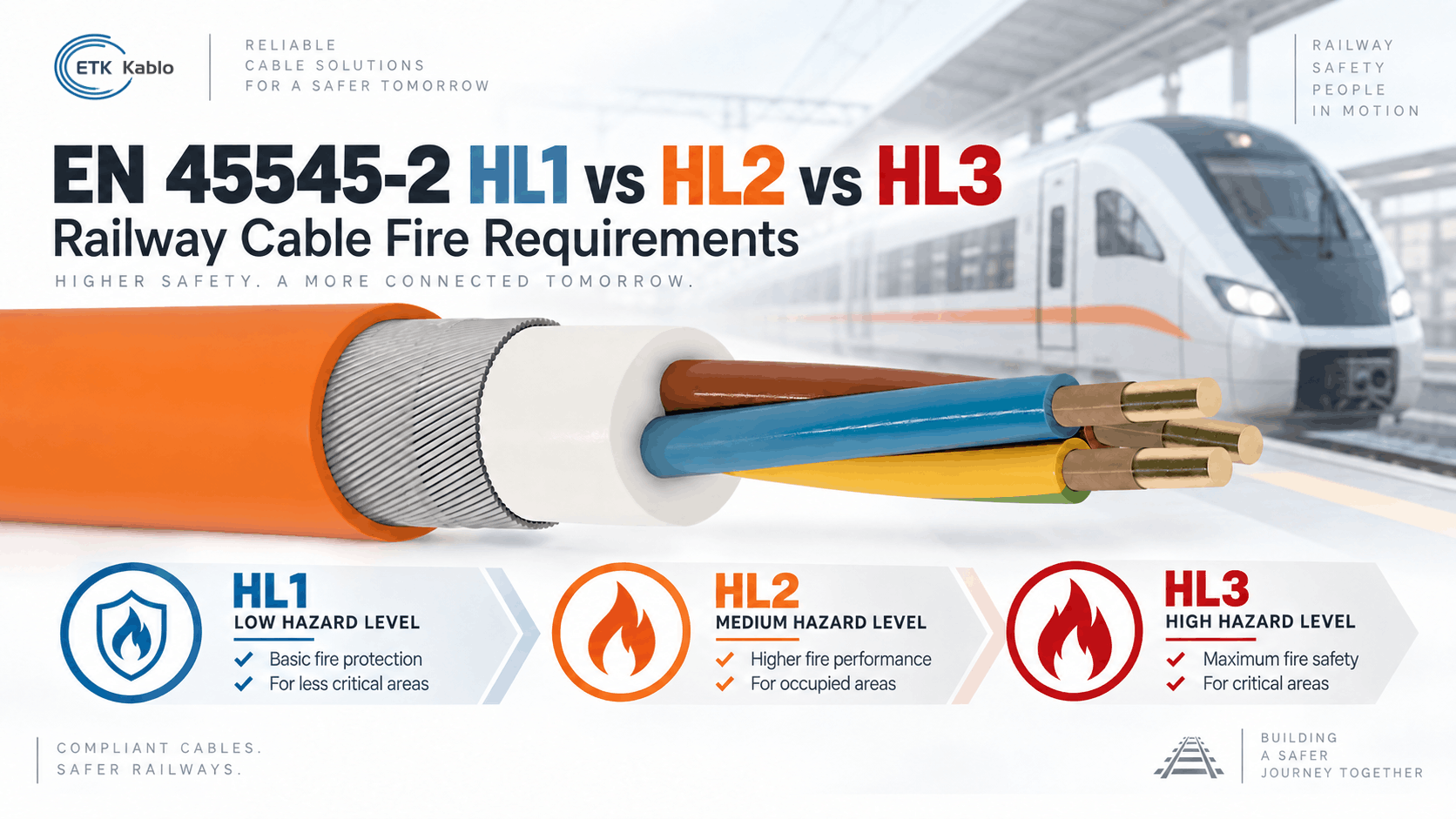
EN 45545-2 HL1 vs HL2 vs HL3: Railway Cable Fire Requirements
Reading Time: 18 minutes
EN 45545-2 hazard levels define different fire-performance requirements for materials and components installed on railway vehicles. For rolling-stock cables, the three levels are identified as HL1, HL2 and HL3.
However, HL1, HL2 and HL3 should not be interpreted simply as three cable quality grades. The required hazard level comes from the railway vehicle’s operating and design classification under the EN 45545 framework.
Once the required hazard level has been established, EN 45545-2 applies the corresponding reaction-to-fire criteria to the relevant product requirement set. For electrical cables, the principal requirement sets are R15 for interior cables and R16 for exterior cables.
Consequently, specifying only “EN 45545-2 cable” is incomplete. A professional railway cable specification should identify the applicable hazard level, requirement set, cable application and supporting fire-test documentation.
Quick answer: HL1 is the least demanding of the three EN 45545 hazard levels, HL2 introduces more stringent fire requirements, and HL3 is the most demanding. For R15 interior cables, the principal differences between HL1, HL2 and HL3 appear particularly in smoke-transmission and toxicity limits. R16 exterior cable requirements use the same general flame-spread and toxicity framework but different smoke thresholds. Importantly, HL3 compliance does not mean a cable is fire-resistant or will continue operating during a fire; circuit integrity requires separate qualification where the project demands it.
EN 45545-2 Hazard Levels at a Glance
| Hazard Level | Relative Requirement | General Interpretation |
|---|---|---|
| HL1 | Lowest of the three | Applied where the vehicle classification produces the least demanding EN 45545 hazard level |
| HL2 | Intermediate | More demanding smoke and fire-safety requirements |
| HL3 | Highest | Most demanding EN 45545-2 fire-performance level |
Therefore, HL3 should not automatically be written into every railway cable specification. The vehicle classification determines whether HL1, HL2 or HL3 is required.
What Is EN 45545-2?
EN 45545 is the European series covering fire protection on railway vehicles.
Within that series, EN 45545-2 defines reaction-to-fire performance requirements for materials and products used on rolling stock.
Its primary fire-safety objective is to limit fire development and reduce the effects of fire, smoke and toxic combustion products so that passengers and staff have sufficient opportunity to reach a place of safety.
Accordingly, the standard is not limited to whether a material catches fire. It evaluates different fire characteristics according to the type of product and the applicable requirement set.
The current edition is EN 45545-2:2020+A1:2023.
EN 45545-2 Is for Railway Vehicles, Not Every Railway Cable
This distinction is essential.
EN 45545-2 applies to materials and components used on railway vehicles.
Therefore, cables installed onboard:
- Trains
- Locomotives
- Metro vehicles
- Trams
- Passenger coaches
- Multiple units
can fall within the rolling-stock fire-protection framework.
By contrast, trackside signal cables, buried railway telecom cables, station infrastructure cables and railway fiber routes are not automatically classified through EN 45545-2 merely because they belong to a railway project.
Instead, those installations can be governed by other infrastructure, fire, operator or national requirements.
What Do EN 45545-2 Hazard Levels Mean?
The terms HL1, HL2 and HL3 stand for different hazard levels.
However, the standard does not allow a cable manufacturer or purchaser to choose the level arbitrarily.
The hazard level results from the combination of:
- The railway vehicle’s operation category
- The railway vehicle’s design category
EN 45545-1 defines those vehicle categories, while EN 45545-2 uses the resulting hazard level to establish material fire-performance requirements.
Therefore, the sequence is:
Vehicle operation + vehicle design → hazard level → product requirement set → fire-test criteria.
EN 45545-2 Hazard Level Classification Matrix
The standard uses four operation categories together with four principal design categories.
| Operation Category | N: Standard Vehicle | A: Automatic Train | D: Double-Deck Vehicle | S: Sleeping / Couchette Vehicle |
|---|---|---|---|---|
| 1 | HL1 | HL1 | HL1 | HL2 |
| 2 | HL2 | HL2 | HL2 | HL2 |
| 3 | HL2 | HL2 | HL2 | HL3 |
| 4 | HL3 | HL3 | HL3 | HL3 |
Consequently, the same physical cable application can require different fire performance depending on the classification of the railway vehicle.
What Are the EN 45545 Design Categories?
N: Standard Vehicles
Category N represents standard railway vehicles that do not fall into the more specialized design categories.
Depending on the operation category, the resulting requirement can range from HL1 to HL3.
A: Automatic Trains
Category A applies to vehicles forming part of an automatic train without emergency-trained staff onboard.
Accordingly, vehicle evacuation and fire-safety strategy are important parts of the overall classification.
D: Double-Deck Vehicles
Category D covers double-deck railway vehicles.
Although the geometry differs from standard rolling stock, the hazard matrix assigns the same HL1/HL2/HL3 progression as N and A for the four operation categories.
S: Sleeping and Couchette Vehicles
Category S is particularly important because passengers can be sleeping when a fire begins.
As a result, even operation category 1 produces HL2 rather than HL1, while operation category 3 already produces HL3.
Why HL3 Is More Demanding
HL3 represents the most demanding hazard level in the EN 45545 framework.
However, the difference is not simply “more flame retardant.”
For railway cables, HL3 can impose tighter limits particularly on:
- Smoke generation
- Toxic combustion products
- Overall reaction-to-fire behaviour
Meanwhile, certain flame-propagation limits can remain identical between HL1, HL2 and HL3.
Therefore, understanding the individual test parameters is more useful than describing HL3 only as “the highest flame class.”
EN 45545-2 Hazard Levels for Railway Cables
Electrical cables are identified within the electro-technical equipment section of EN 45545-2.
The principal cable product groups are:
- EL1A – cables for interior use
- EL1B – cables for exterior use
These correspond to:
- R15 – cable requirements for interior applications
- R16 – cable requirements for exterior applications
Accordingly, a railway cable specification should state whether R15, R16 or both are applicable.
What Is R15 in EN 45545-2?
R15 applies to cables classified as EL1A for interior railway-vehicle use when they are not already covered through the corresponding cable-product-standard route recognized by EN 45545-2.
The R15 fire-performance framework includes:
- Single-cable flame propagation
- Bunched-cable flame propagation
- Smoke density
- Toxicity of combustion gases
Importantly, R15 does not describe the cable’s voltage, conductor size, flexibility or electrical transmission capability.
Instead, it focuses specifically on fire behaviour.
What Is R16 in EN 45545-2?
R16 applies to EL1B cables intended for exterior locations on railway vehicles.
Examples can include cables routed around:
- Bogies
- Underfloor equipment
- Exterior equipment
- Vehicle interconnections
- Other exposed rolling-stock zones
Like R15, R16 assesses flame propagation, smoke and toxicity.
However, smoke-transmission requirements differ because exterior cables present a different exposure relationship to passengers and staff.
R15 vs R16 Railway Cable Requirements
| Requirement Set | Product Group | Principal Location |
|---|---|---|
| R15 | EL1A | Interior rolling-stock cables |
| R16 | EL1B | Exterior rolling-stock cables |
Therefore, saying only that a cable reaches “HL3” still leaves part of the specification unanswered.
A certificate or test report should identify the applicable requirement set.
EN 45545-2 R15 HL1 vs HL2 vs HL3
For R15 interior cables, the main qualification includes flame-spread, smoke-density and toxicity requirements.
| Test Parameter | HL1 | HL2 | HL3 |
|---|---|---|---|
| Single-cable flame requirement | Same limit | Same limit | Same limit |
| Bunched-cable flame requirement | Same limit | Same limit | Same limit |
| Minimum smoke light transmission | 25% | 50% | 70% |
| Maximum ITC toxicity index | 10 | 10 | 6 |
Consequently, HL3 R15 is substantially more demanding in smoke performance than HL1.
In addition, its maximum toxicity index is lower.
EN 45545-2 R16 HL1 vs HL2 vs HL3
Exterior cable requirements use the same general flame-performance approach, while smoke thresholds differ from R15.
| Test Parameter | HL1 | HL2 | HL3 |
|---|---|---|---|
| Single-cable flame requirement | Same limit | Same limit | Same limit |
| Bunched-cable flame requirement | Same limit | Same limit | Same limit |
| Minimum smoke light transmission | No R16 minimum specified | 25% | 50% |
| Maximum ITC toxicity index | 10 | 10 | 6 |
Thus, an R16 HL3 cable still requires substantially controlled smoke and toxicity performance, although the smoke threshold is less demanding than R15 HL3.
Why R15 Has Higher Smoke Requirements Than R16
Interior cables are located closer to passengers, staff and evacuation routes.
Therefore, smoke accumulation inside the vehicle can directly reduce visibility and make evacuation more difficult.
Exterior cable smoke, by contrast, does not necessarily accumulate in the passenger compartment to the same degree.
For this reason, R15 uses more stringent smoke-transmission thresholds at corresponding hazard levels.
EN 60332-1-2 Single-Cable Flame Test
One of the fundamental cable tests referenced by the EN 45545-2 railway cable requirements is EN 60332-1-2.
This test evaluates vertical flame propagation on a single insulated wire or cable.
For R15 and R16, the cable must satisfy the specified limits on the burned and unburned sections.
Notably, these basic flame limits do not progressively change from HL1 to HL3.
Therefore, the distinction between the hazard levels comes largely from additional smoke and toxicity performance rather than simply a different single-cable flame limit.
Bunched-Cable Flame Propagation
Railway installations often contain multiple cables routed together.
Consequently, evaluating only one isolated cable cannot represent every real installation condition.
EN 45545-2 therefore incorporates bunched-cable flame testing.
The applicable procedure depends partly on finished cable diameter.
| Cable Diameter | Referenced Test Route | Maximum Char / Flame-Spread Requirement |
|---|---|---|
| ≥ 12 mm | EN IEC 60332-3-24 | 2.5 m |
| > 6 mm and < 12 mm | EN 50305 | 2.5 m |
| ≤ 6 mm | EN 50305 | 1.5 m |
Accordingly, the physical diameter of the cable can affect the applicable test procedure.
Why Bunched-Cable Performance Matters
Several cables installed together create a larger combustible load than one isolated cable.
In addition, adjacent cables can expose one another to continued flame and heat.
As a result, a cable that self-extinguishes acceptably in an individual flame test can behave differently inside a dense cable bundle.
Therefore, railway fire qualification considers both individual and grouped cable behaviour.
EN 45545-2 Hazard Levels and Smoke Density
Smoke is one of the most important differences between the hazard levels.
EN 61034-2 measures smoke generated by burning cables under defined conditions.
The test records the percentage of light transmitted through the smoke chamber.
Accordingly:
Higher light transmission means lower smoke density.
This is why an R15 HL3 cable must reach at least 70% light transmission, whereas the HL1 minimum is 25%.
Why Low Smoke Is Critical on Trains
Railway vehicles are enclosed environments with limited exit points.
During a fire, dense smoke can:
- Reduce visibility
- Obscure exit signs
- Delay evacuation
- Interfere with rescue operations
- Increase passenger disorientation
Consequently, a cable’s fire behaviour cannot be judged only by whether the flame self-extinguishes.
Smoke production can be equally important to passenger safety.
EN 45545-2 Hazard Levels and Toxicity
Combustion gases can create hazards even before flames physically reach passengers.
For R15 and R16 cable classifications, EN 50305 provides the toxicity assessment using the ITC parameter.
The maximum values are:
- HL1: ITC ≤ 10
- HL2: ITC ≤ 10
- HL3: ITC ≤ 6
Therefore, HL3 imposes a stricter toxicity requirement than the lower hazard levels.
What Is the ITC Toxicity Index?
ITC is an index derived from the concentrations and toxicological significance of combustion gases generated during the prescribed cable test.
A lower ITC result represents a lower calculated toxicity contribution under the test conditions.
Consequently, a maximum limit of 6 for HL3 is more demanding than a limit of 10.
However, ITC should not be interpreted as a prediction of exact human survival time in a real railway fire.
Instead, it is a standardized comparative fire-performance parameter.
Is HL3 the Same as LSZH?
No.
LSZH generally describes a material or cable designed to produce low smoke and low halogen emissions.
EN 45545-2 HL3 is a complete railway fire-performance classification against a defined requirement set.
Therefore, an LSZH cable is not automatically an HL3 cable.
Likewise, writing “halogen-free” on a datasheet does not prove:
- R15 compliance
- R16 compliance
- HL1
- HL2
- HL3
Actual tested performance and supporting documentation are required.
Is Halogen-Free the Same as Low Smoke?
No.
Halogen content and smoke density describe different properties.
A halogen-free cable limits specified halogen-containing combustion products.
Low-smoke performance, meanwhile, describes the amount of optical obscuration produced during burning.
Therefore, professional rolling-stock cable specifications often consider both characteristics separately.
Is Flame Retardant the Same as EN 45545-2 HL3?
No.
A flame-retardant cable can pass one or more flame-propagation tests without satisfying the complete HL3 requirement.
For example, HL3 R15 additionally demands stringent:
- Smoke transmission
- Toxicity
- Applicable bunched-cable performance
Consequently, “flame retardant” should never be used as a substitute for a complete EN 45545-2 classification.
Does HL3 Mean Fire Resistant?
No.
This is one of the most important distinctions in railway cable fire engineering.
EN 45545-2 primarily addresses reaction to fire.
It asks questions such as:
- How does the cable propagate flame?
- How much smoke does it produce?
- How toxic are the combustion products under the test?
Fire-resistant circuit-integrity testing asks a different question:
Does the electrical or communication circuit continue functioning while exposed to fire?
Therefore, a cable can be HL3 without having a PH, FE or other circuit-integrity rating.
EN 45545-2 vs EN 50200
| Characteristic | EN 45545-2 | EN 50200 |
|---|---|---|
| Main purpose | Reaction-to-fire performance | Circuit integrity during fire |
| HL1 / HL2 / HL3 | Yes | No |
| Smoke / toxicity | Important | Not the principal classification purpose |
| Continued circuit operation | Not the main objective | Yes |
| Typical result | R15/R16 hazard level | PH classification where applicable |
Accordingly, safety-related rolling-stock circuits can require more than one fire-performance qualification.
EN 45545-2 vs FE180
FE180 also addresses cable integrity during fire exposure rather than the broader railway reaction-to-fire classification.
Therefore, FE180 and HL3 cannot replace one another.
A project can legitimately require:
- EN 45545-2 HL3 reaction-to-fire performance
- Separate fire-survival performance for a critical circuit
depending on the vehicle and system safety analysis.
EN 45545-2 Hazard Levels vs CPR Classes
CPR fire classification and EN 45545 railway hazard levels also belong to different regulatory frameworks.
CPR classifications such as:
- B2ca
- Cca
- Dca
- Eca
are associated with construction products permanently installed in buildings and civil works.
By contrast, EN 45545-2 addresses railway-vehicle materials and components.
Therefore, an HL3 railway cable should not automatically be described as B2ca, while a B2ca building cable should not automatically be presented as EN 45545-2 HL3.
EN 45545-2 and EN 50264
EN 50264 is a major product-standard family for railway rolling-stock power and control cables with special fire performance.
Importantly, EN 45545-2 recognizes a coordinated route for electrical cables complying with the relevant fire-safety requirements of EN 50264.
Such cables are considered to satisfy R15 and R16 for the corresponding hazard level.
Consequently, a railway purchaser should understand both:
- The cable product standard
- The resulting EN 45545 fire-performance level
EN 45545-2 and EN 50306
EN 50306 covers thin-wall rolling-stock cables designed for reduced dimensions and weight.
These cables are particularly relevant where railway vehicles contain dense electrical wiring and limited installation space.
Again, EN 45545-2 recognizes cables meeting the relevant EN 50306 fire requirements as satisfying the corresponding R15/R16 hazard level.
Therefore, EN 50306 and EN 45545-2 should not be treated as competing standards.
EN 45545-2 and EN 50382
EN 50382 addresses high-temperature rolling-stock power cables.
Applications can involve demanding thermal environments around traction or high-power equipment.
Where the relevant EN 50382 fire requirements are satisfied, EN 45545-2 likewise provides the corresponding R15/R16 recognition route.
Thus, product-standard compliance and hazard-level compliance can work together.
Does EN 45545-2 Replace EN 50264, EN 50306 or EN 50382?
No.
EN 45545-2 establishes fire-behaviour requirements for products used on railway vehicles.
Meanwhile, rolling-stock cable product standards define broader construction and performance requirements.
Those can include:
- Electrical characteristics
- Insulation
- Sheathing
- Temperature
- Mechanical performance
- Oil resistance
- Fire performance
Therefore, one standard should not be substituted for the other.
EN 45545-2 HL1 Railway Cable
HL1 is the least demanding hazard level in the three-level classification system.
Nevertheless, HL1 still requires defined railway fire performance.
For an R15 cable, for example, the product must satisfy applicable flame tests, minimum 25% smoke transmission and an ITC not exceeding 10.
Accordingly, HL1 should not be confused with an ordinary industrial LSZH cable that has never been qualified for railway use.
EN 45545-2 HL2 Railway Cable
HL2 increases the fire-performance requirement.
For R15 interior cables, minimum smoke light transmission rises to 50%.
Meanwhile, the toxicity limit remains ITC ≤ 10.
For R16 exterior cables, HL2 introduces a minimum smoke transmission requirement of 25%.
Therefore, HL2 represents a meaningful step above HL1 even though not every individual test limit changes.
EN 45545-2 HL3 Railway Cable
HL3 represents the most demanding hazard level.
For R15 interior cables:
- Smoke light transmission must reach at least 70%
- ITC must not exceed 6
- Applicable single and bunched flame requirements must also be satisfied
For R16 exterior cables, minimum smoke transmission is 50%, while ITC remains limited to 6.
Consequently, HL3 cable construction generally requires carefully engineered fire-retardant, low-smoke and low-toxicity materials.
Does an HL3 Cable Automatically Meet HL2 and HL1?
Within a given EN 45545 requirement set, HL3 uses the most demanding smoke and toxicity thresholds.
Therefore, a construction that has been properly qualified for HL3 will normally exceed the corresponding lower-level numerical limits.
However, procurement documentation should still identify the actual scope of the certificate or classification report.
In particular, engineers should verify:
- R15 and/or R16
- Cable construction
- Diameter range
- Material formulation
- Test-report scope
Accordingly, one should not infer qualification merely from a similar-looking product in the same manufacturer’s portfolio.
Why Cable Diameter Matters in EN 45545-2 Testing
The bunched-flame test route changes according to cable diameter.
In addition, EN 45545-2 contains rules concerning qualification across intermediate cable diameters when formulations remain identical and qualifying conditions are satisfied.
This is important for manufacturers offering one cable family across many conductor sizes.
However, family qualification still requires controlled material and construction consistency.
Why Material Formulation Matters
Small changes in insulation or sheath compound can affect fire performance.
For example, changing:
- Polymer formulation
- Flame-retardant additives
- Pigment
- Filler system
- Layer thickness
can alter flame spread, smoke and combustion-gas behaviour.
Therefore, railway fire qualification belongs to a defined construction and material system rather than only to a cable trade name.
Why Railway Cables Are Commonly Halogen-Free
Halogen-free compounds are widely used for modern rolling-stock cables because passenger vehicles combine enclosed spaces with sensitive electronic equipment.
In a fire, corrosive gases can damage:
- Electronic systems
- Control equipment
- Metal components
- Emergency equipment
At the same time, low-smoke and low-toxicity behaviour can improve conditions for evacuation.
Consequently, halogen-free fire-retardant insulation and sheath systems are common within major European rolling-stock cable families.
Does Halogen-Free Mean Zero Toxicity?
No.
Any burning organic material can generate potentially harmful combustion products.
Therefore, “halogen-free” should not be interpreted as “non-toxic in fire.”
EN 45545-2 addresses this issue separately through toxicity testing.
As a result, halogen content and ITC performance should be treated as related but distinct technical properties.
EN 45545-2 Hazard Levels for Power Cables
Onboard railway power cables can fall under the EN 45545 fire framework while also following a specific rolling-stock cable product standard.
Depending on voltage, temperature and construction, relevant cable families can include EN 50264 or EN 50382.
Therefore, specifying only “HL3 power cable” leaves several unanswered questions.
A complete requirement can also need:
- Nominal voltage
- Conductor cross-section
- Temperature class
- Flexibility
- Oil resistance
- Screening
- Installation location
EN 45545-2 Hazard Levels for Control Cables
Control circuits represent another major rolling-stock application.
These cables can serve:
- Door systems
- Auxiliary controls
- Lighting controls
- Vehicle automation
- Sensors
- Equipment cabinets
Accordingly, EN 45545 fire qualification must be combined with electrical, EMC and mechanical requirements.
EN 45545-2 Hazard Levels for Data Cables
Modern rolling stock increasingly uses Ethernet and specialized digital communication networks.
Data cables can therefore require both fire performance and controlled high-frequency transmission characteristics.
Potential applications include:
- Ethernet
- Passenger information
- CCTV
- Infotainment
- Diagnostic systems
- Train communication networks
Consequently, an HL3 designation does not indicate the cable’s data category, impedance, attenuation or return-loss performance.
EN 45545-2 Hazard Levels for Fiber Optic Cable
Fiber optic cable contains no copper transmission conductor, yet its polymer materials still contribute to fire behaviour.
Therefore, rolling-stock fiber optic cable can also require suitable railway fire-performance qualification.
Meanwhile, optical specifications remain separate.
These can include:
- G.652.D
- G.657.A1 / A2
- OM3 / OM4 / OM5
- Fiber count
- Attenuation
- Bend performance
- Mechanical construction
Thus, EN 45545 qualification addresses only one part of the complete fiber cable specification.
Interior vs Exterior Railway Cable
The location of the cable affects more than fire classification.
Interior cable designs can prioritize:
- Low smoke
- Low toxicity
- Compact dimensions
- Passenger-area fire safety
Exterior designs can additionally require:
- UV resistance
- Weather resistance
- Ozone resistance
- Oil resistance
- Fuel resistance
- Greater mechanical durability
- Continuous flexibility
Therefore, passing R16 does not automatically prove every environmental property needed for an exterior bogie cable.
EN 45545-2 for Bogie Cables
Bogie installations combine especially demanding conditions.
The cable can face:
- Repeated movement
- Vibration
- Oil
- Fuel
- Water
- UV exposure
- Temperature variation
Consequently, the correct cable requires much more than R16 qualification.
Mechanical and environmental requirements should be specified alongside fire performance.
EN 45545-2 for Jumper and Inter-Vehicle Cables
Cables between moving vehicle sections can experience repeated flexing and torsion.
As a result, conductor design, braid coverage, sheath flexibility and bend radius become critical.
Nevertheless, fire behaviour remains relevant because the same cable forms part of the rolling-stock electrical system.
Therefore, EN 45545 requirements and dynamic mechanical qualification must be considered together.
EN 45545-2 for Metro Vehicles
Metro systems can operate extensively underground, where reaching a place of safety can be more difficult than on open surface routes.
However, one should not conclude automatically that every metro cable must be HL3.
The actual hazard level comes from the applicable vehicle operation and design classification.
Consequently, the rolling-stock manufacturer or project fire specification should identify the required level.
EN 45545-2 for High-Speed Trains
High-speed trains contain dense electrical and communication systems within weight-sensitive vehicle designs.
Therefore, cable selection often balances:
- Fire performance
- Low weight
- Small diameter
- Mechanical durability
- EMC performance
- Temperature capability
Thin-wall railway cable families can become particularly useful where compact dimensions are required.
EN 45545-2 for Sleeping Coaches
Sleeping and couchette vehicles belong to design category S.
Importantly, the hazard matrix treats these vehicles more severely in certain operation categories.
For example, operation category 1 already leads to HL2, while operation category 3 leads to HL3.
Therefore, passenger state and evacuation complexity are reflected directly in the hazard classification.
EN 45545-2 Certificate vs Test Report
Purchasers should distinguish between marketing statements and technical evidence.
A professional qualification package can include:
- Accredited laboratory report
- Classification report
- Product identification
- Applicable R-set
- Hazard level
- Tested cable dimensions
- Material formulation reference
Accordingly, the phrase “EN 45545 compliant” should be supported by documentation matching the product being supplied.
Can One Cable Be R15 and R16?
Yes.
A cable can be qualified against both interior R15 and exterior R16 requirements.
This can provide useful installation flexibility where the same cable family is routed through different vehicle zones.
However, exterior suitability still requires environmental and mechanical characteristics beyond the R16 fire tests.
Can One Cable Be HL1, HL2 and HL3?
A product qualified to the most demanding HL3 limits within the applicable requirement set will generally exceed the corresponding lower hazard-level numerical fire thresholds.
For this reason, datasheets often state performance such as:
EN 45545-2 R15/R16 HL1–HL3.
Nevertheless, the documentation should verify that the complete cable construction is covered.
Common EN 45545-2 Hazard Level Mistakes
Calling HL3 a Fire-Resistance Rating
HL3 concerns reaction to fire, not continued electrical operation during fire.
Assuming Every Railway Cable Needs HL3
The vehicle hazard classification determines the required level.
Specifying HL3 Without R15 or R16
The requirement set identifies whether the cable is classified for interior or exterior application.
Assuming LSZH Automatically Means HL3
Low-smoke halogen-free construction does not prove compliance with the complete EN 45545 test set.
Looking Only at Flame Retardancy
Smoke and toxicity are critical parts of railway cable fire performance.
Confusing R15 with R16
R15 applies to interior cables, while R16 applies to exterior cables.
Assuming R16 Proves Weather Resistance
R16 is a fire-behaviour requirement set. UV, ozone, oil and weather resistance require separate evidence.
Confusing EN 45545 with CPR
Railway hazard levels and building-cable Euroclasses are different classification systems.
Confusing HL3 with PH120 or FE180
Those classifications address different fire-performance questions.
Ignoring the Cable Diameter
Cable diameter influences the applicable bunched-flame test method and can affect qualification scope.
Ignoring Material Changes
A changed sheath or insulation compound can alter fire performance and qualification validity.
Assuming One Test Covers an Entire Product Portfolio
Qualification depends on the documented product family, dimensions, formulation and applicable standard rules.
How to Specify EN 45545-2 Hazard Levels
Identify the Railway Vehicle
Start by defining the rolling-stock type and applicable fire-safety classification.
Determine the Hazard Level
Use the vehicle operation and design categories to establish HL1, HL2 or HL3.
Identify Interior or Exterior Use
Select R15 for EL1A interior cable or R16 for EL1B exterior cable as applicable.
Define the Electrical Function
Specify whether the cable carries power, control, data, communication or another function.
Select the Applicable Cable Product Standard
Depending on construction, this can involve EN 50264, EN 50306, EN 50382 or another relevant railway cable specification.
Define Mechanical Requirements
Add flexibility, vibration, bending, torsion and tensile requirements where needed.
Define Environmental Performance
Exterior applications can require oil, fuel, UV, ozone and weather resistance.
Request Fire Documentation
Require test or classification evidence covering the requested hazard level and product construction.
EN 45545-2 Railway Cable RFQ Checklist
A professional railway cable RFQ can include:
- EN 45545-2 edition
- Required hazard level: HL1, HL2 or HL3
- R15 interior and/or R16 exterior requirement
- Applicable EN 50264, EN 50306 or EN 50382 cable family
- Voltage rating
- Conductor cross-section
- Conductor class
- Tinned or bare copper
- Number of cores or pairs
- Screening requirement
- Characteristic impedance where applicable
- Halogen-free construction
- Smoke-density requirement
- Toxicity requirement
- Flame-propagation requirement
- Operating-temperature range
- Minimum bending radius
- Oil resistance
- Fuel resistance
- UV and ozone resistance
- Fixed or dynamic application
- Vibration requirement
- Fire-resistant circuit integrity where separately required
- Test reports
- Classification documentation
- Cable marking
Consequently, suppliers can evaluate the complete rolling-stock application rather than respond only to the phrase “HL3 cable.”
ETK Kablo and EN 45545-2 Railway Cable Engineering
ETK Kablo develops cable solutions for railway and transportation applications including control, signal, data, communication, fiber optic and specialized low-current requirements.
For onboard rolling-stock projects, cable construction must be evaluated against the project’s specific fire, electrical, mechanical and environmental requirements.
Depending on the application, those requirements can include:
- EN 45545-2 hazard level
- R15 or R16 fire requirement
- Halogen-free materials
- Low smoke
- Low toxicity
- Flame propagation control
- Data transmission performance
- Screening
- Flexibility
- Oil and fuel resistance
- Mechanical durability
Therefore, ETK evaluates railway inquiries according to the complete technical specification rather than treating EN 45545-2 as a standalone cable construction.
EN 45545-2 and ETK Rolling Stock Cable Development
A rolling-stock cable project can require several engineering disciplines at the same time.
For example, an onboard Ethernet cable can need:
- Defined Ethernet transmission performance
- EN 45545-2 fire performance
- Halogen-free construction
- High-flexibility conductors
- Effective EMC screening
- Vibration resistance
- Compact outside diameter
Meanwhile, a power cable can require an entirely different conductor size, voltage, temperature and mechanical construction while still following the same railway fire-safety framework.
Accordingly, ETK’s railway product-development approach should begin with the function of the cable and then integrate the required hazard level into the final design.
Frequently Asked Questions About EN 45545-2 Hazard Levels
What are EN 45545-2 HL1, HL2 and HL3?
They are hazard levels used to define different reaction-to-fire requirements for materials and components installed on railway vehicles.
Which is the highest EN 45545 hazard level?
HL3 is the most demanding of the three levels.
Is HL1 unsafe?
No. HL1 is a defined railway fire-performance level used where the vehicle classification requires it.
Who decides whether a cable needs HL1, HL2 or HL3?
The required level follows from the railway vehicle’s operation and design categories within the EN 45545 framework and the project specification.
What is R15?
R15 is the principal EN 45545-2 requirement set for EL1A interior railway cables.
What is R16?
R16 is the corresponding requirement set for EL1B exterior railway cables.
What tests are used for R15 and R16?
The fire framework includes single-cable flame propagation, bunched-cable flame propagation, smoke density and toxicity testing.
What smoke transmission is required for R15 HL3?
The minimum light transmission requirement is 70%.
What smoke transmission is required for R15 HL2?
The minimum is 50%.
What smoke transmission is required for R15 HL1?
The minimum is 25%.
What smoke transmission is required for R16 HL3?
The minimum is 50%.
What is the HL3 toxicity limit?
For R15 and R16 cable requirements, the maximum ITC value is 6.
What is the HL1 and HL2 ITC limit?
The maximum ITC value is 10 for both levels.
Does HL3 mean the cable is halogen free?
Do not infer complete material composition from the HL3 designation alone. Verify both the cable construction and applicable test documentation.
Does LSZH mean EN 45545-2 compliant?
No. LSZH construction alone does not demonstrate R15 or R16 compliance.
Does HL3 mean fire resistant?
No. HL3 is a reaction-to-fire hazard level rather than a circuit-integrity classification.
Can a cable be both HL3 and PH120?
Potentially yes, if the cable separately satisfies the applicable railway fire-performance requirements and the required circuit-integrity test.
Is EN 45545-2 the same as EN 50264?
No. EN 45545-2 defines fire-performance requirements, while EN 50264 is a rolling-stock cable product-standard family. Their requirements are coordinated.
Does EN 50306 satisfy EN 45545-2?
Electrical cables satisfying the relevant fire-safety requirements of EN 50306 are recognized by EN 45545-2 as meeting R15 and R16 for the corresponding hazard level.
Does EN 50382 satisfy EN 45545-2?
The same principle applies where the relevant EN 50382 fire requirements are fulfilled.
Can an exterior cable be R15?
R15 identifies the interior-cable requirement set. Exterior cable classification is associated with R16, although one cable family can be qualified against both sets.
Does R16 prove UV resistance?
No. UV and weather resistance are separate environmental characteristics.
Is EN 45545-2 required for trackside railway cables?
Not automatically. EN 45545-2 is focused on materials and components used on railway vehicles. Trackside infrastructure follows its applicable project and infrastructure standards.
Is EN 45545-2 the same as CPR?
No. EN 45545 hazard levels apply to railway vehicles, while CPR cable classifications relate to construction products used in buildings and civil works.
What is the current EN 45545-2 edition?
The current European edition is EN 45545-2:2020+A1:2023.
How should EN 45545-2 be written in an RFQ?
Specify the applicable edition, hazard level, R15 and/or R16 requirement, complete cable construction, railway cable product standard and required supporting documentation.
Conclusion
EN 45545-2 hazard levels provide a structured way to match railway-vehicle materials and components to the fire risk associated with the vehicle’s design and operation.
HL1 represents the least demanding hazard level, while HL2 increases the fire-performance requirements. HL3, meanwhile, represents the most demanding level within the classification system.
For railway cables, R15 applies to interior EL1A cable applications and R16 applies to exterior EL1B applications.
Importantly, the difference between HL1, HL2 and HL3 is not limited to flame propagation. Smoke density and toxicity become critical differentiators, particularly for interior rolling-stock cables.
Nevertheless, even HL3 does not describe every characteristic needed from a railway cable.
Specify the Complete Railway Cable Requirement
First, determine the railway vehicle’s operation and design classification.
Next, establish whether HL1, HL2 or HL3 applies.
Then, identify whether the cable requires R15 interior, R16 exterior or both qualifications.
Afterward, select the appropriate rolling-stock cable family according to electrical function, voltage, temperature and installation requirements.
In addition, define mechanical, EMC and environmental performance separately.
Finally, request documentation demonstrating that the actual supplied cable construction is covered by the required fire qualification.
Ultimately, EN 45545-2 should not be reduced to the phrase “HL3 cable.” Effective railway cable engineering combines the correct hazard level with the correct requirement set, electrical construction, mechanical performance and verified fire-test evidence.
Benzer yazılar
EN 45545-2 HL1 vs HL2 vs HL3: Railway Cable Fire Requirements
EN 45545-2 hazard levels define different fire-performance requirements for materials and components installed on railway vehicles. For...
0.4 mm vs 0.6 mm vs 0.8 mm Telephone Cable Conductors: How to Select
Telephone cable conductor diameter directly affects electrical resistance, transmission performance, copper content, cable size, weight...
RE-Y vs RE-2Y vs RE-2X Instrumentation Cable: PVC, PE and XLPE Insulation Compared
RE-Y vs RE-2Y vs RE-2X is fundamentally a comparison of the insulation materials surrounding the copper conductors inside an instrument...
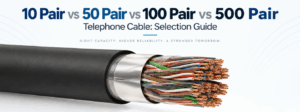
10 Pair vs 50 Pair vs 100 Pair vs 500 Pair Telephone Cable: Selection Guide
Telephone cable pair count is one of the first specifications engineers and procurement teams must define when selecting a multi-pair c...
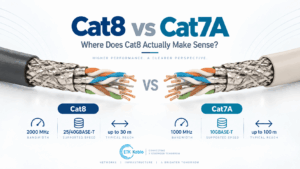
Cat8 vs Cat7A Cable: Where Does Cat8 Actually Make Sense?
Cat8 vs Cat7A is often presented as a simple comparison in which Cat8 is assumed to be the newer, faster and therefore better Ethernet ...
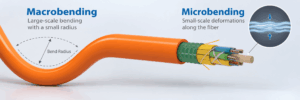
Fiber Optic Cable Bend Radius: Macrobending vs Microbending Explained
Fiber optic bend radius is one of the most important installation limits in an optical cable system. A fiber cable can meet its attenua...
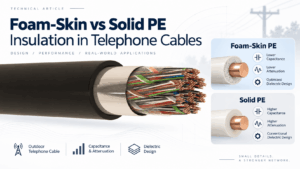
Foam-Skin vs Solid PE Insulation in Telephone Cables
Foam-skin vs solid PE is an important insulation choice in outdoor copper telephone cables because the material surrounding each conduc...
Cat6A Alien Crosstalk Explained: Why ANEXT Matters
Cat6A alien crosstalk is one of the most important performance considerations in high-speed copper structured cabling. As Ethernet freq...
Fiber Optic Cable Mechanical Tests: Tensile, Crush, Impact and Bend Performance
Fiber optic cable testing is essential because good optical performance alone does not prove that a cable can survive installation and ...
Jelly-Filled vs Dry-Core Outdoor Telephone Cable
Jelly-filled vs dry-core is an important construction choice when specifying outdoor telephone cable for telecom distribution networks,...
0.5 vs 0.75 vs 1.0 vs 1.5 mm² Control Cable: How to Select Conductor Size
Control cable conductor size affects resistance, voltage drop, current-carrying capability, cable diameter, flexibility and cost. Among...
300/500 V vs 450/750 V Control Cable: When Is the Higher Voltage Rating Required?
Control cable voltage rating is one of the most important electrical parameters to check when selecting cables for industrial machinery...


