





 President’s Message
Blog
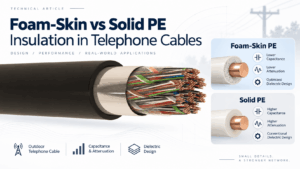
Foam-Skin vs Solid PE Insulation in Telephone Cables
Reading Time: 17 minutes
Foam-skin vs solid PE is an important insulation choice in outdoor copper telephone cables because the material surrounding each conductor directly influences capacitance, attenuation, electrical balance, mechanical robustness and overall cable design.
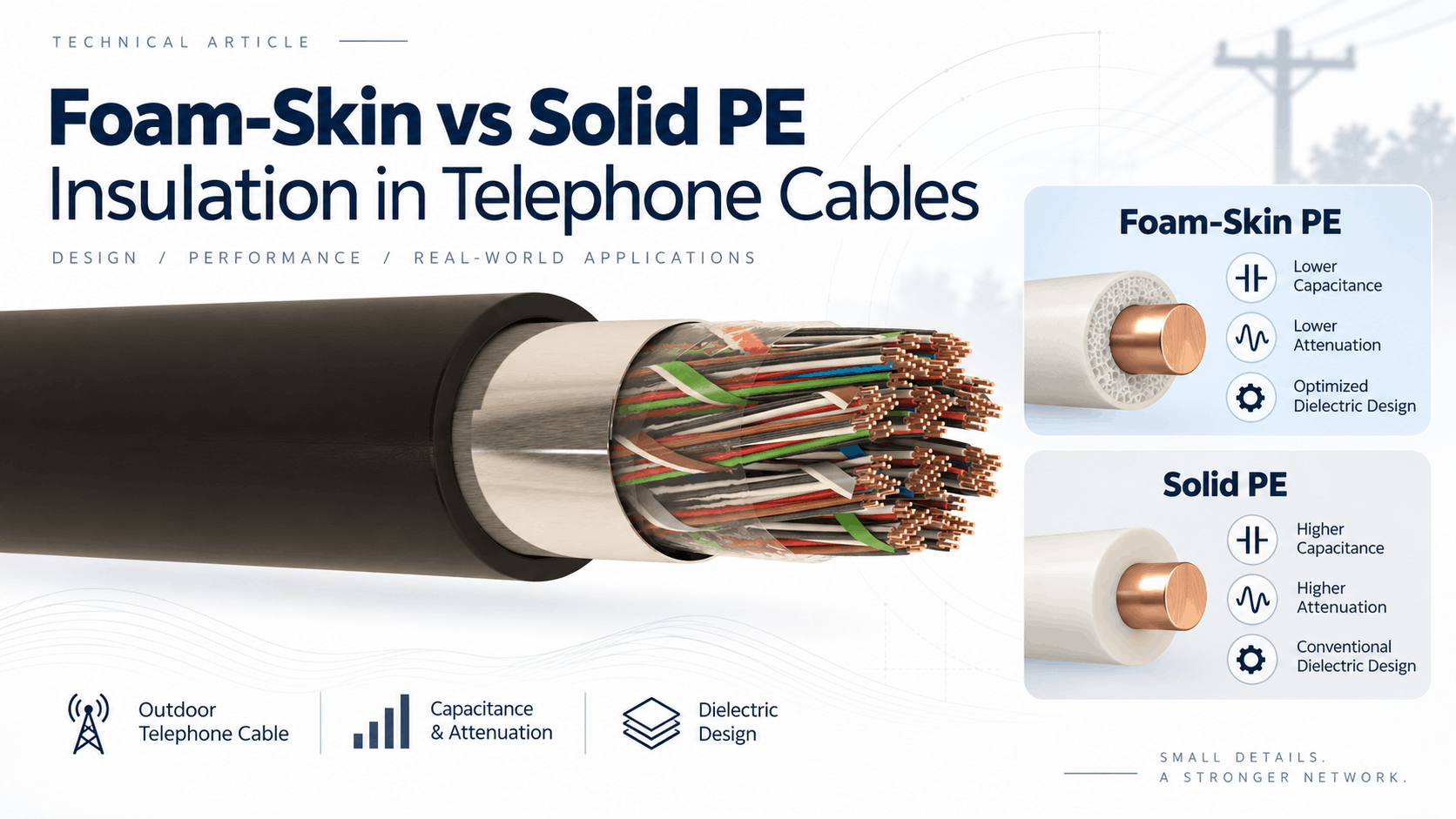
Both constructions use polyethylene as the primary dielectric material. However, solid polyethylene forms a dense continuous insulation layer, while foam-skin insulation combines a foamed polyethylene dielectric with a solid outer polyethylene skin.
The air cells inside the foamed layer reduce the effective dielectric constant of the insulation. Consequently, the manufacturer can achieve favorable electrical characteristics such as controlled mutual capacitance and transmission loss while maintaining the mechanical protection of a solid outer skin.
Solid PE, by contrast, provides a simpler and highly robust homogeneous insulation structure. It offers excellent moisture resistance, mechanical stability and proven performance in outdoor telecommunications networks.
Therefore, neither construction should automatically be considered superior. The correct choice depends on the electrical performance required, conductor diameter, transmission distance, pair geometry, cable construction and project specification.
Quick answer: foam-skin insulation uses a foamed polyethylene dielectric covered by a solid PE skin. The cellular layer lowers the effective dielectric constant, which can help the cable manufacturer control capacitance and attenuation. Solid PE uses a dense polyethylene insulation layer and provides a simple, mechanically robust dielectric system. Both can meet demanding outdoor telephone cable requirements when properly engineered, and IEC 60708 recognizes both solid and cellular polyolefin insulation constructions.
Foam-Skin vs Solid PE at a Glance
| Characteristic | Foam-Skin PE | Solid PE |
|---|---|---|
| Primary dielectric | Foamed polyethylene | Solid polyethylene |
| Outer insulation surface | Solid PE skin | Solid PE throughout |
| Internal cellular structure | Yes | No |
| Effective dielectric constant | Lower in the foamed region | Higher than comparable foamed PE |
| Capacitance optimization | Strong design advantage | Controlled through geometry and insulation thickness |
| Mechanical surface protection | Provided by solid skin | Provided by full solid layer |
| Moisture resistance | Strong when correctly manufactured | Strong |
| Manufacturing complexity | Higher | Lower |
| Suitable for outdoor telephone cable | Yes | Yes |
| Recognized by IEC 60708 | Yes, as cellular insulation | Yes |
Accordingly, the difference is primarily a dielectric-engineering decision rather than a simple distinction between premium and standard insulation.
What Is Foam-Skin PE Insulation?
Foam-skin polyethylene insulation combines two functional regions around the copper conductor.
The main dielectric layer contains microscopic gas cells distributed through the polyethylene. This cellular structure introduces air into the insulation system.
A dense solid polyethylene skin covers the foamed layer.
As a result, the insulation can combine:
- Low effective dielectric constant
- Controlled capacitance
- Good mechanical surface strength
- Resistance to handling damage
- Stable conductor separation
- Good moisture resistance
The solid outer skin is particularly important because a purely porous or exposed cellular surface would be more vulnerable during pair twisting, cable assembly and field handling.
Therefore, foam-skin construction combines the electrical advantages of cellular PE with the practical protection of a dense polyethylene surface.
What Does “Foamed Polyethylene” Mean?
Foamed polyethylene contains microscopic gas-filled cells within the polymer.
The purpose is not to make the cable soft like household foam.
Instead, manufacturers carefully control the cellular structure to modify the dielectric properties of the insulation.
Air has a lower dielectric constant than solid polyethylene. By incorporating controlled gas cells into the polymer, the effective dielectric constant of the insulation decreases.
Consequently, the cable designer can reduce the electrical loading between conductors without relying exclusively on greater physical separation.
Why Add a Solid Skin to Foamed PE?
The outer skin improves the mechanical characteristics of the insulated conductor.
During manufacturing, insulated conductors pass through:
- Guides
- Pairing equipment
- Stranding machines
- Binders
- Cable-core assembly processes
The insulation surface therefore experiences friction and mechanical contact.
A solid PE skin helps protect the cellular dielectric underneath and maintains a smoother, more durable surface.
Furthermore, the dense outer layer helps maintain the dimensional stability required for consistent pair geometry.
What Is Solid PE Insulation?
Solid PE insulation uses a continuous dense polyethylene layer around the copper conductor.
Unlike foam-skin construction, the dielectric does not intentionally contain a cellular structure.
The material provides:
- High insulation resistance
- Excellent moisture resistance
- Strong mechanical integrity
- Stable dimensions
- Good dielectric strength
- Long-term outdoor durability
Solid PE has been used extensively in telecommunications cables because polyethylene combines strong electrical insulation characteristics with low moisture absorption.
Therefore, solid PE remains a highly effective solution for outdoor copper telecom networks.
Foam-Skin vs Solid PE: The Main Difference
The fundamental difference in foam-skin vs solid PE is the density of the dielectric material surrounding the conductor.
Solid PE consists almost entirely of polyethylene.
Foam-skin PE deliberately introduces microscopic gas cells into much of the insulation while retaining a dense external skin.
This changes the effective dielectric properties of the conductor insulation.
Consequently, the manufacturer can achieve the required electrical characteristics using different insulation geometries.
Why the Dielectric Constant Matters
Two copper conductors separated by insulation form a distributed electrical capacitance.
The amount of capacitance depends partly on:
- Conductor diameter
- Distance between conductors
- Insulation thickness
- Dielectric constant of the material
- Pair geometry
A lower dielectric constant generally reduces capacitance when the other variables remain comparable.
Because foamed polyethylene contains air cells, its effective dielectric constant is lower than that of fully dense polyethylene.
Therefore, cellular insulation gives cable designers another tool for controlling capacitance.
Foam-Skin vs Solid PE and Mutual Capacitance
Mutual capacitance is one of the key electrical parameters in multi-pair telephone cables.
It describes the capacitance between the two conductors forming a communication pair.
Excessive capacitance can load the transmission circuit and influence attenuation.
Foam-skin insulation can help reduce capacitance because the cellular dielectric has a lower effective permittivity.
However, this does not mean every foam-skin telephone cable must have a lower published capacitance limit than every solid PE cable.
Manufacturers can adjust conductor spacing, insulation diameter and pair geometry so that two different insulation technologies meet the same electrical specification.
Therefore, engineers should compare actual finished-cable capacitance data rather than judge performance solely from the insulation name.
Why Two Different Insulations Can Have the Same Capacitance Specification
Cable design involves several variables at the same time.
Suppose a manufacturer wants two telephone cable families to meet a maximum mutual capacitance of 50 nF/km.
One design can use foam-skin insulation and a particular insulation diameter.
Another can use solid PE with different conductor spacing or insulation geometry.
Both can ultimately satisfy the same 50 nF/km cable requirement.
Therefore, the dielectric system should be understood as part of the complete cable geometry rather than as an isolated specification.
Foam-Skin vs Solid PE and Attenuation
Attenuation describes the reduction in signal amplitude as the signal travels along the cable.
Several factors influence attenuation in copper telephone cables, including:
- Conductor resistance
- Conductor diameter
- Operating frequency
- Capacitance
- Dielectric losses
- Pair geometry
By reducing the effective dielectric constant, foam-skin insulation can contribute to favorable transmission characteristics.
Nevertheless, conductor diameter remains extremely important.
A larger copper conductor can provide lower DC resistance and lower transmission loss regardless of whether the insulation uses foam-skin or solid PE.
Consequently, attenuation should always be compared from the complete datasheet.
Conductor Diameter vs Insulation Type
Outdoor telephone cables commonly use conductor diameters such as:
- 0.40 mm
- 0.50 mm
- 0.60 mm
- 0.63 mm
- 0.65 mm
- 0.80 mm
- 0.90 mm
Increasing conductor diameter reduces conductor resistance.
This can extend practical transmission distance.
Therefore, a 0.8 mm solid PE cable can provide lower conductor resistance than a 0.4 mm foam-skin cable even though the foam-skin construction has a dielectric advantage.
The insulation type and conductor diameter solve different engineering problems and should be specified independently.
Foam-Skin vs Solid PE and Conductor Resistance
Insulation construction does not directly determine DC conductor resistance.
Resistance depends primarily on:
- Copper conductivity
- Conductor diameter
- Conductor length
- Temperature
Therefore, changing from solid PE to foam-skin insulation does not by itself reduce the copper resistance.
This distinction is important because buyers sometimes attribute every transmission improvement to the insulation.
In reality, telephone cable performance results from the interaction of conductor and dielectric design.
Foam-Skin vs Solid PE and Insulation Resistance
Insulation resistance measures how effectively the dielectric prevents leakage current between conductors or between a conductor and the screen.
Both solid and cellular polyethylene systems can achieve very high insulation resistance when properly manufactured.
The solid outer skin of foam-skin insulation helps protect the cellular layer and contributes to long-term electrical integrity.
Therefore, engineers should review the manufacturer’s published insulation-resistance requirement rather than assume that cellular insulation must provide lower resistance because it contains gas cells.
Foam-Skin vs Solid PE and Dielectric Strength
Dielectric strength defines the insulation system’s ability to withstand applied electrical voltage without breakdown.
Outdoor telephone cables operate at relatively low communication voltages, but manufacturers still perform dielectric tests to verify insulation integrity.
Both foam-skin and solid PE constructions can meet demanding pair-to-pair and pair-to-screen test requirements.
Again, the relevant criterion is the finished-cable test result rather than the insulation label alone.
Foam-Skin vs Solid PE and Capacitance Unbalance
Capacitance unbalance can contribute to electromagnetic interference and crosstalk in multi-pair telephone cables.
Even when average mutual capacitance is correct, differences between conductors or pairs can reduce electrical balance.
Manufacturers therefore control:
- Insulation diameter
- Conductor centering
- Pair twist
- Pair spacing
- Unit geometry
Foam-skin processing must maintain a uniform cellular structure and stable outer diameter.
Solid PE processing must also maintain tight dimensional tolerances.
Consequently, manufacturing consistency can matter as much as the nominal insulation technology.
Why Conductor Centering Matters
The copper conductor should remain centered within the insulation.
If insulation thickness varies significantly around the conductor, the electrical geometry becomes asymmetrical.
This can influence capacitance, balance and dielectric performance.
Therefore, extrusion-line control plays an important role in both solid and foam-skin telephone cable manufacturing.
Manufacturing Foam-Skin PE Insulation
Foam-skin extrusion requires more process control than ordinary solid PE insulation.
The manufacturer must control parameters such as:
- Material temperature
- Extrusion pressure
- Foaming level
- Cell size
- Cell distribution
- Insulation diameter
- Skin thickness
- Conductor centering
If the cellular structure varies excessively, electrical characteristics can also vary.
Therefore, precise extrusion control is essential for consistent foam-skin telephone cable performance.
Physical vs Chemical Foaming
Polymer foaming can be created through different manufacturing technologies.
Some processes use physical gas injection, while others use chemical foaming agents.
The exact process influences:
- Cell structure
- Foaming ratio
- Process control
- Material properties
- Production equipment
However, the finished cable purchaser normally does not need to specify a particular foaming technology unless the project standard requires it.
Instead, electrical performance and material compliance should drive the specification.
Manufacturing Solid PE Insulation
Solid PE extrusion is conceptually simpler because the insulation does not require a controlled cellular structure.
The extrusion line must still maintain accurate:
- Insulation diameter
- Wall thickness
- Conductor centering
- Surface quality
- Material temperature
This simplicity can provide excellent repeatability across high-volume production.
Therefore, solid PE remains attractive for large telecom projects requiring robust and consistent cable construction.
Foam-Skin vs Solid PE and Mechanical Strength
Solid polyethylene has a dense cross-section throughout the insulation.
Foamed PE intentionally contains gas cells, so its bulk mechanical characteristics differ from fully dense polymer.
However, the solid outer skin protects the foam layer from many manufacturing and handling stresses.
As a result, a well-designed foam-skin conductor can provide the mechanical performance required for telephone cable pairing and cable-core assembly.
Therefore, the comparison should focus on the finished insulation system rather than describing foamed PE as mechanically weak.
Why Solid PE Can Be Attractive for Rugged Designs
Solid PE offers a straightforward dense dielectric structure.
This can be attractive where project requirements prioritize:
- Mechanical simplicity
- Dimensional robustness
- Moisture resistance
- Established telecom construction
- Production repeatability
Nevertheless, mechanical requirements also depend heavily on the cable jacket, screen, armour and filling system.
Therefore, solid conductor insulation should not be confused with overall cable mechanical strength.
Foam-Skin vs Solid PE and Moisture
Polyethylene itself offers strong moisture resistance.
Both solid and foam-skin insulated conductors can therefore operate successfully in outdoor telecom cable designs.
However, conductor insulation should not be treated as the cable’s primary longitudinal water-blocking system.
Outdoor cables can additionally use:
- Jelly filling
- Dry water-blocking materials
- Moisture-barrier aluminum tape
- PE outer sheath
Consequently, insulation type and core water blocking are separate specification decisions.
Foam-Skin vs Solid PE Is Not the Same as Jelly vs Dry Core
This distinction is essential.
Foam-skin vs solid PE describes the insulation around each copper conductor.
Jelly-filled vs dry-core describes what occupies the spaces between the insulated pairs inside the overall cable core.
A cable can therefore be:
- Foam-skin and jelly filled
- Foam-skin and dry core
- Solid PE and jelly filled
- Solid PE and dry core
These construction choices are independent.
Therefore, engineers should avoid assuming that foam-skin automatically means jelly filled or that solid PE automatically means dry core.
Foam-Skin vs Solid PE and Metallic Screening
The conductor insulation also does not determine the screening system.
Outdoor telephone cables commonly use an aluminum-based longitudinal screen or moisture barrier around the complete cable core.
That screen can provide:
- Electrostatic shielding
- EMI protection
- Moisture-barrier performance
- Additional mechanical stability
Both foam-skin and solid PE conductor systems can operate beneath the same general screening architecture.
Foam-Skin vs Solid PE and Crosstalk
Crosstalk describes unwanted electromagnetic coupling between telephone pairs.
Insulation affects crosstalk indirectly because it influences conductor spacing and dielectric geometry.
However, pair twist design remains particularly important.
Manufacturers use carefully selected twist lengths to prevent adjacent pairs from maintaining the same electromagnetic relationship throughout the cable.
As a result, telephone cable crosstalk performance depends on:
- Pair twist
- Conductor spacing
- Insulation diameter
- Dielectric uniformity
- Cable-core geometry
Therefore, foam-skin alone does not guarantee better crosstalk performance.
Foam-Skin vs Solid PE for Long-Distance Telephone Networks
Long cable routes increase the importance of transmission loss.
For this reason, engineers can focus on several parameters simultaneously:
- Conductor diameter
- Conductor resistance
- Mutual capacitance
- Attenuation
- Capacitance unbalance
- Crosstalk
Foam-skin insulation provides useful dielectric design advantages for these applications.
However, increasing copper conductor diameter can also provide substantial improvements by reducing resistance.
Consequently, a long-distance telephone cable should be selected from complete transmission data rather than insulation type alone.
Foam-Skin vs Solid PE for Short Distribution Networks
Short distribution networks generally have more transmission margin than long trunk routes.
Therefore, solid PE can provide an efficient and robust solution.
Smaller conductor diameters such as 0.4 or 0.5 mm are also commonly associated with shorter distribution distances.
Nevertheless, foam-skin cable can still be specified for short routes when the operator or project standard requires that construction.
Again, application distance does not create an absolute insulation rule.
Foam-Skin vs Solid PE in High-Pair-Count Cables
Telephone cables can contain hundreds or even thousands of copper pairs.
In these large constructions, small changes in each insulated conductor can significantly affect the overall cable.
Insulation geometry can influence:
- Cable-core diameter
- Pair packing
- Overall weight
- Material consumption
- Capacitance
- Transmission performance
Therefore, dielectric optimization becomes particularly important as pair count increases.
Can Foam-Skin Reduce Cable Diameter?
Potentially, but not automatically.
The lower effective dielectric constant can give the manufacturer more flexibility when balancing insulation thickness, spacing and electrical performance.
However, final outside diameter also depends on:
- Conductor diameter
- Pair count
- Stranding arrangement
- Filling compound
- Wrapping
- Screen
- Armour
- Outer sheath
Therefore, one should compare actual manufacturer diameter tables rather than assume every foam-skin cable will be smaller.
Can Foam-Skin Reduce Cable Weight?
Foamed polymer has lower density than fully solid polymer because part of its volume consists of gas cells.
Therefore, foam-skin insulation can reduce insulation-material mass compared with an otherwise identical fully solid construction.
However, total cable weight can be dominated by copper, armour, screen, filling compound and outer sheath.
Consequently, insulation technology alone does not determine the finished cable weight.
Foam-Skin vs Solid PE and Temperature Stability
Both insulation technologies must maintain electrical and mechanical stability throughout the specified temperature range.
Changes in temperature can influence:
- Polymer dimensions
- Dielectric properties
- Mechanical stiffness
- Cable geometry
Manufacturers therefore select PE compounds and manufacturing processes suitable for the intended outdoor environment.
Consequently, operating and installation temperature ranges should come from the finished-cable datasheet.
Foam-Skin vs Solid PE for Underground Duct Cable
Both insulation technologies can be used successfully in underground telecom ducts.
The more important environmental requirements normally involve the complete cable design.
These can include:
- Jelly filling or dry water blocking
- Aluminum moisture barrier
- UV-resistant PE sheath
- Crush resistance
- Pulling performance
Therefore, underground installation does not automatically require one conductor-insulation technology over the other.
Foam-Skin vs Solid PE for Direct Burial
The same principle applies to direct burial.
Soil pressure, moisture, rocks, rodents and installation damage act mainly on the complete cable structure.
Consequently, direct-burial cable selection should focus heavily on:
- Armour
- Water blocking
- PE jacket
- Mechanical protection
- Screen construction
Either foam-skin or solid PE conductor insulation can form part of an appropriately engineered direct-burial design.
Foam-Skin vs Solid PE for Aerial Telephone Cable
Aerial cables experience ultraviolet radiation, wind, temperature cycling and mechanical tension.
Again, the outer cable design handles most of these environmental demands.
A messenger wire or self-supporting structure can provide tensile support, while black UV-resistant PE protects the cable exterior.
Therefore, conductor insulation should be selected primarily for the required electrical transmission performance.
Does Foam-Skin Mean Better Quality?
No.
Foam-skin is a dielectric design technology, not a universal quality grade.
A poorly controlled foam-skin extrusion can provide worse dimensional consistency than a well-manufactured solid PE insulation.
Likewise, a high-quality solid PE cable can meet demanding international telecom specifications.
Therefore, quality should be evaluated through measurable performance such as:
- Conductor resistance
- Insulation resistance
- Mutual capacitance
- Capacitance unbalance
- Dielectric strength
- Crosstalk
- Dimensional consistency
Does Solid PE Mean Lower Performance?
No.
Solid PE is widely used in professional telecom cables and can meet stringent electrical requirements.
Manufacturers compensate for the dielectric characteristics of solid polyethylene through conductor spacing, insulation diameter and pair geometry.
Consequently, a finished solid PE cable can meet the same published capacitance requirement as a foam-skin product.
IEC 60708 and Foam-Skin vs Solid PE
IEC 60708 provides an important international reference for low-frequency outdoor telecommunications cables with polyolefin insulation and moisture-barrier polyolefin sheaths.
The standard covers copper telephone cable constructions using both solid and cellular insulation.
This is important because it confirms that both technologies represent recognized engineering approaches for outdoor telephone networks.
Therefore, IEC compliance should be evaluated from the complete cable requirements rather than from a preference for one insulation structure.
Solid vs Cellular Insulation in IEC Terminology
Technical standards often use the word cellular rather than foam-skin.
Cellular insulation refers to polymer containing controlled internal gas cells.
Foam-skin describes a practical cable construction in which that cellular dielectric receives a solid external PE layer.
Therefore, buyers can encounter both terminology styles in cable standards, specifications and manufacturer datasheets.
Foam-Skin vs Skin-Foam-Skin
Some telecom specifications use the term skin-foam-skin.
This represents a multilayer dielectric architecture in which the cellular layer is positioned between dense polymer layers.
Other manufacturers or specifications use foam-skin terminology for a foamed dielectric with a dense outer skin.
These descriptions should not be treated as automatically identical.
Therefore, engineers should check the actual layer construction stated by the manufacturer when the distinction matters to the project.
Foam-Skin vs Solid PE and Cable Codes
Outdoor telephone cable designations can provide information about insulation and other construction characteristics.
However, cable codes should not replace the technical datasheet.
A project engineer should verify:
- Actual conductor material
- Insulation construction
- Core filling
- Screen design
- Outer sheath
- Electrical characteristics
Therefore, the product designation serves as a useful identifier, while the construction table confirms the engineering details.
Foam-Skin A-02YSF(L)2Y Telephone Cable
A-02YSF(L)2Y is one widely used outdoor telecom cable construction employing foam-skin polyethylene insulation.
A typical design can include:
- Solid annealed copper conductor
- Foam-skin polyethylene insulation
- Pairs or star quads
- Jelly-filled cable core
- Polyester wrapping
- Additional filling compound
- Aluminum-based screen
- UV-resistant PE outer sheath
This construction combines optimized dielectric performance with strong moisture protection for demanding outside-plant networks.
Solid PE A-2YF(L)2Y Telephone Cable
A-2YF(L)2Y provides a useful solid PE counterpart.
It can use:
- Solid annealed copper conductors
- Solid polyethylene insulation
- Pairs or star quads
- Jelly filling
- Polyester wrapping
- Secondary filling compound
- Aluminum-based screening
- UV-resistant PE outer sheath
Because the surrounding construction can remain broadly comparable, this cable family helps illustrate that the conductor dielectric can change while the moisture and environmental protection philosophy remains similar.
Why This Comparison Is Different from A-02YSF(L)2Y vs A-2Y(L)2Y
The two questions should be separated.
A cable-code comparison examines the entire construction, including filling, screen, sheath and application.
The foam-skin vs solid PE comparison focuses specifically on the conductor insulation system.
Therefore, this distinction helps engineers understand why two telephone cables can use different codes even when many other construction layers appear similar.
Common Foam-Skin vs Solid PE Mistakes
Assuming Foam-Skin Means Foam Outer Sheath
Foam-skin refers to conductor insulation. The outer cable jacket normally remains a dense material such as PE.
Assuming Cellular PE Is Mechanically Soft
The solid external skin protects the foamed dielectric and provides a durable insulation surface.
Assuming Foam-Skin Always Has Lower Published Capacitance
Manufacturers can engineer both insulation systems to meet the same finished-cable capacitance specification.
Assuming Solid PE Has Poor Transmission Performance
A well-engineered solid PE cable can satisfy demanding outdoor telecommunications requirements.
Confusing Insulation Type with Conductor Size
Copper diameter determines conductor resistance independently from the insulation technology.
Confusing Foam-Skin with Jelly Filling
One describes conductor insulation; the other describes material between pairs in the cable core.
Assuming Foam-Skin Automatically Means Dry Core
Foam-skin cables can be jelly filled or dry depending on the complete design.
Assuming Solid PE Automatically Means Dry Core
Solid PE constructions can also use jelly filling.
Ignoring Capacitance Unbalance
Average capacitance alone does not describe electrical balance between pairs.
Ignoring Pair Twist
Crosstalk performance depends heavily on the twist design as well as insulation geometry.
Comparing Insulation without Checking Conductor Diameter
A difference in copper diameter can have a major effect on transmission loss.
Choosing by Cable Name Alone
Actual electrical values and construction data should determine suitability.
How to Choose Foam-Skin vs Solid PE
Define the Transmission Distance
Start by identifying whether the network serves short local distribution or longer telecom routes.
Specify the Conductor Diameter
Select copper diameter according to resistance and transmission-distance requirements.
Review Mutual Capacitance
Compare the manufacturer’s finished-cable capacitance values rather than assuming one insulation technology automatically performs better.
Check Capacitance Unbalance
Electrical balance becomes especially important in high-pair-count communication networks.
Review Attenuation
Where attenuation values are specified, compare them at the required frequency and conductor size.
Check Insulation Resistance
Confirm that the cable meets the required leakage-resistance performance.
Review Dielectric Strength
Check pair-to-pair and pair-to-screen test values where applicable.
Define Core Filling Separately
Specify jelly-filled, dry-core or dry water-blocked construction independently from insulation type.
Select the Screen System
Choose the required aluminum screen or other electromagnetic protection according to the project.
Define Mechanical Protection
Add armour or messenger support where the installation environment requires it.
Check IEC 60708 Requirements
Where the project references IEC 60708, confirm the complete construction and electrical requirements for the selected cable.
Verify the Manufacturer Datasheet
Finally, compare the exact product rather than generalizing from the words foam-skin or solid PE.
Foam-Skin vs Solid PE RFQ Checklist
A professional foam-skin vs solid PE telephone cable specification can include:
- Foam-skin, cellular or solid PE insulation
- Conductor diameter
- Solid annealed copper conductor
- Pair count
- Pair or star-quad construction
- Maximum conductor resistance
- Minimum insulation resistance
- Maximum mutual capacitance
- Capacitance unbalance
- Crosstalk requirement
- Dielectric strength
- Jelly-filled or dry-core design
- Dry water blocking where required
- Aluminum screen or moisture barrier
- PE outer sheath
- UV resistance
- Armour where required
- Messenger wire where required
- Underground, duct or aerial installation
- Operating temperature
- Applicable IEC 60708 requirements
- Cable marking
- Required test reports
Consequently, cable manufacturers can respond to the electrical requirement rather than merely substitute one polyethylene insulation construction for another.
ETK Kablo Foam-Skin and Solid PE Telephone Cables
ETK Kablo manufactures a broad range of outdoor copper telephone cables using both foam-skin and solid polyethylene conductor insulation.
ETK’s A-02YSF(L)2Y / KPDF-AP construction uses solid copper conductors with foam-skin polyethylene insulation covered by a solid PE layer.
The cable also incorporates jelly filling, polyester wrapping, secondary filling compound, an aluminum-based screen and a UV-resistant polyethylene outer jacket.
Meanwhile, ETK’s A-2YF(L)2Y / PDF-AP construction uses solid polyethylene conductor insulation while retaining a broadly comparable outdoor telecom protection system with jelly filling, screen and PE jacket.
Both cable families are available across several copper conductor diameters and pair counts for different network capacities and transmission distances.
Importantly, their published electrical requirements demonstrate that different dielectric technologies can be engineered toward the same overall telephone cable performance targets.
Therefore, ETK can match foam-skin vs solid PE insulation to conductor diameter, pair count, water protection, mechanical construction and project requirements rather than treating insulation material as an isolated purchasing decision.
Frequently Asked Questions About Foam-Skin vs Solid PE
What is foam-skin insulation?
Foam-skin insulation uses a cellular polyethylene dielectric covered by a dense solid polyethylene outer skin.
What is solid PE insulation?
Solid PE uses a continuous dense polyethylene insulation layer around the copper conductor.
Why is polyethylene used in telephone cables?
PE provides strong dielectric properties, high insulation resistance, moisture resistance and long-term stability for telecommunications applications.
Why is PE foamed?
Controlled gas cells lower the effective dielectric constant of the insulation and give the cable designer additional flexibility when optimizing capacitance and transmission performance.
What does the skin do?
The solid outer layer protects the cellular dielectric and provides a smooth, mechanically durable insulation surface.
Does foam-skin have lower capacitance?
Its lower effective dielectric constant can help reduce capacitance for comparable geometry. However, finished foam-skin and solid PE cables can be engineered to meet the same published capacitance requirements.
Does foam-skin reduce attenuation?
It can contribute to favorable transmission characteristics, although conductor resistance, conductor diameter, frequency and cable geometry also affect attenuation.
Is foam-skin better than solid PE?
Not universally. Foam-skin provides dielectric-design advantages, while solid PE offers a simple and robust insulation system. Both can meet professional telecom requirements.
Is solid PE cheaper?
Manufacturing can be simpler because no controlled foaming process is required, but final cable cost depends on conductor size, pair count, filling, screen, armour and other construction factors.
Is foam-skin waterproof?
Foam-skin PE provides moisture-resistant conductor insulation, but it does not replace the cable’s core water-blocking and outer moisture-protection systems.
Is solid PE used for outdoor cables?
Yes. Solid PE insulation is widely used in outdoor telephone cable constructions.
Can foam-skin cable be jelly filled?
Yes. Foam-skin conductor insulation and jelly-filled cable-core construction are independent features.
Can solid PE cable be jelly filled?
Yes. Solid PE outdoor telephone cables can also use jelly filling for longitudinal water protection.
Is foam-skin the same as dry core?
No. Foam-skin describes the insulation around each conductor, while dry core describes the absence of conventional filling gel between the pairs.
Does insulation type affect conductor resistance?
No. DC resistance depends mainly on copper conductor diameter, conductivity, length and temperature.
Does insulation type affect capacitance?
Yes. Dielectric constant and insulation geometry influence the capacitance between conductors.
What is cellular PE?
Cellular PE is polyethylene containing controlled microscopic gas cells that reduce its effective dielectric constant.
Is cellular PE recognized by IEC 60708?
Yes. IEC 60708 covers outdoor copper telephone cables using solid or cellular polyolefin insulation.
What is A-02YSF(L)2Y?
It is an outdoor copper telephone cable construction commonly using foam-skin polyethylene insulation, jelly filling, metallic screening and a polyethylene outer sheath.
What is A-2YF(L)2Y?
It is an outdoor telephone cable construction using solid polyethylene conductor insulation together with filling, screening and an outdoor PE sheath in the corresponding design.
Which insulation is better for long-distance networks?
The decision should come from conductor resistance, capacitance, attenuation and complete cable data. Foam-skin can offer dielectric advantages, but conductor diameter remains particularly important for long-distance performance.
How should foam-skin vs solid PE be specified?
Define the required insulation type together with conductor diameter, pair count, capacitance, resistance, filling, screening, sheath and applicable telecom standards.
Conclusion
The foam-skin vs solid PE comparison is fundamentally a question of dielectric engineering inside the telephone cable.
Foam-skin insulation combines a cellular polyethylene layer with a dense solid PE surface. The air cells reduce the effective dielectric constant, giving cable designers additional flexibility when controlling capacitance and transmission performance.
Solid PE uses a homogeneous dense dielectric and provides excellent mechanical stability, moisture resistance and long-term electrical performance.
However, insulation technology alone does not determine the performance of an outdoor telephone cable.
Conductor diameter, pair twist, capacitance balance, filling compound, metallic screen, jacket and mechanical protection all contribute to the finished product.
Compare Finished Cable Performance, Not Only the Insulation Name
First, determine the required conductor diameter and transmission distance.
Next, compare mutual capacitance, conductor resistance, attenuation and electrical-balance requirements.
Afterward, specify jelly filling or dry-core construction, screening, PE sheath and mechanical protection separately.
Finally, verify the exact cable construction and electrical values from the manufacturer’s technical documentation.
Ultimately, foam-skin and solid PE are both established technologies for professional outdoor telephone networks. Foam-skin provides an optimized cellular dielectric architecture, while solid PE offers a dense and highly robust insulation system. The correct choice is the construction that achieves the required electrical performance, environmental protection and project economics as part of the complete telephone cable design.
Benzer yazılar
EN 45545-2 HL1 vs HL2 vs HL3: Railway Cable Fire Requirements
EN 45545-2 hazard levels define different fire-performance requirements for materials and components installed on railway vehicles. For...
0.4 mm vs 0.6 mm vs 0.8 mm Telephone Cable Conductors: How to Select
Telephone cable conductor diameter directly affects electrical resistance, transmission performance, copper content, cable size, weight...
RE-Y vs RE-2Y vs RE-2X Instrumentation Cable: PVC, PE and XLPE Insulation Compared
RE-Y vs RE-2Y vs RE-2X is fundamentally a comparison of the insulation materials surrounding the copper conductors inside an instrument...
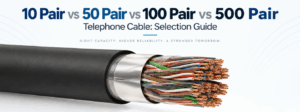
10 Pair vs 50 Pair vs 100 Pair vs 500 Pair Telephone Cable: Selection Guide
Telephone cable pair count is one of the first specifications engineers and procurement teams must define when selecting a multi-pair c...
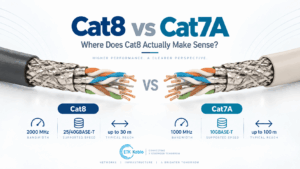
Cat8 vs Cat7A Cable: Where Does Cat8 Actually Make Sense?
Cat8 vs Cat7A is often presented as a simple comparison in which Cat8 is assumed to be the newer, faster and therefore better Ethernet ...
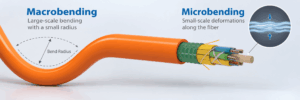
Fiber Optic Cable Bend Radius: Macrobending vs Microbending Explained
Fiber optic bend radius is one of the most important installation limits in an optical cable system. A fiber cable can meet its attenua...
Foam-Skin vs Solid PE Insulation in Telephone Cables
Foam-skin vs solid PE is an important insulation choice in outdoor copper telephone cables because the material surrounding each conduc...
Cat6A Alien Crosstalk Explained: Why ANEXT Matters
Cat6A alien crosstalk is one of the most important performance considerations in high-speed copper structured cabling. As Ethernet freq...
Fiber Optic Cable Mechanical Tests: Tensile, Crush, Impact and Bend Performance
Fiber optic cable testing is essential because good optical performance alone does not prove that a cable can survive installation and ...
Jelly-Filled vs Dry-Core Outdoor Telephone Cable
Jelly-filled vs dry-core is an important construction choice when specifying outdoor telephone cable for telecom distribution networks,...
0.5 vs 0.75 vs 1.0 vs 1.5 mm² Control Cable: How to Select Conductor Size
Control cable conductor size affects resistance, voltage drop, current-carrying capability, cable diameter, flexibility and cost. Among...
300/500 V vs 450/750 V Control Cable: When Is the Higher Voltage Rating Required?
Control cable voltage rating is one of the most important electrical parameters to check when selecting cables for industrial machinery...


