





 President’s Message
Blog
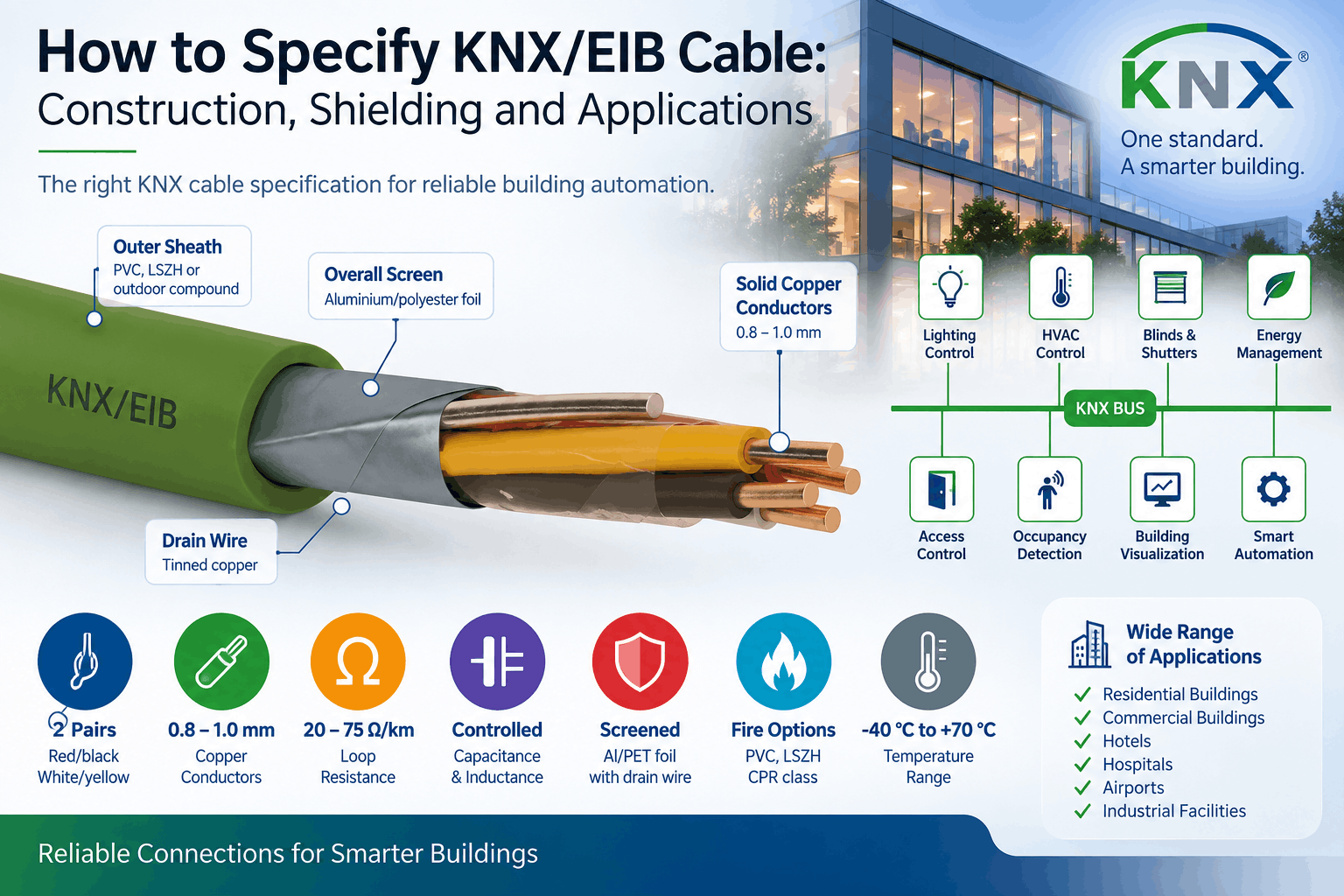
How to Specify KNX/EIB Cable: Construction, Shielding and Applications
Reading Time: 18 minutes
A KNX cable specification defines the electrical, mechanical and construction requirements of the twisted-pair bus cable used to connect devices in a KNX building automation network. Although KNX bus cable may appear relatively simple compared with high-frequency Ethernet or instrumentation cables, its conductor size, pair geometry, twisting, shielding, resistance, capacitance and insulation performance directly affect reliable communication across the building.
KNX systems can control lighting, heating, ventilation, air conditioning, blinds, shutters, access control, energy management and many other building functions through a shared communication bus. Consequently, the cable forms the physical communication backbone connecting sensors, switches, actuators, controllers and other KNX devices.
The terms KNX cable and EIB cable are also frequently used together. EIB, or European Installation Bus, was one of the technologies that preceded KNX. EIB became a central technical foundation of the later KNX system, which is why EIB cable terminology remains common in European specifications, product names and legacy installations.
However, not every green twisted-pair cable should automatically be considered suitable for KNX. A professional specification should evaluate conductor diameter, loop resistance, twisting, capacitance, inductance, screen construction, voltage withstand, fire performance and environmental requirements.
Quick answer: A standard KNX TP cable typically uses two twisted copper pairs, commonly red/black and white/yellow, with the red/black pair serving the KNX bus. Standardized KNX cable requirements specify conductor diameters from 0.8 to 1.0 mm, controlled electrical characteristics, pair twisting and an overall screen. The exact sheath system can then be selected according to the project, including PVC, halogen-free or outdoor constructions.
KNX Cable Specification at a Glance
| Parameter | Typical / Standardized KNX Requirement | Why It Matters |
|---|---|---|
| Transmission medium | Twisted pair | Carries KNX communication and bus power |
| Number of pairs | Two pairs for standardized cable | Provides bus pair plus spare pair |
| Common conductor colours | Red/black and white/yellow | Consistent identification |
| Wire diameter | 0.8–1.0 mm for standardized KNX cable | Controls resistance and voltage drop |
| Conductor material | Copper | Provides defined electrical performance |
| Twisting | Minimum defined twist requirement | Supports balanced communication and EMC performance |
| Screen | Overall screen | Reduces electromagnetic interference |
| Drain wire | Used with the screen | Provides screen continuity and termination |
| Loop resistance | Controlled | Affects voltage drop and network length |
| Capacitance | Controlled | Influences signal transmission |
| Inductance | Controlled | Part of the KNX transmission characteristics |
| Outer sheath | PVC, LSZH or special compound | Matches fire and environmental conditions |
| Network cable length | Up to 1000 m per standard cable segment under applicable KNX rules | Important for system topology |
Therefore, KNX cable selection should not depend only on conductor count or cable colour. Electrical transmission properties and compliance with the applicable KNX requirements are equally important.
What Is KNX?
KNX is an open building automation standard that allows equipment from different manufacturers to communicate within one interoperable control system.
Typical KNX applications include:
- Lighting control
- HVAC control
- Blind and shutter automation
- Room temperature control
- Energy monitoring
- Access control
- Occupancy detection
- Building visualization
- Smart-home automation
- Commercial building automation
Instead of wiring every switch directly to every controlled load, KNX devices exchange information through a common communication network.
Consequently, a well-designed KNX cable specification supports reliable communication while building functions can be reconfigured through software without completely rebuilding the physical control wiring.
What Does EIB Mean?
EIB stands for European Installation Bus.
The European Installation Bus Association was established in 1990 to develop a standardized bus technology for building automation. EIB subsequently became one of the main technologies that formed KNX.
In 1999, the organizations behind EIB, BatiBUS and European Home Systems joined to form what became the KNX Association.
Therefore, the term EIB remains technically and commercially relevant even though KNX is now the current global system.
This history explains product names such as:
These designations continue to appear in modern KNX building automation projects.
KNX vs EIB Cable: Is There a Difference?
In many modern cable specifications, KNX and EIB cable terminology describes the same twisted-pair building automation application.
Older drawings can refer to:
EIB BUS
while newer specifications can use:
KNX TP
The underlying building automation technology evolved from EIB into KNX.
Consequently, engineers often encounter the combined term:
KNX/EIB bus cable
However, the exact cable should still be checked against the required KNX electrical and certification requirements rather than assuming every product carrying an EIB-style designation is formally registered for KNX use.
What Is KNX Twisted Pair?
KNX supports different transmission media, but twisted pair remains one of the most widely used physical media for building installations.
KNX TP uses a balanced communication method in which information is transmitted through a twisted conductor pair.
The twisting helps external electromagnetic interference affect both conductors in a similar way.
As a result, the receiver can distinguish the intended differential communication signal from common electrical noise more effectively.
Therefore, pair twisting is not merely a manufacturing convenience. It forms part of the communication performance of the cable.
Why KNX Cable Uses Twisted Pairs
Buildings contain many sources of electrical interference.
Examples include:
- Power cables
- Lighting circuits
- LED drivers
- Transformers
- Motors
- Variable-frequency drives
- Switch-mode power supplies
- Elevators
- Electrical distribution equipment
Twisting the KNX conductors helps reduce induced noise.
Moreover, controlled pair geometry supports consistent electrical properties along the complete cable length.
For standardized KNX TP cables, the current KNX cable declaration specifies a minimum twisting requirement.
Consequently, replacing KNX cable with an arbitrary untwisted multicore control cable can compromise network reliability.
Typical KNX Cable Construction
A typical screened two-pair KNX cable contains:
- Solid copper conductors
- Individual conductor insulation
- Two twisted pairs
- Pair assembly
- Polyester or similar wrapping where applicable
- Overall metallic screen
- Drain wire
- Outer sheath
The outer sheath can vary according to the installation environment.
For example, indoor commercial projects can use halogen-free construction, while other installations may use PVC.
Meanwhile, outdoor variants can require additional UV and environmental resistance.
Two-Pair KNX Cable Construction
Standardized KNX TP cable commonly contains two conductor pairs:
- Red / black
- White / yellow
The red and black conductors form the principal KNX bus pair.
The second pair provides an additional pair within the cable but should not automatically be treated as a second independent KNX line.
KNX guidance allows only defined uses of the spare pair depending on the installation and electrical-safety conditions.
Therefore, engineers should not assume that a 2-pair KNX cable provides two complete KNX networks inside one sheath.
Red and Black Conductors in KNX Cable
The red and black conductors carry the principal KNX TP connection.
The same bus pair provides both:
- Bus power
- Communication signals
KNX bus supplies typically operate around 29 V DC, while connected devices operate within the relevant KNX voltage range.
This distinction is important because the bus operating voltage is not the same thing as the cable’s insulation or voltage-withstand rating.
Consequently, a datasheet stating a significantly higher cable voltage does not mean that KNX communication itself operates at that voltage.
What Is the White and Yellow Pair Used For?
The white/yellow pair is commonly considered the spare pair in a two-pair KNX cable.
Its permissible use depends on the electrical-safety design and applicable KNX guidance.
For example, it can remain:
- Unused
- Reserved for defined SELV applications where permitted
However, designers should not simply use it as another KNX TP line inside the same cable.
Therefore, the system design should define the spare pair explicitly instead of assigning it informally during installation.
Conductor Diameter in a KNX Cable Specification
Conductor diameter directly affects cable resistance and therefore voltage drop.
According to the current KNX manufacturer’s declaration for standardized TP cables, conductor diameter falls within:
0.8 mm to 1.0 mm
with copper conductors.
The familiar construction:
2 × 2 × 0.8 mm
is therefore widely associated with KNX building automation cable.
Importantly, 0.8 mm refers to conductor diameter rather than 0.8 mm² conductor cross-sectional area.
Consequently, specifications should preserve the correct notation when preparing an RFQ.
0.8 mm vs 0.8 mm²
This is an important technical distinction.
A conductor specified as:
0.8 mm
refers to the diameter of the conductor.
By contrast:
0.8 mm²
refers to conductor cross-sectional area.
These values are not equivalent.
Therefore, a KNX specification should not casually convert a standard 2 × 2 × 0.8 mm construction into 2 × 2 × 0.8 mm².
Using the correct dimensional terminology helps manufacturers and consultants avoid unnecessary technical discrepancies.
Solid vs Stranded KNX Conductors
Standardized KNX cable requirements allow copper conductor constructions within the applicable specification framework.
Nevertheless, solid copper conductors are extremely common in fixed building-installation KNX cables.
Solid construction provides predictable resistance and works conveniently with commonly used KNX connection terminals.
However, the cable’s intended installation method must still be considered.
A highly flexible conductor does not automatically make a cable more appropriate for fixed KNX infrastructure.
Therefore, conductor construction should match both the system requirements and physical installation conditions.
Loop Resistance in a KNX Cable Specification
Loop resistance is one of the most important electrical parameters in KNX TP cabling.
According to the current standardized KNX cable declaration, the defined loop resistance range is:
20–75 Ω/km
for the standardized cable category.
Resistance matters because the cable carries both communication and bus power.
As cable length and connected load increase, resistance contributes to voltage drop.
Consequently, using smaller conductors or unsuitable replacement cable can reduce the available voltage at distant KNX devices.
Why Voltage Drop Matters in KNX Networks
A KNX bus supply typically provides approximately 29 V DC to the line.
However, conductor resistance causes some voltage to be lost as current flows through the cable.
The amount of voltage drop depends on:
- Cable resistance
- Distance
- Device current consumption
- Number of connected devices
- Network topology
Therefore, conductor diameter cannot be reduced simply because KNX carries relatively low data rates.
A thinner communications cable may theoretically transmit data but still create unacceptable bus voltage drop.
KNX Cable Length Requirements
KNX TP networks also have topology-related cable-length limitations.
Common design limits include:
- Maximum total cable length per line segment: 1000 m
- Maximum distance between power supply and a bus device: 350 m
- Maximum distance between two bus devices: approximately 700 m
However, these limits form part of the network design rather than merely the physical cable specification.
Device count, power supply capacity and topology must also be evaluated.
Consequently, selecting a compliant cable does not by itself guarantee a compliant KNX network.
Capacitance in a KNX Cable Specification
Capacitance affects communication characteristics along the bus.
For standardized KNX cable, the current KNX manufacturer’s declaration defines wire-to-wire capacitance within a specified range at the defined test frequency.
Therefore, capacitance should not be ignored when evaluating substitute cables.
Two cables can have the same conductor diameter while exhibiting different capacitance because of differences in:
- Insulation material
- Pair geometry
- Conductor spacing
- Twist design
Consequently, conductor size alone does not determine KNX suitability.
Inductance in a KNX Cable Specification
Inductance forms another part of the electrical transmission characteristics of standardized KNX cable.
The KNX cable declaration defines an inductance range for standardized cable at the specified measurement frequency.
This parameter works together with capacitance and resistance to influence signal transmission.
Therefore, generic control cable cannot automatically replace a KNX bus cable even when conductor count and colour appear similar.
Why KNX Cable Is Screened
KNX TP cables commonly incorporate an overall metallic screen.
The screen surrounds the communication cable core and helps protect the bus against external electromagnetic interference.
Potential interference sources include:
- Mains circuits
- Power supplies
- Motors
- Elevator equipment
- Lighting electronics
- Switchboards
- Automation equipment
Consequently, shielding contributes to stable communication in electrically complex building environments.
KNX Cable Shielding Construction
A typical KNX/EIB bus cable can use:
- Aluminium/polyester foil screen
- Tinned copper drain wire
The foil provides broad coverage around the cable core.
Meanwhile, the drain wire provides continuous electrical contact with the screen and simplifies termination where the design requires it.
Current KNX cable-registration requirements specify that the screen covers the complete cable diameter and define a minimum drain-wire diameter.
Therefore, the screen is an engineered part of the KNX cable rather than decorative metallic wrapping.
Does KNX Cable Need Individual Pair Shielding?
Standard KNX TP cable generally relies on pair twisting together with an overall screen rather than individually screening every pair.
This differs from some instrumentation and high-frequency data cable constructions.
For example, individually screened instrumentation cable may use one metallic screen around every signal pair.
KNX communication does not normally require this PiMF-style arrangement.
Consequently, additional individual pair screens should not be assumed to make a KNX cable technically superior.
KNX Cable vs Instrumentation Cable
KNX and instrumentation cables can both contain twisted and screened conductor elements, but they serve different communication systems.
Instrumentation cable is commonly designed for:
- 4–20 mA circuits
- Measurement signals
- Process instruments
- Industrial control systems
KNX cable, by contrast, is engineered for the electrical and communication requirements of KNX TP building automation.
Therefore, similar visual construction does not make the two cable families interchangeable.
KNX Cable vs Standard Control Cable
A standard control cable commonly connects relays, contactors, switches, actuators and machine-control equipment.
It can be multicore, screened or unscreened.
However, conventional control cable is not necessarily designed around KNX:
- Loop resistance
- Capacitance
- Inductance
- Pair twisting
- Transmission attenuation
Consequently, the upcoming KNX cable vs standard control cable comparison should be treated as a communication-system compatibility issue, not simply a difference in conductor count.
Can Cat6 Cable Be Used for KNX?
Ethernet cable and KNX cable are designed for different communication systems.
Cat6 cable is engineered for high-frequency Ethernet transmission using four balanced pairs.
KNX TP cable, meanwhile, must satisfy the resistance, conductor size, voltage-drop and communication requirements of the KNX bus.
A smaller Ethernet conductor can create excessive voltage drop over long KNX lines even if data transmission initially appears possible.
Therefore, substituting structured cabling for a specified KNX cable should not be treated as normal engineering practice.
PVC KNX/EIB Cable
PVC-based KNX/EIB cable remains useful in building applications where the project permits PVC insulation and sheath systems.
One common construction is:
EIB-Y(St)Y
Such cables can combine:
- Solid copper conductors
- Twisted pairs
- Overall Al/PET screen
- Tinned copper drain wire
- PVC-based insulation and sheath system
Therefore, EIB-Y(St)Y provides a practical screened bus-cable construction for suitable KNX building automation projects.
Halogen-Free KNX/EIB Cable
Projects with stricter fire and smoke requirements can require halogen-free cable construction.
A common ETK product family is:
EIB-H(St)H
Instead of conventional PVC, the cable uses halogen-free insulation and sheath compounds.
This can be important in:
- Airports
- Hospitals
- Hotels
- Commercial buildings
- Public buildings
- Transport infrastructure
- High-rise developments
However, halogen-free construction should not automatically be interpreted as circuit integrity or a particular CPR Euroclass.
EIB-Y(St)Y vs EIB-H(St)H
| Characteristic | EIB-Y(St)Y | EIB-H(St)H |
|---|---|---|
| Application | KNX/EIB building automation | KNX/EIB building automation |
| Typical conductor construction | Solid copper | Solid copper |
| Twisted pair | Yes | Yes |
| Overall screen | Yes | Yes |
| Drain wire | Yes | Yes |
| PVC based | Yes | No |
| Halogen free | No | Yes |
| Primary selection factor | General building environment | Low-smoke / halogen-free requirements |
Consequently, the main selection difference concerns the material and fire-environment requirements rather than the KNX communication protocol itself.
What Does (St) Mean in KNX Cable?
The (St) element in German-style cable designations generally indicates a static screen arrangement involving metallic foil.
In KNX/EIB constructions, this commonly consists of an aluminium/polyester foil combined with a drain or earthing wire.
The screen improves electromagnetic protection around the complete bus-cable core.
Therefore, the notation provides useful construction information, but engineers should still inspect the full datasheet to understand the actual screen materials and coverage.
Outdoor KNX Cable Construction
Standard indoor KNX cable should not automatically be used outdoors.
Outdoor installation can require additional:
- UV resistance
- Moisture resistance
- Temperature capability
- Mechanical protection
- Suitable outer sheath material
Polyethylene-based outer jackets can provide increased environmental resistance in suitable outdoor constructions.
Meanwhile, armored versions can be designed where the cable faces greater mechanical risk.
Consequently, outdoor KNX cable should be selected as a complete environmental construction rather than simply changing the sheath colour.
Armored KNX Cable
Some building automation installations can require additional mechanical protection.
For example, KNX cable can pass through:
- Industrial areas
- Outdoor routes
- Infrastructure corridors
- Underground pathways
- Areas exposed to mechanical damage
Armoring can provide additional protection in these environments.
However, the underlying KNX electrical characteristics must still remain compliant.
Therefore, adding steel wire or another armour layer does not compensate for an unsuitable bus-cable core.
KNX Cable Fire Performance
Fire requirements should be evaluated separately from KNX communication performance.
A KNX cable specification can include requirements for:
- Flame propagation
- Low smoke
- Halogen-free materials
- CPR reaction-to-fire classification
- Acidity
- Flaming droplets
The appropriate level depends on the building, national regulation and project fire strategy.
Therefore, a cable can be electrically suitable for KNX communication while still failing the project’s required fire classification.
LSZH Does Not Mean Fire Resistant
LSZH describes material characteristics related to smoke and halogen-containing combustion products.
It does not automatically mean that the KNX bus continues operating during direct fire exposure.
Likewise, LSZH alone does not establish a B2ca or Cca CPR classification.
Consequently, project specifications should define:
- LSZH requirement
- Flame requirement
- CPR class
- Circuit integrity where genuinely required
as separate parameters.
CPR Classes for KNX Cable
KNX cables permanently installed in European construction works can fall within CPR reaction-to-fire requirements.
Depending on the project, possible classes can include:
- B2ca
- Cca
- Dca
- Eca
Higher Euroclasses can additionally carry smoke, flaming-droplet and acidity subclasses.
Therefore, specifying only “halogen-free KNX cable” can be insufficient when the project also requires a formal CPR classification.
KNX Cable for Lighting Control
Lighting automation is one of the best-known KNX applications.
KNX devices can control:
- Switching
- Dimming
- Scenes
- Occupancy-based lighting
- Daylight control
- Time schedules
The KNX bus connects wall switches, presence detectors, controllers and actuators.
Consequently, the control communication remains separated conceptually from the mains conductors supplying the luminaires.
KNX Cable for HVAC Systems
KNX networks can also integrate HVAC functions.
Typical devices include:
- Room thermostats
- Temperature sensors
- Fan-coil controllers
- Valve actuators
- Air-quality sensors
- HVAC gateways
The KNX cable provides the shared communication path between these devices.
Therefore, one building automation network can coordinate comfort, energy efficiency and room conditions across multiple systems.
KNX Cable for Blinds and Shutters
Motorized blinds and shutters can connect to KNX actuators that receive commands from:
- Wall switches
- Central controls
- Weather stations
- Light sensors
- Timers
- Building-management logic
Consequently, shading can respond automatically to sunlight, temperature, occupancy or weather conditions.
The bus cable allows all of these devices to exchange control information without dedicated point-to-point control wiring for every function.
KNX Cable for Hotels
Hotels can use KNX for integrated room and building automation.
Applications can include:
- Guest-room lighting
- HVAC
- Presence detection
- Blind control
- Energy management
- Central monitoring
Because hotels contain large numbers of occupants and substantial cable infrastructure, LSZH and CPR requirements can become particularly important.
Therefore, cable construction should be coordinated with both KNX communication requirements and the building fire specification.
KNX Cable for Hospitals
Hospitals can use building automation to manage lighting, HVAC, energy consumption and room conditions.
However, cable selection should account for the building’s safety requirements and critical operational environment.
Halogen-free construction can be preferred in appropriate areas because smoke and corrosive combustion products can affect both people and equipment.
Consequently, KNX electrical compatibility should be considered together with the project’s CPR and material requirements.
KNX Cable for Airports
Airports contain large building-management infrastructures combining public areas, commercial spaces, technical rooms and transportation facilities.
KNX can support:
- Lighting automation
- HVAC
- Energy management
- Shading
- Room control
- Monitoring functions
Therefore, cable specifications can need to combine stable KNX communication with demanding smoke, flame and reaction-to-fire requirements.
KNX Cable for Commercial Buildings
Office buildings and commercial developments represent major KNX applications.
One shared bus system can coordinate:
- Lighting
- Temperature
- Occupancy
- Energy consumption
- Shading
- Room automation
Consequently, KNX infrastructure can support both occupant comfort and energy-management strategies.
However, reliable building automation begins with a correctly specified physical communication network.
KNX and BMS Integration
KNX can operate as part of a broader Building Management System.
Gateways can connect KNX installations with:
- BACnet
- Modbus
- IP networks
- Visualization platforms
- Energy-management systems
The KNX TP cable remains the physical field-level communication path for relevant KNX devices.
Therefore, BMS integration does not eliminate the need for a properly engineered KNX bus network.
KNX Cable Topology
KNX TP allows flexible cabling compared with conventional point-to-point control systems.
Routes can include:
- Line structures
- Branches
- Tree-type arrangements
- Combinations of permitted structures
However, system topology still must respect network-length, power-supply and device requirements.
Consequently, cable flexibility should not be interpreted as permission to ignore KNX design rules.
Can KNX Cable Run Near Power Cables?
The answer depends on cable construction, insulation rating, local electrical rules and installation arrangement.
KNX standardized cables can have defined high-voltage withstand performance that allows installation under specified conditions near electrical circuits.
However, separation, containment and electrical-safety requirements vary between countries and projects.
Therefore, designers should follow the applicable electrical installation rules rather than assuming that every KNX cable can share any pathway with mains wiring.
KNX Cable Voltage Rating vs Bus Voltage
This distinction can cause confusion on datasheets.
KNX bus communication operates at approximately 29 V DC.
Meanwhile, the cable itself can carry substantially higher test-voltage or insulation ratings.
Those higher numbers describe the electrical insulation capability of the cable construction.
They do not represent the normal KNX communication voltage.
Consequently, a datasheet should distinguish clearly between:
- Bus operating voltage
- Cable working rating
- Test voltage
- High-voltage withstand
KNX Cable Certification and Registration
Not every manufacturer may simply place the KNX trademark on a cable.
KNX Association maintains a formal registration and certification process for TP cables.
Manufacturers seeking KNX cable registration must document the required construction, electrical, EMC and communication characteristics.
Testing must address parameters such as:
- Conductor dimensions
- Resistance
- Twisting
- Screening
- Voltage withstand
- Capacitance
- Inductance
- Signal attenuation
Only after the applicable KNX process is successfully completed can the KNX trademark be applied according to the Association’s rules.
Registered vs Generic KNX-Compatible Cable
This is an important procurement distinction.
A cable supplier can describe a product as suitable or compatible with a KNX-type application based on its technical characteristics.
However, that is not necessarily equivalent to formal KNX cable registration or certification.
Therefore, where the specification explicitly requires:
KNX registered cable
or
KNX certified cable
the procurement team should request appropriate documentary evidence.
The product’s marketing description alone should not substitute for formal certification.
Common KNX Cable Specification Mistakes
1. Specifying Only “Green KNX Cable”
Colour does not define electrical or communication performance.
2. Writing 0.8 mm² Instead of 0.8 mm
Conductor diameter and conductor area are different measurements.
3. Replacing KNX Cable with Cat6
Ethernet cable has different conductor, resistance and transmission requirements.
4. Using Generic Control Cable
Conductor count alone does not guarantee KNX communication performance.
5. Ignoring Loop Resistance
Excessive resistance can create significant voltage drop.
6. Ignoring Capacitance
Pair geometry and insulation affect communication characteristics.
7. Ignoring Pair Twisting
Twisting contributes to balanced signalling and interference rejection.
8. Assuming Any Foil Screen Is Equivalent
Screen coverage and drain-wire construction should match the cable specification.
9. Using the Spare Pair as a Second KNX Line
The white/yellow pair should follow KNX guidance and the project design.
10. Confusing Bus Voltage with Cable Voltage Rating
The KNX bus operates at low DC voltage even when the cable has a much higher insulation-test rating.
11. Assuming LSZH Means B2ca
Material construction and CPR Euroclass are separate characteristics.
12. Assuming LSZH Means Fire Resistant
Halogen-free construction does not establish circuit integrity.
13. Ignoring CPR Requirements
European building projects can require a specific reaction-to-fire class.
14. Using Indoor Cable Outdoors
Outdoor routes can require UV, moisture and temperature resistance.
15. Assuming KNX Compatibility Means KNX Certification
Formal KNX trademark use requires the applicable registration or certification process.
16. Ignoring Maximum Cable Length
Network topology and voltage drop can limit the permissible route.
17. Selecting Cable Without Considering the Building Type
A hotel, industrial building and private residence can have different fire and environmental requirements.
18. Selecting Only by Price
A lower-cost generic cable can create commissioning and reliability problems if electrical characteristics do not match the KNX system.
How to Prepare a KNX Cable Specification
Step 1: Identify the KNX Transmission Medium
Confirm that the project uses KNX TP cabling rather than another KNX transmission technology.
Step 2: Define the Pair Construction
Specify the required two-pair cable arrangement and conductor colour identification.
Step 3: Define Conductor Diameter
For standardized KNX TP cable, specify the applicable 0.8–1.0 mm conductor range, commonly 0.8 mm.
Step 4: Define Loop Resistance
Ensure resistance complies with the required KNX electrical characteristics.
Step 5: Define Twisting
Specify properly twisted conductor pairs rather than generic parallel cores.
Step 6: Define Shielding
Include the appropriate overall metallic screen and drain wire.
Step 7: Define Electrical Performance
Review capacitance, inductance, insulation resistance and voltage withstand.
Step 8: Define the Sheath Material
Select PVC, LSZH or an outdoor compound according to the environment.
Step 9: Define Fire Performance
Specify CPR, smoke, acidity and flame requirements where applicable.
Step 10: Define Environmental Requirements
Add UV, moisture and temperature requirements for outdoor or severe applications.
Step 11: Define Certification
State whether formal KNX registration or certification is mandatory.
Step 12: Verify Project Documentation
Finally, confirm that the proposed cable datasheet and certificates match every requirement in the tender.
What Should Buyers Include in a KNX Cable RFQ?
A professional KNX cable specification should provide enough information for manufacturers to quote technically equivalent products.
Useful RFQ requirements include:
- KNX TP application
- EIB/KNX designation where required
- Number of pairs
- Conductor diameter
- Conductor material
- Solid or stranded conductor requirement
- Pair colour coding
- Loop resistance
- Capacitance
- Inductance
- Pair twisting requirement
- Overall screen
- Screen material
- Drain wire
- Insulation resistance
- Voltage withstand
- PVC or LSZH construction
- Outer sheath colour
- CPR Euroclass
- Smoke classification where applicable
- Acidity classification where applicable
- Flame-retardant requirement
- UV resistance where applicable
- Operating temperature
- Installation temperature
- Maximum outside diameter where relevant
- KNX registration or certification requirement
- Drum length
- Cable marking
- Test reports
- Project-specific standard
Consequently, buyers can compare cable offers based on equivalent technical requirements instead of product names alone.
ETK Kablo KNX/EIB Bus Cable Solutions
ETK Kablo manufactures screened building automation cables for KNX and EIB applications in residential, commercial and infrastructure projects.
ETK’s building automation portfolio includes:
- EIB-Y(St)Y
- EIB-H(St)H
- EIB-2Y(St)Y
- EIB-2Y(St)H
Depending on product family, constructions can combine solid copper conductors, twisted pairs, aluminium/polyester overall screening and tinned copper drain wires.
EIB-Y(St)Y provides a PVC-based solution for suitable building automation environments.
Meanwhile, EIB-H(St)H provides a halogen-free alternative for projects requiring reduced smoke and halogen-related fire characteristics.
Additional outdoor-oriented variants can use different insulation and sheath systems according to environmental requirements.
Therefore, an ETK KNX cable specification can be selected according to communication requirements, electromagnetic environment, fire behaviour and installation conditions rather than relying on one universal bus-cable construction.
Frequently Asked Questions About KNX Cable Specifications
What is a KNX cable?
A KNX cable is a twisted-pair communication cable used to connect devices in a KNX building automation network.
What is an EIB cable?
EIB cable is a legacy building automation cable designation associated with European Installation Bus, the technology that became a major foundation of KNX.
Is EIB the same as KNX?
EIB was a predecessor technology incorporated into the later KNX standard. Consequently, EIB and KNX terminology frequently coexist in modern cable specifications.
What size is KNX cable?
Standardized KNX TP cable requirements specify copper wire diameters from 0.8 to 1.0 mm, with 0.8 mm being particularly common.
Is KNX cable 0.8 mm or 0.8 mm²?
The common KNX cable designation refers to 0.8 mm conductor diameter, not 0.8 mm² conductor area.
How many pairs does KNX cable have?
Standardized KNX cable commonly uses two pairs, typically red/black and white/yellow.
Which pair is used for KNX?
The red and black pair normally carries KNX bus power and communication.
What is the white and yellow KNX pair for?
It is generally a spare pair whose use should follow KNX guidelines and the project’s electrical design.
Can I use both pairs as separate KNX lines?
This is not recommended as standard KNX installation practice. Separate KNX lines should follow the specified topology and cabling rules.
Why is KNX cable twisted?
Twisting supports balanced transmission and helps reduce electromagnetic interference.
Why is KNX cable screened?
The overall metallic screen helps protect communication against external electromagnetic interference.
What type of screen does KNX cable use?
Typical constructions use aluminium/polyester foil together with a drain wire.
What voltage does KNX use?
KNX TP bus supplies typically operate around 29 V DC. This should not be confused with the cable’s higher insulation or voltage-test ratings.
What is the maximum KNX cable length?
A KNX TP line can have up to approximately 1000 m of total cable under applicable topology rules, with additional limits applying between devices and the power supply.
How far can a KNX device be from the power supply?
A commonly specified maximum distance is approximately 350 m between the KNX power supply and the relevant bus device.
Can Cat6 be used for KNX?
Cat6 is designed for Ethernet rather than KNX TP. Conductor resistance and voltage drop can differ significantly, so purpose-designed KNX cable is the appropriate specification.
Can control cable be used for KNX?
A generic control cable should not automatically replace KNX cable because its resistance, capacitance, twisting, screening and other transmission characteristics can differ.
What is EIB-Y(St)Y?
EIB-Y(St)Y is a screened PVC-based building automation bus cable used for KNX/EIB applications.
What is EIB-H(St)H?
EIB-H(St)H is a screened halogen-free building automation cable designed for suitable KNX/EIB applications.
Is KNX cable LSZH?
It can be. KNX communication requirements and sheath material are separate choices, so both PVC and halogen-free cable constructions exist.
Does LSZH KNX cable mean fire resistant?
No. LSZH describes smoke and halogen-related characteristics and does not automatically provide circuit integrity.
Does KNX cable require CPR classification?
KNX cable permanently incorporated into applicable European construction works can require CPR reaction-to-fire classification according to the project and national rules.
Can KNX cable be installed outdoors?
Yes, provided the selected cable construction has the appropriate UV, moisture, temperature and environmental characteristics.
Can KNX cable be armored?
Yes. Specialized KNX-compatible constructions can include armour where additional mechanical protection is required.
Is every green cable KNX certified?
No. Colour alone does not demonstrate compliance or certification.
Can a manufacturer print the KNX logo on any compatible cable?
No. Use of the KNX trademark requires compliance with the applicable KNX Association registration and certification process.
What should be checked in a KNX cable datasheet?
Check conductor diameter, loop resistance, pair arrangement, capacitance, inductance, twisting, screening, insulation, sheath material, fire performance and applicable certification.
Conclusion
A well-written KNX cable specification defines much more than a green two-pair communication cable.
KNX TP relies on controlled conductor dimensions, twisting and electrical properties to transmit both bus power and communication reliably throughout a building automation network.
Two conductor pairs are commonly provided, with red and black forming the primary KNX bus pair and white/yellow providing the spare pair. Meanwhile, the metallic overall screen helps protect communication from electromagnetic interference.
Electrical characteristics such as loop resistance, capacitance and inductance become particularly important because cable length can extend across large buildings and the bus also supplies connected devices.
Specify KNX Cable by Performance, Not Appearance
Material construction should then be matched to the building environment. PVC-based EIB-Y(St)Y can provide a practical solution for suitable applications, while halogen-free EIB-H(St)H supports projects with more demanding smoke and halogen requirements.
Outdoor, armored and higher fire-performance variants can require further modifications to the cable construction.
However, neither cable colour nor a familiar EIB-style product designation proves formal KNX registration. Where KNX certification is contractually required, procurement teams should verify the appropriate documentation.
Ultimately, the correct KNX/EIB cable is the one that combines the required communication performance, electrical characteristics, shielding, environmental protection and fire classification for the specific building automation project.
Benzer yazılar
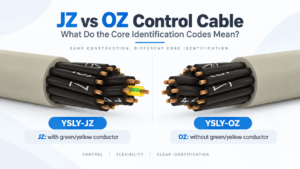
JZ vs OZ Control Cable: What Do the Core Identification Codes Mean?
JZ vs OZ control cable is a common comparison when specifying flexible multicore cables for industrial machinery, control panels, autom...
Ethernet Cable Testing: NEXT, Return Loss, Insertion Loss and ACR Explained
Ethernet cable testing verifies whether a twisted-pair copper cabling system can transmit data within the electrical performance limits...

Fiber Optic Cable Attenuation: 850, 1310, 1550 and 1625 nm Explained
Fiber optic cable attenuation describes the reduction in optical power as light travels through an optical fiber. It is normally expres...
A-02YSF(L)2Y vs A-2Y(L)2Y Outdoor Telephone Cable
A-02YSF(L)2Y vs A-2Y(L)2Y is an important comparison when selecting copper outdoor telephone cable for telecommunications networks, und...
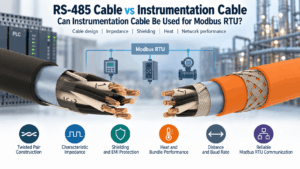
RS-485 Cable vs Instrumentation Cable: Can Instrumentation Cable Be Used for Modbus RTU?
A Modbus RTU cable must do more than carry a low-voltage digital signal from one device to another. Modbus RTU commonly uses an RS-485 ...

Ethernet Cable for PoE: Conductor Size, Heat and Bundle Performance
A PoE Ethernet cable carries data and electrical power over the same balanced twisted-pair cabling system. This capability simplifies t...
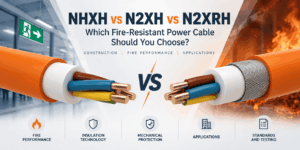
NHXH vs N2XH vs N2XRH: Which Fire-Resistant Power Cable Should You Choose?
NHXH vs N2XH vs N2XRH is an important comparison when specifying 0.6/1 kV power cables for emergency and life-safety systems. Although ...

How to Specify Low Current Cables for Infrastructure Projects
A professional low current cable specification should define much more than a cable name, conductor count or sheath colour. Infrastruct...

Fire Resistant Cables for Hospitals and High-Rise Buildings
Fire resistant cable for hospitals and high-rise buildings supports electrical, communication and control systems that may need to rema...

Industrial Control Cable Selection for Automation and Machinery
Industrial control cable selection should begin with the function of the circuit and the mechanical conditions of the machine rather th...
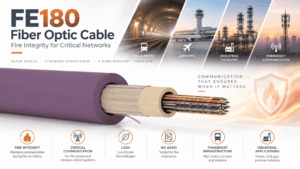
FE180 Fiber Optic Cable: Fire Integrity, Applications and Selection
An FE180 fiber optic cable is designed for optical communication routes where continued transmission during fire can form part of the p...

Screened vs Unscreened Control Cable: What Is the Difference?
Control cable shielding is one of the most important design decisions when selecting cable for industrial automation, machinery, buildi...


