





 President’s Message
Blog

SWA Fiber Optic Cable: Construction, Applications & Selection Guide
Reading Time: 13 minutes
SWA fiber optic cable combines optical fibers with a Steel Wire Armour layer that provides additional mechanical reinforcement around the cable structure. Engineers typically consider SWA where an optical route faces significant pulling forces, crushing, impact, rodents or other physical risks.
However, steel wire armour does not define the complete cable. An SWA construction can use single-mode or multimode fibers, central or multi loose tubes, gel or dry water blocking, different strength members and different outer-sheath materials.
In addition, armour does not increase optical bandwidth or improve the intrinsic attenuation of the fiber. Its primary role is mechanical protection.
Therefore, SWA should solve a defined route requirement rather than serve as an automatic upgrade for every outdoor or underground fiber network.
ETK Kablo manufactures metallic armored fiber optic cable solutions for telecommunications, industrial, railway, infrastructure and other demanding network environments.
Quick answer: Choose SWA when a fiber route needs substantial mechanical reinforcement, especially where tensile loading, difficult pulling conditions or severe physical exposure matter. However, specify water blocking, sheath material, fiber type, fiber count, bending radius, crush resistance and direct-burial suitability separately.
What Is an SWA Fiber Optic Cable?
SWA fiber optic cable is an optical cable that uses galvanized steel wires as a dedicated mechanical armour layer.
The steel wires normally surround an inner cable structure or bedding layer before the manufacturer applies the final outer sheath.
A typical construction can include:
- Single-mode or multimode optical fibers
- Central loose tube or multiple loose tubes
- FRP or another central strength member
- Gel or dry water-blocking materials
- Aramid or glass yarn where required
- Inner sheath or bedding
- Galvanized steel wire armour
- PE, HDPE, LSZH or another project-specific outer sheath
Therefore, SWA identifies one protective layer rather than the complete fiber-cable specification.
SWA Fiber Optic Cable Construction
| Layer | Typical Material | Main Function |
|---|---|---|
| Optical fiber | G.652.D, G.657 or OM fiber | Carry optical signals |
| Loose tube | PBT or suitable polymer | Protect and organize fibers |
| Water blocking | Gel, swellable yarn or tape | Limit longitudinal water migration |
| Strength system | FRP, yarn or other reinforcement | Carry mechanical loads |
| Inner sheath / bedding | Polymeric compound | Create a stable layer beneath armour |
| SWA | Galvanized steel wires | Provide mechanical reinforcement |
| Outer sheath | PE, HDPE, LSZH or specified compound | Protect the finished cable from its environment |
Not every design contains the same layers. As a result, two SWA cables with the same fiber count can have very different diameter, weight and mechanical performance.
What Does SWA Mean?
SWA means Steel Wire Armour or Steel Wire Armoured when describing the finished cable.
The armour consists of multiple steel wires arranged around the cable structure.
These wires can contribute to:
- Tensile strength
- Crush protection
- Impact resistance
- Rodent protection
- Resistance to installation stress
However, the actual performance depends on wire diameter, cable geometry, inner bedding, strength members and complete construction.
Therefore, the letters “SWA” alone do not establish a universal tensile or crush rating.
Is Every Armored Fiber Cable an SWA Cable?
No.
Armored fiber optic cable is the broader category.
Mechanical-protection systems can include:
- Steel Wire Armour
- Steel Wire Braid
- Corrugated steel tape
- Other steel-tape systems
- Glass-yarn reinforcement
- Aramid reinforcement
- Other non-metallic protective structures
Consequently, an armored optical cable should only be called SWA when it actually contains a steel-wire armour layer.
This distinction matters in RFQs because each protection system changes cable diameter, weight, flexibility and mechanical behaviour.
SWA Fiber Optic Cable vs Corrugated Steel Tape
SWA and corrugated steel tape both provide metallic mechanical protection, but they use different geometries.
| Characteristic | SWA | Corrugated Steel Tape |
|---|---|---|
| Armour structure | Multiple galvanized steel wires | Continuous corrugated steel tape |
| Tensile contribution | Can be substantial | Usually more limited |
| Radial protection | Strong when properly designed | Strong continuous metallic barrier |
| Typical cable diameter | Generally larger | Often more compact |
| Typical weight | Generally higher | Generally lower |
| Route direction | Demanding mechanical / tensile conditions | Compact crush, impact and rodent protection |
Neither design is universally stronger in every parameter.
For example, SWA can provide an advantage where longitudinal tensile reinforcement matters. By contrast, corrugated steel tape can provide strong radial and rodent protection in a more compact construction.
For a detailed comparison, see our corrugated steel tape vs SWA fiber cable guide.
Why Use SWA Fiber Optic Cable?
Steel wire armour becomes useful when the cable itself must tolerate substantial mechanical exposure.
Potential route risks include:
- Heavy installation pulls
- Crushing
- Impact
- Rodent activity
- Industrial handling
- Ground movement
- Exposed infrastructure routes
- Maintenance activity
In these situations, SWA can provide meaningful additional protection.
Nevertheless, heavy armour also introduces disadvantages. It increases diameter, weight, stiffness, material content and installation effort.
Therefore, engineers should use SWA where its mechanical benefits justify those trade-offs.
SWA Fiber Optic Cable for Direct Burial
An SWA construction can suit direct-burial fiber networks when the complete cable is designed for the underground environment.
Direct burial removes the continuous external protection normally provided by a duct.
As a result, the cable can encounter:
- Soil pressure
- Stone contact
- Ground movement
- Rodents
- Moisture
- Installation tension
- Local impact
- Future construction activity
SWA can address part of this risk profile. However, steel armour alone does not make a cable suitable for direct burial.
The finished construction must also address water, sheath durability, bending, temperature and other route conditions.
For the complete underground specification, see our direct burial fiber optic cable guide.
Does SWA Make Fiber Cable Waterproof?
No.
This is one of the most important corrections to the old article.
Steel wire armour provides mechanical protection. It does not automatically stop water from moving longitudinally through the cable core.
Water protection can require:
- Thixotropic gel
- Water-swellable yarn
- Water-swellable tape
- Dry tube-blocking materials
- Sealed buffer tubes
- An appropriate outer sheath
Therefore, water blocking and armour must remain separate specification decisions.
Dry-Core and Gel-Filled SWA Fiber Cable
SWA fiber optic cable can use several moisture-protection architectures.
A gel-filled design can use thixotropic compound inside the loose tubes, the cable core or both.
By contrast, dry-core designs use swellable tapes or yarns in the cable core.
A fully dry cable removes conventional gel from both the tubes and cable core.
Each approach can work with SWA because the armour and water-blocking systems perform different functions.
Our dry core vs gel-filled fiber cable guide explains these architectures in detail.
SWA Fiber Optic Cable and Tensile Strength
Tensile performance is one area where steel-wire armour can become especially valuable.
The wires can contribute to longitudinal mechanical strength and help the cable tolerate demanding installation loads.
This can matter in:
- Long cable pulls
- Steep routes
- Industrial installations
- Heavy underground routes
- Large and heavy cable constructions
However, SWA is not the only tensile element in the cable.
FRP, aramid yarn, glass yarn, loose-tube geometry and other internal components can also influence the final tensile rating.
Therefore, procurement teams should compare actual maximum installation and operating tension rather than assuming a value from the armour name.
SWA Fiber Optic Cable and Crush Resistance
Steel wires can provide substantial protection against radial mechanical pressure.
However, crush resistance depends on the complete cable architecture.
Important variables include:
- Wire diameter
- Number and lay of armour wires
- Inner sheath
- Outer diameter
- Loose-tube arrangement
- Strength members
- Outer-sheath thickness
As a result, two SWA cables can have different crush-test results even when they contain the same number of fibers.
SWA Fiber Optic Cable and Impact Protection
Industrial and underground routes can expose the cable to localized impacts.
SWA can distribute and absorb part of that mechanical load before it reaches the optical core.
Nevertheless, armour does not make a cable indestructible.
Severe excavation damage, excessive bending or uncontrolled pulling can still damage optical fibers.
Therefore, good route design and installation practices remain necessary.
Rodent Protection
Rodents can damage unprotected polymer cable jackets and eventually reach the optical core.
A steel armour layer creates a strong physical barrier.
For this reason, SWA can provide useful protection on routes with significant rodent exposure.
However, “rodent proof” should not be used as an unconditional claim. Real exposure and cable construction vary.
Instead, project engineers should define the expected rodent risk and required mechanical performance.
SWA Fiber Optic Cable vs Unarmored Fiber Cable
| Characteristic | SWA Cable | Unarmored Cable |
|---|---|---|
| Dedicated steel armour | Yes | No |
| Typical weight | Higher | Lower |
| Typical diameter | Larger | Smaller |
| Flexibility | Generally lower | Generally higher |
| Mechanical protection | Higher when armour is correctly designed | Depends on cable and external pathway |
| Installation effort | Higher | Lower |
| Best route | Mechanically demanding installation | Protected duct, tray or controlled environment |
An unarmored cable is not an inferior product.
For example, a protected underground duct can already provide substantial mechanical protection. In that environment, heavy SWA may add unnecessary cost and installation difficulty.
See our armored vs unarmored cable guide for the broader decision framework.
SWA Fiber Optic Cable vs Non-Metallic Protection
SWA adds a conductive metallic layer to the optical cable.
By contrast, non-metallic reinforced designs can use FRP, glass yarn or aramid materials.
A dielectric construction can provide advantages where the route aims to avoid conductive metallic elements.
Potential considerations include:
- Electrical isolation
- Grounding philosophy
- Proximity to power infrastructure
- Weight
- Corrosion risk
- Mechanical-performance requirement
However, non-metallic does not automatically mean mechanically weaker.
Instead, compare the measured tensile, crush and impact requirements of the route.
For more detail, see our metallic vs non-metallic fiber cable comparison.
Does SWA Affect Optical Performance?
Not directly.
The optical signal travels through the glass fiber, while the armour protects the surrounding cable mechanically.
Optical performance depends primarily on factors such as:
- Fiber type
- Wavelength
- Attenuation
- Dispersion
- Splice quality
- Connector quality
- Fiber strain
- Active optical equipment
Therefore, adding SWA does not increase bandwidth or make a fiber link faster.
The armour can protect the fiber from mechanical stresses that might otherwise cause damage or excessive loss. However, the steel itself does not improve transmission performance.
Single-Mode SWA Fiber Optic Cable
SWA can be combined with single-mode fibers for telecom, railway, industrial, utility and infrastructure networks.
Single-mode options can include:
- G.652.D
- G.657.A1
- G.657.A2
The correct choice depends on optical distance, bend conditions and network architecture.
Armour selection should remain independent from the optical-fiber decision.
Multimode SWA Fiber Optic Cable
Multimode fiber can also be incorporated into a steel-wire-armored construction.
Possible options include OM1, OM2, OM3, OM4 and OM5 where the application requires them.
However, SWA is not automatically necessary simply because the cable serves an industrial or data network.
The mechanical environment should justify the armour.
For the optical-fiber decision, see our single-mode vs multimode fiber guide.
Central Loose Tube SWA Fiber Cable
A central loose-tube construction places the optical fibers inside one main tube near the cable center.
This architecture can provide:
- Compact fiber organization
- Relatively simple cable construction
- Efficient moderate fiber counts
- Compatibility with water blocking
- Compatibility with mechanical reinforcement
Manufacturers can then add bedding and SWA around the internal structure when the route needs heavier protection.
Multi Loose Tube SWA Fiber Cable
Multi loose-tube designs divide fibers between several tubes that normally strand around a central strength member.
This approach becomes especially useful as fiber count increases.
Potential applications include:
- High-capacity telecom backbones
- Railway communication networks
- Industrial campuses
- Utility infrastructure
- Large underground networks
However, multi loose tube does not automatically require SWA. The same architecture can use steel tape, non-metallic protection or no dedicated armour where the route allows it.
How Many Fibers Can an SWA Cable Contain?
The steel armour does not establish the fiber count.
An SWA construction can be engineered around different optical-core capacities depending on cable architecture.
Common project requirements include:
- 12 fibers
- 24 fibers
- 48 fibers
- 72 fibers
- 96 fibers
- 144 fibers
- 288 fibers
- Other project-specific counts
Higher counts often favour multi loose-tube designs because they provide more structured fiber grouping.
For capacity planning, see our fiber optic cable core-count guide.
PE, HDPE and LSZH Outer Sheaths
The outer sheath and armour solve different problems.
PE or HDPE commonly appears in outdoor and underground optical cables because suitable formulations can provide strong environmental and moisture resistance.
LSZH materials become relevant where smoke and halogen-related requirements apply.
However, the old rule “PE for outdoor, LSZH for indoor” is too simplistic.
Projects can require specialized indoor/outdoor halogen-free designs. Likewise, a PE jacket does not automatically prove direct-burial suitability.
Therefore, the complete product specification should determine the installation environment.
Can SWA Fiber Cable Be Installed in Ducts?
Yes, when the cable dimensions and mechanical characteristics suit the duct and installation method.
However, this does not mean SWA is always the best duct-cable choice.
A protected duct already reduces several mechanical risks.
As a result, a lighter unarmored or steel-tape design may provide adequate protection with lower diameter and pulling weight.
Engineers should therefore evaluate:
- Duct diameter
- Fill ratio
- Pulling distance
- Maximum installation tension
- Bending radius
- Existing mechanical protection
Should SWA Be Used for Aerial Fiber?
Not by default.
Aerial cables face a different mechanical load case from buried or industrial cables.
The route introduces:
- Span load
- Wind
- Ice
- Sag
- Long-term tensile stress
A heavy SWA construction can add unnecessary mass to an aerial span.
Therefore, dedicated ADSS or messenger-supported constructions often provide a more appropriate solution for aerial networks.
SWA Fiber Optic Cable Near Electrical Infrastructure
The optical fibers themselves are immune to electromagnetic interference because they transmit information as light.
However, SWA introduces conductive steel into the cable structure.
As a result, metallic armour can create bonding, grounding and electrical-environment considerations that do not exist in a fully dielectric cable.
The required approach depends on local rules, system design and route conditions.
Therefore, the project engineer should define the bonding or grounding philosophy rather than treating SWA as electrically irrelevant.
Does SWA Need Grounding?
Metallic cable components can require bonding or grounding depending on the installation and applicable regulations.
However, there is no universal instruction that applies identically to every SWA fiber installation worldwide.
The design should consider:
- Local electrical regulations
- Route environment
- Armour continuity
- Equipment interfaces
- Nearby power infrastructure
- Project grounding philosophy
Importantly, grounding the armour should not be described simply as a method to improve optical transmission. The fiber itself does not need metallic EMI shielding.
Corrosion and Steel Armour
The outer sheath normally isolates the SWA layer from the external environment.
However, serious sheath damage can expose metallic armour to water, chemicals or salts.
For this reason, chemically aggressive, marine or unusually wet environments require careful jacket and corrosion assessment.
Where avoiding steel entirely provides an advantage, a suitable non-metallic reinforced construction may offer an alternative.
SWA Fiber Optic Cable and Minimum Bending Radius
Heavy armour generally increases cable diameter and stiffness.
Therefore, route geometry becomes important.
Installers should verify the published minimum bending radius for the exact product rather than using a generic rule.
Problem areas can include:
- Splice chambers
- Building entries
- Duct bends
- Tray transitions
- Equipment rooms
- Service loops
Excessive bending can increase optical loss or damage internal cable elements.
SWA Fiber Optic Cable and Installation Tension
Installation tension can matter as much as long-term mechanical protection.
A cable can experience substantial pulling force before it ever enters service.
Therefore, project teams should verify:
- Maximum installation tension
- Maximum operating tension
- Permitted fiber strain
- Pulling method
- Maximum bend during pulling
- Pulling-eye or grip requirements
A heavy-duty appearance should never replace actual mechanical data.
IEC 60794 and SWA Fiber Cable
The IEC 60794 family provides the international framework for optical fiber cable requirements and testing.
IEC 60794-1-1:2023 establishes generic requirements for optical fiber cable geometry, transmission, materials, mechanical behaviour and environmental performance.
For outdoor cables, IEC 60794-3:2022 covers optical cables intended for external communication networks, including duct, directly buried and aerial applications.
Therefore, mechanical performance should be evaluated through relevant test values rather than marketing terms such as “heavy duty” or “maximum protection.”
Important Mechanical Parameters
When comparing SWA designs, engineers should request measurable data.
Useful parameters include:
- Maximum installation tension
- Maximum operating tension
- Crush resistance
- Impact resistance
- Minimum bending radius
- Cable diameter
- Cable weight
- Operating temperature
- Water penetration performance
These values provide a much stronger procurement basis than the armour acronym alone.
SWA Fiber Optic Cable Price Factors
Steel wire armour increases cable material content and manufacturing complexity.
However, armour is only one part of the final price.
Cost can also depend on:
- Fiber count
- Fiber type
- Loose-tube architecture
- Steel-wire quantity and diameter
- Inner sheath
- Outer jacket
- Water-blocking system
- Cable diameter
- Drum length
- Testing and certification
In addition, installed cost matters.
A heavier cable can require larger drums, stronger pulling equipment and more installation labour.
Therefore, SWA should be evaluated by total project requirement rather than cable price per meter alone.
When Should You Choose an SWA Fiber Optic Cable?
| Route Condition | Should SWA Be Considered? | Reason |
|---|---|---|
| Protected indoor tray | Usually not the first choice | External pathway already provides protection |
| Protected telecom duct | Evaluate first | Lighter construction may be sufficient |
| Direct burial | Often worth evaluating | Greater mechanical exposure |
| Heavy industrial route | Yes | Impact and mechanical loading can justify armour |
| High tensile installation | Yes | Steel wires can contribute longitudinal strength |
| High rodent exposure | Yes | Metallic barrier adds physical protection |
| Restricted duct diameter | Compare alternatives | SWA may be larger and heavier than CST |
| High-voltage environment | Evaluate metallic vs dielectric | Conductive armour introduces electrical considerations |
| Aerial span | Usually use dedicated aerial design | Span loads require different engineering |
| Severe water exposure | SWA alone is insufficient | Water blocking must be specified separately |
How to Select an SWA Fiber Optic Cable
1. Define the Installation Route
First, determine whether the cable will run in duct, direct burial, tray, tunnel, industrial infrastructure or another environment.
2. Identify the Mechanical Risks
Define tensile, crush, impact and rodent exposure.
3. Select the Optical Fiber
Choose single-mode or multimode according to distance and active equipment.
4. Determine the Fiber Count
Include active demand, spare capacity and realistic future expansion.
5. Choose the Loose-Tube Architecture
Select central or multi loose tube according to fiber count and cable organization.
6. Specify Water Blocking
Choose gel, dry-core or fully dry construction according to the environmental requirement.
7. Define SWA Performance
Specify mechanical values rather than simply requesting “heavy armour.”
8. Choose the Outer Sheath
Match PE, HDPE, LSZH or another compound to the actual environment.
9. Review Electrical Considerations
Where metallic armour matters to the electrical environment, define the required bonding or grounding approach.
10. Verify Test Documentation
Finally, check optical, tensile, crush, impact, water and environmental test data.
Common SWA Fiber Optic Cable Specification Mistakes
Assuming SWA Is the Strongest Option in Every Category
Different armour systems can perform differently under crush, tensile, impact and bending loads.
Assuming SWA Automatically Means Direct Burial
The complete cable must be designed for underground environmental conditions.
Assuming Steel Armour Blocks Water
Water blocking and mechanical armour solve different problems.
Using SWA in Every Underground Duct
A protected duct can make heavy armour unnecessary.
Assuming More Steel Means Better Network Performance
Armour does not increase bandwidth or reduce intrinsic fiber attenuation.
Ignoring Cable Weight
Heavy armour affects drum size, transport, pulling and handling.
Ignoring Bending Radius
A strong cable can still suffer damage if installers bend it too tightly.
Assuming SWA Eliminates Rodent Risk Completely
Metallic armour provides strong physical protection, but specifications should avoid unconditional “proof” claims.
Using SWA for Aerial Routes by Default
Aerial spans require dedicated tensile, sag, wind and environmental engineering.
Ignoring Metallic-Armour Electrical Considerations
The optical fiber is dielectric, but the steel armour is conductive.
What Should an SWA Fiber Optic Cable RFQ Include?
A professional RFQ should define much more than “24-core SWA fiber cable.”
Include at least:
- Fiber count
- Single-mode or multimode fiber
- G.652.D, G.657.A1/A2 or OM requirement
- Central or multi loose tube
- Fiber-per-tube configuration where relevant
- Gel-filled, dry-core or fully dry water blocking
- Inner-sheath requirement
- Steel Wire Armour requirement
- Maximum installation tension
- Maximum operating tension
- Crush requirement
- Impact requirement
- Rodent-protection requirement
- PE, HDPE, LSZH or other outer sheath
- Indoor, outdoor, duct or direct-burial installation
- Water-penetration requirement
- Operating-temperature range
- Minimum bending radius
- Maximum cable diameter
- Maximum cable weight where relevant
- Drum length
- Cable marking
- Applicable IEC or project standards
- Type-test and routine-test documentation
As a result, manufacturers can quote technically comparable constructions. Moreover, procurement teams avoid comparing cables that share the SWA name but have very different mechanical capability.
ETK Kablo SWA Fiber Optic Cable Solutions
ETK Kablo manufactures armored fiber optic cables for telecommunications, industrial networks, railway systems, underground infrastructure and project-specific applications.
SWA can be combined with different optical and structural options, including:
- Single-mode fibers
- Multimode fibers
- Central loose-tube architectures
- Multi loose-tube architectures
- Different fiber counts
- Gel or dry water blocking
- PE and project-specific sheath systems
- Customized mechanical requirements
However, ETK’s fiber portfolio also includes corrugated steel tape and non-metallic reinforced designs.
Therefore, project engineers can select the protection architecture according to the route rather than using SWA for every mechanically demanding installation.
For the broader portfolio, visit the ETK Kablo fiber optic cable range.
Frequently Asked Questions About SWA Fiber Optic Cable
What is an SWA fiber optic cable?
An SWA fiber optic cable contains a galvanized steel-wire armour layer that adds mechanical protection around the optical cable construction.
What does SWA stand for?
SWA stands for Steel Wire Armour or Steel Wire Armoured when describing the complete cable.
Is every armored fiber cable SWA?
No. Armored fiber cables can use SWA, corrugated steel tape, steel wire braid or non-metallic reinforcement.
Can SWA fiber cable be directly buried?
Yes, when the complete cable is designed for direct burial. SWA alone does not establish moisture, sheath or environmental suitability.
Does SWA make fiber cable waterproof?
No. SWA primarily provides mechanical protection. Water blocking requires appropriate tubes, gel, swellable materials and sheath construction.
Is SWA better than corrugated steel tape?
Not universally. SWA can provide stronger tensile reinforcement, while corrugated steel tape can provide compact radial and rodent protection.
Does SWA increase fiber bandwidth?
No. Bandwidth depends on the optical fiber, active equipment and network architecture rather than the armour.
Can SWA cable contain G.652.D fiber?
Yes. Steel armour and optical fiber type represent separate design decisions.
Can SWA cable use G.657.A2 fiber?
Yes, when improved macrobending performance suits the network design.
Can SWA fiber cable contain multimode fiber?
Yes. Multimode OM fibers can be used in suitable armored constructions.
Does SWA protect against rodents?
Steel wire armour provides a strong physical barrier and can significantly improve rodent protection.
Is SWA suitable for ducts?
Yes, but a protected duct may not require such heavy armour. Compare cable diameter, weight and mechanical need first.
Is SWA suitable for aerial installation?
It should not be the default choice. Aerial systems normally require dedicated span, sag, wind and tensile engineering.
Does metallic SWA need grounding?
Bonding and grounding requirements depend on the installation, electrical environment and local regulations. Project engineers should define the required approach.
What is the difference between SWA and SWB?
SWA uses a helical layer of steel wires, while SWB uses braided steel wires. The two constructions have different mechanical and flexibility characteristics.
Which SWA fiber cable should I choose?
Start with fiber type and count, then define water blocking, route environment, mechanical loads, armour performance, sheath and installation limits.
Conclusion: When Should You Choose SWA Fiber Optic Cable?
SWA fiber optic cable is primarily a mechanical solution.
Steel wires can provide strong reinforcement where a fiber route faces demanding tensile, crush, impact or rodent conditions.
However, SWA should not become the default specification for every outdoor, underground or industrial fiber link.
First, define the route and mechanical hazards. A protected duct may only need a lighter construction, while a difficult direct-burial or industrial route can justify steel-wire armour.
Next, select the optical architecture independently. Fiber type, fiber count and loose-tube design determine network capacity and organization rather than the armour layer.
Afterwards, specify water blocking and the outer sheath. Armour does not make a cable waterproof, and PE, LSZH or another jacket should follow the actual environmental requirement.
Finally, compare measurable mechanical data. Tensile strength, crush resistance, impact performance, bending radius, diameter and weight provide a stronger basis than the label “heavy-duty SWA.”
The correct SWA cable is therefore the construction that supplies the mechanical protection the route genuinely requires without adding unnecessary steel, weight, diameter or installation complexity.
Benzer yazılar

Ethernet Cable Testing: NEXT, Return Loss, Insertion Loss and ACR Explained
Ethernet cable testing verifies whether a twisted-pair copper cabling system can transmit data within the electrical performance limits...

Fiber Optic Cable Attenuation: 850, 1310, 1550 and 1625 nm Explained
Fiber optic cable attenuation describes the reduction in optical power as light travels through an optical fiber. It is normally expres...
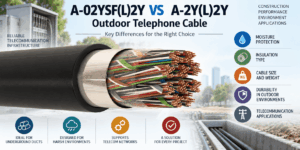
A-02YSF(L)2Y vs A-2Y(L)2Y Outdoor Telephone Cable
A-02YSF(L)2Y vs A-2Y(L)2Y is an important comparison when selecting copper outdoor telephone cable for telecommunications networks, und...
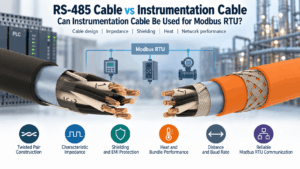
RS-485 Cable vs Instrumentation Cable: Can Instrumentation Cable Be Used for Modbus RTU?
A Modbus RTU cable must do more than carry a low-voltage digital signal from one device to another. Modbus RTU commonly uses an RS-485 ...
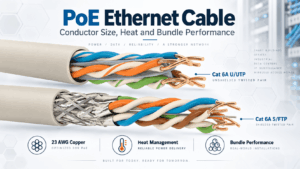
Ethernet Cable for PoE: Conductor Size, Heat and Bundle Performance
A PoE Ethernet cable carries data and electrical power over the same balanced twisted-pair cabling system. This capability simplifies t...
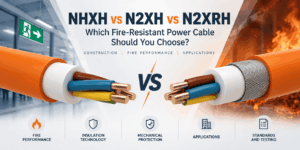
NHXH vs N2XH vs N2XRH: Which Fire-Resistant Power Cable Should You Choose?
NHXH vs N2XH vs N2XRH is an important comparison when specifying 0.6/1 kV power cables for emergency and life-safety systems. Although ...

How to Specify Low Current Cables for Infrastructure Projects
A professional low current cable specification should define much more than a cable name, conductor count or sheath colour. Infrastruct...

Fire Resistant Cables for Hospitals and High-Rise Buildings
Fire resistant cable for hospitals and high-rise buildings supports electrical, communication and control systems that may need to rema...

Industrial Control Cable Selection for Automation and Machinery
Industrial control cable selection should begin with the function of the circuit and the mechanical conditions of the machine rather th...
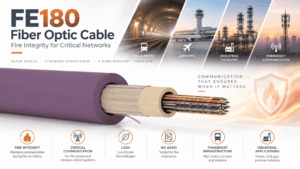
FE180 Fiber Optic Cable: Fire Integrity, Applications and Selection
An FE180 fiber optic cable is designed for optical communication routes where continued transmission during fire can form part of the p...

Screened vs Unscreened Control Cable: What Is the Difference?
Control cable shielding is one of the most important design decisions when selecting cable for industrial automation, machinery, buildi...

BMS Cable Selection: Building Automation Cables for HVAC and Smart Buildings
BMS cable selection should begin with the communication protocol and physical layer rather than with a generic request for “building au...


