





 President’s Message
Braid Screened
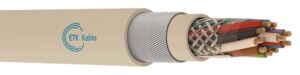
LI2YCHSWAH Signal Control Cable
SKU:
LI2YCHSWAH
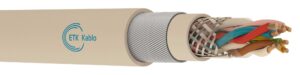
LI2YCHSWAH-TP/TT Signal Control Cable
SKU:
LI2YCHSWAH-TP/TT
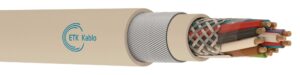
LIHCHSWAH Signal Control Cable
SKU:
LIHCHSWAH
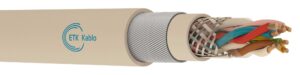
LIHCHSWAH-TP/TT Signal Control Cable
SKU:
LIHCHSWAH-TP/TT
LSZH Steel Wire Armored Braid Screened Signal Control Cable
Braided screened LSZH steel wire armored signal control cables combine electromagnetic screening, halogen-free materials and mechanical armor within one industrial cable construction.
ETK Kablo manufactures this range in LIHCHSWAH and LI2YCHSWAH versions. Standard multicore and TP/TT constructions allow engineers to select the conductor arrangement according to the signal circuit and installation requirements.
A tinned copper braid surrounds the signal core and provides electromagnetic screening. A separate galvanized steel wire armor layer surrounds the inner-jacketed cable and provides additional mechanical protection.
What Is an LSZH Braid Screened Steel Wire Armored Signal Cable?
An LSZH braid screened steel wire armored signal cable combines three separate design functions:
- electromagnetic screening through tinned copper braiding,
- mechanical protection through galvanized steel wire armor,
- LSZH performance through halogen-free jacket materials.
The copper braid and steel wire armor serve different purposes. The copper braid provides the primary electromagnetic screen around the signal conductors, whereas the galvanized steel wire armor primarily protects the cable against mechanical stress.
This distinction is important when specifying cables for industrial automation, process control and other electrically noisy environments.
Copper Braid Screen vs Steel Wire Armor
A cable in this category contains two different metallic systems.
| Construction Element | Main Function |
|---|---|
| Tinned Copper Braid | Electromagnetic screening |
| Halogen-Free Inner Jacket | Separates the screened signal core from the armor |
| Galvanized Steel Wire Armor | Mechanical protection |
| Halogen-Free Outer Jacket | External protection with LSZH material characteristics |
The tinned copper braid creates a flexible conductive layer around the cable core and helps reduce electromagnetic interference from nearby motors, drives, switching equipment and power circuits.
The steel wire armor then adds a separate mechanical barrier around the inner-jacketed signal cable.
Therefore, SWA should not be treated as a substitute for the dedicated copper braid screen.
LIHCHSWAH and LI2YCHSWAH Cable Constructions
The current ETK Kablo range contains two principal conductor-insulation systems.
| Cable Family | Conductor Insulation | Electromagnetic Screen | Mechanical Protection |
|---|---|---|---|
| LIHCHSWAH | Halogen-free insulation | Tinned copper braid | Galvanized steel wire armor |
| LI2YCHSWAH | Solid polyethylene insulation | Tinned copper braid | Galvanized steel wire armor |
Both families use Class 5 stranded electrolytic copper conductors together with halogen-free inner and outer jackets.
The primary difference lies in the conductor insulation. LIHCHSWAH uses halogen-free conductor insulation, while LI2YCHSWAH uses solid polyethylene insulation.
The 2Y designation therefore identifies the polyethylene conductor-insulation system. It does not indicate a different screening or armor method.
Standard and TP/TT Versions
ETK Kablo manufactures this braid-screened SWA family in standard multicore and TP/TT constructions.
| Version | Conductor Arrangement | Electromagnetic Screen | Mechanical Protection |
|---|---|---|---|
| Standard | Cores stranded in layers | Overall tinned copper braid | Galvanized steel wire armor |
| TP/TT | Twisted pairs or triads | Overall tinned copper braid | Galvanized steel wire armor |
What Do TP and TT Mean?
TP describes conductors arranged as twisted pairs, while TT describes conductors arranged as twisted triads.
In the TP/TT products, insulated conductors are first grouped into pairs or triads. The resulting groups are then assembled together before the overall copper braid screen is applied.
This conductor arrangement can help organize separate signal circuits and support electrical balance within industrial control systems.
However, TP/TT does not mean that each pair or triad receives its own metallic screen. The current LIHCHSWAH-TP/TT and LI2YCHSWAH-TP/TT constructions use an overall tinned copper braid around the assembled cable core.
ETK Kablo LSZH Braid Screened SWA Cable Range
| Product | Insulation | Configuration |
|---|---|---|
| LIHCHSWAH Signal Control Cable | Halogen-free | Standard multicore |
| LIHCHSWAH-TP/TT Signal Control Cable | Halogen-free | Twisted pairs / triads |
| LI2YCHSWAH Signal Control Cable | Solid polyethylene | Standard multicore |
| LI2YCHSWAH-TP/TT Signal Control Cable | Solid polyethylene | Twisted pairs / triads |
LSZH and Flame Performance
The products in this range use halogen-free inner and outer jackets and publish applicable testing for smoke density, halogen content, corrosive-gas behavior and flame performance.
Relevant IEC test standards within the current product family include:
- IEC 61034-2 – smoke density
- IEC 60754-1 – halogen content
- IEC 60754-2 – corrosive-gas characteristics
- IEC 60332-1-2 – single-cable flame retardancy
- IEC 60332-3-24 – flame propagation under specified test conditions
The required test package should always be confirmed according to the selected product and project specification.
LSZH Does Not Mean Fire Resistant
LSZH describes cable-material characteristics related to smoke and halogen behavior during combustion.
It does not automatically establish electrical circuit integrity during fire exposure.
Standard LIHCHSWAH and LI2YCHSWAH cables should therefore not automatically be specified as FE180 or PH120 fire-resistant cables.
Where a project requires defined circuit integrity during fire, engineers should select a dedicated fire-resistant cable construction with the required classification.
Typical Applications
LSZH braid screened steel wire armored signal cables can suit fixed industrial installations that require both electromagnetic screening and additional mechanical protection.
Typical applications include:
- industrial automation systems,
- process control installations,
- PLC input and output circuits,
- sensors and actuators,
- factory monitoring systems,
- building automation systems,
- HVAC and BMS installations,
- transportation infrastructure,
- signal circuits in mechanically exposed fixed routes.
Cable selection should also consider the electromagnetic environment, installation route, mechanical exposure and applicable fire-performance requirements.
Braid Screened vs Foil Screened SWA Signal Cable
The main difference between braid-screened and foil-screened SWA signal cables lies in the electromagnetic screen.
The LSZH Foil Screened Steel Wire Armored Signal Cable range uses Al/PET foil with a tinned copper earthing wire.
The braid-screened products on this page instead use a tinned copper braid around the cable core.
| Screening System | Screen Material | Mechanical Protection |
|---|---|---|
| Foil Screened | Al/PET foil + tinned copper earthing wire | Galvanized steel wire armor |
| Braid Screened | Tinned copper braid | Galvanized steel wire armor |
The appropriate screen depends on the EMC requirements, cable construction and project specification rather than on armor alone.
Braid Screened vs Foil + Braid Screened SWA Cable
For projects that require two electromagnetic screening layers, ETK Kablo also manufactures LSZH Braided Foil Screened Steel Wire Armored Signal Control Cables.
Those constructions combine Al/PET foil with a tinned copper braid before the inner jacket and steel wire armor.
By contrast, the products on this page use the copper braid as the dedicated electromagnetic screen without an additional overall foil layer.
All three screening systems belong to the broader LSZH Steel Wire Armored Signal Control Cable range.
How to Specify an LSZH Braid Screened SWA Signal Cable
A complete quotation request should define the electrical, material and mechanical requirements separately.
| Requirement | Information to Specify |
|---|---|
| Cable Family | LIHCHSWAH or LI2YCHSWAH |
| Configuration | Standard or TP/TT |
| Conductor Size | Required cross-section according to the signal circuit |
| Screening | Tinned copper braid |
| Mechanical Protection | Galvanized steel wire armor |
| Installation Environment | Define route, mechanical exposure and environmental conditions |
| Fire Requirement | Define LSZH, flame, CPR or circuit-integrity requirements separately |
| Documentation | Required datasheet, DoP or project-specific documentation |
Why Choose ETK Kablo for LSZH Braid Screened Armored Signal Cable?
ETK Kablo manufactures LSZH braid screened steel wire armored signal cables for industrial signal and control applications requiring both EMC screening and mechanical protection.
The portfolio combines Class 5 copper conductors, tinned copper braid screening, halogen-free inner and outer jackets and galvanized steel wire armor.
LIHCHSWAH and LI2YCHSWAH insulation options together with standard and TP/TT conductor arrangements allow engineers, distributors, system integrators and industrial contractors to select the construction according to the electrical circuit and installation environment.
Frequently Asked Questions About LSZH Braid Screened Steel Wire Armored Cable
What is an LSZH braid screened steel wire armored signal cable?
It is a signal or control cable that combines a tinned copper electromagnetic screen, halogen-free jacket materials and galvanized steel wire armor.
What does SWA mean?
SWA means Steel Wire Armor. The galvanized steel wires provide mechanical protection around the inner-jacketed signal cable.
Does the steel wire armor provide the electromagnetic screen?
No. The tinned copper braid provides the dedicated electromagnetic screen, while the galvanized steel wire armor primarily provides mechanical protection.
What is the difference between LIHCHSWAH and LI2YCHSWAH?
LIHCHSWAH uses halogen-free conductor insulation, while LI2YCHSWAH uses solid polyethylene conductor insulation. Both constructions use tinned copper braid screening, halogen-free inner and outer jackets and galvanized steel wire armor.
What does TP/TT mean?
TP/TT describes conductors arranged as twisted pairs or twisted triads before the complete cable core is assembled.
Are the TP/TT pairs individually screened?
No. The current TP/TT constructions use an overall tinned copper braid around the assembled pairs or triads rather than an individual screen around each pair.
What is the difference between braid screened and foil screened SWA cable?
Braid-screened constructions use tinned copper braiding for electromagnetic screening. Foil-screened versions use Al/PET foil with a tinned copper earthing wire. Both use galvanized steel wire armor for mechanical protection.
Is LSZH the same as fire resistant?
No. LSZH describes smoke and halogen characteristics of cable materials. Fire resistance requires separate circuit-integrity performance such as FE180 or PH120 where specified.
What information should I provide when requesting a quotation?
Provide the required LIHCHSWAH or LI2YCHSWAH family, conductor cross-section, core or TP/TT configuration, operating voltage, installation conditions, LSZH and fire-performance requirements, quantity, packing length and required project documentation.


