





 President’s Message
Braided Foil Screened
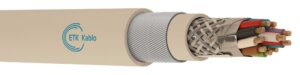
LIY(St)CYSWAY Signal Control Cable
SKU:
LIY(St)CYSWAY
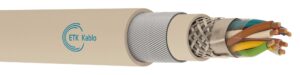
LIY(St)CYSWAY-TP/TT Signal Control Cable
SKU:
LIY(St)CYSWAY-TP/TT
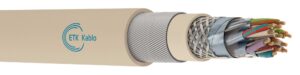
LIY(St)CYSWAY-PiMF/TiMF Signal Control Cable
SKU:
LIY(St)CYSWAY-PiMF/TiMF
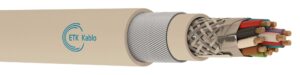
LI2Y(St)CYSWAY Signal Control Cable
SKU:
LI2Y(St)CYSWAY
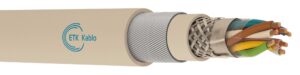
LI2Y(St)CYSWAY-TP/TT Signal Control Cable
SKU:
LI2Y(St)CYSWAY-TP/TT
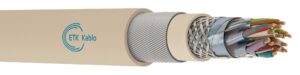
LI2Y(St)CYSWAY-PiMF/TiMF Signal Control Cable
SKU:
LI2Y(St)CYSWAY-PiMF/TiMF
Braided Foil Screened Steel Wire Armored Signal Control Cable
Braided foil screened SWA signal control cables combine two electromagnetic screening layers with galvanized steel wire armor for industrial signal and control circuits requiring additional mechanical protection.
ETK Kablo manufactures this range in LIY(St)CYSWAY and LI2Y(St)CYSWAY constructions. Standard multicore, TP/TT and PiMF/TiMF versions provide different conductor-grouping and screening options for industrial automation, monitoring and process-control applications.
An Al/PET foil and tinned copper braid form the overall electromagnetic screening system. A PVC inner jacket separates the screened signal core from the galvanized steel wire armor, which provides mechanical protection.
What Is a Braided Foil Screened SWA Signal Cable?
A braided foil screened steel wire armored signal cable combines several layers with separate engineering functions:
- Al/PET foil for overall electromagnetic screening,
- tinned copper braid for additional electromagnetic screening,
- PVC inner jacket between the screened core and armor,
- galvanized steel wire armor for mechanical protection,
- PVC outer jacket for external cable protection.
The foil and copper braid work together as the dedicated electromagnetic screening system.
The galvanized steel wire armor serves a different purpose. It surrounds the PVC inner jacket and provides additional protection against mechanical stress.
Foil, Copper Braid and Steel Wire Armor
This cable family contains three metallic elements that should be distinguished during specification.
| Construction Element | Material | Main Function |
|---|---|---|
| Foil Screen | Al/PET tape | Overall electromagnetic screening |
| Braid Screen | Tinned copper braiding | Additional electromagnetic screening |
| Armor | Galvanized steel wire armor | Mechanical protection |
The foil provides broad metallic coverage around the signal core, while the tinned copper braid forms a flexible conductive screening layer.
Together, these layers provide combined electromagnetic screening for sensitive signal circuits.
The galvanized steel wire armor sits outside the PVC inner jacket and addresses mechanical exposure separately.
LIY(St)CYSWAY and LI2Y(St)CYSWAY Constructions
ETK Kablo manufactures two principal conductor-insulation systems within this range.
| Cable Family | Conductor Insulation | Electromagnetic Screen | Mechanical Protection |
|---|---|---|---|
| LIY(St)CYSWAY | PVC | Al/PET foil + tinned copper braid | Galvanized steel wire armor |
| LI2Y(St)CYSWAY | Solid polyethylene | Al/PET foil + tinned copper braid | Galvanized steel wire armor |
Both families use Class 5 stranded electrolytic copper conductors together with UV-resistant PVC inner and outer jackets.
The principal difference lies in the conductor insulation.
LIY(St)CYSWAY uses PVC conductor insulation, while LI2Y(St)CYSWAY uses solid polyethylene conductor insulation.
The 2Y designation therefore identifies the polyethylene conductor-insulation system. It does not indicate a different overall screening system, armor or jacket construction.
PVC Inner and Outer Jackets
The current products in this category use UV-resistant PVC for both the inner and outer jackets.
The PVC inner jacket covers the foil-and-copper-braid-screened signal core before the galvanized steel wire armor is applied.
The PVC outer jacket then covers the complete armored construction.
Current ETK Kablo product data identifies the standard jacket color as RAL 7035 grey.
These cables belong to the PVC signal-control range and should remain distinct from corresponding LSZH constructions that use halogen-free jacket materials.
Standard, TP/TT and PiMF/TiMF Versions
ETK Kablo offers three conductor-grouping and screening architectures within this category.
| Version | Conductor Arrangement | Individual Pair / Triad Screen | Overall Screen |
|---|---|---|---|
| Standard | Cores stranded in layers | No | Al/PET foil + tinned copper braid |
| TP/TT | Twisted pairs or triads | No | Al/PET foil + tinned copper braid |
| PiMF/TiMF | Pairs or triads | Al/PET foil | Al/PET foil + tinned copper braid |
All three versions also use galvanized steel wire armor outside the PVC inner jacket.
What Do TP and TT Mean?
TP refers to conductors arranged as twisted pairs, while TT refers to conductors arranged as twisted triads.
In the current TP/TT constructions, insulated conductors are first grouped into pairs or triads. These groups are then assembled together.
The complete cable core receives an overall Al/PET foil and tinned copper braid screen.
TP/TT therefore describes conductor organization.
It does not mean that each pair or triad receives an individual metallic screen.
PiMF and TiMF Braided Foil Screened SWA Cable
PiMF identifies pairs individually screened in metallic foil, while TiMF identifies individually screened triads.
Each pair or triad receives:
- individual polyester wrapping,
- a tinned copper earthing wire,
- an individual Al/PET foil screen.
The individually screened pairs or triads are then stranded together.
The complete cable core receives an additional overall screening system consisting of Al/PET foil and tinned copper braiding.
Therefore, PiMF/TiMF versions provide individual circuit screening together with combined overall foil-and-braid screening.
A PVC inner jacket and galvanized steel wire armor are then applied around the screened cable core.
ETK Kablo Braided Foil Screened SWA Cable Range
| Product | Insulation | Configuration |
|---|---|---|
| LIY(St)CYSWAY Signal Control Cable | PVC | Standard multicore |
| LIY(St)CYSWAY-TP/TT Signal Control Cable | PVC | Twisted pairs / triads |
| LIY(St)CYSWAY-PiMF/TiMF Signal Control Cable | PVC | Individually screened pairs / triads |
| LI2Y(St)CYSWAY Signal Control Cable | Solid polyethylene | Standard multicore |
| LI2Y(St)CYSWAY-TP/TT Signal Control Cable | Solid polyethylene | Twisted pairs / triads |
| LI2Y(St)CYSWAY-PiMF/TiMF Signal Control Cable | Solid polyethylene | Individually screened pairs / triads |
Electrical and Mechanical Characteristics
The current products use Class 5 stranded electrolytic copper conductors according to IEC 60228, EN 60228 and DIN VDE 0295.
Published conductor cross-sections range from 0.22 mm² to 2.50 mm². Available conductor counts and pair or triad configurations depend on the selected construction.
Current product data publishes:
- 250 V DC operating voltage for applicable smaller conductor sizes,
- 300/500 V operating voltage for applicable larger conductor sizes,
- minimum bending radius of 7.5 × overall cable diameter,
- operating temperature range of -30°C to +70°C.
The selected product datasheet should determine the exact electrical values for each project.
Flame Retardancy
The current products publish single-cable flame-retardancy testing according to:
- IEC 60332-1-2,
- VDE 0482-332-1-2,
- BS EN 60332-1-2.
Flame retardancy should not be confused with fire resistance.
Standard LIY(St)CYSWAY and LI2Y(St)CYSWAY cables should not automatically be specified as FE180 or PH120 fire-resistant cables.
Projects requiring defined circuit integrity during fire exposure must use a dedicated fire-resistant cable construction with the required classification.
Typical Applications
Braided foil screened SWA signal control cables can suit fixed industrial installations where sensitive signal circuits require combined electromagnetic screening together with additional mechanical protection.
Typical applications include:
- industrial automation systems,
- process control installations,
- measurement and monitoring circuits,
- PLC and control-system connections,
- sensors and actuators,
- factory and production infrastructure,
- building automation systems,
- transportation infrastructure,
- signal circuits routed through mechanically exposed fixed areas.
The final cable selection should consider signal sensitivity, electromagnetic interference, mechanical exposure, installation route and applicable project requirements.
Foil Screened vs Braid Screened vs Braided Foil Screened SWA Cable
ETK Kablo offers three electromagnetic-screening concepts within the PVC steel wire armored signal-control range.
| Construction | Electromagnetic Screen | Mechanical Protection |
|---|---|---|
| Foil Screened | Al/PET foil + tinned copper earthing wire | Galvanized steel wire armor |
| Braid Screened | Tinned copper braid | Galvanized steel wire armor |
| Braided Foil Screened | Al/PET foil + tinned copper braid | Galvanized steel wire armor |
The braided foil screened construction combines two overall electromagnetic screening layers, while the steel wire armor remains a separate mechanical protection layer.
Steel Wire Armored vs Steel Wire Braided Signal Cable
Steel wire armor and steel wire braiding are different mechanical constructions.
The products on this page use galvanized steel wire armor together with polyester tape.
They should therefore not be described as Steel Wire Braided products simply because both constructions provide additional mechanical protection.
The required mechanical construction and installation conditions should determine whether SWA or SWB is appropriate.
How to Specify a Braided Foil Screened SWA Signal Cable
A quotation request should define electrical screening, conductor arrangement and mechanical protection separately.
| Requirement | Information to Specify |
|---|---|
| Cable Family | LIY(St)CYSWAY or LI2Y(St)CYSWAY |
| Configuration | Standard, TP/TT or PiMF/TiMF |
| Conductor Size | Required cross-section according to the signal circuit |
| Conductor Insulation | PVC or solid polyethylene |
| Overall Screening | Al/PET foil + tinned copper braid |
| Individual Screening | Specify PiMF/TiMF where individually screened pairs or triads are required |
| Mechanical Protection | Galvanized steel wire armor |
| Installation Environment | Define route, mechanical exposure and environmental conditions |
| Fire Requirement | Define flame, CPR or circuit-integrity requirements separately |
| Documentation | Required datasheet, DoP or project-specific documentation |
Why Choose ETK Kablo for Braided Foil Screened SWA Cable?
ETK Kablo manufactures braided foil screened steel wire armored signal control cables for industrial applications requiring combined electromagnetic screening and mechanical protection.
The range combines Class 5 stranded copper conductors, Al/PET foil, tinned copper braiding, UV-resistant PVC inner and outer jackets and galvanized steel wire armor.
LIY(St)CYSWAY and LI2Y(St)CYSWAY insulation options, together with standard, TP/TT and PiMF/TiMF constructions, allow engineers, distributors, system integrators and industrial contractors to select the cable according to the signal circuits and installation conditions.
Frequently Asked Questions About Braided Foil Screened SWA Cable
What is a braided foil screened SWA signal cable?
It is a signal or control cable that combines Al/PET foil and tinned copper braid for electromagnetic screening with galvanized steel wire armor for mechanical protection.
What does SWA mean?
SWA means Steel Wire Armor. In this cable family, galvanized steel wires provide the mechanical protection layer around the PVC inner jacket.
Does the steel wire armor replace the foil and copper braid screens?
No. The dedicated electromagnetic screening system consists of Al/PET foil and tinned copper braiding. The galvanized steel wire armor primarily provides mechanical protection.
What is the difference between LIY(St)CYSWAY and LI2Y(St)CYSWAY?
LIY(St)CYSWAY uses PVC conductor insulation, while LI2Y(St)CYSWAY uses solid polyethylene conductor insulation. Both use combined foil-and-copper-braid screening, PVC inner and outer jackets and galvanized steel wire armor.
What does TP/TT mean?
TP/TT describes conductors arranged as twisted pairs or twisted triads before the overall screening system is applied.
Are TP/TT pairs individually screened?
No. The current TP/TT constructions use overall Al/PET foil and tinned copper braid screening around the complete assembled cable core.
What does PiMF/TiMF mean?
PiMF/TiMF identifies individually foil-screened pairs or triads. Each pair or triad receives an individual Al/PET foil screen with a tinned copper earthing wire. The complete assembled cable core then receives additional overall Al/PET foil and tinned copper braid screening.
What is the difference between foil screened and braided foil screened SWA cable?
Foil-screened constructions use Al/PET foil as the overall electromagnetic screen. Braided foil screened constructions combine Al/PET foil with a tinned copper braid.
What is the difference between SWA and SWB?
SWA uses galvanized steel wire armor, while SWB uses galvanized steel wire braiding. They are separate mechanical constructions and should not be treated as interchangeable.
Is this cable LSZH?
No. The products in this category use PVC inner and outer jackets. ETK Kablo maintains separate LSZH steel wire armored constructions for projects requiring halogen-free jacket materials.
Is this cable fire resistant?
Not automatically. The current products publish flame-retardancy testing, but this does not establish FE180, PH120 or another defined circuit-integrity classification.
What information should I provide when requesting a quotation?
Provide the required LIY(St)CYSWAY or LI2Y(St)CYSWAY family, conductor cross-section, standard, TP/TT or PiMF/TiMF configuration, operating voltage, installation conditions, mechanical requirements, quantity, packing length and required project documentation.


