





 President’s Message
Drop FTTH Fiber Optic Cable
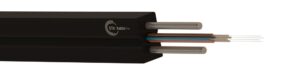
FTTH Fiber Optic Cable
SKU:
Drop
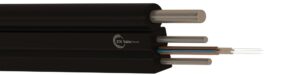
FTTH Aerial Fiber Optic Cable
SKU:
Drop Aerial
FTTH Drop Cable for Last-Mile Fiber Access Networks
FTTH Drop Cable connects the final section of a fiber access network to homes, apartments, offices and other subscriber premises. ETK Kablo manufactures compact fiber optic drop cables for Fiber to the Home (FTTH) and related FTTx networks, with designs for building routes and aerial subscriber connections.
The drop section of a network requires a different cable design from a high-fiber-count backbone. Installation teams need compact dimensions, practical handling, suitable bending performance and enough mechanical strength for the final connection between the distribution network and the subscriber location.
ETK Kablo's current FTTH drop cable range includes standard drop and aerial drop constructions with 1, 2 or 4 optical fibers, allowing telecom operators, contractors and network integrators to select the design according to the last-mile installation route.
What Is an FTTH Drop Cable?
An FTTH drop cable is the fiber optic cable used in the final connection between a fiber distribution point and the customer premises. It forms the subscriber-side segment of an FTTH access network.
Unlike backbone fiber cables that may carry dozens or hundreds of fibers, drop cables normally use a low fiber count and a compact construction. This makes them easier to route through building entrances, wall paths, conduits and short outdoor connections.
Drop cable design should match the actual route. A cable installed inside or around a building has different mechanical requirements from an aerial cable suspended between a pole and the subscriber premises.
FTTH Drop Cable Types from ETK Kablo
ETK Kablo currently offers two principal constructions within this category: a standard FTTH fiber optic drop cable and an aerial FTTH drop cable with an integrated messenger.
| FTTH Cable Type | Construction Concept | Typical Application |
|---|---|---|
| FTTH Fiber Optic Cable | Compact drop cable with steel wire strength members | Subscriber connections, building routes and protected last-mile installations |
| FTTH Aerial Fiber Optic Cable | Drop cable with steel strength members and an integrated steel messenger | Aerial subscriber connection between pole infrastructure and customer premises |
The installation method should be defined before cable selection. A messenger-supported aerial design and a standard building drop cable should not be treated as interchangeable simply because both serve an FTTH network.
Standard FTTH Fiber Optic Drop Cable
ETK Kablo's standard fiber optic drop cable uses a compact flat construction for last-mile network deployment. The currently listed design contains the optical fiber together with steel wire strength members and a UV-resistant halogen-free outer jacket.
The cable is available with 1, 2 and 4 fibers. These low fiber counts match the requirements of subscriber-level connections, where compact size and easy routing are generally more important than the very high fiber capacity required in backbone networks.
ETK Kablo currently lists both G.652.D and G.657.A1 single-mode fiber versions for this construction.
Aerial FTTH Drop Cable with Messenger Wire
Where the final connection runs overhead from a pole toward a building, ETK Kablo offers an aerial FTTH drop cable with an integrated steel messenger wire.
The messenger carries the mechanical load of the aerial section while the optical portion provides the fiber connection. The web between the two elements creates the familiar self-supporting drop structure and allows installers to separate the messenger from the optical section where required during termination.
ETK Kablo's listed aerial drop construction is available with 1, 2 or 4 fibers and currently includes G.652.D and G.657.A1 single-mode fiber options.
G.657.A1 Fiber for FTTH Networks
FTTH routes often include bends around building entrances, wall corners, termination boxes and other confined installation areas. Bend-insensitive single-mode fiber can therefore provide an advantage in access-network applications.
G.657.A1 fiber offers improved macrobending performance compared with conventional G.652.D fiber while maintaining compatibility with standard single-mode networks. This makes it well suited to many subscriber-access and building-entry routes.
ETK Kablo also lists G.652.D versions of its drop cable. The correct fiber should be selected according to network architecture, bend requirements, operator specification and compatibility requirements.
1, 2 and 4 Fiber FTTH Drop Cable
Subscriber drop connections normally require far fewer fibers than distribution or backbone cables. ETK Kablo's current drop cable range therefore focuses on 1 fiber, 2 fiber and 4 fiber configurations.
| Fiber Count | Typical Procurement Consideration |
|---|---|
| 1 Fiber | Compact single-subscriber connection where one optical path meets the network design |
| 2 Fibers | Additional fiber capacity for network architecture, redundancy or future requirements |
| 4 Fibers | Higher drop-level capacity for multi-service, small-building or project-specific connections |
The correct fiber count should follow the operator's network design rather than a generic rule. Providing additional unused fibers can offer future flexibility, but it can also add unnecessary cost where the network does not require them.
FTTH, FTTB and Other FTTx Applications
Although commonly described as FTTH drop cable, these compact fiber constructions can support several access-network architectures depending on the project.
- FTTH – Fiber to the Home: fiber connection extending directly to a residential subscriber.
- FTTB – Fiber to the Building: fiber access reaching a residential or commercial building.
- FTTO – Fiber to the Office: optical connectivity delivered to business or office environments.
- FTTP – Fiber to the Premises: broader term covering fiber connections to residential or commercial premises.
- FTTx: general description for different fiber-access architectures.
From a cable-selection perspective, the most important factor is not the acronym alone. Procurement teams should define where the cable starts, where it terminates, whether the route is indoor or aerial and what mechanical conditions exist along the connection.
Compact Construction for Last-Mile Installation
Last-mile cable routes can pass through narrow conduits, building entrances, wall channels and termination points. Therefore, drop cable construction should remain compact and manageable while maintaining adequate mechanical protection.
ETK Kablo's standard listed drop cable measures approximately 2.0 × 3.2 mm, while the aerial version with messenger measures approximately 2.0 × 5.2 mm. The compact cross-section supports efficient handling during subscriber installation.
The standard listed cable weighs approximately 10 kg/km, while the aerial version weighs approximately 21 kg/km because of its additional messenger construction.
Mechanical Performance of ETK Kablo FTTH Drop Cables
Subscriber cables can experience pulling, bending, crushing and handling forces during installation. ETK Kablo therefore specifies mechanical and environmental tests for its listed FTTH drop products.
Depending on the exact product, the tests include tensile loading, crush resistance, impact, torsion, repeated bending, temperature cycling and water penetration according to applicable IEC 60794 test methods.
For example, the currently published aerial FTTH construction specifies a maximum installation tension of 600 N and a crush test value of 800 N per 100 mm. These values belong to that exact published product and should not automatically be applied to other drop-cable constructions.
FTTH Drop Cable vs Backbone Fiber Optic Cable
An FTTH drop cable and a backbone fiber optic cable perform different roles within the same network.
| Characteristic | FTTH Drop Cable | Backbone Fiber Cable |
|---|---|---|
| Network Position | Final subscriber connection | Main distribution or transport network |
| Typical Fiber Count | Low, often 1–4 fibers | Can range from moderate to very high fiber counts |
| Construction Priority | Compact size, routing and termination | Capacity, environmental protection and long-route performance |
| Typical Route | Distribution point to premises | Central office, backbone, feeder or distribution infrastructure |
A well-designed FTTH system therefore uses different cable families for feeder, distribution and subscriber-drop sections rather than attempting to use one construction across the entire network.
FTTH Drop Cable vs ADSS Fiber Optic Cable
FTTH aerial drop cable and ADSS fiber optic cable can both operate above ground, but they serve different network functions.
An aerial drop cable typically connects the distribution network to an individual subscriber or small premises over a relatively localized final route. An ADSS fiber optic cable, by contrast, is an all-dielectric self-supporting cable engineered for aerial distribution or backbone spans.
The two constructions should therefore remain separate procurement categories. Pole-to-building subscriber drops should follow the drop-cable specification, while longer self-supporting aerial routes require evaluation of span, sag, tension, wind and other ADSS design parameters.
How to Specify an FTTH Drop Cable
Procurement teams should define both the optical requirements and the physical subscriber route before requesting a quotation.
| Specification Item | Information to Provide |
|---|---|
| Application | FTTH, FTTB, FTTO or other FTTx architecture |
| Installation Route | Building, conduit, protected route or aerial subscriber drop |
| Fiber Type | G.652.D, G.657.A1 or project-specific requirement |
| Fiber Count | 1, 2, 4 or other required configuration |
| Messenger Requirement | Standard drop or aerial design with integrated messenger |
| Mechanical Requirements | Tensile, crush, bending and installation conditions |
| Sheath Requirement | Applicable material and fire-performance specification |
| Delivery Requirement | Quantity, drum length, marking and project documentation |
Why Choose ETK Kablo for FTTH Drop Cable?
ETK Kablo manufactures fiber optic cables for telecommunications and infrastructure networks and supplies customers in more than 120 countries. Its fiber portfolio covers backbone, distribution, aerial and subscriber-access constructions.
For FTTH projects, ETK Kablo provides both standard drop and aerial drop cable designs. This allows telecom operators, distributors, contractors and system integrators to match the final subscriber connection to the actual installation route.
ETK Kablo can also evaluate fiber type, fiber count, mechanical requirements, cable dimensions, marking and delivery requirements as part of the technical and commercial quotation process.
Frequently Asked Questions About FTTH Drop Cable
What is an FTTH drop cable?
An FTTH drop cable is the fiber optic cable that connects the distribution side of an access network to the subscriber premises. It forms the final or last-mile fiber connection in an FTTH network.
What is the difference between FTTH cable and drop cable?
FTTH describes the network architecture, while drop cable describes the cable used for the final subscriber connection. An FTTH network contains feeder and distribution cables as well as the final FTTH drop cable.
How many fibers does an FTTH drop cable contain?
Fiber count depends on network design. ETK Kablo's currently listed FTTH drop cables are available with 1, 2 and 4 optical fibers.
Which fiber type is used in ETK Kablo FTTH drop cables?
ETK Kablo currently lists G.652.D and G.657.A1 single-mode fiber options for its standard and aerial FTTH drop cable products.
Why is G.657.A1 used in FTTH networks?
G.657.A1 provides improved resistance to attenuation caused by tighter bends compared with conventional G.652.D fiber. This can be beneficial in building entrances, wall routes and other confined subscriber installations.
What is an aerial FTTH drop cable?
An aerial FTTH drop cable is designed for the final overhead connection toward the subscriber premises. ETK Kablo's current aerial design incorporates a steel messenger wire to support the cable mechanically.
Is FTTH aerial drop cable the same as ADSS cable?
No. FTTH aerial drop cable normally serves the final subscriber connection, while ADSS is a self-supporting dielectric cable used for aerial distribution or backbone routes. The required mechanical design and span conditions differ.
What information should I provide when requesting an FTTH drop cable quotation?
Provide the installation route, fiber type, fiber count, aerial or standard construction requirement, mechanical requirements, quantity, delivery length and any project-specific cable or documentation requirements.


