





 President’s Message
Braided Foil Screened
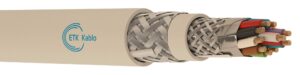
LI2Y(St)CHSWBH Signal Control Cable
SKU:
LI2Y(St)CHSWBH
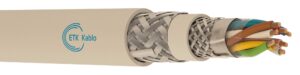
LI2Y(St)CHSWBH-TP/TT Signal Control Cable
SKU:
LI2Y(St)CHSWBH-TP/TT
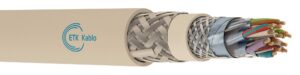
LI2Y(St)CHSWBH-PiMF/TiMF Signal Control Cable
SKU:
LI2Y(St)CHSWBH-PiMF/TiMF
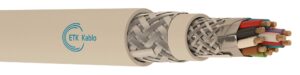
LIH(St)CHSWBH Signal Control Cable
SKU:
LIH(St)CHSWBH
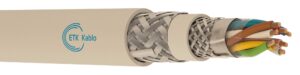
LIH(St)CHSWBH-TP/TT Signal Control Cable
SKU:
LIH(St)CHSWBH-TP/TT
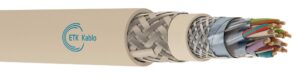
LIH(St)CHSWBH-PiMF/TiMF Signal Control Cable
SKU:
LIH(St)CHSWBH-PiMF/TiMF
LSZH Foil and Braid Screened SWB Signal Control Cables
Foil braid SWB cable constructions from ETK Kablo combine an Al/PET foil and tinned copper braid for electromagnetic screening with galvanized steel wire braiding for additional mechanical protection. This LSZH signal control cable category includes LIH(St)CHSWBH and LI2Y(St)CHSWBH families in standard, TP/TT and PiMF/TiMF constructions.
All six products use IEC 60228 Class 5 stranded copper conductors, combined overall foil-and-copper-braid screening, halogen-free inner and outer jackets and a galvanized steel wire braid mechanical layer. LIH(St)CHSWBH cables use halogen-free conductor insulation, while LI2Y(St)CHSWBH cables use solid polyethylene insulation.
The metallic layers perform separate functions. The Al/PET foil and tinned copper braid provide the dedicated electrical screening system around the signal core. The galvanized steel wire braid is positioned outside the inner jacket and provides additional mechanical protection.
What Is a Foil Braid SWB Cable?
A foil braid SWB cable combines two electrical-screening methods with a separate steel-wire-braid mechanical layer.
The assembled signal core first receives an Al/PET foil and tinned copper braid. These layers form the overall electromagnetic screen. A halogen-free inner jacket then separates the screened core from the galvanized steel wire braid.
The galvanized SWB layer provides additional mechanical protection, while a halogen-free outer jacket completes the cable.
This distinction is important because the tinned copper braid and galvanized steel wire braid are both braided metallic elements but serve different purposes.
ETK Kablo Foil Braid SWB Cable Range
| Product | Conductor Insulation | Conductor Arrangement | Electrical Screening |
|---|---|---|---|
| LIH(St)CHSWBH Signal Control Cable | Halogen-free | Conductors stranded in layers | Overall Al/PET foil + tinned copper braid |
| LIH(St)CHSWBH-TP/TT Signal Control Cable | Halogen-free | Twisted pairs or triads | Overall Al/PET foil + tinned copper braid |
| LIH(St)CHSWBH-PiMF/TiMF Signal Control Cable | Halogen-free | Individually foil-screened pairs or triads | Individual foil screens + overall foil + copper braid |
| LI2Y(St)CHSWBH Signal Control Cable | Solid polyethylene | Conductors stranded in layers | Overall Al/PET foil + tinned copper braid |
| LI2Y(St)CHSWBH-TP/TT Signal Control Cable | Solid polyethylene | Twisted pairs or triads | Overall Al/PET foil + tinned copper braid |
| LI2Y(St)CHSWBH-PiMF/TiMF Signal Control Cable | Solid polyethylene | Individually foil-screened pairs or triads | Individual foil screens + overall foil + copper braid |
How Is a Foil and Braid Screened SWB Cable Constructed?
The construction begins with IEC 60228 Class 5 stranded electrolytic copper conductors. The conductor-insulation material depends on the selected family.
LIH(St)CHSWBH uses halogen-free conductor insulation, while LI2Y(St)CHSWBH uses solid polyethylene insulation.
The assembled cable core receives polyester wrapping, followed by an Al/PET foil and tinned copper braid. These two metallic layers form the overall electromagnetic-screening system.
A UV-resistant halogen-free inner jacket surrounds the screened core. Galvanized steel wire braiding is then applied as the mechanical-protection layer, followed by a UV-resistant halogen-free outer jacket.
LIH(St)CHSWBH vs LI2Y(St)CHSWBH
| Feature | LIH(St)CHSWBH | LI2Y(St)CHSWBH |
|---|---|---|
| Conductor | IEC 60228 Class 5 stranded copper | IEC 60228 Class 5 stranded copper |
| Conductor Insulation | Halogen-free | Solid polyethylene |
| Overall Foil Screen | Al/PET | Al/PET |
| Overall Braid Screen | Tinned copper braid | Tinned copper braid |
| Inner Jacket | Halogen-free | Halogen-free |
| Mechanical Protection | Galvanized steel wire braid | Galvanized steel wire braid |
| Outer Jacket | Halogen-free | Halogen-free |
The principal difference between the two families is the conductor-insulation material. Their overall foil-and-copper-braid electrical screening and galvanized SWB mechanical protection remain similar.
The insulation system also affects insulation resistance. ETK Kablo publishes higher insulation-resistance values for the polyethylene-insulated LI2Y(St)CHSWBH family.
Standard vs TP/TT vs PiMF/TiMF
| Construction | Conductor Arrangement | Individual Pair/Triad Screen | Overall Foil + Braid Screen | SWB Protection |
|---|---|---|---|---|
| Standard | Conductors stranded in layers | No | Yes | Yes |
| TP/TT | Twisted pairs or triads | No | Yes | Yes |
| PiMF/TiMF | Pairs or triads | Yes | Yes | Yes |
Standard versions use conductors stranded together in layers. TP/TT versions organize conductors into twisted pairs or triads before the complete cable core is screened.
PiMF/TiMF versions add a separate Al/PET foil screen and tinned copper earthing wire around each individual pair or triad. The grouped conductors are then stranded together before the overall Al/PET foil and tinned copper braid are applied.
What Do TP and TT Mean?
TP refers to twisted pairs, while TT refers to twisted triads.
These terms describe how conductors are grouped inside the cable. In the TP/TT versions, the pairs or triads do not receive individual metallic screens.
The complete cable core still receives the combined overall Al/PET foil and tinned copper braid screen.
What Do PiMF and TiMF Mean?
PiMF refers to individually foil-screened pairs, while TiMF refers to individually foil-screened triads.
Each pair or triad receives polyester wrapping, a tinned copper earthing wire and an Al/PET foil screen. The individually screened groups are then stranded together.
The complete cable core receives additional polyester wrapping followed by the overall Al/PET foil and tinned copper braid. A halogen-free inner jacket, galvanized steel wire braid and halogen-free outer jacket complete the construction.
Why Does the Cable Contain Three Metallic Protection Layers?
| Layer | Material | Main Function |
|---|---|---|
| Overall Foil Screen | Al/PET | Electromagnetic screening |
| Overall Braid Screen | Tinned copper | Electromagnetic screening |
| SWB Layer | Galvanized steel wire braid | Mechanical protection |
PiMF/TiMF versions contain an additional fourth screening level at group level because each pair or triad also receives its own foil screen.
The distinction between these layers should remain clear in technical specifications. The galvanized steel wire braid is not a substitute for the dedicated foil-and-copper-braid electrical screen.
Foil Braid SWB vs Foil Screened SWB Cable
The wider LSZH steel wire braided signal control cable range also includes foil-only electrical screening.
A foil screened SWB cable uses an Al/PET foil as its principal overall electrical screen.
The products on this page add a tinned copper braid to the overall Al/PET foil. Both constructions then use a separate galvanized steel wire braid outside the inner jacket for mechanical protection.
Foil Braid SWB vs Braid Screened SWB Cable
ETK Kablo also manufactures braid screened SWB signal control cables.
Those products use an overall tinned copper braid as the electrical screen without an additional overall Al/PET foil.
By contrast, LIH(St)CHSWBH and LI2Y(St)CHSWBH combine both overall electrical-screening methods before the inner jacket and SWB mechanical layer are applied.
The combined construction should be specified where the electrical environment or project requirements justify the additional screening system.
Foil Braid SWB vs SWA Signal Cable
The comparable foil and braid screened SWA signal control cable range uses steel wire armor instead of galvanized steel wire braiding for mechanical protection.
| Feature | SWB | SWA |
|---|---|---|
| Overall Electrical Screen | Al/PET foil + tinned copper braid | Al/PET foil + tinned copper braid |
| Mechanical Layer | Galvanized steel wire braid | Galvanized steel wire armor |
| Main Mechanical Function | Additional mechanical protection | Additional mechanical protection |
The required mechanical construction should follow the route conditions and project specification. Neither SWA nor SWB should automatically be considered superior for every installation.
Electrical Characteristics
Published electrical characteristics vary according to conductor cross-section and conductor-insulation material.
| Conductor Cross-Section | Operating Voltage | Test Voltage | LIH Insulation Resistance | LI2Y Insulation Resistance |
|---|---|---|---|---|
| 0.22–0.34 mm² | 250 V DC | 1200 V DC / 1 min | 200 MΩ/km | 5000 MΩ/km |
| 0.50–2.50 mm² | 300/500 V | 2000 V DC / 1 min | 20 MΩ/km | 5000 MΩ/km |
The published maximum conductor resistance ranges from 85.0 Ω/km for 0.22 mm² to 7.98 Ω/km for 2.50 mm² at 20°C.
The exact technical data for the selected conductor size and cable construction should be checked during specification and approval.
Operating Temperature and Bending Radius
ETK Kablo currently publishes an operating temperature range of -30°C to +70°C for these constructions.
The published minimum bending radius is 7.5 × D, where D is the actual outer diameter of the selected cable.
IEC 60228 Class 5 stranded conductors provide installation flexibility. However, Class 5 construction alone does not qualify these cables for drag-chain, robotic or continuous-flex applications.
LSZH and Fire Behavior
Current ETK Kablo documentation lists IEC 61034-2 for smoke density, IEC 60754-1 and IEC 60754-2 for halogen and corrosive-gas behavior, IEC 60332-3-24 for flame propagation and IEC 60332-1-2 for flame retardancy.
These properties should not be confused with circuit integrity during fire.
LSZH and flame-retardant performance do not automatically provide FE180, PH120, E30, E60 or E90 performance. Fire-resistant applications require a construction specifically designed and tested for the required circuit-integrity performance.
LSZH Is Not the Same as CPR
LSZH and CPR describe different fire-related characteristics.
LSZH concerns material, smoke and halogen behavior, while CPR concerns reaction-to-fire classification for an applicable cable construction.
A specific B2ca, Cca, Dca or other Euroclass should therefore be confirmed from the applicable Declaration of Performance rather than inferred from the term LSZH.
Can Foil Braid SWB Cable Be Directly Buried?
Galvanized steel wire braiding alone should not be treated as proof of direct-burial suitability.
Underground installations can expose cables to moisture, standing water, chemicals and installation loads. Therefore, the complete cable construction and route conditions should be evaluated before specifying the cable for underground use.
Where Are Foil Braid SWB Signal Cables Used?
These cables can be considered for fixed low-voltage signal, automation, monitoring and control circuits where the project requires combined foil-and-copper-braid electromagnetic screening together with additional mechanical protection.
Typical applications can include industrial automation, process control, manufacturing plants, control panels, building-management systems, HVAC controls, sensors, actuators and mechanically exposed fixed signal routes.
Final cable selection should consider signal sensitivity, electromagnetic interference, conductor grouping, mechanical conditions, circuit voltage and fire-related requirements.
How to Select a Foil Braid SWB Cable
First, select the conductor-insulation system. LIH(St)CHSWBH uses halogen-free conductor insulation, while LI2Y(St)CHSWBH uses solid polyethylene insulation.
Next, define the conductor arrangement. Standard versions use conductors stranded in layers. TP/TT versions organize conductors into twisted pairs or triads. PiMF/TiMF versions provide separate foil screens around individual pairs or triads.
Then specify conductor cross-section, conductor or pair/triad count, operating voltage and total cable length.
Finally, confirm mechanical route conditions, LSZH requirements, CPR classification where applicable, bending radius, cable marking, packing and required technical documentation.
What Should an RFQ Include?
A clear RFQ should identify LIH(St)CHSWBH or LI2Y(St)CHSWBH, conductor cross-section, conductor or pair/triad count and whether standard, TP/TT or PiMF/TiMF construction is required.
The request should also state total cable length and any required CPR classification, test documentation, cable marking and packing requirements.
ETK Kablo as a Foil Braid SWB Cable Manufacturer
ETK Kablo manufactures foil-and-braid screened steel wire braided signal control cables at its production facility in Istanbul, Türkiye.
The range combines Al/PET foil and tinned copper braid electromagnetic screening with galvanized steel wire braid mechanical protection and includes LIH(St)CHSWBH and LI2Y(St)CHSWBH constructions for distributors, automation contractors, system integrators, OEMs and industrial projects.
What Determines Foil Braid SWB Cable Price?
Foil braid SWB cable price depends on conductor cross-section, conductor or group count, copper content, conductor-insulation material, Al/PET foil, copper-braid content, galvanized steel wire braid content, cable diameter, order quantity and required documentation.
PiMF/TiMF constructions contain additional individual foil screens and earthing wires around each pair or triad. Their material content therefore differs from standard and TP/TT versions.
Commercial comparisons should use equivalent conductor sizes, conductor arrangements, electrical-screening systems, mechanical protection and documentation requirements.
Frequently Asked Questions
What is a foil braid SWB cable?
It is a signal or control cable that combines overall Al/PET foil and tinned copper braid electromagnetic screening with galvanized steel wire braiding for additional mechanical protection.
What is LIH(St)CHSWBH cable?
LIH(St)CHSWBH uses Class 5 stranded copper conductors, halogen-free conductor insulation, combined overall foil-and-copper-braid screening, halogen-free inner and outer jackets and galvanized steel wire braiding.
What is LI2Y(St)CHSWBH cable?
LI2Y(St)CHSWBH uses Class 5 stranded copper conductors with solid polyethylene insulation, combined overall foil-and-copper-braid screening, halogen-free inner and outer jackets and galvanized steel wire braiding.
What do TP and TT mean?
TP refers to twisted pairs and TT refers to twisted triads. They describe conductor grouping and do not mean that the groups are individually screened.
What do PiMF and TiMF mean?
PiMF uses individually foil-screened pairs, while TiMF uses individually foil-screened triads. These versions also retain the combined overall foil-and-copper-braid screen.
What is the difference between the copper braid and SWB?
The tinned copper braid provides electromagnetic screening. The galvanized steel wire braid provides additional mechanical protection.
Does this cable contain both foil and braid screening?
Yes. The products in this category use an overall Al/PET foil together with an overall tinned copper braid as the electrical-screening system.
Is an LSZH SWB cable fire resistant?
Not automatically. LSZH and flame-retardant properties do not provide FE180, PH120 or another circuit-integrity rating unless the selected construction has been specifically designed and tested for that performance.
Can an SWB cable be directly buried?
The presence of galvanized steel wire braiding alone does not establish direct-burial suitability. The complete cable construction and installation conditions must be evaluated.
What is the operating temperature?
ETK Kablo currently publishes an operating temperature range of -30°C to +70°C for these constructions.
What is the minimum bending radius?
The current technical data specifies 7.5 × D, where D is the actual outer diameter of the selected cable.
What determines foil braid SWB cable price?
Important factors include conductor size, conductor or pair count, copper content, insulation system, foil and copper-braid screening, steel-wire-braid content, order quantity and required technical documentation.


