





 President’s Message
Special Fiber Optic Cable
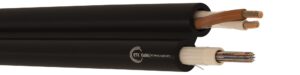
A-D(ZN)T2Y Composite (Stranded Copper) Fiber Optic Cable
SKU:
SLT-NMA-SJ-C(S)F8-(GY)
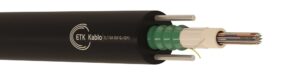
A-D(ZN)(SR)2Y Fiber Optic Cable
SKU:
SLT-SA-SW-SJ-(GY50)
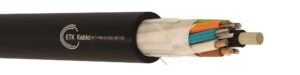
A-DQ(ZN)2Y Composite (Stranded Copper) Fiber Optic Cable
SKU:
MLT-NMA-SJ-C(S)-(GY)-(D)
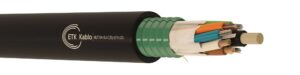
A-DQ(ZN)(SR)2Y Composite (Stranded Copper) Fiber Optic Cable
SKU:
MLT-SA-SJ-C(S)-(GY)-(D)
Special Fiber Optic Cable for Hybrid Fiber + Power Applications
Special Fiber Optic Cable provides project-specific optical connectivity when a conventional fiber cable does not fully match the electrical, mechanical or installation requirements of the network. ETK Kablo manufactures special fiber optic cable constructions that combine optical fibers with copper power conductors, enhanced mechanical protection and different loose-tube architectures for demanding telecommunications and infrastructure projects.
A major part of ETK Kablo's special fiber portfolio consists of hybrid fiber optic cables that carry optical communication and electrical power within one integrated cable construction. These designs can reduce the need for separate fiber and power cable routes when remote equipment requires both data connectivity and electrical supply.
The range also includes reinforced metallic constructions for applications that require higher mechanical protection. For this reason, special cable selection should begin with the complete project requirement rather than with one standard cable code.
What Is a Special Fiber Optic Cable?
A special fiber optic cable is a cable construction developed for requirements that cannot be addressed efficiently by a conventional indoor, duct, aerial or standard armored fiber optic cable.
The special requirement may involve combining multiple functions in one cable, increasing mechanical protection, adapting the loose-tube architecture, incorporating copper conductors or modifying other construction parameters according to the application.
ETK Kablo's product range focuses particularly on composite fiber and copper cable designs together with specialized mechanically reinforced fiber optic constructions.
Hybrid Fiber Optic Cable with Power Conductors
A hybrid fiber optic cable combines optical fibers and electrical conductors within one cable system. The optical fibers provide high-speed data transmission, while the copper conductors can deliver electrical power to equipment at the remote end of the route.
This approach can reduce the need to install separate fiber and power cables along the same path. It can also simplify cable routing, procurement and installation where one piece of equipment requires both optical communication and an electrical supply.
ETK Kablo's composite fiber products incorporate stranded copper power cable elements together with loose-tube optical fibers. Depending on the construction, the cable can use central loose tube or multi loose tube architecture and can include additional mechanical protection.
Hybrid Fiber Cable vs Standard Fiber Optic Cable
A standard fiber optic cable only needs to address optical transmission and the mechanical requirements of the installation. A hybrid fiber + power cable must satisfy both optical and electrical requirements.
| Characteristic | Hybrid Fiber + Power Cable | Standard Fiber Optic Cable |
|---|---|---|
| Optical Fibers | Yes | Yes |
| Copper Power Conductors | Integrated into the cable construction | Normally not included |
| Data Transmission | Through optical fibers | Through optical fibers |
| Electrical Power | Can be delivered through copper conductors | Requires a separate power source or cable |
| Specification Complexity | Optical, electrical and mechanical parameters must all be defined | Primarily optical and mechanical parameters |
| Typical Benefit | Combines data and power in one installed cable | Dedicated optical transmission solution |
The hybrid approach is most useful when combining the two services provides a clear installation or infrastructure advantage. Where no remote power is required, a standard fiber optic construction may remain simpler and more economical.
Composite Fiber Optic Cable vs Hybrid Fiber Optic Cable
The terms composite fiber optic cable and hybrid fiber optic cable are often used in overlapping ways within the cable industry.
In industry usage, hybrid fiber cable frequently refers to a construction that combines optical fiber with electrical power conductors. Composite cable is a broader technical description for a cable that integrates different transmission or functional elements within one construction.
Within ETK Kablo's Special Fiber Optic Cable range, composite products combine optical fibers with stranded copper power elements. Therefore, buyers requiring hybrid fiber + power cable can find relevant constructions within this product family.
Why Combine Fiber and Power in One Cable?
Many network devices require both a high-bandwidth data connection and a local electrical supply. Installing one integrated cable can provide practical advantages where both services follow the same physical route.
Potential benefits can include:
- Fewer separate cable runs
- Reduced pathway occupancy
- Simplified material procurement
- More coordinated installation
- One integrated route toward remote equipment
- Reduced need for a separate local power cable along the same path
However, combining functions also increases specification responsibility. The optical portion, power conductor, cable construction and route must all satisfy their respective requirements.
Electrical Parameters for Hybrid Fiber Power Cable
Specifying a hybrid cable requires more than stating the required fiber count. The copper power section must be designed around the electrical load and cable length.
Important electrical parameters can include:
- Number of copper conductors
- Conductor cross-section
- Supply voltage
- Operating current
- Route length
- Permitted voltage drop
- Conductor insulation requirement
- Electrical protection philosophy
- Applicable project standards
Voltage drop becomes increasingly important as cable length and current increase. Therefore, the conductor size should follow an electrical calculation rather than simply copying the conductor configuration from another hybrid cable project.
Optical Parameters for Hybrid Fiber Optic Cable
The fiber portion of a hybrid cable should be specified independently from the electrical section.
ETK Kablo's special constructions include G.652.D single-mode fiber and selected multimode configurations depending on the exact product. The required optical fiber should follow network distance, transceiver type, bandwidth and system architecture.
Procurement teams should also define:
- Required fiber count
- Single-mode or multimode fiber type
- Central or multi loose tube construction
- Expected optical transmission distance
- Network expansion requirements
- Splicing and termination strategy
The electrical and optical specifications can then be combined into one complete cable design.
Central Loose Tube Hybrid Fiber + Power Cable
ETK Kablo's A-D(ZN)T2Y Composite construction provides a central loose tube solution that combines optical fibers with a power cable element.
The optical fibers are positioned inside a gel-filled PBT tube. Glass yarn provides non-metallic mechanical reinforcement, while the cable also incorporates a separate power element. A web integrates the functional elements into the overall construction, and a UV-resistant black polyethylene outer jacket protects the cable for outdoor use.
The central loose tube composite range includes fiber counts from 2 to 24 fibers.
This design provides a relatively compact solution when a project requires moderate optical capacity together with integrated electrical power.
Multi Loose Tube Hybrid Fiber Optic Cable
Projects requiring additional fiber capacity can use a multi loose tube hybrid fiber optic cable.
ETK Kablo's A-DQ(ZN)2Y Composite construction uses several PBT loose tubes around a non-metallic FRP central strength member. The cable also includes stranded copper power elements, water-blocking materials, glass-yarn reinforcement and a UV-resistant polyethylene outer jacket.
This architecture allows the optical fibers to be distributed across several tubes while retaining the power function within one complete cable.
Product configurations include fiber counts from low-count designs up to 72 fibers.
Armored Hybrid Fiber + Power Cable
Some hybrid routes also require additional protection against crushing, impact or other external mechanical risks.
ETK Kablo's A-DQ(ZN)(SR)2Y Composite cable combines a multi loose tube fiber structure and copper power elements with corrugated steel tape around the cable core.
The steel tape increases radial mechanical protection, while the optical and power elements continue to perform their separate transmission functions inside the same cable.
This type of construction can be considered when one cable must provide fiber connectivity, electrical power and additional mechanical protection.
Metallic armor also introduces electrical installation considerations. Grounding or bonding requirements should therefore be evaluated according to the project and installation environment.
Special Reinforced Fiber Optic Cable
Not every cable within this product family contains copper power conductors. ETK Kablo also includes specialized mechanically reinforced fiber optic constructions for projects where the main requirement is increased physical protection.
The A-D(ZN)(SR)2Y construction combines a central loose tube with glass-yarn reinforcement, corrugated steel tape and galvanized steel wire elements.
This creates a mechanically robust cable architecture for demanding outdoor and infrastructure applications.
The distinction is important: a special fiber cable can be hybrid, armored or both, depending on the project requirement.
Central Loose Tube vs Multi Loose Tube for Special Cables
The same basic architectural decision used in conventional fiber optic networks also applies to special and hybrid cables.
| Feature | Central Loose Tube | Multi Loose Tube |
|---|---|---|
| Fiber Organization | Fibers share one principal tube | Fibers are distributed across several tubes |
| Typical Capacity | Efficient for lower and moderate fiber counts | More scalable for larger fiber counts |
| Construction Complexity | Relatively compact | Supports more complex high-capacity designs |
| Hybrid Capability | Can incorporate power elements | Can incorporate power elements |
| Mechanical Protection | Can be reinforced according to design | Can also incorporate armor and additional reinforcement |
The correct architecture depends on total fiber count, cable diameter, mechanical requirements and how the optical fibers need to be organized within the network.
Water Protection for Outdoor Hybrid Cables
Outdoor hybrid cables must protect both the optical system and the overall cable construction from moisture exposure.
ETK Kablo's composite products use water-protection systems such as waterproof thixotropic jelly in the PBT tubes and water-swellable elements in applicable multi loose tube designs.
The outer polyethylene jacket provides an additional environmental barrier for suitable outdoor applications.
Water protection should be evaluated together with installation method. A cable intended for a duct, aerial route or another outdoor environment may require different overall mechanical characteristics even when its internal moisture-protection system is similar.
Fiber Optics and Electromagnetic Interference
Optical fibers transmit information using light and are inherently unaffected by electromagnetic interference in the same way as metallic signal conductors.
However, a hybrid fiber + power cable also contains copper electrical conductors. Those conductors remain electrical components and must be designed and installed according to the electrical requirements of the project.
For this reason, it is more accurate to evaluate the optical and power sections separately than to describe the entire hybrid cable as universally immune to electromagnetic effects.
Applications for Hybrid and Special Fiber Optic Cable
Hybrid and special fiber optic cables can provide an efficient solution when optical communication and additional electrical or mechanical requirements occur along the same route.
Potential applications can include:
- Telecommunication infrastructure
- Remote communication equipment
- Outdoor surveillance infrastructure
- Industrial communication networks
- Transportation infrastructure
- Utility communication systems
- Campus and large-site networks
- Remote monitoring equipment
- Project-specific fiber + power installations
- Networks requiring reinforced fiber cable constructions
The application name alone does not determine the cable design. The required optical capacity, electrical load, route length and mechanical environment should define the final construction.
When Should You Choose a Hybrid Fiber + Power Cable?
A hybrid cable is most useful when both optical communication and electrical power must reach the same remote location and combining them in one cable provides a clear installation benefit.
Before choosing a hybrid construction, project engineers should evaluate:
- Whether data and power follow the same route
- Required electrical load
- Maximum route length
- Permitted voltage drop
- Required fiber count
- Network transmission distance
- Mechanical protection requirements
- Installation method
- Maintenance strategy
- Applicable electrical and communication standards
If the optical and electrical routes differ significantly, separate cables may provide a simpler solution. ETK Kablo can evaluate the cable architecture according to the actual project specification.
How to Specify a Special Fiber Optic Cable
Special cable quotations require a more detailed technical specification than standard catalogue products. Providing complete project information early helps reduce unnecessary design revisions.
| Specification Item | Information to Provide |
|---|---|
| Fiber Type | Required single-mode or multimode fiber |
| Fiber Count | Current and future optical capacity |
| Fiber Architecture | Central loose tube or multi loose tube |
| Power Requirement | Whether integrated copper power conductors are required |
| Conductor Requirement | Number, cross-section and electrical characteristics |
| Voltage and Current | Operating electrical values |
| Route Length | Required cable length and electrical voltage-drop consideration |
| Mechanical Protection | Non-armored, steel-tape protected or project-specific reinforcement |
| Installation Environment | Aerial, duct, outdoor, industrial or project-specific route |
| Environmental Requirements | Temperature, UV exposure, water and other relevant conditions |
| Delivery Requirements | Quantity, drum length, marking and documentation |
ETK Kablo Special Fiber Optic Cable Range
ETK Kablo's Special Fiber Optic Cable range includes four constructions with different optical, electrical and mechanical concepts.
| Construction | Main Design Concept |
|---|---|
| A-D(ZN)T2Y Composite | Central loose tube hybrid construction with optical fibers, stranded copper power element and outdoor PE jacket |
| A-D(ZN)(SR)2Y | Central loose tube reinforced construction with corrugated steel tape and galvanized steel wire elements |
| A-DQ(ZN)2Y Composite | Multi loose tube hybrid construction with fiber, stranded copper power elements and non-metallic reinforcement |
| A-DQ(ZN)(SR)2Y Composite | Multi loose tube hybrid construction combining fiber, copper power elements and corrugated steel tape protection |
The exact fiber count, fiber type, copper conductor arrangement, dimensions and mechanical characteristics should be confirmed against the technical datasheet or project-specific ETK Kablo proposal.
Why Choose ETK Kablo for Special Fiber Optic Cable?
Special cable projects require the manufacturer to evaluate several engineering requirements together rather than treating the fiber optic cable as a standard catalogue item.
ETK Kablo manufactures both optical and copper cable products, which supports projects where fiber communication and copper power elements need to be integrated into one cable construction.
The special fiber portfolio includes central and multi loose tube hybrid cables, armored composite designs and specialized reinforced optical cables. ETK Kablo can evaluate optical, electrical and mechanical parameters together during the technical quotation process.
Frequently Asked Questions About Special Fiber Optic Cable
What is a special fiber optic cable?
A special fiber optic cable is a project-specific construction designed for requirements that are not fully addressed by a conventional standard fiber cable. It can include hybrid fiber + power elements, additional mechanical protection or another specialized construction.
What is a hybrid fiber optic cable?
A hybrid fiber optic cable combines optical fibers with another functional element. In fiber + power applications, copper conductors provide electrical power while optical fibers carry data within the same overall cable construction.
Can fiber optic cable and power cable be combined?
Yes. ETK Kablo manufactures composite constructions that integrate optical fibers and stranded copper power elements. The electrical conductor size and optical construction should be selected according to the actual project requirements.
What is the difference between hybrid and composite fiber cable?
The terms can overlap. Hybrid fiber cable commonly refers to a combination such as fiber + power, while composite cable is a broader term for a construction that integrates different functional elements. ETK Kablo uses composite terminology for its fiber + stranded-copper constructions.
Does a hybrid fiber cable reduce the need for separate cable runs?
It can. When data and electrical power follow the same route, one integrated construction can reduce the number of separate cables that must be installed. The suitability of this approach depends on the complete project design.
How do I select the copper conductor size in a hybrid cable?
Conductor sizing depends on voltage, current, cable length, permitted voltage drop and applicable electrical requirements. The conductor size should be calculated for the specific load rather than selected only from a previous cable design.
Can hybrid fiber optic cable be armored?
Yes. ETK Kablo offers a multi loose tube composite construction with corrugated steel tape for projects requiring additional mechanical protection.
Can special fiber optic cable use both central and multi loose tube designs?
Yes. ETK Kablo's range includes both central loose tube and multi loose tube special constructions.
What information should I provide for a special fiber optic cable quotation?
Provide the fiber type, fiber count, power-conductor requirement, voltage, current, conductor size if already specified, route length, installation environment, armor requirement, quantity, drum length and any project-specific technical requirements.


