





 President’s Message
Indoor Telephone Cables
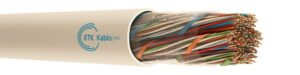
J-02YY Indoor Telephone Cable
SKU:
PDV
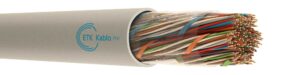
J-02YH Indoor Telephone Cable
SKU:
PDH
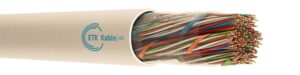
J-YY Indoor Telephone Cable
SKU:
VBV
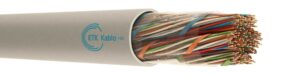
J-HH Indoor Telephone Cable
SKU:
HBH
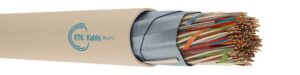
J-02Y(St)Y Indoor Telephone Cable
SKU:
PD-APV
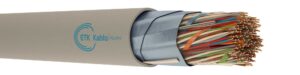
J-02Y(St)H Indoor Telephone Cable
SKU:
PD-APH
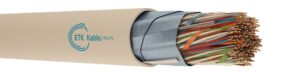
J-Y(St)Y Indoor Telephone Cable
SKU:
VB-APV
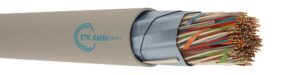
J-H(St)H Indoor Telephone Cable
SKU:
HB-APH

Jumper Wire Indoor Telephone Cable
SKU:
JUMPER
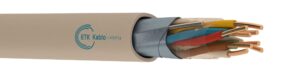
J-Y(St)Y Lg Indoor Telephone Cable
SKU:
J-Y(St)Y Lg
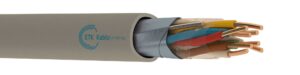
J-H(St)H Lg Indoor Telephone Cable
SKU:
J-H(St)H Lg
Indoor Telephone Cable for Building Communication Networks
Indoor Telephone Cable provides reliable copper connectivity for PBX systems, intercom networks, internal telephone lines and other low-frequency communication circuits inside buildings. ETK Kablo manufactures a broad range of multi-pair indoor telephone cables with solid copper conductors, screened and unscreened constructions, PVC and halogen-free materials, and different insulation systems for professional building communication infrastructure.
ETK Kablo's current indoor telephone cable range includes J-02YY, J-02YH, J-YY, J-HH, J-02Y(St)Y, J-02Y(St)H, J-Y(St)Y, J-H(St)H, J-Y(St)Y Lg, J-H(St)H Lg and jumper wire constructions. This range allows procurement teams to select the cable according to pair count, conductor diameter, insulation, screening and fire-performance requirements.
Indoor telephone cable should not be selected only from the number of pairs. Electrical characteristics, screen requirement, conductor size, sheath material and installation environment all influence the correct cable construction.
What Is an Indoor Telephone Cable?
An indoor telephone cable is a twisted-pair copper communication cable designed primarily for fixed installation inside buildings and protected environments.
The cable carries analog voice, low-frequency communication and other compatible low-voltage signals between equipment such as PBX systems, telephone distribution points, intercom units and internal communication panels.
Depending on the construction, ETK Kablo indoor telephone cables can use PVC, foam-skin polyethylene or halogen-free insulation together with PVC or halogen-free outer jackets. Screened versions add an overall metallic foil screen around the cable core.
ETK Kablo Indoor Telephone Cable Types
The ETK Kablo portfolio includes several construction families rather than one universal indoor telephone cable.
| Cable Family | Main Construction | Typical Selection Reason |
|---|---|---|
| J-02YY | Foam-skin PE insulation, PVC outer jacket, unscreened | Low-capacitance multi-pair indoor telecom applications |
| J-02YH | Foam-skin PE insulation, halogen-free outer jacket, unscreened | Indoor telecom routes requiring halogen-free jacket material |
| J-YY | PVC insulation and PVC outer jacket, unscreened | General-purpose indoor telephone and communication systems |
| J-HH | Halogen-free insulation and halogen-free outer jacket, unscreened | Low-smoke, halogen-free building communication networks |
| J-02Y(St)Y | Foam-skin PE insulation, overall foil screen, PVC outer jacket | Screened low-capacitance indoor telecom networks |
| J-02Y(St)H | Foam-skin PE insulation, overall foil screen, halogen-free outer jacket | Screened communication with halogen-free sheath requirement |
| J-Y(St)Y | PVC insulation, overall foil screen and PVC outer jacket | Screened indoor telephone and low-voltage communication |
| J-H(St)H | Halogen-free insulation, overall foil screen and halogen-free outer jacket | Screened LSZH / halogen-free communication networks |
| Jumper Wire | Compact solid copper insulated conductors | Internal telecom distribution and cross-connection work |
Screened vs Unscreened Indoor Telephone Cable
ETK Kablo manufactures both screened and unscreened telephone cable constructions.
Unscreened telephone cable provides a simpler construction for installations where electromagnetic interference is limited and the project specification does not require an overall screen.
Screened telephone cable adds a metallic screen around the cable core. ETK Kablo's J-Y(St)Y, J-H(St)H, J-02Y(St)Y and J-02Y(St)H constructions use an Al/PET foil screen together with a tinned copper earthing wire.
The screen can help reduce the influence of external electromagnetic interference on low-level communication signals. However, screening should be specified according to the actual installation rather than added automatically to every telephone circuit.
J-Y(St)Y Indoor Telephone Cable
J-Y(St)Y is one of the best-known screened indoor communication cable constructions in the European market.
ETK Kablo's J-Y(St)Y cable uses Class 1 solid copper conductors, PVC insulation, twisted-pair stranding, an Al/PET overall screen with tinned copper earthing wire and a grey PVC outer jacket.
The construction is available in several conductor diameters and pair counts, making it suitable for building telephone distribution, PBX systems, intercom networks and other compatible low-voltage communication circuits.
When requesting a quotation, buyers should clearly state both the cable code and dimensions, including pair count and conductor diameter, such as J-Y(St)Y 2x2x0.8.
J-H(St)H Halogen-Free Telephone Cable
J-H(St)H provides a halogen-free alternative for screened indoor communication networks.
The ETK Kablo construction uses solid copper conductors, halogen-free insulation, an Al/PET overall screen with tinned copper earthing wire and a halogen-free grey outer jacket.
J-H(St)H can be particularly relevant in public buildings, commercial facilities, transport-related buildings and other projects where reduced smoke and corrosive gas emissions form part of the cable specification.
Halogen-free construction should not be confused with fire resistance. A J-H(St)H cable can provide low-smoke and halogen-free characteristics without being an FE180 or PH120 fire-resistant cable.
PVC vs Halogen-Free Indoor Telephone Cable
Sheath and insulation material can influence smoke, gas emissions, flame behavior, mechanical properties and project compliance.
| Characteristic | PVC Construction | Halogen-Free Construction |
|---|---|---|
| Typical ETK Families | J-YY, J-Y(St)Y, J-02YY, J-02Y(St)Y | J-HH, J-H(St)H, J-02YH, J-02Y(St)H |
| Halogen Content | PVC contains halogen | Designed without conventional halogen-containing PVC materials |
| Smoke / Corrosive Gas Requirement | Depends on exact PVC construction | Suitable where low-smoke and reduced corrosive-gas performance is specified |
| Typical Procurement Driver | General building communication installation | Projects with enhanced material fire-safety requirements |
The project specification should determine whether PVC or halogen-free construction is appropriate.
Foam-Skin PE Telephone Cable
ETK Kablo's J-02 series uses foam-skin polyethylene insulation in selected constructions.
Foam-skin insulation combines a foamed polyethylene layer with a solid outer skin. This insulation system can provide favorable electrical characteristics, including relatively low capacitance, while the outer skin adds mechanical protection around the conductor.
The J-02YY and J-02Y(St)Y families use this insulation concept together with PVC outer jackets, while J-02YH and J-02Y(St)H provide halogen-free jacket alternatives.
Multi-Pair Indoor Telephone Cable
Indoor telephone systems can require anything from a few pairs to several hundred pairs within one cable.
ETK Kablo manufactures multi-pair constructions with organized pair grouping for larger cable cores. Depending on the product, small pair counts are stranded in layers, while larger cables use identified pair groups to simplify manufacturing and network organization.
Selected ETK Kablo indoor telephone cable constructions are published in configurations reaching several hundred pairs. Therefore, this category should not be considered limited to small 2-pair or 4-pair building cables.
| Pair Count | Typical Network Role |
|---|---|
| 1–4 Pairs | Local telephone, intercom and equipment connections |
| 5–20 Pairs | Small building and floor distribution |
| 25–100 Pairs | Larger PBX and telecom distribution systems |
| Above 100 Pairs | High-density building telecom backbone and distribution applications |
Conductor Diameter and Electrical Performance
Conductor diameter affects DC resistance, copper content, cable diameter and transmission characteristics.
Depending on the product family, ETK Kablo publishes solid copper conductor diameters including:
- 0.40 mm
- 0.50 mm
- 0.60 mm
- 0.65 mm
- 0.80 mm
- 0.90 mm
A larger conductor generally provides lower DC resistance, but it also increases cable size, copper weight and cost. The correct conductor diameter should follow route length, electrical requirements and the telecom system specification.
2 Pair 0.5 mm Telephone Cable and Other Common Sizes
Telephone cable sizes can be specified by pair count and conductor diameter, for example 2 pair 0.5 mm telephone cable.
This format identifies two important parameters but does not define the complete construction. A 2-pair cable can still be screened or unscreened, PVC or halogen-free, and can use different insulation systems.
For an accurate quotation, buyers should therefore provide the full cable code where possible or specify:
- Number of pairs
- Conductor diameter
- Screen requirement
- Insulation type
- Outer jacket material
- Required fire-performance characteristics
Indoor Telephone Jumper Wire
ETK Kablo also manufactures jumper wire for internal telecom distribution and connection work.
Unlike large multi-pair telephone cables, jumper wire uses a compact construction intended for short internal connections, cross-connect points and telecom distribution areas.
The currently published ETK Kablo jumper wire uses solid copper conductors with PVC insulation and is offered in several conductor diameters.
Jumper wire should therefore remain a separate procurement item from multi-pair building telephone cable even though both belong to the indoor telecom system.
Electrical Parameters for Telephone Cable Selection
Professional telephone cable procurement should consider electrical parameters as well as physical construction.
Important values can include:
- Conductor resistance
- Insulation resistance
- Mutual capacitance
- Capacitance unbalance
- Dielectric strength
- Pair configuration
These values differ according to conductor diameter and insulation system. For example, foam-skin polyethylene and PVC-based telephone constructions can have different capacitance and insulation-resistance characteristics.
Procurement teams should therefore compare the technical data of the exact selected cable rather than applying one electrical value to the complete category.
Applications of Indoor Telephone Cable
ETK Kablo indoor telephone cables can support applications such as:
- PBX telephone systems
- Internal analog telephone networks
- Intercom systems
- Building telecom risers
- Commercial building communication networks
- Hotels and hospitality communication systems
- Hospitals and institutional telephone networks
- Industrial internal communication systems
- Telecom distribution frames
- Low-frequency building communication circuits
The cable should be selected according to the actual communication system. Ethernet and high-speed IP data networks should use the appropriate Data/LAN cable category rather than conventional telephone cable solely because both use twisted copper conductors.
Indoor Telephone Cable vs Data/LAN Cable
Traditional telephone cable and Ethernet data cable serve different transmission requirements.
| Characteristic | Indoor Telephone Cable | Data/LAN Cable |
|---|---|---|
| Main Purpose | Voice and low-frequency communication | High-speed Ethernet data transmission |
| Typical Codes | J-Y(St)Y, J-H(St)H, J-02YY | Cat 5e, Cat 6, Cat 6A, Cat 7 |
| Performance Specification | Resistance, capacitance and low-frequency transmission parameters | Frequency, insertion loss, return loss, NEXT and other Ethernet parameters |
| Selection Method | Pair count, conductor size, screen and material system | Category rating, shielding type and network speed |
For new Ethernet or structured data networks, buyers should specify an appropriate Category-rated LAN cable rather than treating conventional telephone cable as an equivalent product.
Indoor Telephone Cable vs Fire Alarm Cable
Some cable codes can appear in more than one low-voltage communication application, but each application has its own cable requirements.
This page focuses on indoor telephone and building communication. Fire-alarm circuits should follow the project's dedicated fire-alarm cable specification and applicable fire-performance requirements.
Likewise, a standard J-Y(St)Y or J-H(St)H communication cable should not automatically be described as fire resistant. FE180 or PH120 functionality requires separately designed and tested fire-resistant cable constructions.
How to Specify an Indoor Telephone Cable
Providing complete cable requirements helps ETK Kablo identify the correct construction and prepare an accurate quotation.
| Specification Item | Information to Provide |
|---|---|
| Pair Count | Required number of twisted pairs |
| Conductor Diameter | 0.40 mm, 0.50 mm, 0.60 mm or another specified size |
| Insulation | PVC, foam-skin PE or halogen-free according to construction |
| Screen | Screened or unscreened |
| Outer Jacket | PVC or halogen-free |
| Application | PBX, intercom, internal telephone distribution or other communication system |
| Fire Requirement | Flame-retardant, low-smoke / halogen-free or project-specific requirement |
| Electrical Requirements | Resistance, capacitance or other specified values |
| Delivery Requirements | Quantity, packing length, marking and documentation |
ETK Kablo Indoor Telephone Cable Range
| Construction | Main Design Concept |
|---|---|
| J-02YY | Unscreened foam-skin PE insulated cable with PVC jacket |
| J-02YH | Unscreened foam-skin PE insulated cable with halogen-free jacket |
| J-YY | Unscreened PVC indoor telephone cable |
| J-HH | Unscreened halogen-free indoor telephone cable |
| J-02Y(St)Y | Foam-skin PE insulated screened cable with PVC jacket |
| J-02Y(St)H | Foam-skin PE insulated screened cable with halogen-free jacket |
| J-Y(St)Y | PVC insulated screened indoor telephone cable |
| J-H(St)H | Halogen-free screened indoor telephone cable |
| J-Y(St)Y Lg | Screened PVC communication cable with pair stranding in layers |
| J-H(St)H Lg | Screened halogen-free communication cable with pair stranding in layers |
| Jumper Wire | Compact internal telecom connection wire |
The exact pair count, conductor size, cable diameter, electrical performance and fire characteristics should be confirmed from the technical datasheet of the selected product.
Why Choose ETK Kablo for Indoor Telephone Cable?
ETK Kablo manufactures indoor telephone cables across a wide range of insulation, screen, sheath and pair-count configurations.
The portfolio covers conventional PVC telephone cables, foam-skin PE constructions, screened and unscreened designs, halogen-free alternatives and telecom jumper wire. This allows contractors, distributors, telecom integrators and building projects to select the cable according to actual communication and material requirements.
ETK Kablo can evaluate pair count, conductor diameter, screening, electrical characteristics, sheath material and project documentation together during the quotation process.
Frequently Asked Questions About Indoor Telephone Cable
What is an indoor telephone cable?
An indoor telephone cable is a twisted-pair copper communication cable designed for fixed installation inside buildings. It is commonly used for telephone, PBX, intercom and other compatible low-frequency communication circuits.
What is J-Y(St)Y cable?
J-Y(St)Y is a screened indoor communication cable with solid copper conductors, PVC insulation, an overall Al/PET foil screen and a PVC outer jacket.
What is J-H(St)H cable?
J-H(St)H is a screened halogen-free communication cable. It uses halogen-free insulation and outer-jacket materials together with an overall foil screen.
What does (St) mean in telephone cable?
In these cable designations, (St) indicates an overall static screen. ETK Kablo's applicable constructions use an Al/PET foil screen together with a tinned copper earthing wire.
What is the difference between screened and unscreened telephone cable?
Screened telephone cable contains an overall metallic screen that can help reduce electromagnetic interference. Unscreened cable omits this layer and provides a simpler construction where screening is not required.
Is LSZH telephone cable fire resistant?
No. LSZH or halogen-free construction describes smoke and halogen characteristics of the cable materials. Fire resistance such as FE180 or PH120 requires a separately designed and tested cable construction.
What conductor sizes are available for indoor telephone cable?
Depending on the ETK Kablo product family, published solid copper conductor diameters include 0.40, 0.50, 0.60, 0.65, 0.80 and 0.90 mm.
Can ETK Kablo manufacture high-pair-count indoor telephone cable?
Yes. Selected ETK Kablo indoor telephone constructions are published in configurations reaching several hundred pairs, depending on conductor diameter and cable family.
Is telephone cable the same as Cat 5e or Cat 6?
No. Conventional telephone cable is designed around voice and low-frequency communication parameters, while Cat 5e, Cat 6 and higher-category LAN cables are designed for high-frequency Ethernet transmission.
What information should I provide when requesting a quotation?
Provide the cable code if known, pair count, conductor diameter, screened or unscreened requirement, insulation and jacket material, applicable fire-performance requirements, quantity, packing length and any project-specific electrical requirements.


