





 President’s Message
Indoor Telephone Cables
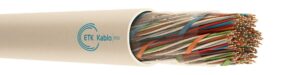
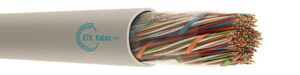
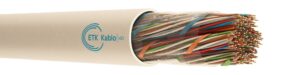
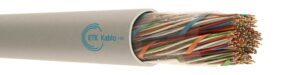
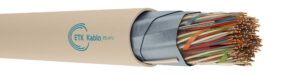
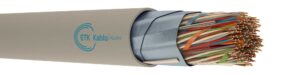
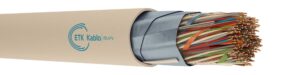
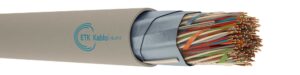

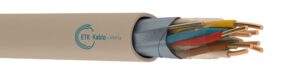
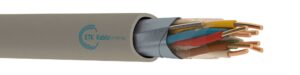
Indoor Telephone Cables | Reliable Voice and Signal Communication Solutions
ETK Kablo’s Indoor Telephone Cables are precision-engineered for low-voltage communication, control, and signaling within commercial, industrial, and institutional buildings. Designed to ensure stable voice transmission and clear low-frequency signal transfer, these cables form the backbone of modern telecommunication and building management networks. Ideal for structured cabling, intercom systems, alarms, and internal telecom loops, ETK Kablo’s indoor cables provide long-term reliability, flexibility, and safety in protected environments.
Construction and Design Features
Each indoor telephone cable is built with solid bare copper conductors arranged in twisted pairs to minimize crosstalk and maintain excellent signal clarity. Conductors are insulated with high-density polyethylene (PE), which ensures low dielectric loss and consistent capacitance over the cable’s lifetime.
For environments with high electrical noise, ETK Kablo offers the J-Y(St)Y type cable — featuring a collective aluminum-polyester foil shield and tinned copper drain wire to prevent electromagnetic interference (EMI). This makes the cable suitable for installation near power lines, control panels, and data equipment. The sheath is manufactured from flame-retardant grey PVC, ensuring mechanical strength, flexibility, and fire safety in compliance with EN 60332-1.
Electrical and Performance Characteristics
ETK Kablo’s indoor communication cables are optimized for short- to medium-distance voice and signal transmission, maintaining stable electrical parameters and minimal attenuation.
- Capacitance: Controlled at approximately 100 nF/km (for J-Y(St)Y types) for low signal delay and distortion.
- Crosstalk Attenuation: Precisely twisted pairs ensure minimal near-end and far-end interference.
- Insulation Resistance: Premium PE insulation prevents leakage and maintains clear signal separation.
- Dielectric Strength: Each batch is high-voltage tested according to international standards.
These electrical parameters guarantee stable analog voice quality, reliable alarm signaling, and precise data communication within interior networks.
Applications and Use Cases
ETK Kablo’s indoor telephone cables are widely used in structured building communication systems, including:
- Commercial Buildings: Internal voice loops, inter-floor telecom lines, and signaling circuits.
- Industrial Facilities: Control wiring between panels, PLCs, and monitoring units.
- Residential and Mixed-Use Developments: Telecom risers and backbone cabling for multi-unit complexes.
- Data and Technology Centers: Alarm and voice routing in control and security rooms.
- Public Institutions: Telephone and intercom lines for hospitals, schools, and government buildings.
- Retail and Hospitality: Voice and signal systems in hotels, malls, and chain facilities.
- BMS & Security Systems: Communication for HVAC, access control, and smoke detection devices.
ETK Kablo Indoor Telephone Cable Range
The most common structure in ETK Kablo’s portfolio is the J-Y(St)Y Cable, a standard European indoor communication cable known for its reliability and compliance. Variants include:
| Feature | Description |
|---|---|
| Conductor | Solid bare copper, 0.6 mm / 0.8 mm diameter |
| Core Configuration | 2 to 24 pairs (e.g., 2×2×0.6 mm to 24×2×0.6 mm) |
| Screening | With (St) collective screen or unshielded versions |
| Sheath | Flame-retardant grey PVC per EN 60332-1 |
| Construction Codes | J-Y(St)Y, J-2Y(St)Y and custom OEM variants |
All products undergo dimensional verification, dielectric strength tests, conductor resistance checks, and flame propagation evaluations in ETK Kablo’s in-house testing laboratory.
Durability and Installation Benefits
- Flame Retardancy: Meets EN 60332-1 to limit fire spread within buildings.
- Flexibility: Easy to install in cable trays, conduits, or compact distribution boxes.
- Shielding Performance: Excellent EMI protection in dense electrical environments.
- Longevity: Resistant to cracking, deformation, or insulation degradation during long-term use.
Why Choose ETK Kablo Indoor Telephone Cables
ETK Kablo’s PVC-sheathed twisted-pair telephone cables offer exceptional reliability, safety, and clarity for all internal voice and control systems. Certified according to international standards, our cables ensure secure communication across diverse projects — from offices and industrial facilities to smart buildings and critical institutions. With proven performance across 120+ countries, ETK Kablo stands as a trusted global supplier of indoor telecommunication cables that combine quality, compliance, and longevity.
Indoor Telephone Cables — Frequently Asked Questions
What kind of cable is used in telephones?
Telephones typically use twisted-pair copper cable. Indoors this is often a multi-pair station/telephone cable (e.g., J-Y(St)Y or CW1308) or a Category cable (Cat5e/Cat6) when voice runs over structured cabling or VoIP.
What is a home phone cable called?
Common names include telephone cable, station wire, inside wiring, or by standard codes such as CW1308 (UK/EU) and J-Y(St)Y (EU). Patch cords that connect the phone to the wall use RJ11 plugs.
What is the difference between RJ11 and RJ12 telephone cable?
Both use a 6-position modular plug (6P). RJ11 is usually 6P2C/6P4C (2–4 conductors) and carries one or two lines for residential sets. RJ12 is 6P6C (all six conductors) and is common in key-system/ PBX handsets where extra pairs are required. Most household lines use RJ11.
What is the best cable for telephone wiring?
For new installs, use Cat5e or Cat6 solid copper for maximum flexibility (supports VoIP and POTS on the same infrastructure). For traditional analog voice only, choose a low-capacitance twisted-pair telephone cable such as J-Y(St)Y or CW1308 with 2 or 4 pairs. Avoid copper-clad aluminum (CCA).


