





 President’s Message
Silicone Cables
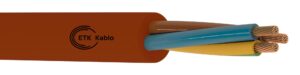
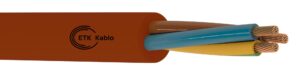
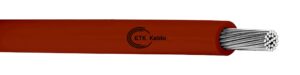
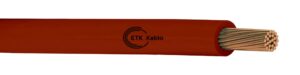
Silicone Cable for High-Temperature Industrial Wiring
Silicone Cable provides flexible electrical wiring for equipment and installations exposed to temperatures beyond the practical range of many conventional thermoplastic cable materials. ETK Kablo manufactures SIMH, SIHF, SIF and SIAF silicone cable constructions for industrial heating, machinery, lighting, motors, transformers and other high-temperature electrical applications.
The ETK Kablo silicone cable range includes single-conductor and multi-core constructions with Class 5 stranded copper conductors and silicone insulation. Selected products use tinned copper conductors, while others use standard electrolytic copper. ETK Kablo silicone cables operate at 300/500 V and cover conductor cross-sections from 0.50 mm² to 10 mm².
Temperature capability depends on the exact cable construction. SIMH is specified for operation from -60°C to +180°C, while SIHF, SIF and SIAF are specified for operation from -60°C to +250°C. Project engineers should therefore select the exact cable code according to temperature, conductor material, core configuration and installation requirements.
What Is a Silicone Cable?
A silicone cable uses silicone-based insulation, and in applicable multi-core designs a silicone outer jacket, to provide electrical insulation across a wide temperature range.
Silicone remains flexible at low temperatures and can tolerate considerably higher operating temperatures than many conventional PVC cable compounds.
This makes silicone-insulated cable suitable for wiring near heating elements, industrial ovens, hot machinery, motors, transformers, lighting equipment and other areas where sustained thermal exposure forms part of normal operation.
ETK Kablo Silicone Cable Range
| Product | Conductor | Construction | Operating Temperature |
|---|---|---|---|
| SIMH | Class 5 stranded copper | Multi-core silicone insulated and silicone jacketed | -60°C to +180°C |
| SIHF | Class 5 stranded tinned copper | Multi-core silicone insulated and silicone jacketed | -60°C to +250°C |
| SIF | Class 5 stranded tinned copper | Silicone-insulated single-conductor construction | -60°C to +250°C |
| SIAF | Class 5 stranded copper | Silicone-insulated single-conductor construction | -60°C to +250°C |
The exact choice depends on whether the installation requires single-core or multi-core construction, tinned or standard copper conductors and the required operating-temperature range.
SIMH Silicone Cable
SIMH Silicone Cable is a flexible multi-core construction using Class 5 stranded copper conductors, silicone insulation, layered stranding and a silicone outer jacket.
The ETK Kablo SIMH range operates at 300/500 V and includes conductor cross-sections from 0.50 mm² to 10 mm².
The operating-temperature range for SIMH is -60°C to +180°C.
This construction can suit industrial wiring where several insulated conductors need to run together inside one flexible high-temperature cable.
SIHF Silicone Cable
SIHF Silicone Cable is also a multi-core silicone-insulated and silicone-jacketed construction, but ETK Kablo uses Class 5 tinned copper conductors.
The SIHF range operates at 300/500 V and covers conductor cross-sections from 0.50 mm² to 10 mm².
Its operating-temperature range extends from -60°C to +250°C.
SIHF can therefore provide a useful option where the project requires a complete multi-core silicone cable together with tinned copper conductors and higher documented temperature capability.
SIF Silicone Cable
SIF Silicone Cable uses a Class 5 stranded tinned copper conductor with silicone insulation.
Unlike SIHF, the SIF construction does not include a separate multi-core outer jacket. It is therefore suitable for single-conductor high-temperature wiring applications.
The ETK Kablo SIF range operates at 300/500 V with conductor sizes from 0.50 mm² to 10 mm² and a temperature range of -60°C to +250°C.
SIAF Silicone Cable
SIAF Silicone Cable is another single-conductor silicone-insulated construction.
ETK Kablo uses a Class 5 stranded electrolytic copper conductor together with silicone insulation.
SIAF operates at 300/500 V, covers conductor cross-sections from 0.50 mm² to 10 mm² and has an operating-temperature range of -60°C to +250°C.
SIMH vs SIHF Silicone Cable
| Feature | SIMH | SIHF |
|---|---|---|
| Construction | Multi-core | Multi-core |
| Conductor | Stranded copper | Stranded tinned copper |
| Insulation | Silicone | Silicone |
| Outer Jacket | Silicone | Silicone |
| Voltage | 300/500 V | 300/500 V |
| Temperature Range | -60°C to +180°C | -60°C to +250°C |
The main practical differences are conductor finish and maximum operating temperature. SIHF uses tinned copper and carries the higher temperature rating.
SIF vs SIAF Silicone Cable
| Feature | SIF | SIAF |
|---|---|---|
| Construction | Single-conductor silicone insulated | Single-conductor silicone insulated |
| Conductor | Stranded tinned copper | Stranded copper |
| Voltage | 300/500 V | 300/500 V |
| Temperature Range | -60°C to +250°C | -60°C to +250°C |
The principal distinction between these constructions is conductor material: SIF uses tinned copper, while SIAF uses standard stranded copper.
Tinned Copper vs Standard Copper in Silicone Cable
ETK Kablo uses both tinned and standard copper conductors across its silicone cable portfolio.
SIHF and SIF use tinned copper, while SIMH and SIAF use standard electrolytic copper.
Tinning creates a metallic coating around the copper strands. This can influence conductor surface behavior and can be useful in applications where the project specifically requires tinned conductors.
The conductor specification should therefore be stated explicitly in the RFQ rather than assuming that every silicone cable uses tinned copper.
300/500 V Silicone Cable
All four ETK Kablo silicone cable families have an operating-voltage rating of 300/500 V.
ETK Kablo technical data also specify a 2000 V test-voltage value for the listed conductor sizes.
This makes the range suitable for many low-voltage internal wiring, control, auxiliary-power and equipment-connection applications where 300/500 V cable meets the electrical design.
Where a project requires 0.6/1 kV, the required construction should be confirmed separately rather than assuming that every silicone cable in this category carries that voltage rating.
High-Temperature Cable up to 250°C
High-temperature capability is one of the main reasons to select silicone cable.
In the ETK Kablo silicone cable portfolio, SIHF, SIF and SIAF have operating temperatures up to +250°C, while SIMH has a maximum of +180°C.
This distinction matters because the generic term “silicone cable” does not define one universal maximum temperature.
The project engineer should compare the documented cable temperature range with the expected normal operating temperature, local hot spots and potential radiant-heat exposure.
Silicone Cable at Low Temperatures
ETK Kablo silicone products have lower operating limits down to -60°C.
Silicone insulation can retain flexibility at temperatures where many conventional thermoplastic materials become significantly stiffer.
This characteristic can be useful where the same cable must tolerate both low-temperature storage or operation and elevated process temperatures.
Silicone Cable for Industrial Heating
Industrial heating equipment can expose electrical wiring to sustained ambient temperatures above the normal range of conventional installation cables.
Silicone cable can provide a suitable wiring solution for applications such as:
- Industrial ovens
- Heating elements
- Heat-treatment equipment
- Industrial dryers
- Infrared heating systems
- Hot-process machinery
- Temperature-control equipment
The cable should be routed according to its documented temperature limit rather than assuming that direct contact with any heating surface is acceptable.
Silicone Cable for Furnaces and Steel Plants
Steel plants, foundries and metal-processing facilities contain equipment that can generate substantial ambient and radiant heat.
Silicone cable can support electrical connections around furnaces, heating systems, rolling equipment and process machinery when the actual cable temperature remains within the selected product's documented operating range.
Additional mechanical, chemical or environmental protection should be specified separately where the cable route introduces those risks.
Silicone Cable for Motors and Transformers
Motors, transformers, coils and electrical machines can generate significant heat during normal operation.
Single-conductor SIF and SIAF cables can provide practical high-temperature internal wiring where individual insulated conductors are required.
Multi-core SIMH and SIHF can suit equipment connections where several conductors need to share one common silicone outer jacket.
Conductor cross-section should follow electrical current, voltage drop, short-circuit requirements and the equipment manufacturer's design.
Silicone Cable for Lighting Equipment
Lighting equipment can create localized heat around lamps, luminaires, ballasts, drivers and enclosed fixtures.
Silicone-insulated wiring can therefore be useful where conventional wiring materials cannot tolerate the expected temperature.
SIF and SIAF can serve individual internal conductors, while multi-core SIMH and SIHF can provide complete cable constructions for suitable equipment connections.
Silicone Cable for Industrial Machinery
Silicone cable can also support machinery where heat resistance and installation flexibility are required together.
Class 5 stranded conductors provide flexibility for routing through equipment and control assemblies.
However, a flexible conductor does not automatically mean that the cable is qualified for continuous drag-chain, robotic or high-cycle movement.
Projects with continuous dynamic motion should define the flexing requirement separately and confirm that the exact cable has the necessary mechanical qualification.
Silicone Cable Conductor Sizes
The ETK Kablo SIMH, SIHF, SIF and SIAF product range includes conductor sizes from 0.50 mm² to 10 mm².
- 0.50 mm²
- 0.75 mm²
- 1.00 mm²
- 1.50 mm²
- 2.50 mm²
- 4.00 mm²
- 6.00 mm²
- 10.00 mm²
The required cross-section should be selected according to current-carrying capacity, conductor resistance, voltage drop, installation method and equipment requirements.
Silicone Cable Fire and Smoke Performance
Depending on the exact product, applicable tests can include:
- IEC 61034-2 smoke-density testing
- IEC 60754-1 halogen-content testing
- IEC 60754-2 corrosive-gas testing
- IEC 60332-1-2 flame-retardancy testing
- IEC 60332-3-24 flame-propagation testing
- IEC 60331-21 circuit-integrity testing
The applicable certificates and test results should always be verified for the exact product and project requirement.
Is Silicone Cable Halogen-Free?
ETK Kablo silicone products include IEC 60754-1 halogen-content testing and IEC 60754-2 corrosive-gas testing.
This allows procurement teams to evaluate halogen and combustion-gas performance against defined test standards instead of relying on broad statements such as “non-toxic cable.”
The exact product documentation should remain the basis for project compliance.
Silicone Cable vs Fire Resistant Cable
High-temperature resistance and fire resistance are related but different cable characteristics.
A silicone material can tolerate high normal operating temperatures, while a fire-resistance classification evaluates electrical circuit integrity under specified fire-test conditions.
ETK Kablo documentation for SIMH, SIHF, SIF and SIAF includes IEC 60331-21 FE180 testing. However, FE180 performance should be confirmed from the exact product documentation rather than assumed simply because a cable uses silicone insulation.
Projects whose primary requirement is life-safety circuit integrity should also evaluate the dedicated ETK Kablo Fire Resistant Cable range.
Silicone Cable vs PVC Cable
| Characteristic | Silicone Cable | Conventional PVC Cable |
|---|---|---|
| Primary Selection Driver | Wide operating-temperature capability | General-purpose electrical and control wiring |
| Low-Temperature Flexibility | Suitable for very low documented temperatures in ETK Kablo products | Depends strongly on the PVC compound |
| High-Temperature Capability | Up to +180°C or +250°C in ETK Kablo products | Typically lower and dependent on the exact PVC compound |
| Conductor Options | Standard or tinned Class 5 copper in the ETK Kablo range | Depends on product family |
Silicone should therefore be selected where its temperature performance provides a real engineering benefit rather than simply replacing PVC in every electrical circuit.
Single-Core vs Multi-Core Silicone Cable
| Construction | ETK Products | Typical Selection |
|---|---|---|
| Single-conductor silicone insulation | SIF, SIAF | Internal equipment wiring and individual electrical connections |
| Multi-core silicone cable with outer jacket | SIMH, SIHF | Complete flexible cable connections containing multiple conductors |
The choice depends on equipment design, mechanical protection and whether individual conductors or one complete multi-core cable is required.
How to Specify a Silicone Cable
A complete RFQ should define the electrical and thermal requirements rather than requesting only a generic heat-resistant cable.
| Specification Item | Information to Provide |
|---|---|
| Cable Type | SIMH, SIHF, SIF, SIAF or required equivalent |
| Construction | Single-conductor or multi-core |
| Conductor | Standard copper or tinned copper |
| Cross-Section | Required conductor size in mm² |
| Voltage | Required electrical rating |
| Operating Temperature | Normal and maximum expected cable temperature |
| Fire Performance | Required flame, smoke, halogen or circuit-integrity tests |
| Movement | Fixed, occasional movement or separately specified continuous-flex requirement |
| Installation Environment | Equipment, oven, motor, lighting, industrial plant or other route |
| Documentation | Datasheet, test reports and project-specific certificates |
Why Choose ETK Kablo for Silicone Cable?
ETK Kablo manufactures four distinct silicone cable constructions rather than treating every high-temperature application as one generic product.
The portfolio includes SIMH and SIHF multi-core designs together with SIF and SIAF single-conductor constructions. Buyers can also select between standard copper and tinned copper conductors according to the exact cable family.
The products cover 300/500 V applications, conductor cross-sections from 0.50 mm² to 10 mm² and operating temperatures reaching +250°C on selected constructions.
ETK Kablo can evaluate conductor type, cable configuration, cross-section, temperature requirement and applicable fire-test documentation together during the quotation process.
Frequently Asked Questions About Silicone Cable
What is silicone cable?
Silicone cable is an electrical cable or insulated conductor that uses silicone-based insulation to provide flexibility and electrical performance across a wide temperature range.
What temperature can ETK Kablo silicone cable withstand?
The available range depends on the product. SIMH is specified from -60°C to +180°C, while SIHF, SIF and SIAF are specified from -60°C to +250°C.
What voltage are ETK Kablo silicone cables?
SIMH, SIHF, SIF and SIAF have a 300/500 V operating-voltage rating.
What is SIHF cable?
SIHF is a flexible multi-core silicone-insulated and silicone-jacketed cable using Class 5 tinned copper conductors.
What is SIMH cable?
SIMH is a multi-core silicone-insulated and silicone-jacketed cable using Class 5 stranded copper conductors.
What is SIF cable?
SIF is a silicone-insulated single-conductor construction using Class 5 stranded tinned copper.
What is SIAF cable?
SIAF is a silicone-insulated single-conductor construction using Class 5 stranded copper.
What is the difference between SIF and SIAF?
The ETK Kablo constructions mainly differ in conductor finish. SIF uses tinned copper, while SIAF uses standard electrolytic copper.
What is the difference between SIMH and SIHF?
Both are multi-core silicone-insulated and silicone-jacketed cables. SIHF uses tinned copper and has a maximum operating temperature of +250°C, while SIMH uses standard copper and has a maximum operating temperature of +180°C.
Is silicone cable fire resistant?
Silicone insulation alone should not be treated as proof of circuit integrity. ETK Kablo documentation for the silicone cable range includes IEC 60331-21 FE180 testing, but the exact test documentation should be checked for the selected cable.
Is silicone cable halogen-free?
ETK Kablo silicone cable documentation includes IEC 60754-1 halogen-content testing and IEC 60754-2 corrosive-gas testing.
Is silicone cable suitable for drag chains?
Not automatically. Class 5 conductors provide installation flexibility, but continuous drag-chain or robotic operation requires a cable specifically qualified for repeated dynamic movement.
What information should I provide when requesting a quotation?
Provide the required cable type, conductor material, single-core or multi-core construction, conductor cross-section, operating voltage, maximum temperature, fire-test requirements, quantity, packing requirements and project documentation.


