





 President’s Message
Blog
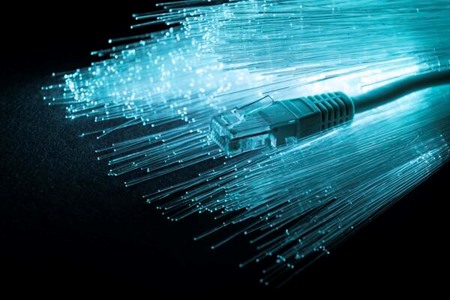
What is a Data / LAN Cable?
Reading Time: 3 minutes
A data cable is a transmission medium that facilitates data exchange between electronic devices. One of its most common application areas is Local Area Network (LAN) systems. These cables enable communication between computers, servers, routers, switches, and other network devices.
Data cables are categorized based on transmission speed, bandwidth, shielding structure, and jacket material. Typically made with copper conductors, the most well-known type is the “Ethernet cable.” Ethernet cables ensure fast and reliable data packet transmission in network systems.
As a core component of structured cabling systems, data cables play a critical role in both small-scale office networks and large-scale data centers. A correctly selected network cable directly impacts network performance.
What Does a Data / LAN Cable Do?
The main function of data cables is to provide data flow between devices. However, beyond this core purpose, they offer many technical and strategic advantages:
- High-Speed Data Transmission: Especially categories like Cat 6A, Cat 7, and Cat 7A support speeds up to 10 Gbps, meeting the needs of modern applications.
- Reliability: Shielded Ethernet cables reduce electromagnetic interference (EMI) to ensure uninterrupted and secure data transmission.
- Infrastructure Compatibility: Network cables are designed in compliance with structured cabling standards, allowing easy installation and scalability.
- Power and Signal Management: Some data cables support Power over Ethernet (PoE), which allows simultaneous data and power transmission through the same cable.
- Long-Distance Performance: Cat 6A and higher categories can transmit data up to 100 meters without significant performance loss.
In summary, choosing the right Ethernet cable directly affects network efficiency, speed, and security. This is especially important in mission-critical areas like data centers, industrial network systems, and smart building automation.
Types of Data / LAN Cables
Data cables are categorized based on the required bandwidth, data speed, and resistance to electromagnetic interference. These categories are typically expressed as “Cat” (Category). Each category is designed for different performance levels and specific application areas.
Cat 3 is rarely used today but still found in legacy telephone systems and some older network infrastructures. With a maximum speed of 10 Mbps and 16 MHz bandwidth, this Ethernet cable is insufficient for modern network applications. It may still be used for analog voice transmission.
Cat 5e supports data transmission up to 100 Mbps and was one of the early Ethernet standards. Its enhanced version, Cat 5e, with 100 MHz frequency support, allows data transfer up to 1 Gbps and has long been the standard in structured cabling systems. It is still commonly used in small office and home networks.
Cat 6 offers bandwidth up to 250 MHz and supports speeds up to 10 Gbps. With improved EMI protection and signal integrity, it is widely used in data centers, industrial facilities, and networks with heavy traffic. It is also suitable for advanced structured cabling setups.
Cat 6A, an advanced version of Cat 6, offers up to 500 MHz bandwidth and supports 10 Gbps speeds over distances up to 100 meters. This makes it ideal for large data transfers in enterprise offices, system rooms, and data centers. Cat 6A cables are often offered in LSOH or armored variants for added safety and durability.
Cat 7 provides up to 600 MHz bandwidth and supports 10 Gbps speeds. Thanks to dual shielding (individual pair foil + overall braid), it delivers exceptional EMI protection. As a result, Cat 7 is preferred in industrial environments and critical applications requiring high-precision data transmission.
Cat 7A is even more advanced, supporting up to 1000 MHz and speeds of up to 40 Gbps. These cables are ideal for network infrastructures demanding ultra-fast connections and high data security. They are commonly used in data centers, server rooms, and high-end AV systems.
This categorization helps users choose the most suitable Ethernet cable based on their needs. Each category is designed to meet current network demands while ensuring compatibility with future technologies.
Data cables form the backbone of communication in today’s digital world. With a wide range from Cat 5e to Cat 7A, Ethernet cables provide tailored solutions for small businesses and high-performance data center infrastructures. If you want a secure, fast, and durable structured cabling system, selecting the right network cable for your project is essential. ETK Kablo is a leading data cable manufacturer.
Benzer yazılar
LSZH vs PVC Cable: Which Should You Specify?
Choosing between LSZH vs PVC cable is primarily a material and fire-safety decision rather than a simple question of which cable is “be...
Cat6A Cable for Data Centers: U/FTP, F/FTP or S/FTP?
Choosing the right Cat6A cable for data centers involves more than specifying 10 Gigabit Ethernet and 500 MHz performance. U/FTP, F/FTP...
Instrumentation Cable Shielding: Individual Screen vs Overall Screen
Instrumentation cable shielding plays a critical role in protecting low-level analogue and digital signals from electromagnetic interfe...
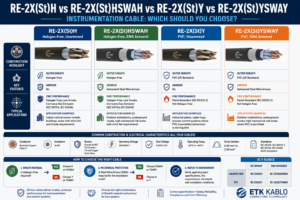
RE-2X(St)H vs RE-2X(St)HSWAH vs RE-2X(St)Y vs RE-2X(St)YSWAY: Which Should You Choose?
Choosing the right RE-2X(St) instrumentation cable is not simply a matter of comparing four similar product codes. RE-2X(St)H, RE-2X(St...
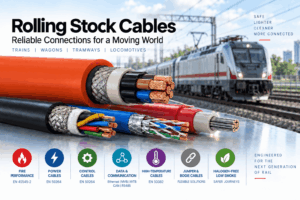
Rolling Stock Cables: Standards, Types and Applications
Rolling stock cables are specialized electrical and communication cables designed for installation onboard railway vehicles such as tra...
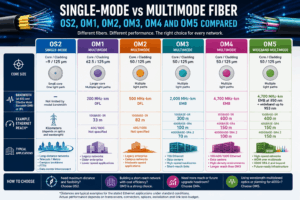
Single-Mode vs Multimode Fiber: OS2, OM1, OM2, OM3, OM4 and OM5 Compared
Choosing single-mode vs multimode fiber is one of the most important decisions when designing a fiber optic network. OS2, OM1, OM2, OM3...
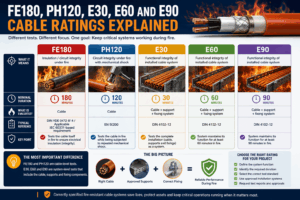
FE180, PH120, E30, E60 and E90 Cable Ratings Explained
Understanding FE180, PH120, E30, E60 and E90 cable ratings is essential when specifying fire-resistant cables for emergency, life-safet...
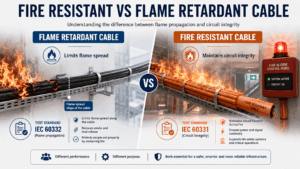
Fire Resistant vs Flame Retardant Cable: What Is the Difference?
The difference between a fire resistant vs flame retardant cable is one of the most important distinctions in cable fire performance. A...
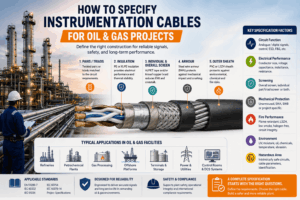
How to Specify Instrumentation Cables for Oil & Gas Projects
Selecting oil and gas instrumentation cables requires much more than choosing a conductor size and adding a screen. Refineries, petroch...
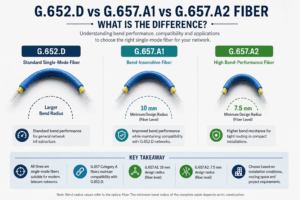
G.652.D vs G.657.A1 vs G.657.A2 Fiber: What Is the Difference?
Choosing between G.652.D, G.657.A1 and G.657.A2 fiber is primarily a question of how the optical fiber will behave when the network is ...
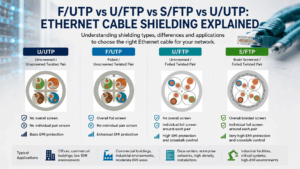
F/UTP vs U/FTP vs S/FTP vs U/UTP: Ethernet Cable Shielding Explained
Ethernet cable shielding can have a major influence on how reliably a network performs in environments affected by electromagnetic inte...
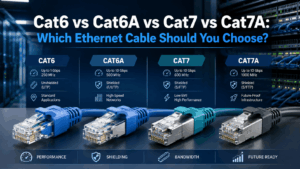
Cat6 vs Cat6A vs Cat7 vs Cat7A: Which Ethernet Cable Should You Choose?
Choosing between Cat6 vs Cat6A vs Cat7 vs Cat7A is not simply a matter of selecting the highest cable category available. Each Ethernet...


