





 President’s Message
Blog
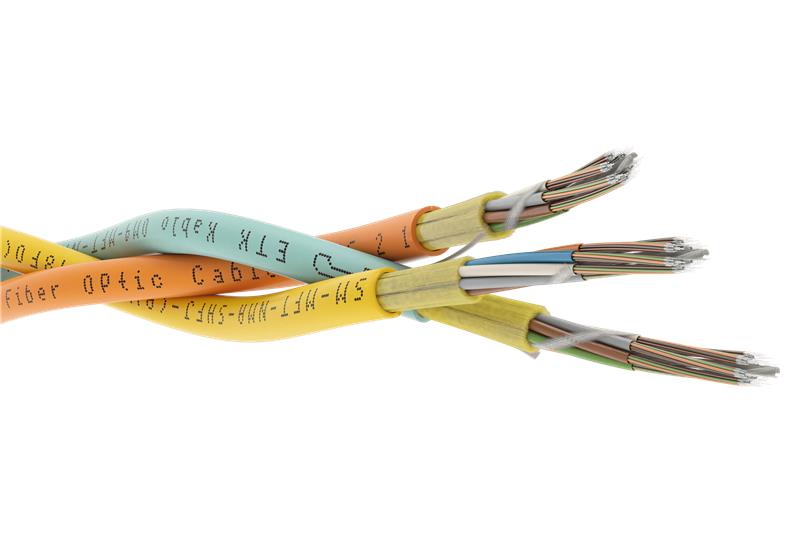
Flextube (Flexible Tube) Micro Module Fiber Optic Cable: High-Density, Flexible Connectivity for Modern Networks
Reading Time: 5 minutes
Introduction: The Future of Fiber Network Efficiency
As digital infrastructure continues to evolve, network operators face growing pressure to deliver higher bandwidth in smaller spaces, all while reducing deployment time and total cost of ownership. In this landscape, Flextube and Micro-Module Fiber Optic Cables have emerged as next-generation solutions that revolutionize how fiber networks are built and managed.
By combining exceptional flexibility, compact construction, and high fiber density, these micromodule fiber optic cables enable efficient network expansion for FTTx, data centers, metro rings, and long-haul backbones—setting a new benchmark for modern connectivity.
What Is a Flextube or Micro-Module Fiber Optic Cable?
A micro-module cable (often referred to as a Flextube fiber optic cable) is a high-capacity cable that groups optical fibers into small, flexible “modules” instead of conventional rigid loose tubes. Each module encloses multiple fibers within a soft, peelable jacket made of a thin polymer layer. These modules are then stranded around a central strength member, wrapped with protective layers, and enclosed within the main sheath.
This micromodule architecture allows a significantly higher number of fibers to fit within a compact cable diameter—often exceeding 1,728 fibers in a single cable—making them ideal for high-density installations such as backbone and metro networks.
Key Design Features and Construction
In a typical micro-module fiber optic cable, fibers are loosely housed within flexible mini-modules made from soft thermoplastic materials. These jackets can be easily opened by hand—no special tools required—allowing quick access for splicing and mid-span operations.
Around the core, manufacturers add water-blocking elements (like gels or super-absorbent polymers) and strength members made from aramid or glass yarn. The entire assembly is protected by an outer sheath made of PE for outdoor use or LSZH (Low Smoke Zero Halogen) for indoor or tunnel environments.
The fibers themselves are typically bend-insensitive G.652D or G.657.A1/A2, providing superior bending performance in compact routing spaces like ducts and patch panels.
Flextube vs. Traditional Loose Tube Cables
Traditional loose tube cables typically hold up to 12 fibers per tube within stiffer, larger tubes—limiting flexibility and density. In contrast, Flextube fiber optic cables replace these rigid tubes with ultra-soft micromodules. Thanks to thinner walls and flexible polymer jackets, more fibers can fit in a smaller diameter, while maintaining strength and durability.
For example, Flextube designs can house 864 fibers in cables as small as 15 mm in diameter using 200 µm fibers—much denser and lighter than conventional loose tube constructions. Moreover, the reduced stiffness minimizes microbending during installation, preserving optical performance over time.
| Feature | Traditional Loose Tube Cable | Flextube / Micro-Module Cable |
|---|---|---|
| Fiber grouping | Fibers grouped in rigid loose tubes (typically up to 12 fibers per tube). | Fibers grouped in soft, flexible micromodules with peelable polymer jackets. |
| Cable flexibility | More rigid construction, higher risk of microbending in tight spaces. | Highly flexible, kink-resistant structure for tight bends and compact routing. |
| Fiber density | Limited fiber count for a given diameter; larger cable for high fiber counts. | Very high fiber density; up to 1,728 fibers in a compact cable diameter. |
| High-fiber-count example | 864 fibers typically require a larger, heavier cable with higher duct occupancy. | 864 fibers can be accommodated in ~15 mm diameter using 200 µm fibers. |
| Access and splicing | Tube opening often requires tools and careful handling to avoid fiber damage. | Tool-free, hand-peelable micromodules for fast splicing and mid-span access. |
| Mid-span branching | More complex and time-consuming to branch individual tubes and fibers. | Modules can be easily accessed mid-span, ideal for FTTH/FTTB branching. |
| Installation methods | Common in traditional duct and direct-buried installations. | Optimized for ducts, microducts, air-blown systems, aerial and compact routes. |
| Handling in closures & panels | Larger bending radii and stiffer handling in trays and splice closures. | Compact routing with easier fiber management in closures, trays and panels. |
| Typical applications | Conventional backbone and access networks with standard fiber densities. | High-density backbone, metro, data center and FTTH networks requiring maximum fibers per duct. |
Advantages of Micro-Module and Flextube Fiber Optic Cables
1. Higher Fiber Density in Compact Spaces
Micromodule optical fiber cables offer unmatched fiber density, allowing operators to install more fibers in existing ducts or smaller microducts. This translates into lower installation costs, optimized duct usage, and greater scalability.
2. Quick, Tool-Free Access
The peelable design of micro-module cables enables technicians to open and access fibers by hand, without cutting tools. This saves time, prevents damage, and simplifies maintenance or network expansion.
3. Simplified Mid-Span Access
In many micromodule optical fiber cables, individual modules can be accessed mid-span—ideal for adding branches or customers along an existing route, making them perfect for FTTH and FTTB networks.
4. Exceptional Flexibility and Handling
Thanks to their kink-resistant structure, Flextube fiber optic cables are easy to handle, route, and manage within closures and panels—saving space while maintaining reliability.
5. Versatility Across Applications
Whether for underground, aerial, microduct, or direct-buried installations, these cables adapt to diverse environments. Options include rodent-protected, air-blown, ADSS, and LSZH-sheathed designs for both indoor and outdoor use.
Typical Applications
FTTH and Access Networks
In dense urban areas, micromodule fiber optic cables enable operators to expand capacity without new civil works—perfect for space-limited conduits in FTTH deployments.
Backbone and Metro Networks
High-fiber-count Flextube fiber optic cables (up to 1,728 fibers) deliver vast bandwidth for metro rings, long-haul links, and data center interconnects.
Data Centers and Campus Networks
The compact design of micro-module fiber optic cables allows easy routing in trays, risers, and underfloor systems, supporting scalable and high-density optical infrastructure.
Aerial and ADSS Installations
Lightweight micromodule fiber optic cables deliver high tensile strength for aerial spans, with designs optimized for safe breakaway under extreme load—enhancing reliability and safety.
Direct-Buried and Harsh Environments
Flextube optical fiber cables built for direct burial include robust sheaths, moisture protection, and anti-rodent layers, ensuring long-term performance in rugged conditions.
Design Variants: Standard, Mini, and Nano Micro-Modules
The micromodule concept continues to evolve. Today’s standard, mini, and nano micromodule fiber optic cables address various installation needs and density targets. “Mini” versions optimize for microduct systems, while Nano Micro-Modules use ultra-thin fiber coatings (down to 200 µm), reaching 864 fibers in a 15 mm cable.
Modern Flextube designs increasingly use gel-free, dry construction, which simplifies splicing, improves environmental sustainability, and enhances installation speed.
How to Choose the Right Micromodule Cable for Your Network
When selecting a Flextube or micro-module cable, several criteria should be evaluated together. The required fiber count and scalability should match both today’s capacity and future growth plans, ensuring that additional services and customers can be added without replacing the original backbone.
The installation environment is equally important: operators should decide whether the cable will be used in ducts, microducts, aerial spans, tunnels, or direct-buried routes and choose mechanical protection accordingly. The fiber type—typically bend-insensitive G.652D or G.657.A1/A2—must be selected to minimize bend loss in dense routing paths.
Finally, the installation method, such as pulling, air-blowing, or tensioned aerial deployment, should be matched with the cable’s sheath design, strength members, and friction characteristics to guarantee safe and efficient installation.
ETK Kablo’s Advanced Flextube and Micro-Module Cable Solutions
At ETK Kablo, innovation and reliability go hand in hand. As global fiber demands rise, ETK Kablo’s FlexibleTube (FT) Fiber Optic Cables and micromodule optical fiber cables are designed to support the world’s most demanding network projects.
By integrating bend-insensitive fibers, customized sheathing materials, and high-density micromodule architectures, ETK Kablo delivers tailored solutions for FTTH, backbone, data center, and metro applications.
Whether it’s an air-blown Flextube cable, an ultra-light aerial micromodule cable, or a high-count underground system, ETK Kablo ensures each design aligns perfectly with mechanical, optical, and environmental requirements—helping network operators deploy faster, scale seamlessly, and perform reliably.
Frequently Asked Questions (FAQs)
1. What makes a Flextube cable different from a traditional loose tube cable?
Flextube cables use soft, flexible micromodules instead of rigid tubes, enabling higher fiber density and easier handling.
2. Are micromodule fiber optic cables suitable for FTTH?
Yes. Their compact size and easy mid-span access make them ideal for FTTH and access networks.
3. Can these cables be used in harsh environments?
Absolutely. Variants with reinforced sheaths and water-blocking components are designed for direct burial and rugged conditions.
4. What types of fibers are typically used?
Most Flextube and micro-module cables use bend-insensitive G.652D or G.657.A1/A2 fibers for superior flexibility.
5. Do Flextube cables require special tools for splicing?
No. Their peelable jacket allows tool-free access, making fieldwork faster and safer.
6. What is the maximum fiber count available?
Modern micromodule cables can support up to 1,728 fibers in a single compact cable.
Conclusion
Flextube (Flexible Tube) Micro Module Fiber Optic Cables are redefining how networks are built—offering higher density, faster installation, and lower costs without compromising durability or performance.
With ETK Kablo’s expertise in advanced micromodule and Flextube technology, network operators gain reliable, future-ready connectivity solutions for even the most demanding environments.


