





 President’s Message
Blog
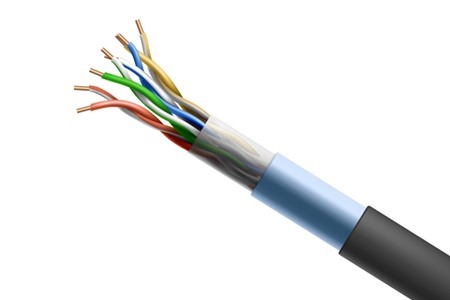
What Are Building Automation Cables? KNX, EIB & Selection Guide
Reading Time: 11 minutes
What are building automation cables? Building automation cables connect sensors, actuators, switches, controllers and other low-voltage devices within smart-building systems. They carry communication and control signals for functions such as lighting, HVAC, shading, room control and energy management.
However, building automation does not use one universal cable. The required construction depends on the communication system, electrical characteristics, installation environment and fire requirements.
For example, KNX TP networks use a dedicated twisted-pair bus cable. ETK Kablo offers EIB-Y(St)Y, EIB-H(St)H, EIB-2Y(St)Y and EIB-2Y(St)H constructions for different material and project requirements.
In addition, engineers must consider shielding, conductor dimensions, insulation material, outer sheath, electromagnetic interference and installation conditions. Therefore, choosing the correct cable requires more than simply requesting “KNX cable” or “building automation cable.”
ETK Kablo manufactures a dedicated KNX / EIB bus cable portfolio for residential, commercial and infrastructure automation systems.
Quick answer: Building automation cables provide the communication path between compatible automation devices. For KNX TP systems, a screened twisted-pair bus cable provides the dedicated physical medium. Choose the exact EIB cable construction according to insulation, sheath, fire requirements, environmental exposure and project documentation.
What Are Building Automation Cables?
What are building automation cables in practical terms? They are communication cables designed for low-voltage building-control networks.
They commonly connect devices such as:
- Room controllers
- Temperature sensors
- Presence detectors
- Push buttons
- Lighting actuators
- Blind and shading actuators
- HVAC controllers
- Energy meters
- Logic modules
- Building-management interfaces
As a result, the cable becomes part of the building’s control infrastructure rather than its main power-distribution system.
Nevertheless, the exact cable depends on the automation protocol. KNX TP, Ethernet-based automation and other fieldbus systems do not necessarily use the same physical cable.
What Are Building Automation Cables Used For?
Building automation integrates different technical systems so that they can operate according to programmed logic, sensor inputs and user commands.
Typical functions include:
- Lighting control
- Heating and cooling control
- Ventilation
- Shading and blinds
- Room-temperature management
- Occupancy-based control
- Energy monitoring
- Access-related automation
- Alarm status integration
- Smart-home functions
For example, a presence sensor can send a bus message when someone enters a room. The automation system can then switch lighting or adjust HVAC operation.
Therefore, reliable communication between devices is essential. The cable must support the electrical and transmission requirements of the selected system.
What Are Building Automation Cables in KNX Systems?
KNX is one of the most established building-automation standards. It supports several communication media, including twisted pair, IP, RF and other KNX technologies.
KNX TP uses a dedicated twisted-pair bus cable to connect compatible devices. According to KNX Association, this wired medium supports applications such as lighting, HVAC, shading, room control and energy monitoring.
You can review the official KNX technology overview for the current KNX communication framework.
In addition, KNX TP combines communication and bus power on the relevant pair. Therefore, the physical cable forms a critical part of the KNX installation.
KNX vs EIB: What Is the Difference?
EIB means European Installation Bus. It formed one of the technologies that contributed to the development of the unified KNX standard.
Today, the cable market still widely uses product names such as EIB-Y(St)Y and EIB-H(St)H.
Therefore, “EIB cable” and “KNX cable” often appear together in specifications and purchasing inquiries.
However, buyers should still verify the exact system and cable requirements. A familiar EIB designation alone does not prove that every product from every manufacturer has identical electrical characteristics or approval status.
Building Automation Cable Construction
A typical KNX / EIB bus cable uses solid copper conductors arranged in twisted pairs or a star-quad structure.
The cable can also include:
- Class 1 solid copper conductors
- PVC, PE or halogen-free insulation
- Twisted pairs / star-quad construction
- Polyester wrapping
- Al/PET foil screen
- Tinned-copper drain or earthing wire
- PVC or halogen-free outer sheath
As a result, the construction differs significantly from a general flexible control cable.
In particular, KNX bus cable normally uses solid conductors because the device connection system and electrical design suit that architecture.
What Does 2x2x0.8 Mean?
The designation 2x2x0.8 commonly describes a KNX / EIB bus-cable configuration.
It means:
- 2 pairs
- 4 conductors in total
- 0.8 mm conductor diameter
Importantly, the final value is 0.8 mm diameter, not 0.8 mm² conductor cross-section.
This distinction matters when engineers compare cable specifications or prepare RFQs.
For example, ETK Kablo’s EIB-Y(St)Y 2x2x0.8 product uses four 0.8 mm solid copper conductors arranged in a star-quad construction.
Why Does KNX Use Twisted Conductors?
Twisting helps the communication circuit reject electromagnetic interference.
External noise tends to couple similarly into conductors that remain closely paired. Therefore, balanced signalling can reduce the effect of common interference.
In addition, controlled twisting supports stable transmission parameters along the bus.
However, twisting alone does not define a compliant KNX cable. Conductor resistance, capacitance, insulation and other electrical properties also matter.
Why Is the Cable Screen Important?
Modern buildings contain many potential electromagnetic-noise sources.
Examples include:
- Power cables
- LED drivers
- Variable-frequency drives
- HVAC equipment
- Switch-mode power supplies
- Transformers
- Electrical distribution equipment
Therefore, ETK’s EIB cable families use an overall Al/PET foil screen together with a tinned-copper earthing or drain wire.
The screen adds protection against external electromagnetic interference.
Nevertheless, proper routing and installation remain important. Screening does not compensate for poor cable separation or incorrect system design.
Building Automation Cable Types
ETK Kablo currently offers four main EIB bus-cable constructions:
| Product | Insulation | Outer Sheath | Screen | Main Material Difference |
|---|---|---|---|---|
| EIB-Y(St)Y | PVC | PVC | Al/PET + tinned-copper wire | PVC construction |
| EIB-H(St)H | Halogen-free compound | Halogen-free compound | Al/PET + tinned-copper wire | Halogen-free construction |
| EIB-2Y(St)Y | PE | PVC | Al/PET + tinned-copper wire | PE insulation + PVC sheath |
| EIB-2Y(St)H | PE | Halogen-free compound | Al/PET + tinned-copper wire | PE insulation + halogen-free sheath |
Therefore, the four designations mainly differ in insulation and sheath materials rather than in the basic communication concept.
EIB-Y(St)Y Bus Cable
EIB-Y(St)Y uses PVC insulation and a PVC outer jacket.
The ETK construction also includes:
- Class 1 solid copper conductors
- Star-quad arrangement
- Polyester tape
- Al/PET overall screen
- Tinned-copper earthing wire
- Green UV-resistant PVC outer sheath
Therefore, this construction provides a conventional screened PVC option for KNX / EIB systems.
ETK’s current product data publishes a 300 V DC operating-voltage value and a 10xD minimum bending radius.
EIB-H(St)H Bus Cable
EIB-H(St)H replaces the PVC insulation and sheath with halogen-free materials.
As a result, it suits projects where low-smoke and halogen-free material performance forms part of the specification.
ETK’s halogen-free EIB-H(St)H construction also lists tests for smoke density, corrosive gases, halogen-free performance and flame propagation.
However, halogen-free does not automatically mean fire resistant. Likewise, a flame-propagation test does not establish circuit integrity during a fire.
PVC vs Halogen-Free KNX Cable
The choice between PVC and halogen-free material is primarily a project and fire-strategy decision.
| Property | PVC Construction | Halogen-Free Construction |
|---|---|---|
| Material family | PVC | Halogen-free compound |
| Halogen content | Contains halogen | Designed for halogen-free performance |
| Smoke / gas strategy | Depends on product | Suitable where low-smoke / halogen-free requirements apply |
| Common project direction | General building applications where permitted | Public, transport and safety-focused projects |
For this reason, hospitals, airports, schools, tunnels and other public environments can place greater emphasis on halogen-free cable materials.
For the broader material distinction, see our LSZH vs PVC cable guide.
EIB-2Y(St)Y Bus Cable
EIB-2Y(St)Y uses polyethylene insulation and a PVC outer sheath.
ETK’s EIB-2Y(St)Y product also includes an overall Al/PET screen and tinned-copper earthing wire.
In addition, ETK specifies a UV-resistant PVC outer jacket for this construction.
However, UV resistance alone does not prove suitability for direct burial, permanent water exposure or every outdoor installation.
Therefore, engineers should confirm the complete environmental requirement before specifying the cable for an external route.
EIB-2Y(St)H Bus Cable
EIB-2Y(St)H combines PE insulation with a halogen-free outer sheath.
The ETK EIB-2Y(St)H construction uses a UV-resistant halogen-free outer jacket together with the same general screened bus architecture.
This structure can suit projects that require PE insulation together with a halogen-free sheath.
Nevertheless, the sheath description should not become an automatic “outdoor rated” claim.
Before external installation, engineers should check water exposure, UV, pathway type and mechanical conditions separately.
What Are Building Automation Cables Made Of?
What are building automation cables made of depends on the selected variant.
For ETK’s EIB families, the main material choices include:
- Solid electrolytic copper conductor
- PVC insulation
- PE insulation
- Halogen-free insulation
- Polyester separator
- Aluminium/polyester screening tape
- Tinned-copper drain wire
- PVC outer sheath
- Halogen-free outer sheath
Therefore, two green KNX cables can still use different insulation and sheath systems.
The product designation and datasheet should always control the final selection.
Building Automation Cable vs Control Cable
Building automation bus cable and industrial control cable serve different electrical architectures.
A KNX TP cable uses twisted solid conductors and controlled communication parameters for the bus system.
By contrast, industrial control cables often use multi-core flexible conductors for relay, contactor, actuator and machine-control circuits.
Therefore, YSLY or a similar flexible control cable should not automatically replace a KNX bus cable.
For industrial automation circuits, see our control cable guide.
Building Automation Cable vs Ethernet Cable
KNX TP and Ethernet use different communication architectures.
Cat 5e, Cat 6 and Cat 6A use four balanced twisted pairs and follow Ethernet structured-cabling requirements.
KNX TP uses its own dedicated bus architecture.
Therefore, a Category cable and a KNX TP cable should not be treated as interchangeable products simply because both contain twisted conductors.
However, modern smart buildings can use both technologies. For example, KNX TP can serve field-level building controls while Ethernet connects gateways, supervisory systems and IP infrastructure.
Building Automation Cable vs Fire Alarm Cable
A fire alarm cable serves a different system function from a KNX building-automation bus cable.
Fire detection and alarm systems can have dedicated electrical, fire and regulatory requirements.
Meanwhile, building automation can exchange status information with other building systems through suitable interfaces.
Therefore, integration at the software or controller level does not make the physical cables interchangeable.
Always specify the correct cable family for the actual system.
Lighting Control
Lighting represents one of the most common building-automation applications.
A KNX installation can connect switches, presence detectors, dimming actuators and lighting controllers through the bus.
For example, occupancy data can trigger lighting scenes automatically. In addition, schedules can reduce unnecessary energy use.
The bus cable carries the communication between compatible KNX devices. It does not replace the power circuit that feeds the lighting load.
HVAC and Room Control
Building automation can coordinate heating, cooling and ventilation according to room conditions.
Typical connected devices include:
- Room thermostats
- Temperature sensors
- Fan-coil controllers
- Valve actuators
- Air-quality sensors
- HVAC gateways
As a result, the automation bus helps the building respond to occupancy and temperature changes.
However, the KNX cable carries communication and bus functions. It does not replace the main electrical supply to large HVAC equipment.
Shading and Blind Automation
Automated blinds and shades can respond to time, sunlight, room temperature and user commands.
For example, a building can reduce solar heat gain by lowering blinds during periods of intense sunlight.
Meanwhile, room users can retain local control through compatible wall devices.
Therefore, building automation can combine comfort and energy-management functions on the same communication infrastructure.
Energy Monitoring
Smart buildings increasingly track electrical and environmental data.
Compatible meters and sensors can send values to the automation system.
As a result, operators can monitor consumption, identify abnormal behaviour and improve scheduling.
However, the bus cable itself does not measure energy. It only provides the communication path between compatible devices.
Smart Homes and Residential Automation
Residential KNX systems can combine lighting, climate, blinds and other building functions.
In addition, homeowners can use wall controls, touch panels or compatible supervisory interfaces.
Because the bus infrastructure is wired, the cable becomes a long-term part of the building.
Therefore, planners should consider future expansion and routing access during construction.
Commercial Buildings
Office buildings can contain hundreds or thousands of automation points.
Common functions include lighting, HVAC zoning, occupancy detection and shading.
Furthermore, a centralized building-management platform can integrate data from several subsystems.
As a result, reliable field communication becomes increasingly important as project scale grows.
Hospitals, Schools and Public Buildings
Public buildings often place additional emphasis on fire behaviour and material selection.
Therefore, halogen-free EIB constructions can become relevant where the project specification requires them.
However, the cable designer should still distinguish between LSZH characteristics, CPR reaction-to-fire classification and true fire resistance.
These terms describe different performance areas.
Airports, Stations and Transport Buildings
Large transport facilities combine many technical systems.
For example, automation can manage lighting, HVAC, energy consumption and environmental controls across large areas.
In addition, these projects can impose strict fire, smoke and documentation requirements.
Therefore, cable selection should follow the complete project specification rather than only the protocol name.
What Are Building Automation Cables Selected By?
What are building automation cables selected by? The process starts with the communication system and ends with the installation environment.
1. Confirm the Automation Protocol
First, determine whether the project uses KNX TP or another physical communication system.
2. Verify the Required Cable Specification
Check conductor dimensions, electrical parameters and any KNX registration or project-documentation requirements.
3. Choose the Material System
Select PVC, PE or halogen-free materials according to the required product construction.
4. Review Fire Requirements
Define LSZH requirements, flame tests and CPR classification separately where applicable.
5. Evaluate Electromagnetic Conditions
Consider nearby power circuits, drives, transformers and electronic equipment.
6. Define the Installation Environment
Specify indoor, protected, UV-exposed or other environmental conditions.
7. Check the Route
Review cable length, topology and device-location requirements according to the bus-system rules.
8. Verify Mechanical Limits
Confirm bending radius, installation temperature and physical protection requirements.
9. Review Product Documentation
Check technical datasheets, approvals and test documentation before final selection.
10. Coordinate With the System Integrator
Finally, ensure that the cable, devices, topology and commissioning approach match the complete KNX design.
Building Automation Cable Selection Matrix
| Project Requirement | Good Starting Direction |
|---|---|
| Standard screened PVC KNX bus | EIB-Y(St)Y |
| Halogen-free insulation and sheath | EIB-H(St)H |
| PE insulation with PVC sheath | EIB-2Y(St)Y |
| PE insulation with halogen-free sheath | EIB-2Y(St)H |
| High-occupancy building | Evaluate halogen-free and project fire requirements |
| UV-exposed route | Verify UV-resistant product plus complete environmental suitability |
| Permanent wet or direct-burial route | Request project-specific confirmation; do not rely on UV resistance alone |
| Industrial relay / contactor control | Evaluate industrial control cable instead |
| Ethernet / IP backbone | Use suitable Data/LAN or fiber infrastructure |
This table provides a starting point. The exact system and project documentation should still determine the final cable.
Common Building Automation Cable Selection Mistakes
Writing 2x2x0.8 mm² Instead of 2x2x0.8 mm
For the common KNX construction, 0.8 describes conductor diameter. It does not mean a 0.8 mm² conductor cross-section.
Using Any Four-Core Cable for KNX
Matching the number of conductors does not prove equivalent electrical or system performance.
Assuming Every Green Cable Is the Same
Cable color does not define insulation, electrical characteristics or approval.
Confusing PVC and Halogen-Free Constructions
EIB-Y(St)Y and EIB-H(St)H use different material systems.
Assuming PE Insulation Means Outdoor Cable
PE insulation alone does not establish suitability for every external installation.
Assuming UV Resistance Means Direct Burial
UV performance does not define water penetration, soil exposure or mechanical protection.
Calling LSZH Cable Fire Resistant
Halogen-free behaviour and circuit integrity are separate properties.
Ignoring EMI and Cable Routing
A screened bus cable still needs proper routing around power and electrical equipment.
Using Control Cable as a Direct KNX Substitute
A flexible industrial control cable does not automatically meet KNX TP bus requirements.
Specifying Only “KNX Cable”
A good RFQ should identify the required construction, materials, size and documentation.
What Should a Building Automation Cable RFQ Include?
A professional inquiry should define more than the words “KNX cable.”
Include at least:
- KNX / EIB or other required bus system
- Exact product designation where known
- 2x2x0.8 or other required conductor configuration
- Conductor material and diameter
- Required insulation material
- Required outer-sheath material
- Screening construction
- Operating-voltage requirement
- Indoor or external installation conditions
- UV exposure where relevant
- Moisture or water exposure
- Fire-performance requirement
- CPR class where applicable
- Required KNX or project approval documentation
- Cable color
- Printing and marking requirements
- Packing length
- Project quantity
- Test reports and certificates
As a result, manufacturers can quote equivalent technical constructions. Moreover, procurement teams can compare offers on the same basis.
ETK Kablo KNX / EIB Solutions
ETK Kablo manufactures screened bus cables for KNX / EIB building-control systems.
The current range includes:
- EIB-Y(St)Y
- EIB-H(St)H
- EIB-2Y(St)Y
- EIB-2Y(St)H
These families allow project engineers to combine different insulation and sheath materials with the required screened bus architecture.
In addition, ETK publishes electrical, mechanical and fire-related data for each specific construction.
Therefore, buyers should compare the exact product datasheet rather than selecting only by the generic term “EIB cable.”
Frequently Asked Questions
What are building automation cables?
What are building automation cables? They are communication cables that connect sensors, actuators, controllers and other devices within building-control systems.
What cable does KNX use?
KNX TP uses a dedicated twisted-pair bus cable. The exact approved or project-specified cable should meet the required KNX electrical and construction parameters.
What does EIB mean?
EIB means European Installation Bus. The cable market still uses EIB product designations within modern KNX building-automation applications.
What does 2x2x0.8 mean?
It normally means two pairs, four conductors in total and a conductor diameter of 0.8 mm.
Is 0.8 in KNX cable 0.8 mm²?
No. In the common 2x2x0.8 designation, 0.8 refers to conductor diameter in millimetres.
What is EIB-Y(St)Y?
EIB-Y(St)Y is a screened KNX / EIB bus-cable construction with PVC insulation and PVC outer sheath.
What is EIB-H(St)H?
EIB-H(St)H uses halogen-free insulation and a halogen-free outer sheath together with a screened bus construction.
What is EIB-2Y(St)Y?
EIB-2Y(St)Y uses PE insulation and a PVC outer sheath.
What is EIB-2Y(St)H?
EIB-2Y(St)H combines PE insulation with a halogen-free outer sheath.
Why is KNX cable screened?
The overall screen helps reduce the influence of external electromagnetic interference on the bus circuit.
Can ordinary four-core cable replace KNX cable?
Do not assume so. Conductor count alone does not establish equivalent electrical characteristics or KNX suitability.
Can KNX cable be installed outdoors?
Only when the exact cable construction suits the environmental conditions. UV resistance alone does not establish suitability for direct burial, wet ducts or permanent water exposure.
Is halogen-free KNX cable fire resistant?
Not automatically. Halogen-free characteristics, flame propagation, CPR classification and fire-resistant circuit integrity describe different properties.
Is KNX cable the same as control cable?
No. KNX TP uses a dedicated bus architecture, while industrial control cables normally serve relay, actuator and machine-control circuits.
Is KNX cable the same as Ethernet cable?
No. KNX TP and Ethernet use different physical and communication architectures, although both technologies can operate within the same smart building.
Which building automation cable should I choose?
Choose according to the KNX or bus-system specification, material requirements, fire strategy, environmental conditions and project documentation.
Conclusion: What Are Building Automation Cables?
What are building automation cables? They form the wired communication infrastructure between compatible sensors, actuators and controllers in smart-building systems.
For KNX TP networks, a dedicated screened twisted-pair bus cable provides the physical communication medium. However, several material constructions can satisfy different project requirements.
EIB-Y(St)Y uses PVC insulation and sheath. By contrast, EIB-H(St)H uses halogen-free materials. EIB-2Y(St)Y combines PE insulation with PVC sheath, while EIB-2Y(St)H combines PE insulation with a halogen-free sheath.
Next, engineers should consider electromagnetic interference, fire requirements and the physical installation route. In particular, UV resistance should not be confused with automatic direct-burial or permanent-wet suitability.
Finally, verify the cable against the system specification and product documentation. This approach prevents unsuitable substitutions based only on cable color, conductor count or a familiar EIB designation.
The correct building-automation cable is therefore the construction that matches the KNX system, electrical characteristics, materials and installation environment without unnecessary overengineering.
Benzer yazılar
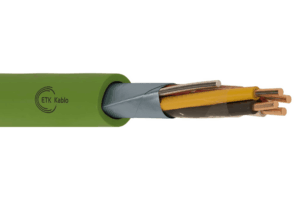
KNX/EIB Busleitung Kabel EIB-H(St)H 2x2x0,8 – Technischer Leitfaden für Einkauf und Beschaffung
In modernen Gebäudeautomationssystemen spielt die KNX/EIB Busleitung, insbesondere das Kabel EIB-H(St)H 2x2x0,8, eine zentrale Rolle. F...


