





 President’s Message
Control Cables
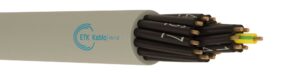
YSLY-JZ Control Cable
SKU:
YSLY-JZ
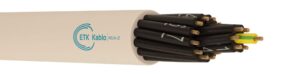
HSLH-JZ Control Cable
SKU:
HSLH-JZ
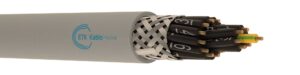
YSLCY-JZ Control Cable
SKU:
YSLCY-JZ
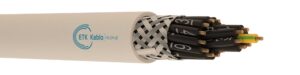
HSLCH-JZ Control Cable
SKU:
HSLCH-JZ
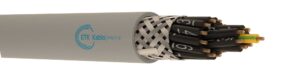
2YSLCY-JZ Control Cable
SKU:
2YSLCY-JZ
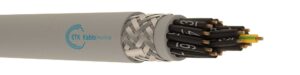
YSLYCY-JZ Control Cable
SKU:
YSLYCY-JZ
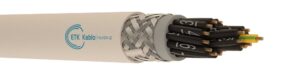
HSLHCH-JZ Control Cable
SKU:
HSLHCH-JZ
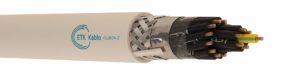
HSL(St)CH-JZ Control Cable
SKU:
HSL(St)CH-JZ
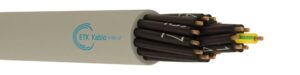
YSLY-JZ 0.45/0.75kV Control Cable
SKU:
NYSLY-JZ
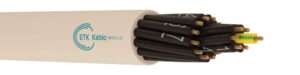
HSLH-JZ 0.45/0.75kV Control Cable
SKU:
NHSLH-JZ
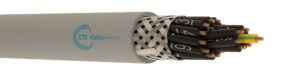
YSLCY-JZ 0.45/0.75kV Control Cable
SKU:
NYSLCY-JZ
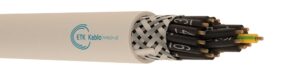
HSLCH-JZ 0.45/0.75kV Control Cable
SKU:
NHSLCH-JZ
YSLYCY-JZ 0.45/0.75kV Control Cable
SKU:
NYSLYCY-JZ
HSLHCH-JZ 0.45/0.75kV Control Cable
SKU:
NHSLHCH-JZ
Flex-JZ 0.6/1kV Control Cable
SKU:
Flex-JZ 0.6/1kV
Flex-H-JZ 0.6/1kV Control Cable
SKU:
Flex-H-JZ 0.6/1kV
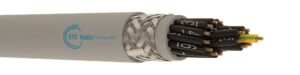
Flex-CY-JZ 0.6/1kV Control Cable
SKU:
Flex-CY-JZ 0.6/1kV
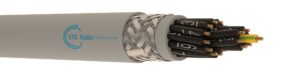
Flex-CH-JZ 0.6/1kV Control Cable
SKU:
Flex-CH-JZ 0.6/1kV
Control Cable Manufacturer for Industrial Automation
Control Cable connects control panels, machinery, actuators, relays, drives and other equipment in industrial automation systems. ETK Kablo manufactures flexible multi-core control cables for machine building, production lines, switchboards, HVAC systems, process equipment and other industrial control applications.
The ETK Kablo control cable portfolio includes YSLY, YSLCY, YSLYCY, HSLH, HSLCH and related constructions with PVC or halogen-free materials, screened and unscreened architectures, different voltage ratings and mechanically reinforced designs.
Choosing the correct control cable requires more than selecting the number of cores. Voltage rating, conductor cross-section, core identification, electromagnetic interference, sheath material, mechanical protection and installation environment should all form part of the specification.
What Is a Control Cable?
A control cable is a multi-core electrical cable used to transmit commands, switching signals and auxiliary electrical energy between components of an automation or control system.
Typical circuits connect control panels with contactors, relays, actuators, valves, motors, sensors and machine equipment.
Control cables commonly use flexible stranded copper conductors so installers can route multiple cores efficiently through machinery, cabinets and industrial cable pathways.
Depending on the electrical environment, the cable can remain unscreened or include copper-braid, foil or combined screening. The construction can also use PVC or halogen-free materials according to project requirements.
ETK Kablo Control Cable Types
ETK Kablo manufactures several control cable families with different screening, material and voltage concepts.
| Construction | Main Feature | Typical Selection Reason |
|---|---|---|
| YSLY-JZ | Flexible PVC, unscreened | General machinery and control-panel wiring |
| HSLH-JZ | Halogen-free, unscreened | Control circuits requiring LSZH / halogen-free materials |
| YSLCY-JZ | Tinned copper braid screen | EMI-sensitive industrial control circuits |
| HSLCH-JZ | Halogen-free with tinned copper braid | EMI protection combined with halogen-free materials |
| YSLYCY-JZ | PVC inner jacket + copper braid + PVC outer jacket | Screened control cable with a double-jacket structure |
| HSLHCH-JZ | Halogen-free inner jacket + copper braid + halogen-free outer jacket | Halogen-free screened double-jacket construction |
| YSL(St)CY-JZ | Al/PET foil + tinned copper braid | Combined electromagnetic screening |
| YSLYQY-JZ | Galvanized steel wire braid | Additional mechanical protection |
| Flex Series | 0.6/1 kV constructions | Higher-voltage control and auxiliary circuits |
YSLY-JZ Flexible Control Cable
YSLY-JZ is one of ETK Kablo's principal flexible PVC control cable constructions.
The cable uses Class 5 stranded copper conductors, PVC insulation and a PVC outer jacket. Black conductors with white numbering simplify circuit identification, while the JZ configuration includes a green-yellow protective conductor.
The YSLY-JZ range covers conductor cross-sections from 0.50 mm² to 16 mm² and operates at 300/500 V.
This construction suits general machinery wiring, production lines, control cabinets, HVAC equipment, switchgear and other industrial control circuits where electromagnetic screening is not required.
HSLH-JZ Halogen-Free Control Cable
HSLH-JZ provides the halogen-free counterpart for control installations where project requirements call for reduced smoke and halogen emissions.
The construction uses Class 5 stranded copper conductors together with halogen-free insulation and a halogen-free outer jacket.
HSLH-JZ remains unscreened, making it suitable where the electrical environment does not require a dedicated electromagnetic screen.
Halogen-free construction should not be confused with fire resistance. HSLH cable can provide low-smoke and halogen-related performance without automatically providing FE180 or PH120 circuit integrity.
YSLCY-JZ Shielded Control Cable
YSLCY-JZ adds a tinned copper braid around the assembled control cores.
This braid provides electromagnetic screening against external electrical noise and can improve signal stability in automation environments containing motors, contactors, variable-frequency drives and power circuits.
The ETK Kablo construction uses PVC insulation, a polyester separator, tinned copper braid and a PVC outer jacket.
YSLCY-JZ should therefore be considered when the installation needs a screened control cable but does not require the additional inner jacket used in the YSLYCY construction.
YSLYCY-JZ Double-Jacket Shielded Control Cable
YSLYCY-JZ also uses a tinned copper braid screen, but its construction includes a PVC inner jacket before the braid and a second PVC outer jacket.
This additional jacket changes the mechanical architecture and separates the screened layer from the insulated cable core.
| Feature | YSLCY-JZ | YSLYCY-JZ |
|---|---|---|
| Insulation | PVC | PVC |
| Inner Jacket | No dedicated inner jacket | PVC inner jacket |
| Screen | Tinned copper braid | Tinned copper braid |
| Outer Jacket | PVC | PVC |
| Main Difference | More compact screened construction | Double-jacket screened architecture |
Neither design is automatically superior. The correct construction depends on the project specification, cable dimensions and mechanical requirements.
HSLCH-JZ Halogen-Free Shielded Control Cable
HSLCH-JZ combines halogen-free insulation and jacket materials with a tinned copper braid screen.
This construction provides electromagnetic protection while also addressing project requirements for smoke density, halogen content and corrosive gas behavior.
It can be relevant in industrial buildings, transportation infrastructure and other enclosed environments where both EMI control and halogen-free materials matter.
HSLHCH-JZ Double-Jacket Halogen-Free Control Cable
HSLHCH-JZ uses a halogen-free inner jacket, tinned copper braid and a halogen-free outer jacket.
The construction therefore combines electromagnetic screening with a double-jacket halogen-free architecture.
ETK Kablo also offers a 0.45/0.75 kV version of this construction for projects requiring a higher control-circuit voltage rating.
YSL(St)CY-JZ Foil and Braid Screened Control Cable
YSL(St)CY-JZ provides a combined screening architecture.
The construction includes a PVC inner jacket followed by an Al/PET foil and tinned copper braid before the outer PVC jacket.
The foil and braid serve complementary electromagnetic-screening functions. This design can therefore suit electrically noisy industrial environments where the project specifies a more substantial overall screen.
Screened vs Unscreened Control Cable
Screening should follow the electromagnetic environment of the installation rather than being added automatically to every control cable.
| Construction | Screen | Typical Selection Logic |
|---|---|---|
| YSLY / HSLH | None | General control circuits in relatively controlled EMI environments |
| YSLCY / HSLCH | Tinned copper braid | Industrial control circuits requiring EMI protection |
| YSLYCY / HSLHCH | Tinned copper braid with inner jacket | Screening combined with a double-jacket architecture |
| YSL(St)CY | Al/PET foil + copper braid | Combined screening for more demanding electromagnetic environments |
Screened control systems also require appropriate termination and bonding practices. Selecting a screened cable alone does not guarantee effective electromagnetic compatibility.
Screening vs Mechanical Armor
A signal screen and mechanical armor perform different functions.
Copper braid and Al/PET foil primarily provide electromagnetic protection. Galvanized steel wire braid primarily provides mechanical reinforcement.
| Layer | Main Function |
|---|---|
| Al/PET Foil | Electromagnetic screening |
| Tinned Copper Braid | Electromagnetic screening |
| Foil + Copper Braid | Combined electromagnetic screening |
| Galvanized Steel Wire Braid | Mechanical protection |
This distinction is important when specifying industrial cables. A mechanically protected cable does not automatically provide the same EMI performance as a dedicated copper or foil screen.
YSLYQY-JZ Steel Wire Braided Control Cable
YSLYQY-JZ is ETK Kablo's mechanically reinforced control cable construction with galvanized steel wire braiding.
The cable uses PVC-insulated Class 5 copper conductors, a PVC inner jacket, galvanized steel wire braid and a PVC outer jacket.
The steel braid provides additional physical protection for industrial routes exposed to greater mechanical stress.
It should not be confused with YSLCY or YSLYCY, where the tinned copper braid primarily performs an electromagnetic-screening role.
PVC vs Halogen-Free Control Cable
ETK Kablo manufactures corresponding PVC and halogen-free control-cable families so the material system can follow the project requirements.
| PVC Direction | Halogen-Free Direction | Screening Concept |
|---|---|---|
| YSLY | HSLH | Unscreened |
| YSLCY | HSLCH | Copper braid |
| YSLYCY | HSLHCH | Copper braid + inner jacket |
| YSL(St)CY | HSL(St)CH | Foil + copper braid |
PVC remains suitable for many conventional industrial control applications. Halogen-free constructions become relevant where smoke density, corrosive gas and halogen requirements form part of the project specification.
The terms LSZH, halogen-free and fire resistant should not be treated as interchangeable. Fire resistance requires separate cable construction and circuit-integrity testing.
JZ, OZ, JB and OB Control Cable Codes
Control cable specifications frequently use suffixes such as JZ, OZ, JB and OB to describe conductor identification and the presence of a green-yellow protective conductor.
| Suffix | Typical Meaning |
|---|---|
| JZ | Number-coded conductors with a green-yellow protective conductor |
| OZ | Number-coded conductors without a green-yellow protective conductor |
| JB | Color-coded conductors with a green-yellow protective conductor |
| OB | Color-coded conductors without a green-yellow protective conductor |
Availability depends on the exact ETK Kablo product and project requirement. Buyers should specify the required conductor-identification system when requesting a quotation.
300/500 V Control Cables
Many standard ETK Kablo YSL and HSL control-cable constructions operate at 300/500 V.
This group includes general machine and automation cables such as YSLY-JZ, YSLCY-JZ and their corresponding halogen-free variants.
The available conductor cross-sections depend on the exact construction, with ETK Kablo product families covering a broad range from small control-circuit sizes up to larger auxiliary-control conductors.
450/750 V Control Cables
ETK Kablo also manufactures 0.45/0.75 kV control cables for projects requiring a higher voltage rating than the standard 300/500 V families.
ETK Kablo offers 450/750 V versions of:
- YSLY-JZ
- HSLH-JZ
- YSLCY-JZ
- HSLCH-JZ
- YSLYCY-JZ
- HSLHCH-JZ
The voltage rating should follow the actual control circuit and project electrical specification rather than being selected from cable code alone.
0.6/1 kV Flexible Control Cable
For higher-voltage auxiliary and control circuits, ETK Kablo offers a dedicated 0.6/1 kV Flex series.
The Flex series includes:
- Flex-JZ 0.6/1 kV
- Flex-H-JZ 0.6/1 kV
- Flex-CY-JZ 0.6/1 kV
- Flex-CH-JZ 0.6/1 kV
These constructions extend the control-cable portfolio beyond conventional 300/500 V and 450/750 V designs.
The required voltage rating, conductor size and screen should always be matched to the actual auxiliary or control circuit.
Control Cable Conductor Sizes
ETK Kablo's principal control-cable families use Class 5 stranded copper conductors for installation flexibility.
YSLY, YSLCY, YSLYCY and related families include conductor cross-sections such as:
- 0.50 mm²
- 0.75 mm²
- 1.00 mm²
- 1.50 mm²
- 2.50 mm²
- 4.00 mm²
- 6.00 mm²
- 10.00 mm²
- 16.00 mm²
The correct cross-section depends on circuit current, conductor resistance, voltage drop, cable length and the requirements of the connected equipment.
Multi-Core Control Cable
Industrial machines can require many control circuits between the main panel and field equipment. Multi-core construction allows numerous command and auxiliary circuits to share one cable.
Number-coded conductors can simplify wiring and maintenance in large control panels because each core remains identifiable throughout the route.
ETK Kablo offers YSLY and related constructions in a wide range of conductor counts. The available maximum count depends on conductor cross-section and cable family.
Control Cable for Industrial Automation
Industrial automation is one of the primary applications for flexible control cable.
Typical applications include:
- Machine control circuits
- PLC panel wiring
- Production lines
- Conveyor systems
- Packaging machinery
- Material-handling equipment
- HVAC control systems
- Pumps and process equipment
- Switchgear and control cabinets
- Industrial plant automation
The cable should be selected according to the electrical and mechanical environment of the specific circuit rather than the industry name alone.
Control Cable for Machinery and OEM Applications
Machine manufacturers and OEMs often require flexible multi-core cables that simplify routing between panels, terminal boxes and machine components.
Class 5 conductors provide easier installation around equipment than rigid conductor designs. Number-coded cores can also simplify assembly, testing and maintenance.
However, a flexible conductor does not automatically mean that a cable is suitable for continuous high-cycle movement in drag chains or robotic systems. Repeated-motion requirements should be specified separately and confirmed for the exact cable construction.
Control Cable vs Signal Cable
Control cable and signal cable can overlap in low-voltage automation systems, but ETK Kablo separates the two product families according to their main construction and application focus.
| Characteristic | Control Cable | Signal Control Cable |
|---|---|---|
| Typical ETK Families | YSLY, YSLCY, YSLYCY, HSLH | LIYY, LIYCY, LIHH, LIHCH |
| Main Architecture | Flexible multi-core industrial control wiring | Flexible low-voltage signal transmission |
| Typical Selection Factors | Core count, voltage, conductor size, screen and machinery requirements | Signal level, EMI protection and low-voltage communication requirements |
The project circuit should determine which product family is technically appropriate.
Control Cable vs Instrumentation Cable
Control cables primarily transmit commands and switching signals between industrial equipment, while instrumentation cables are designed around sensitive measurement and process signals.
ETK Kablo instrumentation cables include RE-series pair, triad and PiMF/TiMF constructions. These architectures provide dedicated screening options for sensitive analogue and digital instrument circuits.
By contrast, the YSL and HSL control-cable families primarily use multi-core construction for machinery, panel and automation wiring.
The terms should therefore not be used interchangeably when an EPC or industrial project specifies a particular cable architecture.
Flame Retardancy and Halogen-Free Performance
ETK Kablo provides applicable fire-performance information according to the exact control-cable construction.
PVC families such as YSLY and YSLCY include single-cable flame-retardancy testing under IEC 60332-1-2.
Halogen-free constructions such as HSLCH and HSLHCH additionally include applicable smoke-density, halogen-content and corrosive-gas tests.
The exact standard set should always be verified from the individual product datasheet. One category-wide fire classification should not automatically be applied to every control cable.
How to Specify a Control Cable
A complete RFQ should define the electrical construction and installation requirements rather than requesting only a generic control cable.
| Specification Item | Information to Provide |
|---|---|
| Voltage Rating | 300/500 V, 450/750 V, 0.6/1 kV or project-specific requirement |
| Core Count | Required number of conductors |
| Conductor Cross-Section | Required mm² size |
| Core Identification | JZ, OZ, JB, OB or project-specific requirement |
| Screen | Unscreened, copper braid, foil + braid or other specified architecture |
| Material | PVC or halogen-free |
| Mechanical Protection | Standard or steel-wire-braided construction where required |
| Installation | Machine, control panel, tray, conduit or other industrial route |
| Fire Requirements | Required flame, smoke, halogen and CPR characteristics where applicable |
| Movement Requirement | Fixed, occasional movement or project-specific dynamic requirement |
| Documentation | Datasheet, test documentation, DoP where applicable and project certificates |
ETK Kablo Control Cable Portfolio
| Product Family | Main Construction Direction |
|---|---|
| YSLY-JZ | PVC, flexible, unscreened control cable |
| HSLH-JZ | Halogen-free, flexible, unscreened control cable |
| YSLCY-JZ | PVC, tinned copper braid screened |
| HSLCH-JZ | Halogen-free, tinned copper braid screened |
| 2YSLCY-JZ | Special screened control cable construction |
| YSLYCY-JZ | PVC double-jacket, copper braid screened |
| HSLHCH-JZ | Halogen-free double-jacket, copper braid screened |
| HSL(St)CH-JZ | Halogen-free foil + copper braid screened |
| 450/750 V Series | Higher-voltage versions of key YSL/HSL constructions |
| Flex Series | 0.6/1 kV flexible control cable constructions |
| YSL(St)CY-JZ | PVC inner jacket with foil + copper braid screening |
| YSLYQY-JZ | Galvanized steel-wire-braided mechanical protection |
The exact core count, cross-section, voltage, screen architecture and fire-performance characteristics should be confirmed from the selected ETK Kablo product datasheet.
Why Choose ETK Kablo as Your Control Cable Manufacturer?
ETK Kablo manufactures control cables across several voltage, screening and material architectures rather than offering one generic automation cable.
The portfolio covers general-purpose YSLY, screened YSLCY and YSLYCY, halogen-free HSL families, combined foil-and-braid screening, steel-wire-braided mechanical protection and 300/500 V, 450/750 V and 0.6/1 kV constructions.
This range allows OEM machine builders, automation contractors, industrial distributors, panel builders and EPC companies to select the cable according to the actual electrical and mechanical requirements of the circuit.
ETK Kablo can evaluate voltage rating, conductor size, core count, screen, sheath material, mechanical protection and project documentation together during the quotation process.
Frequently Asked Questions About Control Cable
What is a control cable?
A control cable is a multi-core electrical cable used to transmit commands, switching signals and auxiliary electrical energy between control panels, machinery, actuators, relays and other automation equipment.
What is YSLY cable?
YSLY is a flexible multi-core control cable with PVC insulation and a PVC outer jacket. ETK Kablo manufactures YSLY in several conductor sizes and core configurations for industrial automation and machinery wiring.
What does JZ mean in control cable?
JZ typically indicates black number-coded conductors together with a green-yellow protective conductor. This configuration simplifies core identification in multi-core control circuits.
What does OZ mean?
OZ describes a number-coded construction without a green-yellow protective conductor. It is useful where the control circuit does not require a protective-earth core inside the cable.
Is YSLY cable shielded?
No. Standard YSLY is unscreened. Where electromagnetic protection is required, a screened construction such as YSLCY, YSLYCY or another suitable screen architecture should be selected.
What is the difference between YSLCY and YSLYCY?
Both ETK Kablo constructions use a tinned copper braid screen. YSLYCY additionally includes a PVC inner jacket beneath the braid, while YSLCY uses a more compact construction without that dedicated inner jacket.
What is the difference between YSLY and HSLH?
YSLY uses PVC insulation and a PVC outer jacket. HSLH uses halogen-free materials for projects requiring specified smoke and halogen characteristics.
Is HSLH fire resistant?
No. Halogen-free and flame-retardant performance should not be confused with fire resistance. FE180 or PH120 circuit integrity requires a separately designed and tested fire-resistant cable.
What is a shielded control cable?
A shielded control cable contains a conductive screen around the cable core to reduce electromagnetic interference. ETK Kablo offers copper-braid and combined foil-and-braid screened constructions.
Does ETK Kablo manufacture 0.6/1 kV control cable?
Yes. ETK Kablo's Flex series includes Flex-JZ, Flex-H-JZ, Flex-CY-JZ and Flex-CH-JZ 0.6/1 kV constructions.
What information should I provide when requesting a quotation?
Provide the required cable family if known, voltage rating, number of cores, conductor cross-section, JZ/OZ/JB/OB configuration, screening requirement, PVC or halogen-free material requirement, mechanical protection, quantity, packing length and project documentation requirements.


