





 President’s Message
Central Loose Tube Fiber Optic Cable
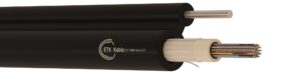
A-D(ZN)T2Y Fiber Optic Cable
SKU:
SLT-NMA-SJ-A(S)-(GY20)
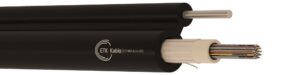
A-D(ZN)T2Y Fiber Optic Cable
SKU:
SLT-NMA-SJ-A(M)-(GY25)
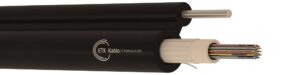
A-D(ZN)T2Y Fiber Optic Cable
SKU:
SLT-NMA-SJ-A(L)-(GY27)
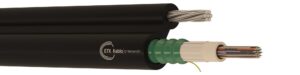
A-D(ZN)(SR)T2Y Fiber Optic Cable
SKU:
SLT-SA-SJ-A(L)-(GY27)
Central Loose Tube Fiber Optic Cable for Aerial Networks
Central Loose Tube Fiber Optic Cable offers a compact optical cable architecture in which the fibers share one central protective tube. ETK Kablo manufactures aerial central loose tube fiber optic cables for telecommunications, broadband, campus, utility and infrastructure networks that require an efficient combination of optical capacity and overhead mechanical support.
ETK Kablo's aerial central loose tube designs combine a gel-filled PBT tube with glass-yarn reinforcement, an integrated steel messenger and a UV-resistant polyethylene outer jacket. Selected constructions also add corrugated steel tape when the project requires additional mechanical protection.
This architecture is particularly suitable when the network requires a relatively compact aerial cable with low to moderate fiber counts rather than the larger and more complex structure of a multi loose tube design.
What Is a Central Loose Tube Fiber Optic Cable?
A central loose tube cable places the optical fibers together inside one main protective tube positioned near the center of the cable construction.
The fibers remain relatively free within the tube rather than being tightly buffered against its inner surface. This allows the tube to help isolate the optical fibers from mechanical forces and dimensional changes that occur during installation and service.
In ETK Kablo's aerial central loose tube products, waterproof thixotropic jelly surrounds the fibers inside the PBT tube. Glass yarn provides additional non-metallic reinforcement, while an integrated steel messenger supports the overhead installation.
How Does Central Loose Tube Construction Work?
The central loose tube architecture keeps the cable relatively simple because all optical fibers share one tube rather than being divided among several stranded tubes.
A typical ETK Kablo aerial construction includes:
- Single-mode or multimode optical fibers
- Waterproof thixotropic jelly
- One central PBT loose tube
- Glass-yarn reinforcement
- Ripcord
- Web connecting the optical cable and messenger
- Galvanized steel messenger wire
- UV-resistant black HDPE outer jacket
Selected versions also include corrugated steel tape around the optical cable core for additional radial mechanical protection.
Central Loose Tube vs Multi Loose Tube Fiber Optic Cable
Central loose tube and multi loose tube cables both protect optical fibers within loose tubes, but their internal architecture is different.
| Feature | Central Loose Tube Cable | Multi Loose Tube Cable |
|---|---|---|
| Number of Fiber-Bearing Tubes | One main central tube | Several loose tubes |
| Architecture | Compact and relatively simple | Tubes stranded around a central strength member |
| Fiber Capacity | Well suited to low and moderate fiber counts | Better suited to larger fiber counts and scalable backbone designs |
| Cable Diameter | Can remain relatively compact | Generally increases as more tubes are added |
| Fiber Organization | Fibers share one tube | Fibers can be organized across several tubes |
| Typical Selection Driver | Compact construction and efficient moderate capacity | Higher capacity and structured fiber allocation |
Neither architecture is universally better. Central loose tube is often the more efficient choice when one tube can accommodate the required fibers. Multi loose tube becomes more attractive as network capacity and fiber-management requirements increase.
Aerial Figure-8 Central Loose Tube Design
ETK Kablo's products use an aerial Figure-8 style construction. The optical cable and steel messenger run parallel to each other and connect through a web.
The messenger provides the primary mechanical support for the overhead route. As a result, the optical section does not need to carry the aerial span load in the same way as a fully self-supporting ADSS cable.
This integrated design simplifies pole-to-pole installation because the support element forms part of the cable itself. However, installers and project engineers must still evaluate span length, cable weight, mechanical load, sag, environmental conditions and hardware requirements.
Steel Messenger Options for Different Mechanical Requirements
ETK Kablo offers several A-D(ZN)T2Y constructions with different galvanized steel messenger configurations. These product variants allow the mechanical construction to change according to project requirements while maintaining the same central loose tube architecture.
The product range includes designs using messenger constructions such as single galvanized steel wires and a stranded steel messenger. The exact messenger dimension, cable weight and tensile specification depend on the individual product version.
Therefore, procurement teams should not select an aerial cable only from its fiber count. The required span and mechanical performance must also correspond to the specific messenger construction.
A-D(ZN)T2Y Central Loose Tube Fiber Optic Cable
A-D(ZN)T2Y is the principal non-armored central loose tube aerial construction in ETK Kablo's product range.
The cable contains optical fibers within a gel-filled PBT tube. Glass yarn provides additional non-metallic reinforcement, while a galvanized steel messenger supports aerial installation. A UV-resistant black HDPE jacket protects the cable against outdoor environmental exposure.
ETK Kablo offers several A-D(ZN)T2Y variants with different messenger configurations to address different mechanical requirements.
A-D(ZN)(SR)T2Y Armored Aerial Construction
For projects requiring additional radial mechanical protection, ETK Kablo also offers the A-D(ZN)(SR)T2Y construction.
This design retains the central loose tube and steel messenger concept but adds corrugated steel tape around the optical portion of the cable. The steel tape creates an additional barrier against crushing, impact and other external mechanical risks.
The armored version can therefore suit demanding aerial infrastructure where project engineers need both messenger-supported overhead installation and increased physical protection of the optical cable core.
Because the cable contains metallic armor as well as a steel messenger, electrical and grounding considerations should be evaluated according to the complete installation and applicable project requirements.
2 to 24 Fiber Aerial Central Loose Tube Cables
ETK Kablo's central loose tube aerial products cover fiber counts from 2 to 24 optical fibers.
This range makes the architecture suitable for access, distribution, campus, industrial and moderate-capacity telecommunications routes where the project does not require the larger fiber counts typically associated with multi loose tube backbone cables.
| Fiber Count Range | Typical Network Consideration |
|---|---|
| 2–6 Fibers | Low-capacity point-to-point, industrial or access links |
| 8–12 Fibers | Distribution, campus and moderate network expansion requirements |
| 16–24 Fibers | Higher-capacity access and infrastructure connections while retaining a compact single-tube architecture |
The fiber count should follow both current demand and reasonable future expansion. Where the project requires substantially greater capacity or structured fiber grouping across several tubes, a multi loose tube cable may provide a more appropriate architecture.
Single-Mode and Multimode Fiber Options
Central loose tube describes the physical cable architecture rather than the optical transmission type. Therefore, the same general construction can support different optical fiber types.
ETK Kablo's aerial central loose tube products include G.652.D single-mode fiber together with multimode variants such as OM1, OM2 and OM3. Other fiber requirements should be confirmed according to the selected product and project specification.
Single-mode fiber is typically selected for telecommunications, access and longer-distance infrastructure networks. Multimode fiber can support shorter-distance industrial, campus and local network applications where compatible optical equipment is used.
Moisture Protection in Central Loose Tube Cable
Outdoor aerial networks expose cables to humidity, rain, condensation and changing temperatures. Moisture control therefore forms an important part of the cable design.
In ETK Kablo's central loose tube aerial products, waterproof thixotropic jelly fills the PBT tube around the optical fibers. This system helps limit longitudinal water movement within the fiber-bearing tube and protects the optical elements from moisture exposure.
The external HDPE sheath provides an additional environmental barrier and protects the cable against UV exposure and normal outdoor weather conditions.
Mechanical Performance for Aerial Installation
Aerial fiber optic cable specification requires more than optical attenuation data. The cable and its messenger must withstand the mechanical forces created during installation and long-term operation.
ETK Kablo provides product-specific values for parameters such as:
- Maximum installation tension
- Maximum operating tension
- Crush resistance
- Impact resistance
- Torsion
- Repeated bending
- Bending radius
- Temperature cycling
- Water penetration
Relevant tests use applicable IEC 60794 optical cable test methods. However, the specified values differ between product variants. Buyers should therefore use the mechanical table of the exact selected product rather than applying one category-wide tensile rating.
Central Loose Tube vs ADSS Fiber Optic Cable
A central loose tube aerial cable and an ADSS cable should not be considered synonymous.
The term central loose tube describes how the optical fibers are arranged inside the cable. ADSS, or All-Dielectric Self-Supporting, describes the mechanical concept used to support an aerial cable.
ETK Kablo's central loose tube Figure-8 constructions use an integrated metallic messenger wire. Therefore, these specific constructions are not ADSS cables.
A project requiring a fully dielectric self-supporting aerial solution should be evaluated under the appropriate ADSS construction rather than substituting a messenger-supported cable solely because both products use loose tubes.
Applications of Aerial Central Loose Tube Fiber Optic Cable
Compact central loose tube aerial cables can serve a wide range of outdoor communication networks, including:
- Telecommunication access and distribution networks
- Urban and rural broadband infrastructure
- Campus and building-to-building connections
- Industrial communication networks
- Utility communication systems
- Municipal fiber networks
- Transportation and infrastructure communication links
- FTTx distribution networks
The correct product depends on fiber count, span conditions, messenger requirements and the level of mechanical protection required by the installation.
When Should You Choose Central Loose Tube?
Central loose tube construction is particularly attractive when the project requires a compact cable and the required fiber count fits efficiently inside one tube.
It can offer several practical benefits:
- Compact cable architecture
- Efficient use of cable diameter
- Simple internal fiber organization
- Environmental isolation through loose-tube design
- Low to moderate fiber-count flexibility
- Compatibility with aerial messenger-supported constructions
- Ability to add metallic protection when required
For very high fiber counts, complex backbone networks or projects that require separate tube-level fiber organization, multi loose tube construction may provide greater scalability.
How to Specify a Central Loose Tube Fiber Optic Cable
To obtain an accurate technical and commercial proposal, procurement teams should define both the optical requirements and the aerial installation conditions.
| Specification Item | Information to Provide |
|---|---|
| Fiber Type | Required single-mode or multimode fiber |
| Fiber Count | 2, 4, 6, 8, 12, 16, 20, 24 or project-specific requirement |
| Aerial Route | Pole spacing and route configuration |
| Messenger Requirement | Required mechanical strength or specified messenger construction |
| Armor | Non-armored or corrugated steel tape protected construction |
| Mechanical Loads | Installation tension, operating tension, crush and impact requirements |
| Environmental Conditions | Temperature, wind, UV exposure and local climate |
| Delivery Requirements | Quantity, drum length, cable marking and project documentation |
Why Choose ETK Kablo for Central Loose Tube Fiber Optic Cable?
ETK Kablo has manufactured fiber optic cables since 2001 and supplies telecommunications and infrastructure customers in more than 120 countries.
The company's fiber portfolio covers central loose tube, multi loose tube, tight-buffered, aerial, armored, duct and project-specific constructions. This allows buyers to select the cable architecture according to the actual network rather than forcing one design into every application.
For aerial central loose tube projects, ETK Kablo can evaluate fiber count, optical fiber type, messenger construction, armor requirement and mechanical performance together during the quotation process.
Frequently Asked Questions About Central Loose Tube Fiber Optic Cable
What is a central loose tube fiber optic cable?
A central loose tube fiber optic cable places its optical fibers together inside one main protective tube. This creates a compact architecture that can provide environmental and mechanical isolation for the fibers.
Is central loose tube the same as single loose tube?
The terms are often used to describe the same basic architecture: one primary fiber-bearing loose tube rather than several stranded loose tubes. Product construction should still be confirmed from the manufacturer's datasheet.
What is the difference between central loose tube and multi loose tube?
A central loose tube cable uses one main tube for the optical fibers. A multi loose tube cable distributes fibers among several tubes arranged around a central strength member. Multi loose tube designs generally provide greater scalability for high fiber counts.
How many fibers can ETK Kablo's aerial central loose tube products contain?
ETK Kablo's aerial central loose tube products cover 2 to 24 fibers. Other central loose tube constructions may have different capacities, so buyers should confirm the required design with ETK Kablo.
What is A-D(ZN)T2Y fiber optic cable?
A-D(ZN)T2Y is an aerial central loose tube construction offered by ETK Kablo. It combines a gel-filled PBT loose tube, glass-yarn reinforcement, an integrated galvanized steel messenger and a UV-resistant HDPE outer jacket.
What is A-D(ZN)(SR)T2Y fiber optic cable?
A-D(ZN)(SR)T2Y uses a similar aerial central loose tube architecture but adds corrugated steel tape around the optical cable core for increased mechanical protection.
Is this central loose tube cable an ADSS cable?
No. ETK Kablo's central loose tube Figure-8 products use a metallic steel messenger for aerial support. ADSS uses an all-dielectric self-supporting construction without a metallic messenger.
What information should I provide when requesting a quotation?
Provide the required fiber type, fiber count, aerial route and pole spacing, mechanical requirements, armor requirement, environmental conditions, quantity, drum length and any project-specific standards or documentation requirements.


