





 President’s Message
Fire Resistant FE180 Fiber Optic Cable
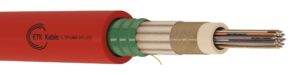
U-D(ZN)(SR)H FE180 Fire Resistant (B2ca) Fiber Optic Cable
SKU:
SLT(FR)-SA-SHFJ-(GY12)-(FE180.PH120)
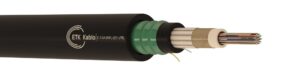
U-D(ZN)H(SR)H FE180 Fire Resistant Fiber Optic Cable
SKU:
SLT-SA-DHFJ-(GY30)-(FR)
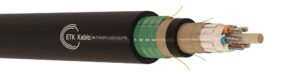
U-DQ(ZN)H(SR)H FE180 Fire Resistant Fiber Optic Cable
SKU:
MLT-SA-DHFJ-(GY40)-(D)-(FR)
Fire-Resistant Fiber Optic Cables | B2ca FE180 High-Safety Solutions by ETK Kablo
ETK Kablo’s fire-resistant fiber optic cables ensure continuous data transmission during fire conditions, safeguarding critical communication lines when reliability is most crucial. Certified to B2ca CPR and FE180 fire-resistance standards, these cables maintain optical integrity under extreme heat and flame exposure—ideal for tunnels, hospitals, airports, industrial plants, data centers, and railway networks.
Why Choose Fire-Resistant Fiber Optic Cables
In emergency scenarios, uninterrupted connectivity can save lives and prevent operational collapse. ETK Kablo’s B2ca-classified fiber optic range provides low smoke emission, zero halogen content, and exceptional flame retardance. The design ensures data link continuity even during extended fire exposure, meeting the most demanding construction and safety codes across Europe and the world.
Technical Construction and Design
- Fiber Types: Single mode (G.652D, G.657.A1/A2) and multi-mode (OM3, OM4, OM5)
- Fire Performance: B2ca-s1a-d1-a1 per EN 50575 (CPR Regulation)
- Fire Resistance: FE180 – maintains optical transmission for ≥ 180 minutes under direct flame
- Sheath Material: Halogen-free, flame-retardant compound with low smoke density
- Operating Temperature: -40 °C to +85 °C (continuous operation)
- Installation Applications: Indoor and outdoor fixed installations where safety and CPR compliance are mandatory
Typical Applications
Fire-resistant fiber optic cables from ETK Kablo are deployed in:
- Critical infrastructure and tunnel communication systems
- Hospitals and public buildings with life-safety requirements
- Data centers and server rooms requiring redundant high-speed links
- Power plants, industrial automation, and rail transit networks
- Marine and offshore installations demanding halogen-free fire protection
Compliance and Certifications
ETK Kablo’s fire-resistant fiber optic portfolio meets or exceeds the following international standards for safety and performance:
| Standard / Directive | Scope of Compliance |
|---|---|
| IEC 60331 | Fire resistance – Maintains functionality during direct flame exposure for ≥ 180 min (FE180) |
| IEC 60754-1/2 | Halogen-free – No toxic or corrosive gas emission during combustion |
| IEC 61034-1/2 | Low smoke density – Enhanced visibility and evacuation safety |
| EN 50575 (B2ca) | CPR Construction Products Regulation – Highest reaction-to-fire class for fiber optic cables |
Performance and Advantages
- Continuous operation under fire: Maintains optical signal integrity through extreme heat and flame.
- Enhanced safety: Minimal smoke and zero halogen emissions protect lives and equipment.
- Mechanical durability: Resists impact, bending, and environmental stress during and after fire exposure.
- Global acceptance: Fully CPR-compliant and recognized under EU and international standards.
- Flexible deployment: Suitable for indoor/outdoor routes, vertical shafts, and tight bending installations.
Why ETK Kablo Fire-Resistant Fiber Optic Cables?
ETK Kablo combines advanced engineering and strict testing to deliver unparalleled safety and network resilience. Our fire-resistant fiber optic cables ensure data continuity in critical infrastructure worldwide, helping integrators, contractors, and telecom operators meet the highest CPR and IEC standards. Supported by our technical expertise and global logistics, ETK Kablo stands as a trusted partner for reliable, future-ready optical network solutions.
ETK Kablo — Keeping data flowing, even under fire.
Fire-Resistant Fiber Optic Cable — Frequently Asked Questions
Which fibre is resistant to fire?
The glass optical fibre itself is non-flammable; what determines fire behaviour is the cable construction (insulation, sheath, fillers). For fire-critical areas, choose fire-resistant, LSZH fiber optic cables that are certified (e.g., FE180 and CPR B2ca) to maintain transmission and minimise smoke/toxic gases during a fire.
Which cable is fire resistant?
Fire-resistant cables are specifically designed and tested to keep circuits operating under fire. Look for markings such as FE180, PH90/PH120, or compliance to IEC 60331/EN 50200/BS 6387. In fiber optics, select fire-resistant LSZH designs with CPR B2ca reaction-to-fire class for use in public and safety-critical buildings.
What is the difference between FRLS and LSZH cables?
FRLS = Flame-Retardant, Low Smoke (may still contain halogens).
LSZH = Low Smoke, Zero Halogen (no halogen acids).
Both limit flame spread and smoke, but LSZH additionally avoids corrosive/acidic gases, making it preferred for enclosed, people-dense spaces and sensitive electronics.
What is a fire-resistant cable as per IEC 60331?
A cable that maintains circuit integrity under fire during the IEC 60331 test series (fire with/without shock for a defined duration and temperature). For fiber optics, the relevant part verifies the cable can continue to transmit signals while exposed to flame for the specified time (e.g., FE180 ≈ 180 minutes).
What is a B2ca cable?
B2ca is a CPR reaction-to-fire class (EN 50575) indicating very high performance for building installations: limited heat release and flame spread, with optional sub-classes for smoke (s1a/s1b), droplets (d0/d1), and acidity (a1). A fiber optic cable marked B2ca-s1a,d1,a1 is suitable for stringent safety environments.
What is a fire-rated cable?
“Fire-rated” is a general term for cables certified for fire performance. It can refer to fire-resistant (IEC 60331/EN 50200/BS 6387 – keeps working during fire) or reaction-to-fire (CPR) classes such as B2ca/Cca (limits flame/heat/smoke). In life-safety systems you often need both: fire-resistance for functionality and CPR for building compliance.


