





 President’s Message
Fire Resistant Power Cables
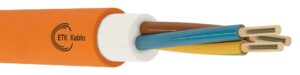
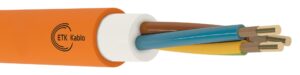
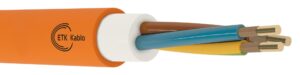
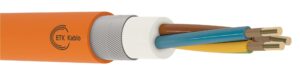
Fire-Resistant Power Cables
Fire-resistant power cables play a crucial role in ensuring the continuity of electrical circuits during fire emergencies. Designed to maintain circuit integrity for a specified duration under flame exposure, these cables are essential for powering critical systems such as emergency lighting, smoke extraction units, fire alarm panels, communication lines, and safety controls. ETK Kablo’s fire-resistant power cable range is engineered to meet the highest standards of flame resistance, halogen-free composition, and operational stability in environments where reliability under extreme thermal stress is paramount.
Purpose and Role in Critical Infrastructure
Modern buildings and infrastructure projects demand not only high-performance energy transmission but also resilience under hazardous conditions. Fire scenarios threaten the operability of life-saving systems, and the failure of cabling in such moments can lead to catastrophic consequences. Fire-resistant power cables are specifically designed to continue functioning for defined periods even when exposed to fire, high temperatures, or mechanical shock. They are deployed in structures where human safety, asset protection, and system continuity are non-negotiable.
Typical operational requirements include compliance with standards such as FE180 (functionality under fire for 180 minutes), E30–E90 (circuit integrity for 30 to 90 minutes), and PH120 (functional endurance under fire and mechanical shock for 120 minutes). These classifications ensure that vital systems powered through such cables will remain operational long enough to allow evacuation, emergency responses, and controlled shutdowns.
Cable Construction and Material Properties
ETK Kablo’s fire-resistant power cables are designed for 0.6/1 kV low-voltage applications and constructed using solid or stranded bare copper conductors, based on cross-section size and project preference. The insulation layer consists of halogen-free thermoplastic (HFFR) or thermoset materials, chosen for their ability to resist combustion and limit smoke emission.
For fire endurance, a key component is the mica tape layer, which acts as a fire barrier wrapped around each conductor. This layer maintains electrical isolation even as insulation materials degrade under flame. The bedding and outer sheath are composed of halogen-free, low-smoke, flame-retardant compounds, which do not emit toxic or corrosive gases when exposed to fire. This ensures both human safety and protection of sensitive electronic equipment nearby.
Core identification is made via standard color-coding, and the sheath is typically orange or red — denoting fire-resistance in many international standards. Cables may also include optional features such as EMC shielding, depending on application.
Fire Classifications: FE180, E30–E90, PH120
Understanding fire classification codes is essential for evaluating fire-resistant cables. ETK Kablo’s fire-resistant power cables meet the following definitions:
-
FE180: The cable continues to conduct electricity for 180 minutes in direct flame as per IEC 60331-21 and EN 50200 testing protocols.
-
E30–E90: Refers to the cable’s ability to maintain circuit integrity in a simulated fire scenario for 30 to 90 minutes, tested in real installation conditions on cable trays. These durations are often determined by building regulations based on building height, occupancy type, and function.
-
PH120: The cable can operate under flame, mechanical shock, and water spray for at least 120 minutes, offering multi-hazard fire resilience, per BS 8491 or similar standards.
These properties ensure continued electrical service to emergency systems during building evacuations and firefighting operations.
Applications in Building and Infrastructure Projects
Fire-resistant power cables are indispensable in locations where uninterrupted power delivery to essential systems is legally or functionally required. ETK Kablo’s product portfolio supports energy continuity in a wide range of applications, including:
-
Hospitals and Healthcare Facilities: Powering intensive care units, emergency lighting, ventilation, and evacuation systems
-
Tunnels and Transportation Infrastructure: Supplying lighting and control systems where evacuation time is critical
-
High-Rise and Commercial Buildings: Enabling fire alarm loops, PA systems, fire pumps, and emergency lifts
-
Airports and Metro Stations: Ensuring data and energy continuity in safety-critical zones
-
Data Centers: Protecting backup power and monitoring lines from premature failure
-
Factories and Production Plants: Maintaining control systems and minimizing downtime risk during incidents
-
Public Institutions: Schools, universities, and government offices with high human occupancy
In all these applications, ETK Kablo’s cables deliver power without compromise during fire, ensuring systems can operate reliably when they are needed most.
ETK Kablo’s Fire-Resistant Cable Portfolio
ETK Kablo offers a complete range of NHXH-type fire-resistant power cables, which can be configured according to core count, conductor size, and fire classification level. Typical configurations include:
-
Voltage Rating: 0.6/1 kV
-
Conductor Sizes: From 1x1.5 mm² up to 5x16 mm² and higher on request
-
Core Options: Single-core, multi-core (e.g., 3x1.5, 4x2.5, 5x6 mm²)
-
Fire Rating Options: FE180 + E30 / E60 / E90 or PH120 compliance
-
Sheath Color: Flame-retardant halogen-free compounds in red, orange, or grey
All cables undergo comprehensive in-house testing at ETK Kablo’s laboratory, including high-voltage testing, insulation resistance, fire propagation, smoke density, and acid gas emissions.
Environmental and Safety Considerations
In addition to fire functionality, ETK Kablo’s fire-resistant power cables are environmentally responsible and health-conscious in their design:
-
Halogen-Free Composition: Prevents the emission of corrosive gases that damage electronics or ventilation equipment during fire
-
Low Smoke Output: Supports safe evacuation by improving visibility in smoke-filled areas
-
Non-Toxic Combustion: Reduces health risks for occupants and first responders
-
Reduced Flame Spread: Helps contain fires within localized areas and prevents escalation
These properties align with modern building safety codes and green construction standards aimed at minimizing harm to people, property, and equipment.
Fire-resistant power cables are not just technical components; they are lifelines that safeguard critical systems when fire strikes. ETK Kablo’s NHXH FE180 E30–E90 cable portfolio combines material innovation, precision manufacturing, and stringent testing to meet the highest standards of fire performance. These cables are the backbone of power continuity in essential infrastructure — from hospitals and tunnels to data centers and factories.
By offering flame-resistant, halogen-free, and low-smoke power cables tailored for safety and compliance, ETK Kablo helps engineers, specifiers, and developers build infrastructures that protect lives and operations under the most extreme conditions.
Fire-Resistant Cables — Frequently Asked Questions
What is a fire protection cable?
A fire protection cable is designed to maintain electrical circuit integrity during a fire, ensuring critical systems such as alarms, evacuation lighting, and emergency communications continue to operate. These cables are typically halogen-free and meet international standards like IEC 60331 and EN 50200.
What is firestop cable?
Firestop cable refers to a cable used within a fire-stopping system, sealed through walls or floors to prevent flame and smoke spread. It combines fire-resistant properties with certified fire-stopping materials to preserve the barrier rating of the structure.
What is a fire-resistant cable as per IEC 60331?
According to IEC 60331, a fire-resistant cable must continue to operate for a defined period (typically 90 to 180 minutes) under direct flame exposure at high temperatures. It must maintain circuit continuity under conditions of fire, mechanical shock, and water spray tests as defined by the standard.
What is a fire cable called?
Fire-resistant cables are often labeled with designations such as JE-H(St)H or LIH(St)H, and marked with performance ratings like FE180 or PH120, indicating how long they can maintain functionality under fire exposure.
How to fireproof a cable?
To improve fire resistance, cables can be protected using mica tapes, mineral insulation, or halogen-free compounds. Additionally, proper installation practices such as metal conduits, fire sleeves, or fire-resistant coatings enhance protection against high-temperature damage.


