





 President’s Message
Building Automation Cables
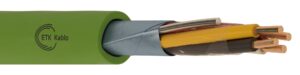
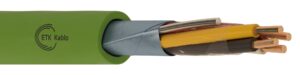
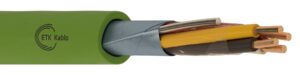
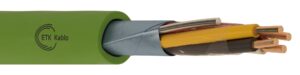
EIB Bus Cables | EIB-H(St)H and EIB-Y(St)Y for KNX Building Automation
EIB bus cables are precision-engineered for the structured transmission of low-voltage control signals in KNX (Konnex) and EIB (European Installation Bus) building automation systems. These systems are fundamental in smart infrastructure projects that demand integrated control of lighting, heating, ventilation, air conditioning (HVAC), security systems, and shading solutions. ETK Kablo’s EIB-H(St)H and EIB-Y(St)Y bus cables are manufactured in line with KNX Association protocols and comply with European and international standards for fire performance, electromagnetic compatibility, and data communication stability.
Functional Role in KNX Communication Systems
In a KNX network, all devices—such as sensors, actuators, and logic modules—are connected via a common twisted-pair bus that operates on 24V DC. This backbone enables bidirectional communication, ensuring distributed intelligence throughout the building. ETK Kablo’s bus cables facilitate this data exchange by delivering low-capacitance, impedance-controlled connections designed to prevent data loss or system error. Their consistent signal transmission and mechanical integrity make them the ideal choice for complex building control applications, from small office automation to large-scale infrastructure.
Construction and Material Composition
ETK Kablo’s bus cables are typically produced in 2x2x0.8 mm² twisted pair configurations using solid bare copper conductors for stable and low-resistance signal flow. The twisting of conductor pairs is tightly controlled to suppress crosstalk and maintain signal integrity across extended distances. The EIB-H(St)H cable is insulated with halogen-free, flame-retardant compound, while the EIB-Y(St)Y model uses standard PVC insulation suitable for less restrictive environments. Both cables include collective aluminum/polyester shielding with a tinned copper drain wire, offering robust protection against external electromagnetic interference. Sheath materials are selected based on fire safety and application needs—halogen-free LSZH for EIB-H(St)H and flame-retardant PVC for EIB-Y(St)Y—with sheath colors typically green and grey, respectively.
Electrical Characteristics and Transmission Performance
ETK Kablo’s EIB cables are designed for a nominal operating voltage of 300V, with a test voltage of 2000V. They exhibit characteristic impedance in the range of 100–120 ohms, optimized for 9600 baud data transmission over a shared bus line. Capacitance values remain under 100 nF/km, ensuring minimal signal delay, while loop resistance does not exceed 73.2 ohms/km thanks to the use of solid copper cores. The cables perform reliably within a temperature range of -5°C to +70°C in fixed installations and maintain mechanical flexibility with a minimum bending radius of 10 times the outer diameter.
Shielding Integrity and EMI Protection
In building environments where low-voltage communication cables run adjacent to power lines or electronic control equipment, electromagnetic interference poses a significant threat to data reliability. The collective screen used in EIB-H(St)H and EIB-Y(St)Y—comprising an aluminum/polyester foil and drain wire—protects against this risk by blocking induced electrical noise. This makes shielded bus cables essential in environments such as control rooms, industrial plants, transportation terminals, and healthcare facilities where uninterrupted signal transmission is critical.
Fire Behavior and Environmental Safety
The EIB-H(St)H variant is specifically designed to comply with fire safety and environmental health standards. It is halogen-free and emits minimal smoke, ensuring better visibility and reduced toxicity during a fire. It meets IEC 60332-1-2 for flame retardancy, IEC 60754-1/2 for halogen-free content, and IEC 61034 for smoke density. These properties make it suitable for use in schools, hospitals, high-rise buildings, tunnels, and other public structures where life safety is regulated. The EIB-Y(St)Y version, while not halogen-free, still provides flame retardancy and is appropriate for indoor spaces where such regulations are not mandatory.
Application Areas and Industry Use Cases
EIB-H(St)H and EIB-Y(St)Y bus cables are deployed in a wide range of industries where KNX-based automation systems are implemented. In commercial office complexes, they support lighting scenes, occupancy control, and centralized HVAC automation. In healthcare facilities, these cables ensure reliable signaling for patient monitoring systems, temperature regulation, and access control. Educational institutions use EIB bus cables for time-scheduled lighting and ventilation, while transportation hubs such as airports and rail stations rely on them for emergency system management, energy efficiency, and integrated signage control. In residential and hospitality environments, bus cables enable user-controlled comfort settings for lighting, climate, and shading. Their versatility also extends to shopping centers, warehouses, and data centers that utilize KNX systems for security and operational efficiency.
Standards Compliance and CPR Classification
ETK Kablo’s EIB bus cables are produced in accordance with EN 50090-2-2, the core KNX system standard. Additional compliance includes IEC 60332-1-2 for flame resistance, IEC 60754-1/2 for halogen gas analysis, and IEC 61034 for smoke density measurement. These standards guarantee reliable performance and regulatory acceptance across Europe and global markets. For fire performance under the Construction Products Regulation (CPR), EIB-H(St)H is offered with classifications such as Dca s2 d2 a1 or, on request, Cca s1b d1 a1. All cables carry CE marking and are supported with Declaration of Performance (DoP) documents for project-based compliance audits.
Product Range and Technical Scope
ETK Kablo supplies its EIB-H(St)H and EIB-Y(St)Y cables in industry-standard configurations. The 2x2x0.8 mm² layout is the most widely used, ensuring compatibility with KNX-certified devices and system topologies. Green-sheathed, halogen-free EIB-H(St)H is the default choice for fire-regulated installations, while grey-sheathed EIB-Y(St)Y serves cost-sensitive applications that do not demand halogen-free properties.
Testing and Quality Assurance
ETK Kablo manufactures all bus cables under ISO 9001-certified quality management systems. Each batch undergoes rigorous testing for insulation resistance, capacitance, conductor continuity, shielding integrity, flame behavior, and dimensional compliance. For cables under CPR scope, additional fire class validation is performed, including smoke production and acidity measurements. Full traceability and technical documentation are provided to support tenders, large-scale installations, and international exports.
Global Reach and Project Support
ETK Kablo exports its EIB cable solutions to over 120 countries, serving KNX system integrators, electrical wholesalers, and MEP contractors. With extensive stock, multilingual documentation, and flexible production capabilities, the company supports a wide range of projects across Europe, the Middle East, Africa, and Central Asia. EIB-H(St)H and EIB-Y(St)Y cables have been successfully deployed in smart hospitals, airports, public institutions, LEED-certified commercial buildings, and high-performance residential developments.
EIB bus cables form the foundation of intelligent building automation. ETK Kablo’s EIB-H(St)H and EIB-Y(St)Y series deliver high-performance, low-capacitance, and EMI-protected signal transmission for modern KNX systems. With compliance to fire safety and environmental standards, broad sectoral applicability, and globally certified manufacturing, these cables provide dependable, long-term infrastructure solutions for today’s and tomorrow’s smart buildings.
Bus Cables — Frequently Asked Questions
What is a CAN bus cable?
A CAN bus cable is a twisted-pair communication cable used in Controller Area Network (CAN) systems for data exchange between devices. It provides reliable signal integrity and noise immunity in automation, automotive, and industrial control environments. Typical constructions include 120 Ω impedance with shielded pairs to minimize electromagnetic interference (EMI).
What is a KNX cable?
A KNX cable is a specialized bus cable used in building automation for controlling lighting, HVAC, blinds, and security systems. It carries both data and power for KNX-certified devices. The most common type is EIB-H(St)H (halogen-free), offering low smoke and zero halogen emissions for safe in-building installations.
What is the cost of KNX cable?
The cost of KNX cable varies depending on construction, CPR fire class, and shielding type. Prices typically range from €0.60 – €1.20 per meter for standard 2×2×0.8 mm halogen-free EIB-H(St)H cables, and may be higher for armored or outdoor versions. Contact ETK Kablo for project-specific quotations and bulk pricing.
What is the difference between EIB and KNX?
EIB (European Installation Bus) was the original building-automation protocol standardized in the 1990s. KNX is its modern successor, fully backward-compatible and standardized under EN 50090 / ISO/IEC 14543. While the terms are often used interchangeably, KNX represents the unified global standard that evolved from EIB.


