





 President’s Message
Multi Loose Tube Fiber Optic Cable
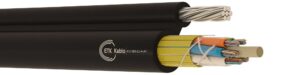
A-DF(ZN)T2Y Fiber Optic Cable
SKU:
MLT-NMA-SJ-A(S)-(AY27)
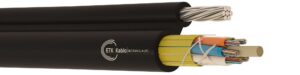
A-DF(ZN)T2Y Fiber Optic Cable
SKU:
MLT-NMA-SJ-A(M)-(AY35)
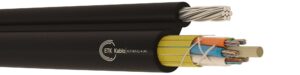
A-DF(ZN)T2Y Fiber Optic Cable
SKU:
MLT-NMA-SJ-A(L)-(AY50)
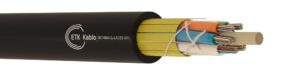
A-DF(ZN)2Y Fiber Optic Cable
SKU:
MLT-NMA-SJ-LADSS-(AY)
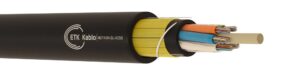
A-DF2Y(ZN)2Y Fiber Optic Cable
SKU:
MLT-NMA-DJ-ADSS-(AY)
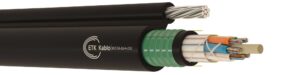
A-DF(ZN)(SR)T2Y Fiber Optic Cable
SKU:
MLT-SA-DJ-A(S)-(GY27)
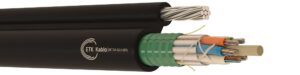
A-DF(ZN)(SR)T2Y Fiber Optic Cable
SKU:
MLT-SA-SJ-A(M)-(GY35)
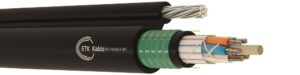
A-DF(ZN)(SR)T2Y Fiber Optic Cable
SKU:
MLT-SA-DJ-A(L)-(GY50)
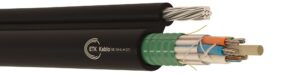
A-DF(ZN)2Y(SR)T2Y Fiber Optic Cable
SKU:
MLT-SA-SJ-A(S)-(GY27)
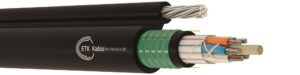
A-DF(ZN)2Y(SR)T2Y Fiber Optic Cable
SKU:
MLT-SA-DJ-A(M)-(GY35)
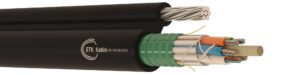
A-DF(ZN)2Y(SR)T2Y Fiber Optic Cable
SKU:
MLT-SA-SJ-A(L)-(GY50)
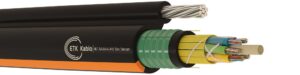
A-DF(ZN)2Y(SR)T2Y Türk Telekom Fiber Optic Cable
SKU:
MLT-SA-DJ-A(L)-(AY50) Türk Telekom
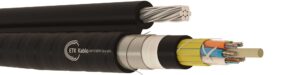
A-DF(ZN)2Y2BT2Y Fiber Optic Cable
SKU:
MLT-DGSTA-DJ-A(M)-(AY50)
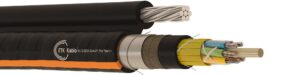
A-DF(ZN)2Y2BT2Y Türk Telekom TRFO-10 Fiber Optic Cable
SKU:
MLT-DGSTA-DJ-A(M)-(AY50) Türk Telekom TRFO-10
Multi Loose Tube Fiber Optic Cable for High-Capacity Aerial Networks
Multi Loose Tube Fiber Optic Cable uses several fiber-bearing tubes stranded around a central strength member to provide scalable optical capacity for telecommunications and infrastructure networks. ETK Kablo manufactures multi loose tube fiber optic cables for aerial backbone, broadband, utility, metropolitan and other outdoor communication systems.
Compared with a central loose tube design, the multi loose tube architecture distributes optical fibers across several tubes. This structure supports higher fiber counts, organized fiber allocation and a wide range of mechanical constructions. ETK Kablo's aerial multi loose tube cables are available in messenger-supported, all-dielectric self-supporting and mechanically reinforced designs.
What Is a Multi Loose Tube Fiber Optic Cable?
A multi loose tube fiber optic cable contains several PBT tubes stranded around a central strength member. Each tube can contain multiple optical fibers, while filler elements can occupy unused positions to maintain the required cable geometry.
The optical fibers remain loose inside the tubes rather than being tightly fixed to the surrounding material. This structure helps isolate them from mechanical strain and dimensional changes caused by temperature variation, pulling forces and other installation conditions.
In ETK Kablo constructions, the central strength element can use FRP, while loose tubes can include water-blocking jelly. Depending on the cable design, additional elements can include aramid yarn, glass yarn, inner jackets, steel armor, messenger wires and UV-resistant polyethylene outer jackets.
Multi Loose Tube vs Central Loose Tube Cable
The main difference between central and multi loose tube fiber optic cable lies in how the optical fibers are organized inside the cable.
| Feature | Multi Loose Tube Cable | Central Loose Tube Cable |
|---|---|---|
| Fiber-Bearing Tubes | Several loose tubes | One main central tube |
| Internal Structure | Tubes stranded around a central strength member | Fibers grouped inside one central tube |
| Fiber Capacity | Highly scalable for moderate and high fiber counts | Efficient for lower and moderate fiber counts |
| Fiber Organization | Fibers can be divided among separate tubes | Fibers share one main tube |
| Construction Flexibility | Suitable for ADSS, messenger-supported and armored designs | Provides a compact and relatively simple architecture |
| Typical Network Role | Distribution, backbone and higher-capacity infrastructure | Access and moderate-capacity routes |
Central loose tube remains an efficient solution when the required fibers fit comfortably inside one tube. Multi loose tube becomes increasingly useful when the project requires larger fiber counts, tube-level fiber organization or more complex mechanical constructions.
How Multi Loose Tube Construction Supports Higher Fiber Counts
Instead of increasing the number of fibers inside one central tube indefinitely, a multi loose tube cable distributes them across several tubes. This provides additional design flexibility as network capacity grows.
For example, a cable can use six, eight, ten or twelve fiber-bearing tubes depending on the required capacity and tube configuration. Each tube can carry a defined number of fibers, allowing network operators to organize fibers according to routes, services or future expansion plans.
ETK Kablo's aerial multi loose tube designs include configurations reaching 144 fibers in selected constructions. The available fiber count depends on the exact product family, tube diameter and cable architecture.
Figure-8 Multi Loose Tube Aerial Cable
Several ETK Kablo products combine multi loose tube architecture with an integrated steel messenger. The optical cable and messenger run in parallel and connect through a web, creating a Figure-8 style aerial construction.
The A-DF(ZN)T2Y family is an example of this design. It combines loose tubes stranded around an FRP central strength member with aramid yarn reinforcement, a steel messenger and a UV-resistant polyethylene jacket.
The messenger provides the primary support for pole-to-pole installation. ETK Kablo offers variants with different messenger constructions so project engineers can select the mechanical design according to the required aerial route.
ADSS Multi Loose Tube Fiber Optic Cable
Multi loose tube architecture can also be used in ADSS fiber optic cable. ADSS means All-Dielectric Self-Supporting, so the cable supports itself without an integrated metallic messenger.
ETK Kablo's A-DF(ZN)2Y family uses an FRP central strength member together with aramid yarn reinforcement and an HDPE outer jacket. The construction remains non-metallic while providing the tensile reinforcement required by the cable design.
ETK Kablo also manufactures the A-DF2Y(ZN)2Y double-jacket construction. This design adds an inner polyethylene jacket before the aramid reinforcement and outer HDPE sheath, creating a more substantial ADSS structure for demanding mechanical requirements.
ADSS cable selection must consider span conditions, tensile loads, sag, wind, ice where applicable, installation hardware and the surrounding electrical environment. The term ADSS alone does not define one universal mechanical rating.
Single-Jacket vs Double-Jacket ADSS Construction
ETK Kablo's aerial multi loose tube portfolio includes both single-jacket and double-jacket all-dielectric designs.
| Construction | Typical Structure | Selection Consideration |
|---|---|---|
| A-DF(ZN)2Y | Multi loose tube core, FRP, aramid yarn and one HDPE outer jacket | All-dielectric aerial construction with a relatively streamlined jacket system |
| A-DF2Y(ZN)2Y | Multi loose tube core, inner PE jacket, aramid yarn and outer HDPE jacket | Double-jacket design for applications requiring a more substantial mechanical structure |
The number of jackets should not be selected independently from the rest of the mechanical design. Required tensile performance, cable diameter, environmental conditions and installation method all influence the correct construction.
Armored Multi Loose Tube Aerial Fiber Optic Cable
Some aerial routes require both messenger-supported installation and additional radial protection around the optical cable core. ETK Kablo manufactures several multi loose tube constructions for these requirements.
The A-DF(ZN)(SR)T2Y family combines glass-yarn reinforcement with corrugated steel tape and an integrated steel messenger. The steel tape creates an additional physical barrier against crushing, impact and other external mechanical risks.
Other ETK Kablo variants use more complex double-jacket and metallic protection systems for projects with demanding mechanical specifications.
Because these constructions include metallic components, project engineers should consider bonding, grounding and the electrical environment where applicable.
Heavy-Duty Aerial Multi Loose Tube Constructions
Not every aerial installation has the same mechanical requirements. In addition to conventional messenger-supported and ADSS designs, ETK Kablo's product range includes specialized heavy-duty constructions for demanding infrastructure projects.
For example, the A-DF(ZN)2Y2BT2Y construction combines a multi loose tube optical core with an inner polyethylene jacket, water-swellable protection, two helically applied galvanized steel tapes, a heavy steel messenger and an HDPE outer jacket.
This type of construction illustrates why project buyers should specify actual mechanical requirements rather than requesting only a generic “aerial fiber cable.” Different routes can require very different tensile, crush and protection characteristics.
Fiber Count and Tube Organization
Multi loose tube design gives network engineers flexibility in both total fiber count and tube allocation.
A cable can distribute fibers across several loose tubes according to network requirements. Filler elements can occupy unused positions so the stranded core maintains its geometry even when the project does not require the maximum possible number of fibers.
| Design Factor | Procurement Consideration |
|---|---|
| Total Fiber Count | Current network capacity and planned expansion |
| Fibers per Tube | Required fiber organization and tube design |
| Number of Tubes | Total capacity and cable architecture |
| Filler Elements | Used where necessary to maintain stranded-core geometry |
| Central Strength Member | Mechanical stability and cable construction requirements |
Tube organization can also make fiber identification and network allocation easier in larger infrastructure systems.
Single-Mode and Multimode Multi Loose Tube Cables
Multi loose tube describes the mechanical architecture of the cable rather than the optical fiber type.
ETK Kablo manufactures suitable multi loose tube constructions with G.652.D single-mode fiber and, depending on the product family, multimode options including OM1 and other project-specific fiber types.
Single-mode fiber is the typical choice for telecom backbone, broadband and longer-distance infrastructure networks. Multimode fiber can support shorter-distance applications where the network equipment and transmission requirements call for it.
The optical fiber type should therefore be selected according to transmission requirements, while the cable construction should reflect the mechanical and environmental conditions of the route.
Water Blocking and Outdoor Protection
Outdoor aerial networks require protection against moisture, UV radiation and long-term environmental exposure.
ETK Kablo multi loose tube designs can use waterproof thixotropic jelly inside individual PBT tubes and additional filling or water-blocking elements within the cable core. Depending on the construction, dry water-blocking materials can also form part of the protection system.
UV-resistant polyethylene jackets protect suitable aerial constructions against prolonged outdoor exposure. Double-jacket variants provide an additional structural layer where required by the cable design.
Mechanical Performance Matters in Aerial Multi Loose Tube Cable
Fiber count alone does not determine whether an aerial cable is suitable for a project. Mechanical performance must match the route.
Relevant parameters can include:
- Maximum installation tension
- Long-term operating tension
- Crush resistance
- Impact resistance
- Bending performance
- Torsion resistance
- Temperature cycling
- Water penetration
- Cable weight
- Messenger or self-supporting strength
ETK Kablo provides product-specific mechanical values for individual constructions using applicable IEC 60794 test methods. Procurement teams should compare the datasheet of the selected cable rather than applying one tensile or crush value to the entire multi loose tube category.
Applications of Multi Loose Tube Fiber Optic Cable
Multi loose tube aerial cables can support high-capacity and mechanically demanding communication networks such as:
- Telecommunication backbone and distribution networks
- Urban and rural broadband infrastructure
- Metropolitan fiber networks
- FTTx feeder and distribution networks
- Utility communication systems
- Transportation and railway communication networks
- Industrial backbone networks
- Campus and interbuilding infrastructure
- Special operator and project-specific telecom networks
The final construction should reflect the required fiber count, aerial support method, environmental exposure and mechanical loads of the actual route.
When Should You Choose Multi Loose Tube Fiber Optic Cable?
A multi loose tube construction is particularly suitable when a project needs more scalability or fiber organization than a compact central loose tube design can efficiently provide.
Typical reasons to select multi loose tube include:
- Higher fiber-count requirements
- Need to divide fibers among several tubes
- Future capacity expansion
- Telecom backbone or distribution architecture
- ADSS aerial installation
- Messenger-supported aerial installation
- Additional mechanical armor requirements
- Project-specific high-strength construction
For smaller fiber counts where all fibers fit efficiently inside one central tube, a central loose tube cable may remain the more compact option.
How to Specify a Multi Loose Tube Fiber Optic Cable
Procurement teams should provide both network-capacity requirements and aerial mechanical conditions when requesting a quotation.
| Specification Item | Information to Provide |
|---|---|
| Fiber Type | Required single-mode or multimode optical fiber |
| Fiber Count | Total current and future fiber requirement |
| Tube Configuration | Required fiber distribution or project-specific tube allocation |
| Aerial Construction | ADSS, Figure-8 messenger-supported or special aerial design |
| Span Conditions | Pole spacing and route geometry where relevant |
| Mechanical Requirements | Installation tension, operating tension, crush and impact requirements |
| Armor | Non-armored, corrugated steel tape or special metallic protection |
| Jacket Construction | Single jacket, double jacket or project-specific design |
| Environmental Conditions | Temperature, wind, ice, UV exposure and local climate |
| Project Requirements | Applicable tests, approvals, marking, drum lengths and documentation |
Why Choose ETK Kablo for Multi Loose Tube Fiber Optic Cable?
ETK Kablo manufactures a broad range of multi loose tube aerial cables rather than relying on one standard construction. The product range includes messenger-supported Figure-8 cables, single- and double-jacket ADSS designs, corrugated steel tape protected cables and special heavy-duty operator constructions.
This range allows telecom companies, distributors, contractors and infrastructure buyers to select the mechanical architecture according to the actual route while maintaining the required optical capacity.
ETK Kablo can evaluate fiber count, tube organization, aerial support system, tensile requirements, armor, jacket construction and environmental conditions during the technical quotation process.
Frequently Asked Questions About Multi Loose Tube Fiber Optic Cable
What is a multi loose tube fiber optic cable?
A multi loose tube fiber optic cable distributes optical fibers among several loose tubes stranded around a central strength member. The architecture provides scalable fiber capacity and allows fibers to be organized across separate tubes.
Is multi loose tube the same as stranded loose tube?
In optical cable terminology, stranded loose tube commonly describes the same general architecture in which several loose tubes are stranded around a central strength member. The exact construction should still be confirmed from the product datasheet.
What is the difference between central loose tube and multi loose tube?
Central loose tube uses one main fiber-bearing tube. Multi loose tube uses several tubes arranged around a central strength member. Multi loose tube generally offers more scalability and tube-level fiber organization for higher-capacity networks.
How many fibers can an ETK Kablo multi loose tube cable contain?
Fiber capacity depends on the individual construction. Selected ETK Kablo aerial multi loose tube products include configurations up to 144 fibers.
Can multi loose tube cable be ADSS?
Yes. ETK Kablo manufactures multi loose tube ADSS constructions using dielectric elements such as FRP and aramid yarn without an integrated metallic messenger.
Can multi loose tube cable use a steel messenger?
Yes. ETK Kablo also manufactures Figure-8 style multi loose tube constructions with an integrated galvanized steel messenger for aerial installation.
Can multi loose tube fiber optic cable be armored?
Yes. Selected ETK Kablo constructions incorporate corrugated steel tape or other metallic protection systems when the project requires additional mechanical protection.
What information should I provide when requesting a quotation?
Provide the required fiber type, total fiber count, tube configuration if specified, aerial support method, span conditions, mechanical loads, armor requirement, jacket construction, environmental conditions, quantity and project documentation requirements.


