





 President’s Message
Metallic Armored Fiber Optic Cable
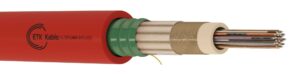
U-D(ZN)(SR)H FE180 Fire Resistant b2ca Fiber Optic Cable
SKU:
SLT(FR)-SA-SHFJ-(GY12)-(FE180.PH120)
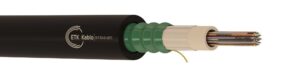
A-D(ZN)(SR)2Y Fiber Optic Cable
SKU:
SLT-SA-SJ-(GY12)
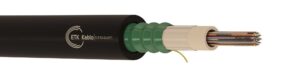
A-D(ZN)(SR)2Y Fiber Optic Cable
SKU:
SLT-SA-SJ-(GY25)
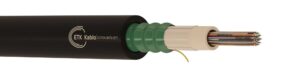
U-D(ZN)(SR)H Fiber Optic Cable
SKU:
SLT-SA-SHFJ-(GY12)
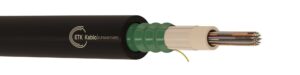
U-D(ZN)(SR)H Fiber Optic Cable
SKU:
SLT-SA-SHFJ-(GY25)
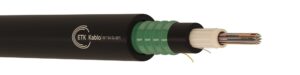
A-D(ZN)2Y(SR)2Y Fiber Optic Cable
SKU:
SLT-SA-DJ-(GY20)
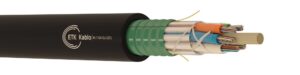
A-DF(ZN)(SR)2Y Fiber Optic Cable
SKU:
MLT-SA-SJ-(GY12)
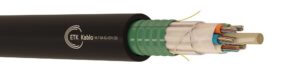
A-DQ(ZN)(SR)2Y Fiber Optic Cable
SKU:
MLT-SA-SJ-(GY12)-(D)
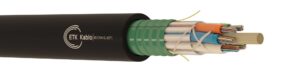
A-DF(ZN)(SR)2Y Fiber Optic Cable
SKU:
MLT-SA-SJ-(GY27)
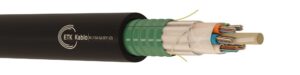
A-DQ(ZN)(SR)2Y Fiber Optic Cable
SKU:
MLT-SA-SJ-(GY27)-(D)
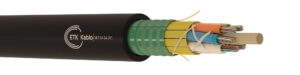
A-DF(ZN)(SR)2Y Fiber Optic Cable
SKU:
MLT-SA-SJ-(AY27)
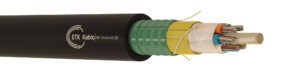
A-DQ(ZN)(SR)2Y Fiber Optic Cable
SKU:
MLT-SA-SJ-(AY27)-(D)
Metallic Armored Fiber Optic Cable for Demanding Installations
Armored Fiber Optic Cable provides additional physical protection for optical networks installed in environments where crushing, impact, rodents or other mechanical risks can threaten standard cable constructions. ETK Kablo manufactures metallic armored fiber optic cables for telecommunications, underground infrastructure, industrial networks, transportation systems and other demanding projects.
ETK Kablo's metallic armored portfolio includes constructions with corrugated steel tape and selected designs with additional steel wire reinforcement. Depending on the project, these protection systems can be combined with central loose tube or multi loose tube architectures, single-mode or multimode fibers, water-blocking elements and different outer sheath materials.
What Is an Armored Fiber Optic Cable?
An armored fiber optic cable includes an additional protective layer around the optical cable core. In metallic armored designs, this protection typically uses steel to increase resistance against external mechanical forces.
The armor does not carry the optical signal. Instead, it protects the loose tubes, optical fibers and other internal elements against conditions that could otherwise damage the cable.
Metallic armor is particularly useful where cable routes face higher risks from excavation, crushing, impact, rodents, unstable ground or demanding industrial environments.
Corrugated Steel Tape Armored Fiber Optic Cable
Corrugated steel tape armored fiber optic cable is one of the main constructions in ETK Kablo's metallic armored portfolio. The steel tape surrounds the cable core and forms a robust physical barrier while keeping the overall cable relatively compact.
Corrugation allows the steel layer to follow cable movement more effectively than a completely rigid metallic tube. As a result, the finished cable can combine mechanical protection with practical installation characteristics.
Corrugated steel tape can provide increased resistance against:
- Crushing forces
- Impact and accidental mechanical damage
- Rodent attack
- External pressure
- Mechanical stress during installation and service
The exact crush, impact and tensile performance depends on the individual cable design. Therefore, project engineers should use the relevant product datasheet rather than assigning one mechanical rating to every armored fiber optic cable.
Steel Tape and Steel Wire Reinforced Fiber Optic Cables
Different projects impose different mechanical loads. Corrugated steel tape provides strong radial protection, while selected cable constructions can incorporate galvanized steel wire elements where the design requires additional mechanical or tensile reinforcement.
| Protection System | Main Function | Typical Consideration |
|---|---|---|
| Corrugated Steel Tape | Radial mechanical protection | Crush, impact and rodent protection |
| Steel Wire Reinforcement | Additional mechanical and tensile support | More demanding pulling or installation conditions |
| Combined Metallic Protection | Enhanced protection through multiple metallic elements | Special or heavy-duty infrastructure applications |
A buyer should not select steel tape or steel wire based on terminology alone. Tensile load, crush resistance, installation method, route geometry and environmental conditions determine the most appropriate construction.
Central Loose Tube and Multi Loose Tube Armored Fiber Cables
Metallic armor can protect different optical cable architectures. ETK Kablo manufactures both central loose tube and multi loose tube armored fiber optic cables.
Central loose tube constructions provide a compact cable design and suit many access, telecom and infrastructure networks. ETK Kablo's A-D(ZN)(SR)2Y family is an example of this architecture, combining optical fibers in a central PBT loose tube with mechanical reinforcement and corrugated steel tape protection.
Multi loose tube constructions arrange fibers across several tubes around a central strength element. This design supports larger fiber counts and provides additional flexibility when network designers need structured fiber allocation across high-capacity backbone routes.
Examples in the ETK Kablo portfolio include A-DF(ZN)(SR)2Y and A-DQ(ZN)(SR)2Y construction families. Water protection can use gel-filled or dry water-blocking systems depending on the individual design.
A-D(ZN)(SR)2Y Armored Fiber Optic Cable
The A-D(ZN)(SR)2Y family represents an important metallic armored construction within ETK Kablo's fiber optic portfolio. Typical designs use a central loose tube, dielectric reinforcing elements, corrugated steel tape and a black polyethylene outer sheath.
This construction combines the compact dimensions of a central loose tube cable with the additional mechanical protection of steel armor. Depending on the individual product version, ETK Kablo can offer different fiber types, fiber counts and additional mechanical elements.
A-D(ZN)(SR)2Y cables can support outdoor telecom, duct and underground infrastructure projects when the selected product specification matches the installation requirements.
Armored Fiber Optic Cable for Underground Networks
Underground fiber routes can expose cables to soil pressure, construction activity, rodents, moisture and accidental impact. Metallic armor adds a physical protection layer between these external hazards and the optical cable core.
For this reason, armored fiber optic cables are frequently considered for telecom backbone routes, metropolitan networks, transportation infrastructure, industrial facilities and other underground installations.
However, armored does not automatically mean direct burial. Direct-burial suitability depends on the complete cable construction, including armor system, outer sheath, water protection and specified mechanical performance.
Where the cable runs inside a protected duct and mechanical risk is relatively low, a lighter construction may also satisfy the project. Selecting more armor than necessary can increase diameter, weight, installation effort and cost without providing a meaningful technical advantage.
Rodent Protection in Metallic Armored Fiber Cables
Rodent damage can cause serious network interruptions in outdoor and underground fiber routes. Corrugated steel tape provides a strong physical barrier that can significantly improve protection against rodent attack compared with standard unarmored constructions.
Nevertheless, no generic category statement should replace a project-specific assessment. Rodent pressure varies by location, installation method and environment. Buyers with severe rodent exposure should identify this requirement clearly during cable specification.
Water Blocking and Outdoor Protection
Mechanical armor alone does not protect an optical cable against every environmental risk. Outdoor fiber cable design must also address water ingress, UV exposure, temperature variation and long-term environmental stress.
Depending on the product, ETK Kablo metallic armored fiber cables can use thixotropic gel, dry water-blocking materials or other moisture-protection systems around the loose tubes and cable core.
For suitable outdoor constructions, a black PE or HDPE outer sheath provides environmental protection and UV resistance. The correct sheath and water-blocking system should be selected together with the armor construction.
Single-Mode and Multimode Armored Fiber Optic Cable
Mechanical protection and optical fiber type perform different functions within the cable. Therefore, metallic armored fiber optic cables can be manufactured with different optical fibers according to the network design.
Single-mode options can include G.652.D, G.657.A1 and G.657.A2 for telecommunications, backbone, access and long-distance networks.
Suitable constructions can also use OM1, OM2, OM3, OM4 and OM5 multimode fibers for shorter-distance enterprise, industrial and data-network applications.
The optical fiber should be selected according to transmission requirements, while the armor system should be selected according to the physical installation environment.
Metallic vs Non-Metallic Armored Fiber Optic Cable
Metallic and non-metallic protection systems address similar mechanical risks in different ways. Neither construction is universally preferable.
| Characteristic | Metallic Armored Fiber | Non-Metallic Armored Fiber |
|---|---|---|
| Protection Material | Steel tape, steel wire or another metallic element | Glass yarn, aramid yarn or other dielectric reinforcement |
| Electrical Conductivity | Contains conductive metallic components | Can maintain an all-dielectric construction |
| Mechanical Protection | Strong physical barrier against crush and impact | Depends on dielectric reinforcement system |
| Rodent Protection | Steel armor provides a strong physical barrier | Glass-yarn systems can provide additional deterrence |
| Grounding Considerations | May require bonding or grounding according to project rules | No metallic armor layer to ground in an all-dielectric design |
| Corrosion Consideration | Metallic components must suit the installation environment | No corrosion of a metallic armor layer |
Projects near electrical infrastructure, or installations requiring a fully dielectric cable, may favor non-metallic reinforcement. Routes facing substantial physical damage can favor metallic armor when the cable specification supports it.
Applications of Metallic Armored Fiber Optic Cable
ETK Kablo supplies metallic armored fiber constructions for professional network and infrastructure applications such as:
- Telecommunication backbone networks
- Underground and duct fiber routes
- Metropolitan and campus networks
- Railway and transportation infrastructure
- Industrial communication systems
- Energy and utility infrastructure
- High mechanical-risk outdoor installations
- Rodent-prone cable routes
The final cable design should always reflect the actual installation conditions and project specification.
Mechanical Testing of Armored Fiber Optic Cables
For armored fiber cable procurement, optical attenuation alone does not provide enough information. Mechanical performance also matters.
Depending on the individual product specification, relevant optical cable testing can include tensile, crush, impact, torsion, repeated bending, temperature cycling and water penetration tests under applicable parts of the IEC 60794 series.
The required acceptance criteria vary by construction. As a result, procurement teams should compare the specific mechanical values stated on the ETK Kablo product datasheet rather than assuming one test level for the entire metallic armored category.
How to Specify an Armored Fiber Optic Cable
Providing a detailed project specification helps ETK Kablo determine whether the application requires corrugated steel tape, additional steel reinforcement or another construction.
| Specification Item | Information to Provide |
|---|---|
| Fiber Type | G.652.D, G.657.A1, G.657.A2 or required multimode fiber |
| Fiber Count | Required number of optical fibers |
| Cable Architecture | Central loose tube or multi loose tube |
| Installation Method | Duct, underground, direct burial where applicable, tray or mixed route |
| Armor Requirement | Corrugated steel tape, additional steel reinforcement or project-specific design |
| Mechanical Loads | Tensile, crush, impact and pulling requirements |
| Environmental Conditions | Moisture, UV exposure, temperature, soil conditions and rodent risk |
| Outer Sheath | PE, LSZH or another project-specific material |
| Fire Requirement | Applicable reaction-to-fire or fire-resistance requirement where relevant |
| Project Documentation | Standards, test requirements, approvals and special specification clauses |
Why Choose ETK Kablo for Armored Fiber Optic Cable?
ETK Kablo has manufactured fiber optic cables since 2001 and produces a wide range of metallic and non-metallic protected constructions for international projects.
The metallic armored portfolio covers compact central loose tube cables, multi loose tube designs and specialized constructions with different mechanical protection systems. This allows project engineers and procurement teams to select a cable according to real mechanical and environmental requirements rather than relying on one standard armored design.
ETK Kablo supplies distributors, contractors, telecom companies, system integrators and infrastructure projects in more than 120 countries.
Frequently Asked Questions About Armored Fiber Optic Cable
What is an armored fiber optic cable?
An armored fiber optic cable includes an additional protective layer around the optical cable core. Metallic armored constructions commonly use corrugated steel tape or other steel elements to improve protection against crushing, impact, rodents and other mechanical risks.
What is corrugated steel tape armor?
Corrugated steel tape is a shaped steel layer wrapped around the fiber optic cable core. It creates a strong mechanical barrier while allowing the cable to retain practical flexibility for installation.
What is the difference between steel tape and steel wire armor?
Steel tape primarily provides radial protection against crushing, impact and rodents. Steel wire elements can provide additional mechanical or tensile reinforcement. The required system depends on the cable design and installation loads.
Can armored fiber optic cable be directly buried?
Selected armored fiber optic cables can be designed for direct-burial applications. However, metallic armor alone does not confirm direct-burial suitability. Buyers should verify the complete construction and product datasheet.
Does metallic armored fiber optic cable require grounding?
Because metallic armor is conductive, bonding or grounding may be required depending on local regulations, system design and installation conditions. The electrical requirements of the complete project should be reviewed before installation.
Does steel armor protect fiber cables from rodents?
Steel armor creates a strong physical barrier and can significantly improve rodent protection. The required protection level should still be evaluated according to the installation environment and project specification.
Can armored fiber optic cable contain a non-metallic strength member?
Yes. Metallic armor and the central strength member are separate design elements. A cable can use an FRP or other dielectric strength member while still incorporating corrugated steel tape or another metallic armor layer.
Does ETK Kablo manufacture both central and multi loose tube armored fiber cables?
Yes. ETK Kablo's metallic armored portfolio includes both central loose tube and multi loose tube constructions for different fiber counts, network architectures and mechanical requirements.


