





 President’s Message
Braided Foil Screened Control Cables
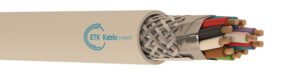
LIY(St)CY Signal Control Cable
SKU:
LIY(St)CY
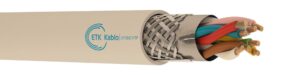
LIY(St)CY-TP/TT Signal Control Cable
SKU:
LIY(St)CY-TP/TT
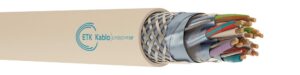
LIY(St)CY-PiMF/TiMF Signal Control Cable
SKU:
LIY(St)CY-PiMF/TiMF

LI2Y(St)CY Signal Control Cable
SKU:
LI2Y(St)CY
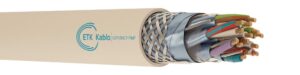
LI2Y(St)CY-PiMF/TiMF Signal Control Cable
SKU:
LI2Y(St)CY-PiMF/TiMF
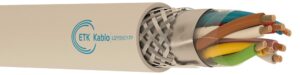
LI2Y(St)CY-TP/TT Signal Control Cable
SKU:
LI2Y(St)CY-TP/TT
Braided Foil Screened Control Cable for Industrial Signal and Automation Systems
Braided Foil Screened Control Cable combines an overall Al/PET foil with an overall tinned copper braid to provide a dual electromagnetic-screening architecture for industrial signal, monitoring and control circuits. ETK Kablo manufactures this PVC-jacketed cable family in LIY(St)CY and LI2Y(St)CY constructions, including standard multicore, twisted pair/triad and individually screened pair/triad versions.
The current ETK Kablo range uses flexible Class 5 stranded copper conductors and a UV-resistant PVC outer jacket. LIY(St)CY variants use PVC conductor insulation, while LI2Y(St)CY variants use solid polyethylene insulation. All current products use PVC outer jackets, but not every product uses PVC conductor insulation.
All six current products use an overall Al/PET foil together with tinned copper braiding. TP/TT versions organize conductors into twisted pairs or triads, while PiMF/TiMF versions add individual foil screens around each pair or triad before the common overall foil-and-braid screen.
What Is a Braided Foil Screened Control Cable?
A braided foil screened control cable uses two complementary metallic screening layers around the signal-cable core:
- Al/PET foil
- Tinned copper braid
Both layers form part of the electromagnetic-screening system. They help reduce unwanted coupling between sensitive signal circuits and electrical noise sources in the surrounding installation.
The foil and copper braid should not be confused with steel wire braid or steel wire armor. Those steel constructions provide mechanical protection and are used in separate mechanically protected ETK Kablo cable constructions.
ETK Kablo Braided Foil Screened Control Cable Range
| Current Product | Insulation | Conductor Organization | Screening Architecture |
|---|---|---|---|
| LIY(St)CY | PVC | Multicore / layered | Overall Al/PET foil + tinned copper braid |
| LIY(St)CY-TP/TT | PVC | Twisted pairs or triads | Overall Al/PET foil + tinned copper braid |
| LIY(St)CY-PiMF/TiMF | PVC | Individually screened pairs or triads | Individual pair/triad foil + overall foil + copper braid |
| LI2Y(St)CY | Solid PE | Multicore / layered | Overall Al/PET foil + tinned copper braid |
| LI2Y(St)CY-TP/TT | Solid PE | Twisted pairs or triads | Overall Al/PET foil + tinned copper braid |
| LI2Y(St)CY-PiMF/TiMF | Solid PE | Individually screened pairs or triads | Individual pair/triad foil + overall foil + copper braid |
This architecture allows engineers to select the insulation system, conductor grouping and internal circuit separation independently while retaining the same combined overall foil-and-braid screen.
How Foil and Braid Screening Work Together
The overall Al/PET foil forms a continuous metallic layer around the assembled signal conductors.
The tinned copper braid surrounds the same cable core as a second conductive screen. Together, the two components provide a more extensive overall screening architecture than either the foil-only or braid-only ETK Kablo categories.
However, additional screening should follow a real EMC requirement. A cable with more screening layers is not automatically the correct solution for every application.
Extra metallic layers can increase cable diameter, copper content, termination work and cost. Therefore, project engineers should select the screening architecture according to signal sensitivity, electromagnetic environment and installation design.
Al/PET Foil Screen
ETK Kablo uses Al/PET tape as the foil component of the combined screen.
The foil surrounds the signal-cable core and provides broad metallic coverage around the conductors.
In standard LIY(St)CY and LI2Y(St)CY constructions, this is an overall screen rather than an individual pair screen.
PiMF/TiMF versions add separate individual foil screens inside the cable in addition to the common overall foil-and-braid system.
Tinned Copper Braid Screen
The second overall screening component is tinned copper braiding.
The braid forms a flexible conductive network around the cable core and supports electrical screen continuity along the cable route.
The braid remains an electromagnetic-screening component. It is not a steel mechanical armor layer.
Compatible gland, connector, bonding and termination practices are important because the performance of a screened cable also depends on how the screen integrates into the installed system.
Foil + Braid Is Not Mechanical Armor
| Construction Element | Material | Main Function |
|---|---|---|
| Foil Screen | Al/PET | Electromagnetic screening |
| Braid Screen | Tinned copper | Electromagnetic screening |
| SWB Mechanical Layer | Steel wire | Mechanical reinforcement |
| SWA Mechanical Layer | Steel wire | Mechanical protection |
A standard LIY(St)CY cable contains foil and copper braid screening but does not automatically contain steel mechanical protection.
Where a project requires both combined electromagnetic screening and mechanical steel protection, ETK Kablo offers separate SWB and SWA foil-and-braid-screened constructions.
LIY(St)CY Signal Control Cable
LIY(St)CY is the standard PVC-insulated construction in this category.
The current ETK Kablo cable consists of:
- Class 5 stranded electrolytic copper conductors
- PVC conductor insulation
- Layered stranding
- Polyester tape
- Overall Al/PET foil
- Overall tinned copper braid
- UV-resistant PVC outer jacket
This construction can serve low-voltage signal, monitoring and control circuits where the project requires flexible conductors together with combined overall electromagnetic screening.
LI2Y(St)CY Signal Control Cable
LI2Y(St)CY uses the same basic combined-screen concept but changes the conductor-insulation material.
The current ETK Kablo construction uses:
- Class 5 stranded electrolytic copper conductors
- Solid polyethylene conductor insulation
- Layered stranding
- Polyester wrapping
- Overall Al/PET foil
- Overall tinned copper braid
- UV-resistant PVC outer jacket
The distinction between LIY and LI2Y is technically important because conductor insulation influences electrical characteristics such as insulation resistance.
Therefore, LI2Y(St)CY should not be described simply as another PVC-insulated version of LIY(St)CY. The two families share a PVC outer jacket, but their conductor-insulation systems differ.
LIY(St)CY vs LI2Y(St)CY
| Feature | LIY(St)CY | LI2Y(St)CY |
|---|---|---|
| Conductor | Class 5 stranded copper | Class 5 stranded copper |
| Conductor Insulation | PVC | Solid PE |
| Overall Foil | Al/PET | Al/PET |
| Overall Braid | Tinned copper | Tinned copper |
| Outer Jacket | PVC | PVC |
| Published Insulation Resistance | Depends on conductor size | 5000 MΩ/km across published sizes |
The correct family should follow the required insulation system and electrical characteristics rather than the assumption that the two codes describe identical cables.
TP/TT Braided Foil Screened Control Cable
TP/TT versions organize conductors into twisted pairs or twisted triads.
TP identifies twisted-pair organization, while TT identifies twisted-triad organization.
ETK Kablo strands the insulated conductors into pairs or triads and then strands those groups together into the complete cable core.
The complete assembly then receives polyester wrapping and the overall Al/PET foil plus tinned copper braid.
Why Use Twisted Pairs or Triads?
Pair or triad organization creates defined conductor groups for individual signal circuits.
Twisting can improve electrical balance and help control coupling between a signal circuit and surrounding electromagnetic fields.
TP/TT constructions can therefore suit automation, monitoring and measurement circuits where engineers prefer dedicated pair or triad organization rather than conventional multicore stranding.
The choice between cores, pairs and triads should follow the connected equipment and circuit design.
PiMF/TiMF Braided Foil Screened Control Cable
PiMF/TiMF versions provide an additional level of internal circuit screening.
PiMF identifies pairs individually screened in metal foil, while TiMF identifies individually screened triads.
In the current ETK Kablo construction, each pair or triad receives:
- Individual polyester wrapping
- Tinned copper earthing wire
- Individual Al/PET foil screen
The screened pairs or triads are then stranded together. The complete cable core receives another polyester wrap, an overall Al/PET foil and an overall tinned copper braid before the PVC outer jacket.
PiMF/TiMF Uses Both Individual and Overall Screens
| Screening Layer | Location | Purpose |
|---|---|---|
| Individual Al/PET Foil | Around each pair or triad | Additional circuit-to-circuit separation |
| Overall Al/PET Foil | Around complete cable core | Overall electromagnetic screening |
| Overall Tinned Copper Braid | Around complete cable core | Additional overall electromagnetic screen |
This means a PiMF/TiMF product should not be described simply as the same double-screened cable with a different conductor grouping.
It contains additional individual screens inside the overall combined-screen structure.
TP/TT vs PiMF/TiMF
| Feature | TP/TT | PiMF/TiMF |
|---|---|---|
| Pair / Triad Organization | Yes | Yes |
| Individual Pair/Triad Foil | No | Yes |
| Overall Al/PET Foil | Yes | Yes |
| Overall Copper Braid | Yes | Yes |
| Main Selection Driver | Defined conductor grouping | Defined grouping + additional circuit-to-circuit screening |
PiMF/TiMF should therefore be selected where individual circuit screening is technically required rather than automatically being treated as the preferred version.
Conductor Cross-Section Range
The current ETK Kablo technical tables publish electrical data from 0.22 mm² to 2.50 mm².
Published cross-sections include:
- 0.22 mm²
- 0.25 mm²
- 0.34 mm²
- 0.50 mm²
- 0.75 mm²
- 1.00 mm²
- 1.50 mm²
- 2.50 mm²
Exact conductor counts, pair counts, triad counts, dimensions and available combinations should be confirmed from the selected product table during quotation.
Electrical Characteristics by Conductor Size
| Cross-Section | Max. Conductor Resistance at 20°C | Mutual Capacitance | Published Operating Voltage | Test Voltage |
|---|---|---|---|---|
| 0.22 mm² | 85.0 Ω/km | 110 nF/km | 250 V | 1200 V |
| 0.25 mm² | 77.8 Ω/km | 110 nF/km | 250 V | 1200 V |
| 0.34 mm² | 56.0 Ω/km | 110 nF/km | 250 V | 1200 V |
| 0.50 mm² | 39.0 Ω/km | 120 nF/km | 300/500 V | 2000 V |
| 0.75 mm² | 26.0 Ω/km | 120 nF/km | 300/500 V | 2000 V |
| 1.00 mm² | 19.5 Ω/km | 130 nF/km | 300/500 V | 2000 V |
| 1.50 mm² | 13.3 Ω/km | 140 nF/km | 300/500 V | 2000 V |
| 2.50 mm² | 7.98 Ω/km | 150 nF/km | 300/500 V | 2000 V |
The electrical rating therefore varies with conductor cross-section. One blanket operating-voltage statement should not be applied to every product size.
Insulation Resistance: LIY vs LI2Y
The insulation material creates a significant electrical difference between the two principal families.
| Construction | Published Insulation Resistance |
|---|---|
| LIY – 0.22 to 0.34 mm² | 200 MΩ/km |
| LIY – 0.50 to 2.50 mm² | 20 MΩ/km |
| LI2Y – published sizes | 5000 MΩ/km |
This difference is one reason why procurement documents should identify the exact cable code rather than specifying only “PVC foil and braid screened cable.”
Class 5 Flexible Copper Conductors
The current six products use stranded electrolytic copper conductors identified as Class 5 according to IEC 60228, EN 60228 and DIN VDE 0295 references published by ETK Kablo.
Class 5 stranding gives the conductor greater installation flexibility than a rigid solid conductor.
However, flexible conductor construction does not automatically make these cables suitable for continuous high-cycle drag chains, robotics or torsional motion.
Dynamic-duty requirements should be specified separately and confirmed for the exact product.
Foil and Braid Screened Cable for Industrial Automation
Industrial automation systems frequently carry low-level signals between sensors, controllers, switches, monitoring equipment and actuators.
Where these signal routes run near motors, switching equipment, drives or power infrastructure, the electromagnetic environment can influence cable selection.
A combined foil-and-braid construction can provide an appropriate screening architecture where the project specifically requires two overall electromagnetic screens.
The screen does not eliminate the need for correct routing, separation, grounding and termination practices.
Foil and Braid Screened Cable for PLC Signals
PLC input and output circuits can carry analogue or digital control signals between field equipment and automation panels.
LIY(St)CY and LI2Y(St)CY constructions can provide flexible screened connections where the signal specification and electromagnetic environment call for an overall foil-and-braid screen.
For multiple sensitive circuits, TP/TT or PiMF/TiMF versions can provide more structured conductor grouping.
Foil and Braid Screened Cable for Sensors and Monitoring
Sensors and monitoring equipment can transmit relatively low-level electrical signals over industrial cable routes.
Combined overall screening can help control the influence of external electromagnetic fields where cable routes share technical spaces with electrically active equipment.
Projects carrying several independent measurement circuits within one cable can also evaluate PiMF/TiMF versions when additional circuit-to-circuit screening is required.
Foil and Braid Screened Cable for BMS and HVAC
Building-management and HVAC systems use control signals between sensors, actuators, controllers and supervisory equipment.
Braided foil screened signal cables can provide a PVC-jacketed option where the route specification allows PVC and the electromagnetic environment requires combined screening.
Where the building or fire strategy requires halogen-free materials, the corresponding LSZH signal-control range should be evaluated instead.
Braided Foil Screened vs Foil Screened Cable
| Feature | Foil Screened | Foil + Braid Screened |
|---|---|---|
| Overall Al/PET Foil | Yes | Yes |
| Overall Tinned Copper Braid | No | Yes |
| Typical ETK Family | LIY(St)Y / LI2Y(St)Y | LIY(St)CY / LI2Y(St)CY |
| Primary Difference | Foil-only screen | Combined foil + copper braid |
The combined-screen construction adds a copper braid to the overall foil architecture.
That does not make it universally preferable. The correct choice should follow the project EMC requirement, termination method, cable diameter constraints and commercial considerations.
Braided Foil Screened vs Braid Screened Cable
| Feature | Braid Screened | Foil + Braid Screened |
|---|---|---|
| Overall Al/PET Foil | No | Yes |
| Overall Tinned Copper Braid | Yes | Yes |
| Typical ETK Family | LIYCY / LI2YCY | LIY(St)CY / LI2Y(St)CY |
The combined family adds an overall foil beneath the copper braid.
A braid-only cable can remain the correct engineering choice where the project does not require the additional foil layer.
Unscreened vs Foil vs Braid vs Foil + Braid
| Screen Architecture | Typical ETK Family | Main Construction |
|---|---|---|
| Unscreened | LIYY | No dedicated metallic screen |
| Foil Screened | LIY(St)Y | Overall Al/PET foil |
| Braid Screened | LIYCY | Overall tinned copper braid |
| Foil + Braid Screened | LIY(St)CY | Overall Al/PET foil + tinned copper braid |
These screening architectures provide different levels and forms of electromagnetic screening without implying that the most heavily screened option is automatically the best cable for every installation.
Braided Foil Screened vs Steel Wire Braided Cable
Standard LIY(St)CY and LI2Y(St)CY use tinned copper braid as an electromagnetic screen.
Steel Wire Braided signal-control cables add a separate steel mechanical layer outside the electrically screened cable core.
Therefore, the terms braid screened and Steel Wire Braided describe different materials and different functions.
| Construction | Material | Function |
|---|---|---|
| Electrical Braid | Tinned copper | EMC screening |
| SWB | Steel wire | Mechanical reinforcement |
Braided Foil Screened vs Steel Wire Armored Cable
Steel Wire Armor provides mechanical protection around a cable construction.
It does not replace the Al/PET foil or tinned copper braid used for signal screening.
A mechanically protected signal-control cable can therefore contain both electrical screening and steel armor as separate functional layers.
PVC vs LSZH Foil and Braid Screened Cable
| Characteristic | PVC Combined-Screen Family | LSZH Combined-Screen Family |
|---|---|---|
| Typical ETK Codes | LIY(St)CY / LI2Y(St)CY | LIH(St)CH / related halogen-free constructions |
| Outer Jacket | PVC | Halogen-free material |
| Main Selection Driver | PVC permitted by project | Low-smoke / halogen requirement |
| Foil + Braid Screening | Available | Available |
PVC and LSZH describe material systems rather than circuit-integrity ratings.
Neither term automatically means that the cable is fire resistant. Projects requiring defined FE180, PH or other circuit-integrity performance should use a separately tested fire-resistant construction.
Flame Retardancy
The current six product pages publish IEC 60332-1-2 together with corresponding VDE and BS EN references for flame-retardancy testing.
This describes reaction to flame under the referenced test conditions.
It should not be interpreted as fire-resistant circuit integrity, nor should a conventional PVC product be described as LSZH simply because it has a flame-retardancy test reference.
Mechanical Characteristics
The current ETK Kablo product pages publish:
- Minimum bending radius: 7.5xD
- Operating temperature: -30°C to +70°C
- Typical published packing options: 100 m, 500 m and 1000 m
Exact outside diameter and weight depend on conductor cross-section, conductor count, pair or triad count and screening architecture.
PiMF/TiMF variants can be larger because the cable includes additional individual wrapping and foil screens inside the overall screened construction.
PVC Outer Jacket
All six current products in this category use a UV-resistant PVC outer jacket, normally published as RAL 7035 grey.
However, UV-resistant PVC terminology alone should not be interpreted as universal suitability for direct burial, permanent water exposure, aggressive chemicals or other demanding environmental conditions.
The exact route requirements should be included in the RFQ when environmental exposure forms part of the project specification.
How to Specify Braided Foil Screened Control Cable
| Specification Item | Information to Provide |
|---|---|
| Base Family | LIY(St)CY or LI2Y(St)CY |
| Conductor | Class 5 stranded copper |
| Insulation | PVC or solid PE according to selected family |
| Conductor Organization | Multicore, TP/TT or PiMF/TiMF |
| Overall Screening | Al/PET foil + tinned copper braid |
| Individual Screening | Specify PiMF/TiMF where required |
| Cross-Section | Select according to circuit and published product range |
| Voltage Requirement | Confirm against selected conductor size |
| Outer Jacket | PVC |
| EMC Environment | Define external and circuit-to-circuit screening requirements |
| Mechanical Protection | Specify SWB or SWA separately where required |
| Dynamic Requirement | Confirm separately for continuous-motion applications |
| Documentation | Datasheet and project-specific compliance documentation |
Why Choose ETK Kablo for Braided Foil Screened Control Cable?
ETK Kablo manufactures a broad combined-screen signal-control cable range with both PVC-insulated and PE-insulated constructions.
The current portfolio includes multicore, twisted pair/triad and individually screened pair/triad designs, allowing engineers to select the required conductor grouping and circuit-screening architecture.
All current products in this category use Class 5 copper conductors, overall Al/PET foil, overall tinned copper braid and a PVC outer jacket.
ETK Kablo can evaluate conductor size, core or pair configuration, insulation system, EMC environment, mechanical protection and project documentation during quotation.
Frequently Asked Questions About Braided Foil Screened Control Cable
What is a braided foil screened control cable?
It is a signal or control cable that combines an overall metallic foil with an overall conductive braid around the cable core. ETK Kablo uses Al/PET foil and tinned copper braiding in the current PVC-jacketed range.
What is the difference between foil and braid screening?
Foil uses a metallic laminate around the cable core, while braid uses woven conductive wires. The current LIY(St)CY and LI2Y(St)CY families use both systems together.
Does LIY(St)CY use PVC insulation?
Yes. The current LIY(St)CY family uses PVC conductor insulation together with a PVC outer jacket.
Does LI2Y(St)CY use PVC insulation?
No. LI2Y(St)CY uses solid polyethylene conductor insulation while retaining a PVC outer jacket.
What does TP/TT mean?
TP and TT identify conductors organized as twisted pairs or twisted triads.
What does PiMF/TiMF mean?
PiMF identifies individually foil-screened pairs, while TiMF identifies individually foil-screened triads.
Do PiMF/TiMF cables still have the overall foil and braid?
Yes. The current ETK Kablo PiMF/TiMF constructions add individual foil screens around pairs or triads and retain the overall Al/PET foil and tinned copper braid.
Is tinned copper braid mechanical armor?
No. The tinned copper braid in this category is an electromagnetic screen. Mechanical steel protection belongs to separate SWB or SWA constructions.
What conductor type is used?
The current products use stranded electrolytic copper conductors identified as Class 5.
What conductor sizes are published?
The current technical tables publish electrical data from 0.22 mm² to 2.50 mm². Exact conductor-count and grouping options depend on the selected product.
Are all sizes rated 300/500 V?
No. The current product tables publish 250 V for smaller 0.22–0.34 mm² sizes and 300/500 V for 0.50–2.50 mm² sizes.
What is the operating temperature?
The current ETK Kablo product pages publish an operating range of -30°C to +70°C.
What is the minimum bending radius?
The current product pages publish a minimum bending radius of 7.5xD.
Is the cable flame retardant?
The current product pages reference IEC 60332-1-2 and corresponding VDE and BS EN flame-retardancy standards.
Is this cable fire resistant?
Not automatically. Flame retardancy does not establish defined fire-resistant circuit integrity such as FE180 or PH-rated performance.
Is the cable LSZH?
No. This category uses PVC outer jackets. Projects requiring halogen-free materials should evaluate the corresponding LSZH signal-control category.
Can this cable be used in drag chains?
Class 5 conductors provide installation flexibility, but continuous drag-chain or robotic-motion suitability requires separate product confirmation.
Can this cable be mechanically armored?
ETK Kablo maintains separate Steel Wire Braided and Steel Wire Armored signal-control branches, including foil-and-braid screened versions.
What information should I provide when requesting a quotation?
Provide the required LIY or LI2Y family, conductor cross-section, core/pair/triad configuration, TP/TT or PiMF/TiMF requirement, voltage, EMC environment, mechanical protection, quantity and project documentation requirements.


