





 President’s Message
Indoor Fiber Optic Cable
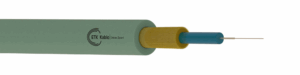
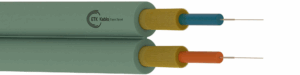
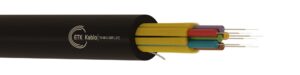
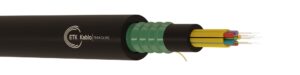
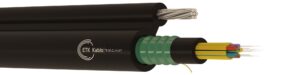
Indoor Fiber Optic Cable for Tight-Buffered Networks
Indoor Fiber Optic Cable provides reliable optical connectivity inside buildings, data rooms, industrial facilities, campuses and structured network environments. ETK Kablo manufactures tight-buffered fiber optic cables with compact constructions that simplify routing, handling and termination in indoor fiber networks.
ETK Kablo's current indoor fiber portfolio uses 900 µm tight-buffered optical fibers together with dielectric strength elements and halogen-free jacket materials. The range includes simplex and duplex cables for individual fiber connections as well as multi-fiber constructions for building backbones and distribution routes.
What Is a Tight-Buffered Fiber Optic Cable?
A tight-buffered fiber optic cable applies an additional protective buffer directly around each coated optical fiber. In ETK Kablo's current indoor constructions, the fiber receives a 900 µm HFFR/LSOH tight buffer that makes the individual fiber easier to handle during installation and termination.
This architecture differs from a loose tube cable, where 250 µm fibers remain relatively free inside a larger tube. Tight buffering therefore suits indoor networks where installers often need direct access to individual fibers, compact routing and straightforward termination.
Because the fibers do not require a gel-filled loose tube, tight-buffered designs can also provide a clean and practical construction for telecom rooms, equipment areas and building distribution systems.
Indoor Fiber Optic Cable Types from ETK Kablo
ETK Kablo offers several tight-buffered constructions for different indoor and infrastructure requirements.
| Construction | Typical Configuration | Main Use |
|---|---|---|
| Simplex Zipcord | 1 tight-buffered fiber | Individual optical connections and equipment links |
| Duplex Zipcord | Two connected simplex elements | Duplex transmission links and equipment connections |
| Multi-Fiber J-V(ZN)H | 2–24 tight-buffered fibers | Indoor distribution and building backbone networks |
| Armored Tight-Buffered Cable | Multi-fiber construction with corrugated steel tape | Routes requiring additional mechanical protection |
| Aerial Tight-Buffered Cable | Armored construction with steel messenger | Special routes extending into outdoor or aerial infrastructure |
The last two constructions extend tight-buffer technology beyond conventional indoor routing. Therefore, project engineers should select the exact product according to the complete installation route rather than assuming that every cable displayed in this family serves the same environment.
Simplex Fiber Optic Cable
A simplex fiber optic cable contains one optical fiber and provides a compact solution for point-to-point links, equipment connections, patching and other single-fiber applications.
ETK Kablo's J-V(ZN)H Simplex Zipcord construction uses one 900 µm tight-buffered fiber, aramid yarn as the non-metallic strength member and a UV-resistant LSOH outer jacket.
The product range includes G.652.D single-mode and OM1, OM2, OM3 and OM4 multimode fiber options.
Duplex Fiber Optic Cable
A duplex fiber optic cable combines two optical paths for applications that require separate transmit and receive fibers.
ETK Kablo's Duplex Zipcord construction connects two tight-buffered cable elements with a web. This design allows the two sides to remain together during routing while installers can separate them where necessary for termination.
Like the simplex version, the duplex range includes G.652.D and OM1–OM4 options.
Multi-Fiber Tight-Buffered Indoor Cable
Indoor backbone and distribution networks often require more than one or two fibers. ETK Kablo's J-V(ZN)H TB-NMA-SHFJ construction groups multiple 900 µm tight-buffered fibers inside one cable.
The available versions cover 2, 4, 6, 8, 12 and 24 fibers. Glass yarn or aramid yarn provides non-metallic mechanical reinforcement, while an LSOH outer jacket completes the construction.
This structure can suit building backbones, floor distribution, telecom rooms and other indoor routes where installers need several individually accessible fibers in one cable.
Why Use 900 µm Tight-Buffered Fiber Indoors?
A 900 µm tight buffer provides additional protection and handling strength around each fiber compared with the underlying coated optical fiber.
For indoor installation, this can provide several practical advantages:
- Easier handling of individual fibers
- Cleaner preparation without loose-tube filling gel
- Convenient routing inside cabinets and equipment rooms
- Direct access to individual fibers during termination
- Additional protection around the coated fiber
- Compact constructions for simplex, duplex and multi-fiber networks
The tight buffer does not eliminate the need to respect fiber bending, pulling and termination requirements. Installation teams should still follow the mechanical limits of the exact cable and connector system.
Tight Buffer vs Loose Tube Fiber Optic Cable
Tight-buffered and loose-tube cables protect optical fibers using different mechanical architectures.
| Feature | Tight-Buffered Cable | Loose Tube Cable |
|---|---|---|
| Fiber Protection | Buffer applied directly around individual fiber | Fibers remain loose inside a larger tube |
| Typical Buffered Diameter | Approximately 900 µm in ETK indoor constructions | Typically 250 µm coated fibers inside tube |
| Termination | Convenient individual-fiber access | Requires preparation of the loose tube and fibers |
| Typical Environment | Indoor and building networks | Outdoor, duct, aerial and backbone networks |
| Water Blocking | Usually not based on gel-filled fiber tubes | Can use gel or dry water-blocking systems |
| Architecture | Simplex, duplex or grouped tight buffers | Central or multi loose tube |
The installation environment should determine the construction. Tight-buffered cable is usually preferable where indoor handling and termination matter, while loose-tube architecture is often more suitable for long outdoor routes and environmental isolation.
LSOH Indoor Fiber Optic Cable
ETK Kablo's tight-buffered indoor products use LSOH / halogen-free jacket materials. These materials reduce smoke and corrosive halogen gas emissions compared with conventional halogen-containing materials when exposed to fire.
This makes LSOH constructions particularly relevant for occupied buildings, telecom rooms, commercial facilities and other environments where smoke and gas characteristics form part of the cable specification.
However, LSOH should not be confused with fire resistance. A low-smoke halogen-free cable can still have a specific reaction-to-fire classification without maintaining circuit integrity during a fire. Fire-resistant fiber optic cable requires a separate construction and specification.
Single-Mode and Multimode Indoor Fiber Cables
Indoor fiber optic networks can use either single-mode or multimode fibers depending on transmission distance, equipment and network architecture.
ETK Kablo's indoor product range includes G.652.D single-mode fiber together with OM1, OM2, OM3 and OM4 multimode options across several tight-buffered constructions.
Single-mode fiber supports longer-distance and high-capacity backbone links. Multimode fiber remains widely used for shorter building, campus and equipment-room connections where compatible transceivers and network architecture make it appropriate.
Fiber type should therefore be selected from optical requirements rather than simply from the fact that the cable is installed indoors.
Armored Tight-Buffered Fiber Optic Cable
Some routes require the termination advantages of tight-buffered fiber together with additional physical protection. ETK Kablo's A-V(ZN)H(SR)2Y construction combines 900 µm tight-buffered fibers, glass or aramid reinforcement, an LSOH inner jacket and corrugated steel tape.
The construction is available in fiber counts from 2 to 24 and provides increased physical protection for routes exposed to greater mechanical risk.
Because this design contains metallic armor, its installation requirements differ from a standard all-dielectric indoor cable. Engineers should assess grounding, routing and environmental requirements for the complete project.
Aerial Tight-Buffered Fiber Optic Cable
ETK Kablo also offers an A-V(ZN)H(SR)T2Y construction that combines tight-buffered fibers and corrugated steel tape with an integrated steel messenger wire.
This specialized design demonstrates that tight buffer describes the fiber protection architecture rather than automatically defining the installation environment. The product can combine a tight-buffered optical core with mechanical elements intended for a more demanding aerial route.
For conventional aerial backbone applications, however, project engineers should also evaluate the dedicated aerial loose-tube and ADSS cable families.
Applications of Indoor Fiber Optic Cable
Tight-buffered indoor fiber optic cables can support applications such as:
- Building backbone networks
- Data and telecom rooms
- Enterprise LAN infrastructure
- Campus buildings
- Industrial communication systems
- Equipment and rack connections
- Fiber distribution frames
- FTTB and building distribution systems
- Simplex and duplex optical links
The exact product should be selected according to fiber count, fiber type, mechanical protection, installation route and fire-performance requirements.
Mechanical Performance of Indoor Tight-Buffered Cables
Indoor fiber cable must tolerate pulling, bending, crushing and handling during installation without compromising optical performance.
ETK Kablo publishes product-specific mechanical data using applicable IEC 60794 test methods. Depending on the exact construction, testing can include tensile load, crush, impact, torsion, repeated bending and temperature cycling.
The required values differ substantially between a compact simplex cable, a multi-fiber indoor distribution cable and an armored construction. Procurement teams should therefore use the datasheet of the selected product rather than applying one category-wide mechanical specification.
How to Specify an Indoor Fiber Optic Cable
Procurement teams should define both the optical requirements and the physical installation route before selecting the cable.
| Specification Item | Information to Provide |
|---|---|
| Fiber Type | Required single-mode or multimode fiber |
| Fiber Count | 1, 2 or multi-fiber requirement |
| Construction | Simplex, duplex or multi-fiber tight-buffered cable |
| Installation Environment | Building, rack, telecom room, backbone or special route |
| Mechanical Protection | Standard, reinforced or armored construction |
| Jacket Requirement | LSOH and applicable project-specific fire performance |
| Mechanical Requirements | Tensile, crush and bending requirements |
| Project Requirements | Quantity, marking, delivery length, standards and documentation |
Why Choose ETK Kablo for Indoor Fiber Optic Cable?
ETK Kablo manufactures tight-buffered fiber optic cables ranging from compact simplex and duplex designs to 24-fiber distribution cables and mechanically reinforced constructions.
This portfolio allows telecom companies, system integrators, contractors and distributors to select an indoor optical cable according to the actual fiber count, termination method and installation conditions rather than relying on one generic construction.
ETK Kablo can evaluate fiber type, fiber count, tight-buffer architecture, mechanical protection, jacket requirements and delivery specifications during the quotation process.
Frequently Asked Questions About Indoor Fiber Optic Cable
What is an indoor fiber optic cable?
An indoor fiber optic cable is designed for optical connections inside buildings and controlled environments. ETK Kablo's main indoor constructions use individually protected 900 µm tight-buffered fibers.
What is a tight-buffered fiber optic cable?
A tight-buffered cable applies an additional protective layer directly around each optical fiber. ETK Kablo uses 900 µm tight-buffered fibers in its current indoor constructions.
What is the difference between tight buffer and loose tube fiber?
Tight-buffered fiber has a protective buffer directly around the individual fiber, while loose-tube cable places coated fibers inside a larger tube where they can move relatively freely. Tight buffer is commonly used indoors, while loose tube is widely used for outdoor and backbone installations.
What is the difference between simplex and duplex fiber optic cable?
Simplex cable contains one optical path, while duplex cable provides two optical paths. Duplex connections commonly use one fiber for transmission in each direction when the network equipment requires separate transmit and receive fibers.
How many fibers are available in ETK Kablo indoor cables?
The current portfolio includes one-fiber simplex, duplex constructions and multi-fiber J-V(ZN)H cables with 2, 4, 6, 8, 12 and 24 fibers.
Does ETK Kablo offer single-mode and multimode indoor fiber cable?
Yes. ETK Kablo's indoor products include G.652.D single-mode and OM1, OM2, OM3 and OM4 multimode fiber options. Availability should be confirmed for the exact selected construction.
Is LSOH cable the same as fire-resistant cable?
No. LSOH describes smoke and halogen characteristics of cable materials. Fire resistance refers to a cable's ability to maintain specified functionality during fire exposure and requires a different cable construction and test requirement.
Can tight-buffered fiber optic cable be armored?
Yes. ETK Kablo offers tight-buffered constructions with corrugated steel tape where the installation requires additional mechanical protection.


