





 President’s Message
Non-Metallic Armored Fiber Optic Cable
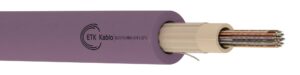
U-D(ZN)H b2ca Fiber Optic Cable
SKU:
SLT(FR)-NMA-SHFJ-(GY)
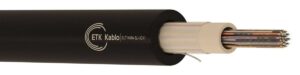
A-D(ZN)2Y Fiber Optic Cable
SKU:
SLT-NMA-SJ-(GY12)
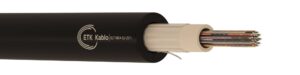
A-D(ZN)2Y Fiber Optic Cable
SKU:
SLT-NMA-SJ-(GY25)
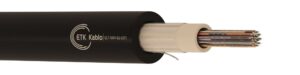
A-D(ZN)2Y Fiber Optic Cable
SKU:
SLT-NMA-SJ-(GY30)
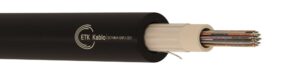
U-D(ZN)H Fiber Optic Cable
SKU:
SLT-NMA-SHFJ-(GY12)
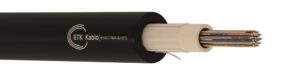
A-D(ZN)2Y Fiber Optic Cable
SKU:
miniSLT-NMA-SJ-(GY12)
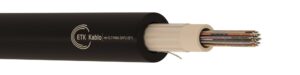
U-D(ZN)H Fiber Optic Cable
SKU:
miniSLT-NMA-SHFJ-(GY12)
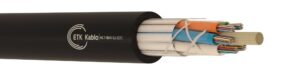
A-DF(ZN)2Y Fiber Optic Cable
SKU:
MLT-NMA-SJ-(GY12)
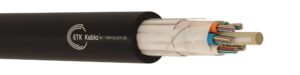
A-DQ(ZN)2Y Fiber Optic Cable
SKU:
MLT-NMA-SJ-(GY12)-(D)
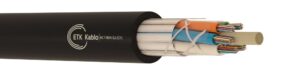
A-DF(ZN)2Y Fiber Optic Cable
SKU:
MLT-NMA-SJ-(GY27)
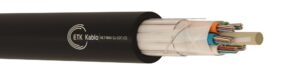
A-DQ(ZN)2Y Fiber Optic Cable
SKU:
MLT-NMA-SJ-(GY27)-(D)
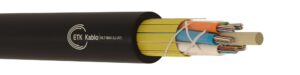
A-DF(ZN)2Y Fiber Optic Cable
SKU:
MLT-NMA-SJ-(AY27)
Non-Metallic Armored Fiber Optic Cables | All-Dielectric, Rodent-Resistant Fiber Solutions
ETK Kablo’s Non-Metallic Armored Fiber Optic Cables are purpose-built for environments requiring high mechanical strength and complete electrical insulation. Designed with an all-dielectric structure, these cables are non-conductive and entirely immune to lightning strikes and electromagnetic interference (EMI). This makes them the ideal choice for installation near power lines, substations, chemical plants, and high-voltage zones, where metallic cables could pose safety risks.
All-Dielectric Construction for Maximum Safety
Unlike metallic armored cables that use steel or aluminum, ETK Kablo’s non-metallic armored fiber optic cables use aramid yarn or glass yarn as the armor material. This reinforcement provides excellent tensile strength, crush resistance, and rodent protection without adding conductivity. The result is a lightweight yet extremely durable cable that performs flawlessly under mechanical stress and outdoor exposure.
These cables are suitable for direct burial, duct systems, and aerial ADSS (All-Dielectric Self-Supporting) installations, offering flexibility across diverse outdoor applications. They are particularly effective for areas prone to electrical hazards or where grounding and earthing are impractical or prohibited.
Fiber Types and Technical Options
ETK Kablo manufactures non-metallic armored cables in multiple configurations to meet varied bandwidth and distance requirements:
| Fiber Type | Standard | Typical Application |
|---|---|---|
| Singlemode | G.652D / G.657A1 / G.657A2 | Telecom and long-haul data transmission |
| Multimode | OM1 / OM2 / OM3 / OM4 / OM5 | Local networks, data centers, and short-range connectivity |
| Armor Type | Aramid Yarn / Glass Yarn | Non-conductive protection and rodent resistance |
Each cable is engineered for low attenuation, stable optical performance, and extended service life. Gel-filled loose tube construction prevents moisture ingress, maintaining consistent transmission quality even in humid or submerged conditions.
Performance and Environmental Advantages
- Electrical Safety: Non-conductive, fully dielectric design prevents lightning-induced damage.
- Rodent and Crush Resistance: Aramid and glass yarn layers protect against physical and biological threats.
- UV and Flame Resistance: UV-stabilized PE outer sheath ensures durability in outdoor conditions.
- Lightweight and Flexible: Easier to handle and install than metallic armored cables.
- Maintenance-Free: No need for grounding or corrosion monitoring over time.
Compliance and International Standards
All ETK Kablo non-metallic armored cables are manufactured in accordance with IEC 60794, ITU-T G.652/G.657, and EN 50173 standards. This ensures global compatibility with telecommunication, industrial, and infrastructure systems. Every batch undergoes tensile, crush, and environmental testing to guarantee consistent field performance and reliability.
Applications
- High-Voltage and Substation Environments: Safe operation near live conductors and electrical fields.
- Railway and Highway Corridors: Vibration-resistant fiber pathways for signaling and communication.
- Industrial Plants and Refineries: Suitable for chemical, explosive, or EMI-sensitive areas.
- Aerial ADSS Networks: Ideal for self-supporting installations between poles and masts.
- FTTH / FTTX Networks: Perfect for access networks requiring mechanical strength and safety.
Why Choose ETK Kablo’s Non-Metallic Armored Fiber Cables?
ETK Kablo combines advanced engineering, global certifications, and decades of manufacturing expertise to deliver non-conductive armored cables that ensure safety, performance, and longevity. Trusted in more than 120 countries, our fiber optic solutions empower critical infrastructures with reliable, future-proof connectivity.
Choose ETK Kablo’s Non-Metallic Armored Fiber Optic Cables for a lightweight, corrosion-proof, and electrically safe solution designed for high-voltage, industrial, and outdoor applications. Experience superior network uptime and reduced maintenance with ETK Kablo’s precision-engineered fiber technology.
Non-Metallic Armored & ADSS Fiber Optic Cables — Frequently Asked Questions
What is a non-metallic sheathed cable?
A non-metallic sheathed cable uses no metal in its jacket or armor. In fiber optics this typically means an all-dielectric design (e.g., aramid or glass-yarn reinforcement with a PE/HDPE outer sheath), providing lightning immunity and no need for grounding.
What are the different types of armored fiber cable?
Two broad families are used: metallic armored (e.g., corrugated steel tape—CST, or steel wire armor—SWA) for high crush/rodent protection, and non-metallic armored (aramid/glass yarns or dielectric rods) for all-dielectric, lightning-immune protection. Both can be supplied in loose-tube outdoor constructions.
What is the difference between armored cable and metallic cable?
Armored cable refers to any fiber cable with an added protective layer (metallic or dielectric) against impact and rodents. Metallic cable refers specifically to cables that contain metal—either as the armor (CST/SWA) or as conductors (in copper cables). Non-metallic armored fiber has armor but no metal, so it remains dielectric.
What does ADSS mean in fiber?
ADSS stands for All-Dielectric Self-Supporting. It is a non-metallic fiber cable designed to be strung between poles or towers without a messenger wire, relying on high-tensile dielectric strength members (typically aramid yarn) for support.
What is the difference between OPGW and ADSS cable?
OPGW (Optical Ground Wire) replaces/combines the overhead earth wire on power lines with a metallic stranded cable that contains fibers— it is metallic and installed on energized transmission towers. ADSS is an all-dielectric, standalone fiber cable lashed directly to poles/towers, clear of conductors; it does not carry electrical current and requires no grounding.
What are the components of ADSS cable?
Typical ADSS construction includes: loose tubes with optical fibers (often gel or dry-blocked), a central FRP/GRP strength member, aramid yarn strength elements for tensile load, water-blocking elements, and a UV-resistant outer jacket (PE/HDPE; anti-tracking jackets used near high-voltage corridors). Ripcords and markings are added for installation and identification.


