





 President’s Message
Outdoor Telephone Cables
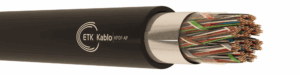
A-02YSF(L)2Y Outdoor Telephone Cable
SKU:
KPDF-AP
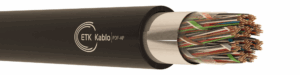
A-2YF(L)2Y Outdoor Telephone Cable
SKU:
PDF-AP
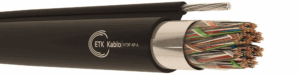
A-02YSF(L)T2Y Outdoor Telephone Cable
SKU:
KPDF-AP-A
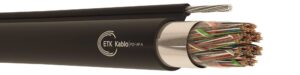
A-2YF(L)T2Y Outdoor Telephone Cable
SKU:
PDF-AP-A
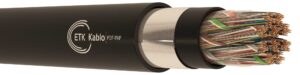
A-2YSF2Y(L)2Y Outdoor Telephone Cable
SKU:
PDF-PAP
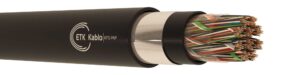
A-02YS2Y(L)2Y Outdoor Telephone Cable
SKU:
KPD-PAP
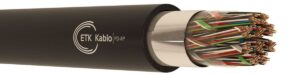
A-2Y(L)2Y Outdoor Telephone Cable
SKU:
PD-AP
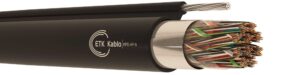
A-02YS(L)T2Y Outdoor Telephone Cable
SKU:
KPD-AP-A
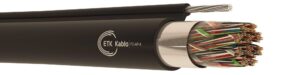
A-2Y(L)T2Y Outdoor Telephone Cable
SKU:
PD-AP-A
Outdoor Telephone Cable for Telecom Infrastructure
Outdoor Telephone Cable provides reliable copper communication for external telecommunications networks, underground routes, ducts, aerial spans and building-to-network connections. ETK Kablo manufactures a broad range of multi-pair outdoor telephone cables for telecom operators, infrastructure contractors, industrial networks, railway projects and other communication systems.
The ETK Kablo outdoor telephone cable portfolio includes jelly-filled and dry-core constructions, solid and foam-skin polyethylene insulation, aluminum-tape screened designs, aerial cables with integrated steel messenger wires, double-jacket cables, drop wires and steel-wire-armored constructions. Different pair counts, conductor diameters and mechanical protection systems allow procurement teams to match the cable to the actual network environment.
Outdoor telephone cable should therefore be specified according to more than pair count alone. Installation method, conductor diameter, moisture protection, screening, mechanical protection and required electrical transmission characteristics all influence the correct cable construction.
What Is an Outdoor Telephone Cable?
An outdoor telephone cable is a copper communication cable designed for external telecom networks and other low-frequency communication systems. The cable normally contains multiple solid copper conductors arranged as twisted pairs or star quads and protected by polyethylene-based insulation and an outdoor-grade sheath.
Compared with indoor telephone cable, outdoor constructions must address additional environmental risks such as moisture, UV exposure, underground installation conditions and mechanical stress. Depending on the route, the cable can also require filling compound, additional jackets, metallic armor or an integrated messenger wire.
Outdoor telephone cables remain relevant wherever copper communication infrastructure is required for conventional telephone circuits, legacy telecom networks, voice services, signaling, intercom systems, industrial communication and other low-frequency applications.
Multi-Pair Copper Telephone Cable
Large telecom networks often require many copper pairs within one cable. ETK Kablo manufactures multi-pair telephone cables ranging from small pair counts to very high-capacity constructions for external distribution networks.
Pairs or star quads are organized into structured cable units. In several ETK Kablo constructions, pairs are assembled into 10-pair units, while larger groups such as 25, 50 or 100 pairs form the higher-level cable core.
This organized structure supports large copper distribution networks while helping maintain consistent electrical characteristics across the cable.
| Pair Count | Typical Procurement Consideration |
|---|---|
| 2–10 Pairs | Local communication links, equipment connections and small distribution routes |
| 20–50 Pairs | Building, campus and local telecom distribution |
| 100–300 Pairs | Larger access and distribution networks |
| 400–1200 Pairs | High-capacity copper telecom infrastructure |
| Above 1200 Pairs | Selected large multi-pair network constructions |
ETK Kablo's outdoor telephone range includes selected configurations reaching up to 2400 pairs. Maximum pair count depends on conductor diameter and the specific cable construction.
Telephone Cable Conductor Sizes
Conductor diameter directly affects electrical resistance, cable dimensions, copper weight and the practical transmission characteristics of a telephone cable.
ETK Kablo outdoor telephone cable constructions are available with several solid copper conductor diameters. Depending on the product family, available options include:
- 0.40 mm
- 0.50 mm
- 0.60 mm
- 0.63 mm
- 0.65 mm
- 0.80 mm
- 0.90 mm
A larger conductor diameter generally reduces conductor resistance but increases cable diameter, copper content, weight and cost. The correct conductor size should therefore follow transmission distance, electrical requirements and the telecom network specification.
Solid PE and Foam-Skin PE Insulation
ETK Kablo manufactures outdoor telephone cables with different polyethylene insulation systems according to cable design.
Solid polyethylene insulation provides a durable dielectric layer around the copper conductor and is used in several conventional outdoor telephone cable constructions.
Foam-skin polyethylene insulation combines a foamed polyethylene layer with a solid outer skin. This structure can provide favorable electrical characteristics while preserving mechanical protection around the conductor.
The insulation type should be selected according to the cable specification rather than treated as a simple quality ranking. Both systems can provide reliable performance when correctly engineered for the required telephone cable construction.
Jelly-Filled Outdoor Telephone Cable
Moisture is one of the main risks in underground copper telecommunication networks. For this reason, ETK Kablo manufactures jelly-filled telephone cable constructions for routes where water protection is important.
In a filled cable such as A-02YSF(L)2Y, a special filling compound occupies the air spaces within the cable core. Additional filling can also be applied between the wrapped core and the metallic screen, depending on the construction.
This system helps restrict longitudinal water movement if the outer cable layers become damaged during installation or service.
Jelly-filled construction is particularly relevant for underground ducts, outside-plant telecom networks and other environments where long-term moisture exposure forms part of the risk assessment.
Dry-Core vs Jelly-Filled Telephone Cable
ETK Kablo offers both filled and non-filled outdoor telephone cable families. The two concepts should not be confused.
| Characteristic | Jelly-Filled Cable | Dry-Core Cable |
|---|---|---|
| Core Filling | Filling compound occupies air spaces | No conventional jelly filling in the cable core |
| Moisture Strategy | Filling compound helps limit water migration | Depends on complete cable construction and route protection |
| Handling | Requires removal of filling compound during termination | Cleaner preparation during termination |
| Typical Selection Driver | Moisture protection in outside-plant telecom infrastructure | Project-specific route and construction requirements |
The installation environment should determine which construction is appropriate.
Screened and Shielded Telephone Cable
A shielded telephone cable uses a metallic screen around the cable core. In ETK Kablo's outdoor telephone portfolio, several cable families use a longitudinal metallic screen around the cable core.
Constructions such as A-02YS(L)2Y and A-02YSF(L)2Y use a copolymer-coated flat aluminum tape applied longitudinally over the cable core. This metallic layer provides screening and forms part of the cable's electrical and environmental protection system.
Screening can be relevant where the telecom network requires controlled electrical characteristics or additional protection from external electromagnetic influences.
The terms screened and shielded are often used interchangeably in commercial terminology. The actual screen construction should always be confirmed from the product datasheet.
Underground Telephone Cable
Underground telephone cable is an important application within ETK Kablo's outside-plant telecom range. Underground networks can place cables inside conduits or use mechanically reinforced constructions according to the route.
For duct installations, the surrounding conduit already provides an important physical barrier. The cable must still address moisture, pulling forces and long-term environmental conditions.
Where underground routes expose the cable to greater mechanical risk, additional jacket layers or armor may be required.
For this reason, the terms underground telephone cable and direct-burial telephone cable should not automatically be treated as identical.
Duct vs Direct Burial Telephone Cable
| Feature | Duct Installation | Direct Burial Installation |
|---|---|---|
| Route | Cable runs inside a conduit | Cable is installed directly in the ground |
| External Mechanical Protection | Duct provides an additional barrier | Cable construction must address the surrounding burial environment |
| Moisture | Still important because underground ducts can contain water | Must be evaluated together with soil and cable construction |
| Armor | Project-specific | Often considered where significant mechanical risk exists |
| Maintenance | Duct can facilitate replacement or network expansion | Normally requires excavation to access the cable |
A cable should only be specified for direct burial when the exact product construction and project requirements support that installation method.
Armored Telephone Cable
Some outdoor telecom routes require substantially greater mechanical protection. ETK Kablo manufactures armored telephone cable constructions using galvanized steel wire around an inner polyethylene jacket.
For example, A-2Y(L)2YR2Y and A-02Y(L)2YR2Y constructions use round galvanized steel wires as armor before the final outer polyethylene jacket.
Steel wire armor can increase resistance against crushing, impact and other mechanical stresses. It also increases cable diameter, weight and installation requirements, so armor should be selected where the route justifies the additional protection.
Because steel armor is electrically conductive, bonding and grounding requirements should be evaluated according to the applicable installation rules and project design.
Aerial Telephone Cable with Messenger Wire
Aerial telephone cable is designed for overhead telecom routes between poles or other supporting structures.
ETK Kablo manufactures aerial telephone cable constructions with integrated galvanized steel messenger wire. For example, A-02YS(L)T2Y and A-02YSF(L)T2Y use a steel messenger to provide mechanical support for the overhead installation.
Aerial cable selection should consider:
- Pair count
- Cable weight
- Messenger construction
- Pole spacing
- Mechanical tension
- Wind and local environmental conditions
- Required conductor diameter
A standard outdoor telephone cable should not be suspended between poles unless the construction is designed for that aerial mechanical load.
Outdoor Telephone Drop Wire
ETK Kablo also manufactures compact telephone drop wire constructions for final copper connections within outdoor telephone networks.
Drop wire uses a low conductor count and compact external construction compared with the large multi-pair distribution cables used further upstream in the network.
This makes drop wire appropriate for the final section of a copper subscriber or point-to-point communication connection where a large multi-pair cable would be unnecessary.
ETK Kablo's portfolio includes both standard outdoor drop wire and aerial drop wire products for different final-connection routes.
Double-Jacket Outdoor Telephone Cable
Some outdoor telephone cable constructions use an inner polyethylene jacket in addition to the final outer jacket.
For example, A-02YS2Y(L)2Y incorporates a polyethylene inner jacket before the aluminum screen and final polyethylene outer jacket.
Additional jacket layers can provide structural separation and support more demanding cable constructions. However, double jacket should not automatically be interpreted as armor. Metallic armor is a separate mechanical protection element and must be specified independently.
A-02YSF(L)2Y Outdoor Telephone Cable
A-02YSF(L)2Y is one of the most important cable families in ETK Kablo's outdoor telephone portfolio.
The construction includes:
- Electrolytic annealed solid copper conductors
- Foam-skin polyethylene insulation
- Pairs or star quads
- Jelly-filled cable core
- Non-hygroscopic polyester wrapping
- Additional filling compound around the core
- Copolymer-coated aluminum tape screen
- UV-resistant black polyethylene outer jacket
The product is available in a wide range of conductor diameters and pair counts, allowing the same general cable family to serve small external links and very large copper telecom distribution networks.
Electrical Performance of Multi-Pair Telephone Cable
Telephone cable procurement should consider electrical transmission characteristics rather than relying only on physical dimensions.
Important parameters include:
- DC conductor resistance
- Insulation resistance
- Mutual capacitance
- Capacitance unbalance between pairs
- Capacitance unbalance to screen
- Dielectric strength
- Pair and quad construction
These characteristics influence signal quality and consistency across large multi-pair networks. ETK Kablo provides product-specific electrical values according to conductor diameter and cable construction.
Procurement teams should compare the exact requested cable size and pair count rather than applying one electrical value to every outdoor telephone cable.
Applications of Outdoor Telephone Cable
ETK Kablo outdoor telephone cables can support communication systems such as:
- Public telecommunications networks
- Outside-plant copper access networks
- Underground duct systems
- Aerial telephone networks
- Campus communication infrastructure
- Industrial telephone and intercom systems
- Railway communication infrastructure
- Rural telecom networks
- Building-to-cabinet communication links
- Legacy copper telephone infrastructure
- Low-frequency signaling and supervisory communication systems
The correct cable construction depends on installation method, pair count, electrical requirements and environmental conditions.
How to Specify an Outdoor Telephone Cable
Providing complete network and installation information helps ETK Kablo select the correct cable family and prepare an accurate quotation.
| Specification Item | Information to Provide |
|---|---|
| Pair Count | Required number of copper pairs |
| Conductor Diameter | 0.40 mm, 0.50 mm, 0.60 mm or other required size |
| Insulation | Solid PE or foam-skin PE according to cable specification |
| Core Filling | Jelly-filled or dry-core construction |
| Screen | Required metallic screen construction |
| Installation | Duct, underground, direct burial, aerial or project-specific route |
| Mechanical Protection | Standard, double-jacket or steel-wire-armored construction |
| Aerial Support | Messenger-supported construction where required |
| Electrical Requirements | Resistance, capacitance and dielectric requirements where specified |
| Delivery Requirements | Quantity, drum length, cable marking and project documentation |
ETK Kablo Outdoor Telephone Cable Range
ETK Kablo manufactures a broad outdoor telephone cable portfolio covering different insulation, filling, screening and mechanical protection systems.
| Construction Example | Main Design Concept |
|---|---|
| A-02YSF(L)2Y | Foam-skin PE insulated, jelly-filled, aluminum-screened outdoor telecom cable |
| A-02YS(L)2Y | Foam-skin PE insulated, screened dry-core outdoor telephone cable |
| A-2Y(L)2Y | Solid PE insulated outdoor telephone cable with aluminum screen |
| A-02YSF(L)T2Y | Jelly-filled aerial telephone cable with galvanized steel messenger |
| A-02YS(L)T2Y | Aerial screened telephone cable with steel messenger |
| A-02YS2Y(L)2Y | Double-jacket outdoor telephone cable |
| A-2Y(L)2YR2Y | Steel-wire-armored outdoor telephone cable |
| Drop Wire | Compact outdoor telephone subscriber or point-to-point connection |
The exact conductor size, pair count, cable diameter, filling, screen, armor and electrical values should be confirmed from the technical datasheet of the selected product.
Why Choose ETK Kablo for Outdoor Telephone Cable?
ETK Kablo manufactures outdoor copper telecom cables across a much wider range than one standard telephone cable design. The portfolio includes dozens of constructions for duct, underground, aerial, reinforced and high-pair-count communication networks.
This range allows telecom operators, distributors, EPC contractors, railway projects and infrastructure buyers to select the cable according to actual network conditions rather than adapting the installation to a limited catalogue.
ETK Kablo can evaluate pair count, conductor diameter, filling, screening, messenger requirements, mechanical protection and electrical specifications together during the quotation process.
Frequently Asked Questions About Outdoor Telephone Cable
What is an outdoor telephone cable?
An outdoor telephone cable is a copper communication cable designed for external telecom networks. It normally uses polyethylene-based insulation and an outdoor-grade sheath, with additional filling, screening, armor or messenger elements depending on the installation.
What is the difference between indoor and outdoor telephone cable?
Outdoor telephone cable is designed to address environmental factors such as moisture, UV exposure and outside-plant mechanical conditions. Indoor telephone cable uses constructions intended primarily for building and controlled-environment installation.
What is a jelly-filled telephone cable?
A jelly-filled telephone cable contains filling compound inside the cable core to help prevent longitudinal water migration. It is widely used in outdoor and underground telecom networks where moisture protection is important.
What is a shielded telephone cable?
A shielded or screened telephone cable includes a metallic screen around the cable core. Selected ETK Kablo outdoor telephone cables use a longitudinal copolymer-coated aluminum tape screen.
Can outdoor telephone cable be installed underground?
Yes, selected outdoor telephone cables are suitable for underground telecom routes. The exact product should be selected according to whether the installation uses a duct, direct burial or another protected route.
Can telephone cable be installed aerially?
Yes. ETK Kablo manufactures aerial telephone cables with integrated galvanized steel messenger wire. A standard non-messenger cable should not automatically be used for pole-to-pole installation.
Does ETK Kablo manufacture armored telephone cable?
Yes. ETK Kablo offers outdoor telephone cable constructions with galvanized steel wire armor for projects requiring increased mechanical protection.
How many pairs can an outdoor telephone cable contain?
Pair count depends on the cable construction and conductor diameter. ETK Kablo's range includes small multi-pair cables as well as selected high-capacity constructions reaching up to 2400 pairs.
What conductor diameters are available?
Depending on the product family, ETK Kablo offers solid copper conductor options ranging from approximately 0.40 mm to 0.90 mm.
What information should I provide when requesting a quotation?
Provide the pair count, conductor diameter, filling requirement, installation method, screening requirement, armor or messenger requirement, applicable electrical specifications, quantity, required drum length and project documentation requirements.


